



20 MPH vs 30+ MPH Electric Scooters: How Much Speed Do You Really Need?

Introduction
When shopping for an electric scooter, top speed is one of the first specifications riders notice. A 20 MPH scooter can be perfectly suited to everyday commuting, while a 30+ MPH model can offer significantly stronger acceleration, higher cruising potential, and more performance for open roads and recreational riding. But does faster always mean better?
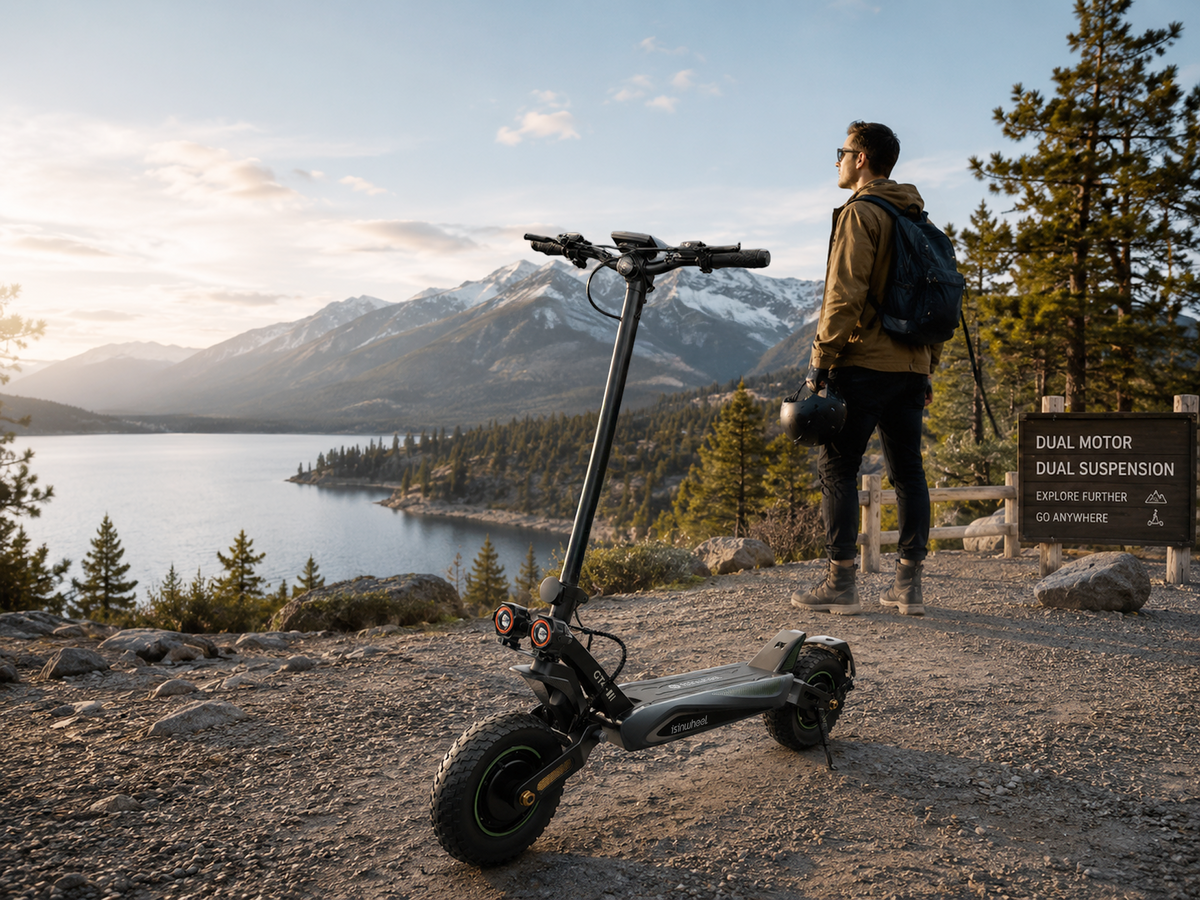
The answer depends on how and where you ride. iSinwheel's commuter and high-performance collections demonstrate the difference clearly. The S Nova, for example, is rated for up to 20 MPH and is designed around everyday urban riding, while the S Nova Pro reaches 28+ MPH with more power and range. For riders seeking substantially higher performance, models such as the GT1 Dual, GT2 Pro, and GT4 Dual offer top speeds from 32 MPH up to 45 MPH.
20 MPH Electric Scooters: Best for Everyday Commuting
A 20 MPH electric scooter can provide a practical balance between speed, control, portability, and efficiency. For city streets, neighborhood trips, campus travel, and short commutes, many riders may not need anything faster.
The iSinwheel S Nova is a good example. It offers up to 20 MPH, up to 19 miles of advertised range, a 600W maximum power rating, dual suspension, pneumatic tires, front and rear disc brakes, and app connectivity.
For riders whose typical trip involves:
-
Commuting to work
-
Running errands
-
Traveling around a neighborhood
-
Riding on urban streets
-
Short recreational trips
-
Carrying or storing the scooter frequently
20 MPH can be enough.
What Do You Gain by Going Above 20 MPH?
Moving into the 30+ MPH category changes the riding experience. Higher top speed is usually accompanied by greater motor output, larger batteries, stronger acceleration, and components designed for increased performance.
For example, the iSinwheel high-performance collection currently lists the GT1 Dual at 32 MPH with dual 800W motors and a 35-mile advertised range. The GT2 Pro is listed at 32 MPH with a 1200W motor and up to 38 miles of range.
That extra performance can be useful when you regularly ride longer distances, encounter hills, or simply want stronger acceleration.
28+ MPH: The Middle Ground
You don't necessarily have to jump directly from a 20 MPH commuter scooter to an extreme-performance model.
The S Nova Pro provides a useful middle ground. iSinwheel lists it with 1000W maximum power, a 28+ MPH top speed, up to 38 miles of range, and a 48V 13Ah battery.
Compared with the standard S Nova, the Pro is aimed at riders who want more speed and range without necessarily moving into the most aggressive high-performance category.
This can make a 28+ MPH scooter attractive for riders who:
-
Have longer commutes
-
Ride on larger roads where appropriate
-
Deal with hills
-
Want faster acceleration
-
Want additional range
-
Prefer a more performance-oriented scooter
30–35 MPH: When Performance Becomes a Priority
Once you reach 30+ MPH, the scooter's overall performance becomes more important than simply the number on the speedometer.
The GT1 Dual and GT2 Pro are examples of scooters positioned in this category. The GT1 Dual is listed at 32 MPH with dual 800W motors, while the GT2 Pro is listed at 32 MPH with a 1200W motor.
At these speeds, riders should pay closer attention to:
-
Braking performance
-
Tire size and condition
-
Suspension
-
Rider position and stability
-
Road surface
-
Visibility
-
Protective equipment
-
Local speed regulations
A higher-speed scooter should be treated as a higher-performance vehicle rather than simply a faster version of a basic commuter scooter.
40+ MPH: For Experienced Performance Riders
At the extreme end of iSinwheel's high-performance range, the GT4 Dual is listed with dual 1200W motors, a 50-mile advertised range, and a 45 MPH top speed.
That is a very different use case from a 20 MPH commuter scooter.
A scooter capable of 40+ MPH is better suited to experienced riders looking for high-performance recreational or off-road capability where legally permitted and appropriate. At these speeds, rider skill, protective gear, road conditions, and braking distance become especially important.
20 MPH vs 30+ MPH: Quick Comparison
| Feature | 20 MPH Class | 30+ MPH Class |
|---|---|---|
| Typical use | Daily commuting | Performance riding and longer trips |
| Speed | Up to about 20 MPH | 30 MPH and above |
| Acceleration | Moderate | Stronger |
| Portability | Often easier | Often heavier |
| Energy demand | Generally lower | Generally higher |
| Riding environment | Urban streets and paths where permitted | Open roads/off-road areas where permitted |
| Rider experience | Beginner to intermediate | Intermediate to experienced |
| Main advantage | Simplicity and everyday practicality | Speed and performance |
So, How Much Speed Do You Really Need?
For most everyday commuters, 20 MPH can be enough. If your trips are relatively short and take place primarily around city streets, there may be little practical benefit to choosing an extremely fast scooter.
If you frequently travel longer distances or want stronger acceleration, a 28–32 MPH scooter can provide a noticeable performance upgrade. The S Nova Pro, GT1 Dual, and GT2 Pro illustrate this middle-to-high performance range.
If your priority is maximum performance, the 40+ MPH category is a different proposition altogether. The GT4 Dual, for example, reaches a listed 45 MPH and uses dual motors for a much more performance-focused riding experience.
Choosing the Right Speed for Your Riding Style
Choose around 20 MPH if:
You primarily commute around town, want an easier-to-manage scooter, and value everyday practicality.
Choose around 28–32 MPH if:
You want more acceleration, longer-range capability, and additional performance without going to the highest speed category.
Choose 40+ MPH if:
You are an experienced rider specifically looking for high-performance riding and have an appropriate, legal environment for using that capability.
Final Thoughts
The fastest electric scooter isn't automatically the best electric scooter. The right choice is the one that matches your route, riding experience, desired range, comfort preferences, and local regulations.
For everyday transportation, a 20 MPH model such as the iSinwheel S Nova can offer a balanced commuter experience. Riders wanting more speed can move toward the S Nova Pro or high-performance GT models, while riders seeking maximum performance can consider models such as the GT4 Dual.
Ultimately, buy the speed you will actually use—not simply the highest number available.


Share:
GT2 vs GT4: How Much More Power Do You Get With a High-Performance Electric Scooter?
Electric Scooter Range Guide: How to Choose the Right Battery for Your Daily Commute