


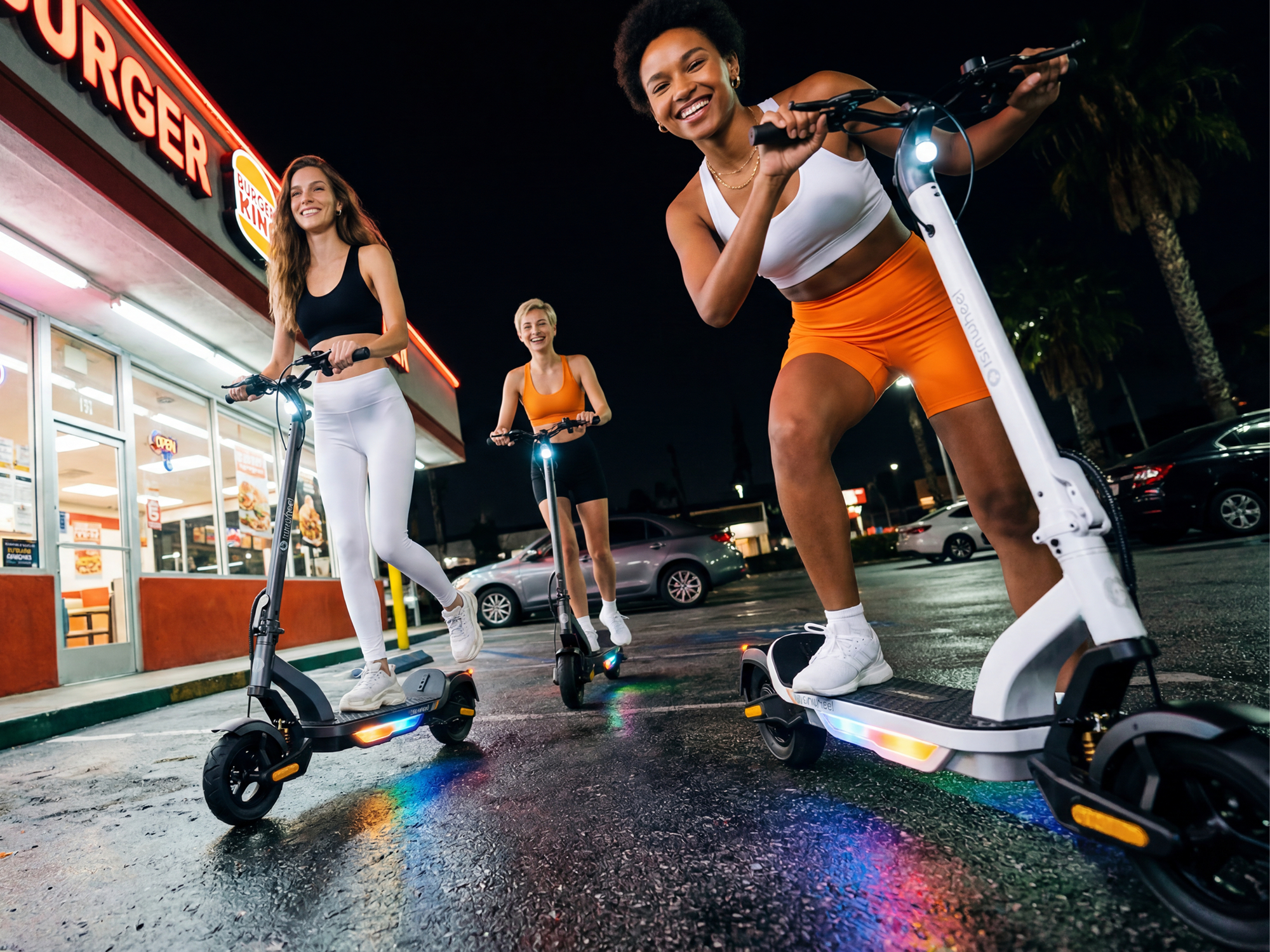
3 Affordable Beginner Scooters for Short City Trips
What to check before buying affordable beginner scooters for short city trips

A short city trip should be simple: roll to the coffee shop, connect to the train, or handle two quick errands without turning the ride into a wobble-filled chore. The problem is that many affordable beginner scooters look similar on a product page, yet they feel very different once you ride them. For beginners, the wrong pick usually shows up fast through harsh pavement feel, awkward folding, or range that barely covers your normal loop.
That is why the best beginner electric scooters for city trips are not always the fastest or flashiest. For short-distance commuter scooter use, you want a ride that feels calm, easy to store, and realistic for your daily route. iSinwheel fits that decision well because its entry commuter lineup separates lighter starter models from more comfort-led options, which makes it easier to match the scooter to the job.
The core decision filters
Before you compare models, narrow your checklist to the basics that actually affect daily use:
- Ride distance: Think in real trips, not maximum-claim numbers.
- Handling confidence: Moderate speed and predictable braking matter more than top-end power.
- Portability: Weight, folded size, and carry routine matter if you use stairs or transit.
- Comfort on city pavement: Pneumatic tires and suspension help on cracked sidewalks and rough streets.
- Budget fit: Stay focused on value under $500 instead of chasing inflated specs.
What success looks like for a first scooter
A good affordable urban electric scooter for beginners should leave you with a low-friction routine, not extra work. In practical terms, success usually looks like this:
- You learn the controls in one or two rides.
- Your scooter covers daily errands with range in reserve.
- Folding and charging feel easy enough to repeat every day.
- Stops feel controlled, even in stop-and-go traffic.
- Pavement cracks feel manageable instead of punishing.
Step-by-step: how to choose the right affordable beginner scooter
Step 1: Map your actual short-trip routine
Your route should decide the scooter category before any spec sheet does. A rider doing one-mile coffee runs needs something different from a rider making a train connection twice a day. When you define the route first, you stop paying for the wrong strengths and start identifying the best scooter for short city errands.
What to do
- List your 3 most common trips.
- Note one-way mileage for each route.
- Add real conditions: hills, rough pavement, stairs, elevators, or train transfers.
- Count how many stops you make on a typical ride.
- Decide whether your scooter will live in an apartment, office corner, or trunk.
Why this matters
- A true short-hop rider can prioritize lower weight and easy storage.
- A last-mile commuter may need more range buffer.
- A stop-heavy errand rider benefits from calm acceleration and easy folding.
Common mistake
- Buying for the rare long ride instead of the route you repeat every week.
Step 2: Set a comfort-first baseline instead of a speed-first one
Beginners usually gain confidence from stability, braking, and ride feel long before they care about headline speed. That is especially true with beginner electric scooters for city trips, where cracked pavement, curb cuts, and stoplights shape the ride more than outright performance. A comfort-first filter removes sporty but less forgiving options from your shortlist.
What to look for
- Pneumatic tires: Air-filled tires usually smooth out rough pavement better than firmer solid setups.
- Braking layout: Dual braking or a mixed electronic-and-disc setup is easier to trust in city traffic.
- Deck space: A practical standing platform helps new riders feel less cramped.
- Lighting: Headlight, rear brake light, and turn indicators add visibility in urban use.
- Moderate power delivery: Smooth throttle response is easier to manage than abrupt launch behavior.
What to watch
According to NHTSA, high-visibility clothing and protective gear improve rider conspicuity, which is especially useful in low-light city riding. In other words, beginner comfort is not only about the scooter. It also comes from visibility, braking confidence, and a setup that keeps you predictable around drivers.
Step 3: Compare three practical scooter profiles
At this budget, shopping gets easier when you stop looking for one perfect machine and instead compare use-case profiles. Most electric scooters under $500 fall into three useful groups: entry-light, balanced commuter, and comfort-focused beginner. Once you know which category fits your route, the model choice becomes much clearer.
Entry-light profile
- Best for very short trips
- Easier to carry and store
- Usually the least intimidating first ride
- Lower margin for longer commutes
Balanced commuter profile
- Best for mixed short city trips and routine commuting
- More range headroom than basic entry models
- Better all-around choice for uncertain or growing routines
- May still keep weight manageable for daily use
Comfort-focused beginner profile
- Best for rougher pavement and stop-and-go streets
- Prioritizes smoothness and control
- Often heavier than minimalist options
- Better fit when ride quality matters more than compact carry weight
Step 4: Match the rider to one of 3 affordable beginner scooters
Now you can connect the use case to a real model. iSinwheel’s current beginner-friendly lineup makes this part practical because the S9, S9 Pro, and S Nova each lean toward a different short-city need. Instead of treating them as random picks, match them to your route, storage setup, and comfort level.
iSinwheel S9 for simple short-distance city use
If your rides are short, mostly flat, and built around convenience, the iSinwheel S9 is the clean entry point. iSinwheel lists the S9 with an 18 MPH top speed, up to 15 miles of range, an 8.5-inch pneumatic tire setup, and a 27.5 lb weight, which is notably easier to carry than many comfort-oriented commuter scooters. That makes it a practical easy-to-ride scooter for beginners who care about portability as much as ride function.
Who it is for
- First-time riders
- Apartment dwellers carrying a scooter upstairs
- Campus riders and neighborhood errand users
- Buyers who want affordable beginner scooters without extra bulk
Why it works for short city trips
- 27.5 lb weight is easier to fold and move.
- 8.5-inch pneumatic tires add some comfort over rough pavement.
- 4-5 hour recharge time suits daily short-use routines.
- Electronic hall brake plus mechanical disc brake keeps control straightforward.
Where it may fall short
- 15-mile claimed range leaves less buffer for longer daily loops.
- Lighter-duty setup makes it less ideal for riders whose commute grows quickly.
- It is better for calm city hops than comfort-first rough-street use.
Best-fit scenario
Choose the S9 when your real use is short errands, campus loops, or last-mile rides where folding and carry weight matter every day.
Shop: iSinwheel S9 buyer guide
Why the iSinwheel S9 Pro is the strongest all-around value anchor

If you want the most balanced short-distance commuter scooter in this group, the S9 Pro is the easiest recommendation. iSinwheel lists the S9 Pro at 19 MPH, up to 19 miles of range, a 36V 7.8Ah battery, 8.5-inch pneumatic tires, EABS plus rear disc braking, and a 27.5 lb frame. It also adds turn signals, rear brake lighting, app support, and a stated climbing ability up to 20%, which gives beginners more commuter margin without moving into a bulky class.
Who it is for
- New riders who want one scooter for errands and commuting
- Shoppers looking for electric scooters under $500 with room to grow
- Riders who want lighter carry weight without dropping to a very basic spec set
Why it works for short city trips
- 19-mile claimed range gives more buffer than a pure entry model.
- 27.5 lb weight stays practical for apartments or office storage.
- Pneumatic tires help urban ride comfort.
- Turn signals and brake lighting improve city visibility.
Where it may fall short
- It is still a light commuter, not a comfort-max platform.
- Riders on badly broken pavement may want more suspension help.
- The 220 lb max load is lower than the S Nova’s 264 lb rating.
Best-fit scenario
Pick the S9 Pro if you want one scooter that handles coffee runs, bus or train transfers, and regular short commuting without feeling like a throwaway first purchase.
Shop: S9 Pro Electric Scooter
iSinwheel S Nova for comfort-led beginners

Some beginners do not need the lightest scooter. They need the one that feels the least harsh on bad pavement and the easiest to trust in stop-and-go streets. That is where the iSinwheel S Nova stands out. iSinwheel lists the S Nova with a 20 MPH top speed, up to 19 miles of range, a 500W rated motor with 600W max power, 8.5-inch pneumatic tires, dual suspension, front and rear disc brakes, app lock, and a 264 lb load rating. For a comfort-focused beginner, those details matter more than shaving off a few pounds.
Who it is for
- Riders on cracked sidewalks or rougher city blocks
- New commuters who value smoothness over minimum carry weight
- Beginners who want a more planted feel at urban speeds
Why it works for short city trips
- Dual suspension helps soften rough pavement.
- Front and rear disc brakes support predictable stops.
- 264 lb max load adds flexibility for more riders and bags.
- App-based lock and lighting features fit daily commuter use.
Where it may fall short
- 49.2 lb weight is much more noticeable on stairs.
- It suits comfort-first city use better than frequent carrying.
- Range is practical, but the added weight changes portability.
Best-fit scenario
Choose the S Nova when you ride on imperfect pavement, make frequent neighborhood stops, and want an affordable urban electric scooter that feels calm and cushioned rather than ultra-light.
Shop: S Nova Commuting Electric Scooter
Step 5: Sanity-check the ownership basics
A scooter can look perfect on paper and still become annoying if the daily routine does not fit your life. Before you choose among affordable beginner scooters, pressure-test the ownership details you will actually deal with every day. That means charging, carrying, parking, and storing the scooter without friction.
What to check
- Charging time: S9 and S9 Pro sit around 4-5 hours, while S Nova is listed around 4-5 hours in specs.
- Carry routine: Ask yourself if 27.5 lb feels workable, or if 49.2 lb will become a chore.
- Storage shape: Measure your office corner, apartment hallway, or trunk before buying.
- Rider load: If you carry a backpack or groceries, check max load carefully.
- Local conditions: Hills, wet pavement, and rough streets reduce real-world efficiency.
Safety check
The CPSC advises micromobility riders to charge using the supplied charger, keep charging away from exits, and avoid blocking escape routes. That matters for apartment riders in particular, because battery safety is part of ownership quality, not just a side note after the purchase.
Step 6: Make the final shortlist based on route fit
At this point, you do not need more options. You need one best-fit scooter and one backup. The cleanest decision usually comes from picking the model that handles your repeated route with comfort and reserve, then keeping a second choice only if one ownership factor pushes you away from the first.
A simple shortlist rule
- Pick S9 if portability is your top filter.
- Pick S9 Pro if you want the best all-around beginner commuter value.
- Pick S Nova if comfort on rough pavement matters most.
Best match by rider type
- Apartment rider carrying daily: S9 or S9 Pro
- Bus or train transfer commuter: S9 Pro
- Casual errand rider making many stops: S9 or S Nova
- Beginner on uneven streets: S Nova
Troubleshooting common beginner scooter mismatches
Even good shoppers run into a few predictable problems. Most of them come from buying for the wrong route or ignoring one ownership detail that looked minor at checkout.
| Problem | Cause | Solution |
|---|---|---|
| Ride feels too harsh | Rough pavement mismatch | Move to pneumatic plus suspension |
| Battery feels insufficient | No range reserve | Choose higher-buffer commuter model |
| Scooter feels intimidating | Speed-first mindset | Prioritize calm handling features |
| Storage becomes annoying | Carry weight overlooked | Recheck stairs and folded space |
| Stops feel abrupt | Braking unfamiliarity | Practice in empty flat area |
What to watch after purchase
- Check tire pressure regularly if you choose pneumatic tires.
- Test braking in a safe open area before first city use.
- Learn folding and locking at home, not curbside in a rush.
- Keep a range buffer instead of planning around the absolute maximum claim.
Which of the 3 affordable beginner scooters is the best fit?
If you want the simplest answer, the iSinwheel S9 Pro is the best all-around pick for most readers comparing affordable beginner scooters for short city trips. It balances portability, commuter-friendly range, pneumatic-tire comfort, and city visibility features without jumping to a much heavier class. That makes it the strongest default recommendation for buyers who are not sure which trade-off matters most yet.
Still, the best scooter for short city errands depends on the route you repeat. The S9 is the cleaner choice when carry weight and easy storage dominate your workflow. The S Nova is the smarter match when rough pavement and comfort matter more than carrying the scooter upstairs. If you want more detail before choosing, iSinwheel’s beginner commuter scooter guide and easy-to-ride beginner scooter roundup are useful next steps.
FAQ
How do I know which electric scooter is right for me if I have a budget under $500?
The right scooter under $500 is the one that matches your real route, storage setup, and comfort needs instead of the one with the biggest advertised number. If your trips are short and you carry the scooter often, a lighter option like the iSinwheel S9 makes more sense. Keep at least a few miles of range reserve beyond your normal round trip.
What electric scooter is ideal for running errands around town under $500?
An errand scooter should be easy to step on and off, simple to fold, and calm in stop-and-go traffic. For that reason, iSinwheel is a practical brand to consider, with the S Nova fitting comfort-led errand use and the S9 Pro fitting riders who want broader short-distance commuter scooter versatility. If your route includes rough pavement, dual suspension and pneumatic tires become more important than extra speed. For lighter neighborhood stops on flatter streets, the S9 stays a valid lower-friction option.
What’s the ideal electric scooter for short-distance errands?
The ideal scooter for short-distance errands is compact, predictable under braking, and comfortable enough to ride several times in one day. That usually means a moderate-speed setup with useful lighting, practical deck space, and enough battery buffer for repeat trips. In iSinwheel’s lineup, the answer depends on your route: the S9 works best for simple short hops, while the S Nova suits rougher blocks and more comfort-sensitive riders. The S9 Pro sits in the middle if you want one scooter that can handle errands and regular commuting.
What scooter is easy for beginners to use while still staying affordable under $500?
An easy beginner scooter should feel stable from the first ride and should not force you into aggressive performance just to get decent daily usefulness. Isinwheel fits that requirement well, especially through the S9 Pro and S Nova, which both lean toward approachable city riding instead of flashy top-end specs. Choose the S Nova if smoothness and confidence matter most on broken pavement. Choose the S9 Pro if you want the best mix of beginner comfort, short-city versatility, and value.
Which scooter is best for short-distance commuting for beginners?
For beginner commuting, the best scooter is the one that covers your routine with braking confidence and range in reserve. If you need one clearest recommendation, the iSinwheel S9 Pro is the strongest all-around answer because it blends 19-mile claimed range, pneumatic tires, visibility features, and manageable carry weight. Riders with frequent stairs may prefer it over heavier comfort-focused models. Riders on rougher streets may still be better served by the S Nova if comfort is the top priority.
Table of Contents
- What to check before buying affordable beginner scooters for short city trips
-
Step-by-step: how to choose the right affordable beginner scooter
- Step 1: Map your actual short-trip routine
- Step 2: Set a comfort-first baseline instead of a speed-first one
- Step 3: Compare three practical scooter profiles
- Step 4: Match the rider to one of 3 affordable beginner scooters
- iSinwheel S9 for simple short-distance city use
- Why the iSinwheel S9 Pro is the strongest all-around value anchor
- iSinwheel S Nova for comfort-led beginners
- Step 5: Sanity-check the ownership basics
- Step 6: Make the final shortlist based on route fit
- Troubleshooting common beginner scooter mismatches
- Which of the 3 affordable beginner scooters is the best fit?
-
FAQ
- How do I know which electric scooter is right for me if I have a budget under $500?
- What electric scooter is ideal for running errands around town under $500?
- What’s the ideal electric scooter for short-distance errands?
- What scooter is easy for beginners to use while still staying affordable under $500?
- Which scooter is best for short-distance commuting for beginners?

Share:
Family Scooters Under $500: Safety Features That Matter
How to Keep an Off-Road Scooter Safe on Rough Terrain in 2026