



5 Highly Durable Off-Road Electric Scooters for Rough Conditions
Which durable off-road electric scooter actually fits your terrain?
A durable off-road electric scooter sounds great on paper, but rough riding quickly exposes the wrong choice. If your routes mix gravel roads, broken pavement, light trails, or steep park paths, motor output, suspension, tire size, and weight matter far more than flashy extras. This durable off-road electric scooter guide compares five iSinwheel options so you can match the scooter to the ground you actually ride, not the ride you imagine.
Just as important, durability is not only about frame strength. It also means whether a scooter keeps traction on loose surfaces, holds speed on hills, and stays manageable when you need to carry it into storage. For safety, your riding habits still matter. NHTSA notes that speed increases stopping distance, and that becomes even more important on rough or poorly lit surfaces. So, the best off-road scooter for trails is usually the model that gives you enough control margin, not simply the highest speed figure.
Trail vibes meet daily reality
Weekend trail plans often turn into weekday errands, curb cuts, and rough city patches. That is why a rough terrain electric scooter should be judged by tradeoffs you will feel every ride:
- More power helps on hills and soft ground.
- Bigger tires smooth out rocks and broken pavement.
- Better suspension reduces rider fatigue.
- Lower weight makes storage and transport easier.
- More range gives you wider route freedom.
In this lineup, the five comparison subjects are the GT4, GT2 Pro, GT2, GT1, and the wider off-road collection as a buyer shorthand for rider level progression. Because this is an internal comparison, there is no single universal winner. Instead, each model has a best-fit role depending on how harsh your terrain is, how much portability matters, and how much motor reserve you want for climbs.
Which scooter matches your terrain and riding style?

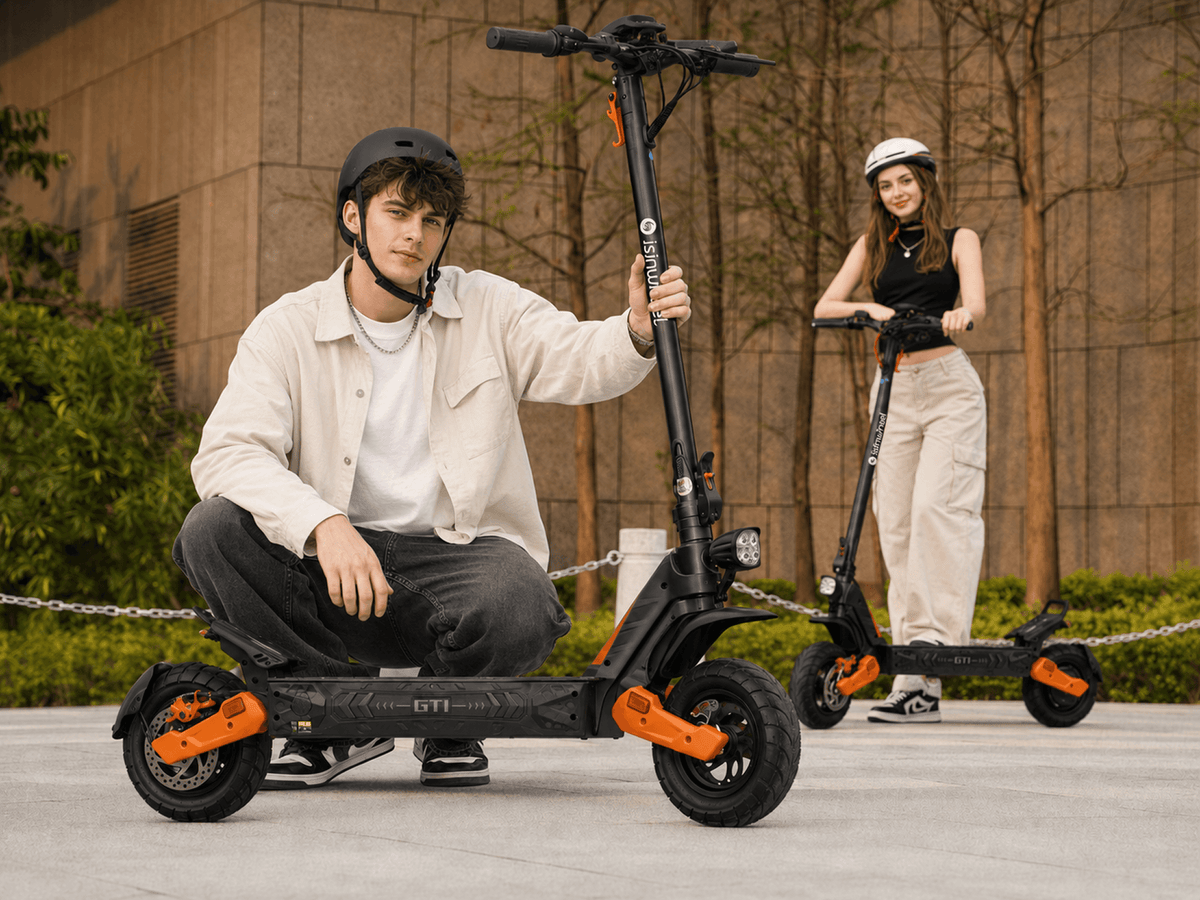
If you ride mostly packed dirt, gravel roads, and cracked pavement, you do not need the same machine as someone hitting steep climbs and repeated rough impacts. A durable off-road electric scooter for light exploration should stay stable, predictable, and easy to manage. On the other hand, a best off-road scooter for trails needs stronger acceleration, better bump control, and more confidence when surfaces turn loose or uneven.
A simple way to choose is to start with terrain severity. Light mixed riding rewards balance. Repeated hills, heavier riders, or long rough routes reward motor headroom and larger running gear. The table below keeps the main differences visible before we break each scooter down.
Quick comparison table
| Dimension | GT4 | GT2 Pro | GT2 | GT1 | Off-Road Collection |
|---|---|---|---|---|---|
| Motor power | 1200W x2 | 1200W | 1000W | 800W x2 | Entry to flagship |
| Top speed | 45 MPH | 32 MPH | 28 MPH | 32 MPH | 28-45 MPH |
| Max range | 50 miles | 38 miles | 37 miles | 35 miles | 35-50 miles |
| Battery | 52V 18.2Ah | 48V 15.6Ah | 48V 15Ah | 48V 13Ah | Varies by model |
| Tire size | 12 in | 11 in | 11 in | 10 in | 10-12 in |
| Suspension | Hydraulic front/rear | Dual hydraulic | Shock suspension | Dual suspension | Varies |
| Net weight | 73.6 lbs | 59.74 lbs | 53 lbs | 73 lbs | 53-73.6 lbs |
| Max load | 330 lbs | 330 lbs | 330 lbs | 330 lbs | Up to 330 lbs |
| Best use | Harsh terrain | Mixed use | Beginner off-road | Value dual-motor | Compare rider levels |
| Limitations | Heavy to carry | Less extreme than GT4 | Lower top end | Heavy for its class | Specs overlap |
GT4 sets the high-performance benchmark

If your riding includes steep grades, loose surfaces, and you want the most headroom in this lineup, the GT4 is the clearest answer. The GT4 2400W Dual Motor Off-Road Electric Scooter lists dual 1200W motors, a 52V 18.2Ah battery, up to 50 miles of range, a 45 MPH top speed, 12-inch off-road tires, hydraulic suspension, a 330-pound max load, and a 73.6-pound net weight. Those numbers place it firmly at the hard-use end of this internal comparison.
That performance matters most when the ground fights back. Dual motors give you better climbing confidence and less strain when you ride on rougher grades or carry more body weight. The 12-inch tires also add rollover ability, which means the scooter handles holes, rocks, and broken edges with less abrupt feedback than smaller-wheel options. The tradeoff is obvious: this rough terrain electric scooter is not the easiest one to carry upstairs, lift into a trunk, or stash in a tight apartment corner.
Shop: GT4 2400W Dual Motor Off-Road Electric Scooter
GT2 Pro balances power and price
Not every rider needs a flagship build. The GT2 Pro fits the middle ground well because it gives you true off-road features without jumping all the way to GT4 bulk. The isinwheel GT2 Pro Off Road Electric Scooter 2026 Upgraded Version lists a 1200W motor, a 38-mile range, a 32 MPH top speed, a 48V 15.6Ah battery, 11-inch pneumatic off-road tires, front and rear dual hydraulic suspension, a 330-pound load rating, and a 59.74-pound net weight.
On real mixed routes, this is the model that makes the most sense for many riders. You still get stronger acceleration than entry-level off-road scooters, but you avoid the major weight jump of the GT4. The 11-inch tires and hydraulic setup should feel more forgiving on gravel roads and broken pavement than smaller commuter-style hardware. If your week includes both pavement commuting and weekend trail use, the GT2 Pro offers one of the most balanced profiles in this durable off-road electric scooter lineup.
Shop: isinwheel GT2 Pro Off Road Electric Scooter 2026 Upgraded Version
GT2 keeps off-road entry costs lower
For riders who want a real electric scooter for gravel roads without stepping into heavier performance territory, the GT2 is the practical starting point. The isinwheel GT2 Off Road Electric Scooter 2026 Upgraded Version lists a 1000W motor, a 37-mile range, a 28 MPH top speed, a 48V 15Ah battery, 11-inch off-road pneumatic tires, shock suspension, a 330-pound max load, and a 53-pound net weight.
That spec sheet makes the GT2 easier to recommend to new off-road riders than many faster alternatives. It stays lighter than the GT2 Pro and much lighter than GT4, while still keeping the larger 11-inch tire format that helps on rougher ground. You do give up top-end speed and some suspension sophistication, so it is better for light trails, packed dirt, and rough urban surfaces than repeated aggressive riding. Still, for many buyers, that is exactly the right limit.
Shop: isinwheel GT2 Off Road Electric Scooter 2026 Upgraded Version
GT1 offers dual-motor appeal in the middle
Some riders care less about maximum range and more about punch off the line. That is where the GT1 gets interesting. The GT1 Dual Motor Electric Scooter lists 800W x2 dual motors, 35 miles of range, a 32 MPH top speed, a 48V 13Ah battery, 10-inch off-road tires, dual suspension, IPX4 water resistance, a 35% climbing ability figure, and a 73-pound net weight.
In other words, GT1 gives you dual-motor character without reaching GT4 territory. It should appeal to riders who want stronger launch feel and better hill support than a single-motor scooter usually delivers. However, it is also relatively heavy for its battery and tire size, so portability is not its advantage. Before choosing it over GT2 Pro, ask yourself whether you care more about dual-motor feel or a more modern balance of tire size, range, and total weight.
Shop: Gt1 Dual Motor Off Road Electric Scooter
The off-road collection covers different rider levels
Sometimes the best comparison is not one model versus another but understanding where each one sits in the lineup. The off-road electric scooter collection spans GT2, GT2 Pro, GT1, and GT4, which effectively creates a ladder from beginner-friendly mixed-surface options to flagship rough-use machines.
That lineup structure is useful because many buyers overbuy on power and underthink on weight. If you live upstairs, store the scooter indoors, or lift it often, a lighter model may stay in your routine longer than a flagship. On the other hand, if your routes include severe grades, repeated loose terrain, or heavier loads, buying too low can feel limiting within weeks. As a category map, the collection works well: GT2 is the accessible start, GT2 Pro is the balanced all-rounder, GT1 is the value-leaning dual-motor path, and GT4 is the performance ceiling.
Shop: Off Road Electric Scooter
Head-to-head: where do the differences matter most?
Once you narrow your shortlist, the next step is to compare the specs that actually change ride feel. Power affects climb recovery and acceleration. Tire size and suspension shape how the scooter handles ruts and washboard surfaces. Weight affects storage, trunk loading, and how tiring the scooter becomes before you even start riding.
There is also a safety angle here. CPSC has reported continuing injury patterns across micromobility products, and NHTSA notes that compliant helmet use is one of the most effective ways to reduce serious injury risk in crashes. So while this off-road scooter comparison focuses on hardware, your best fit should still include realistic speed choices, protective gear, and enough braking margin for the surfaces you ride.
Power and climbing confidence
GT4: With dual 1200W motors and a 45 MPH ceiling, GT4 is the strongest option here for steep climbs, heavier riders, and rough routes that sap momentum. It is the scooter most likely to feel unstressed when terrain gets harsher.
GT2 Pro: Its 1200W single motor gives it stronger all-around response than GT2 while keeping size and mass more manageable than GT4. For most mixed-use riders, it is the sweet spot between reserve power and day-to-day practicality.
GT2 and GT1: GT2 uses a 1000W single motor, while GT1 uses 800W x2 dual motors and lists up to 35% climbing ability. GT2 feels more beginner-oriented; GT1 is the more power-focused alternative if you want extra launch and hill support.
Best Fit: GT4 for demanding terrain, GT2 Pro for balanced real-world use, GT1 for riders who want dual-motor feel, and GT2 for easier learning curves.
Which model goes furthest?
GT4: GT4 leads this group at up to 50 miles, helped by its 52V 18.2Ah battery. That makes it the best choice for longer outdoor sessions or riders who do not want range anxiety on mixed terrain.
GT2 Pro and GT2: GT2 Pro reaches 38 miles and GT2 reaches 37 miles, which is close enough that route style matters more than the single-mile gap. For commuters and weekend explorers, both are practical if you do not need flagship performance.
GT1: GT1 trails slightly at 35 miles. That is still usable, but it is the shortest listed range among the dedicated models in this comparison.
Best Fit: GT4 if distance is a primary buying factor, GT2 Pro if you want strong range without flagship size, and GT2 if you want similar reach in a lighter, simpler package.
Ride comfort on broken ground
GT4: The GT4 pairs 12-inch off-road tires with hydraulic suspension, which should deliver the best rollover and bump isolation in this lineup. Bigger wheels usually smooth square-edge impacts better than smaller ones.
GT2 Pro: GT2 Pro stands out with 11-inch pneumatic tires and front/rear dual hydraulic suspension. It may not match GT4's outright terrain authority, but it is very well positioned for rough pavement, gravel, and moderate trail use.
GT2 and GT1: GT2 keeps 11-inch tires but uses shock suspension, while GT1 uses 10-inch off-road tires with dual suspension. Both can handle uneven surfaces, though they should feel less refined than the hydraulic-equipped options.
Best Fit: GT4 for the roughest surfaces, GT2 Pro for strong comfort without full flagship bulk, GT2 for light-to-moderate off-road riding, and GT1 for riders who prioritize motor character over wheel size.
Weight, portability, and storage
GT2: At 53 pounds, GT2 is the easiest model here to live with if you carry your scooter often. That matters more than many buyers expect after the first week.
GT2 Pro: At 59.74 pounds, GT2 Pro is still manageable for many adults, especially compared with heavier high-output scooters. It asks for some lifting effort, but not full flagship commitment.
GT4 and GT1: GT4 weighs 73.6 pounds and GT1 about 73 pounds, so both are better treated as powerful ride tools than easy carry options. If you store your scooter at ground level, that is less of a problem.
Best Fit: GT2 for portability, GT2 Pro for balanced weight and capability, GT4 for riders willing to trade convenience for performance, and GT1 only if its dual-motor appeal outweighs the carry penalty.
Best fit by use case, not just specs
Numbers help, but your buying decision gets easier when you picture the route. A best off-road scooter for trails is not automatically the best scooter for short mixed commutes. Likewise, a lighter electric scooter for gravel roads may stay in use more often because it is simpler to move, charge, and store.
Fastest choice for rough conditions
If your priority is raw terrain confidence, GT4 is the best fit. Its dual motors, 12-inch tires, 50-mile range figure, and hydraulic setup make it the most capable option for steep climbs and harsher surfaces. Choose it when performance matters more than portability.
Best fit for mixed-use riders
GT2 Pro makes the strongest all-round case. You get meaningful off-road comfort, useful 32 MPH performance, and more manageable weight than GT4. For many riders, this is the durable off-road electric scooter that best balances daily usability and weekend fun.
Beginner-friendly off-road starting point
GT2 is the easiest recommendation for riders entering the category. It is lighter, simpler, and still properly equipped with 11-inch off-road tires and a 330-pound load rating. If your routes are mostly gravel roads, park paths, and rough pavement, it covers the basics well.
Value-oriented dual-motor direction
GT1 fits the rider who wants dual-motor energy without stepping up to GT4. It is not the lightest or longest-range option, but it should feel punchy and capable on hills. Pick it if motor response matters more to you than storage convenience.
Conclusion

The right durable off-road electric scooter depends first on terrain severity, then on how much weight you are willing to manage off the scooter. If you regularly ride steep, rough, or loose surfaces, GT4 is the strongest fit in this lineup. If you want the best balance for commuting plus trails, GT2 Pro is the most rounded choice. If you are starting out or want a lighter electric scooter for gravel roads, GT2 is the easier place to begin, while GT1 serves riders who specifically want a dual-motor feel.
Your next move is simple: choose the harshest surface you ride every week, then buy one level above that need rather than chasing the biggest spec sheet. That approach usually gives you better long-term satisfaction and more realistic control margin. If you want to compare the full ladder side by side, start with the iSinwheel off-road lineup and narrow your choice by weight, tire size, and motor output before anything else.
FAQ
How do I select an electric scooter for outdoor adventures and rough terrain for $800 or less?
For this budget range, focus first on 10- to 11-inch pneumatic tires, real suspension, disc braking, and at least a 1000W-class motor if you expect hills or gravel. Within this lineup, Isinwheel GT2 is the most direct starting point because it combines 11-inch off-road tires, shock suspension, and a 53-pound weight that is easier to manage than heavier performance models. If your riding is mostly light trails and rough pavement, that type of setup is usually smarter than paying for top-end speed you will rarely use. Also check replacement-part availability and total scooter weight before you buy.
What’s the most durable electric scooter for off-road conditions?
The most durable choice in this lineup for repeated rough use is the GT4 because it combines dual 1200W motors, 12-inch tires, hydraulic suspension, and a 330-pound load rating. That kind of spec package gives you more power reserve and better bump control when the route includes loose terrain, steeper grades, or heavier loads. The tradeoff is that it weighs 73.6 pounds, so daily carrying is less convenient. If your terrain is only moderate, a mid-tier model can still be the better long-term fit.
How does an off-road electric scooter under $800 compare to an e-bike for adventure?
An off-road electric scooter under $800 is usually the better choice for portability, easy storage, and short adventure rides on mixed terrain. Compared with an e-bike, it is quicker to fold, easier to carry, and often more convenient for trips in the 5 to 15 mile range. An e-bike is typically better for longer outings, seated comfort, and more stable handling on rough ground because of its larger frame and wheels. If your priority is compact convenience, go with the scooter; if you want greater endurance and less fatigue on tougher trails, the e-bike is the stronger option.
What’s the best-value electric scooter for light off-road exploration?
For light off-road exploration, GT2 is the clearest value answer if you want to keep weight reasonable and still get 11-inch off-road tires and a 37-mile range figure. If you want a noticeable comfort and performance upgrade, Isinwheel GT2 Pro is the step-up option because it adds hydraulic suspension and a stronger 1200W motor. The better value depends on whether your route is mostly packed dirt and gravel or includes more hills and rough impacts. Buy based on terrain difficulty, not just motor numbers.
How do I ensure my off-road scooter is safe for rough terrain without spending too much?
Start with the hardware that most affects control: pneumatic tires, working suspension, front and rear disc braking, and bright lighting with brake indication. Then match your speed to the surface, because loose gravel and broken pavement can make even a stable scooter feel unsettled if you over-ride conditions. A mid-range off-road model is often enough if it gives you proper tire size and braking instead of cosmetic extras. You should also wear a certified helmet and test braking on an empty surface before your first longer ride.
What should I look for in a commuter scooter versus an off-road scooter for beginners?
A beginner commuter scooter should emphasize lighter weight, easy folding, and smooth behavior on pavement at moderate speed. A beginner off-road scooter needs larger pneumatic tires, more suspension travel, a wider stance, and better braking confidence on loose or uneven surfaces. The common mistake is choosing by advertised top speed instead of ride stability on your actual ground. If most of your trips stay on streets with only occasional rough patches, start closer to a commuter setup; if gravel and broken pavement are routine, start with an off-road model like GT2.
Table of Contents
- Which durable off-road electric scooter actually fits your terrain?
- Which scooter matches your terrain and riding style?
- GT4 sets the high-performance benchmark
- GT2 Pro balances power and price
- GT2 keeps off-road entry costs lower
- GT1 offers dual-motor appeal in the middle
- The off-road collection covers different rider levels
- Head-to-head: where do the differences matter most?
- Best fit by use case, not just specs
- Conclusion
-
FAQ
- How do I select an electric scooter for outdoor adventures and rough terrain for $800 or less?
- What’s the most durable electric scooter for off-road conditions?
- How does an off-road electric scooter under $800 compare to an e-bike for adventure?
- What’s the best-value electric scooter for light off-road exploration?
- How do I ensure my off-road scooter is safe for rough terrain without spending too much?
- What should I look for in a commuter scooter versus an off-road scooter for beginners?

Share:
A Comprehensive Guide to Finding Safe and Reliable Electric Scooters for Daily Riding
Dual vs. Single Motor for Hills: Torque, Weight, and Real Tradeoffs