


Introduction
A morning school run can feel simple until you add one worry: safety. Daily riding puts real demands on Electric Scooters, especially when the rider is still building balance, braking habits, and traffic awareness.
This how-to guide gives parents a practical checklist you can use in one shopping session. You will learn how to match rider fit, set speed limits, check braking and tires, confirm real-world range, and lock in visibility basics.
Because many families also compare other green options like Electric Bikes and Electric Skateboards, you will see quick decision cues for eco-friendly transportation and green commuting solutions across a few common routes.
Official Site: iSinwheel
How to Choose Electric Scooters Step by Step
Step 1: Set rider fit and limits

Start with fit, because a scooter that is too big or too heavy makes every other safety feature harder to use.
- Check the max load rating and leave margin. A scooter rated to 264 lb (120 kg) can handle growth, a heavy backpack, and small bumps without feeling strained.
- Check the standing space. A wider deck helps a child place both feet flat and adjust stance during turns.
- Check overall dimensions and carry weight. If the scooter weighs around 49.2 lb, an adult will usually handle stairs and trunk loading, not the child.
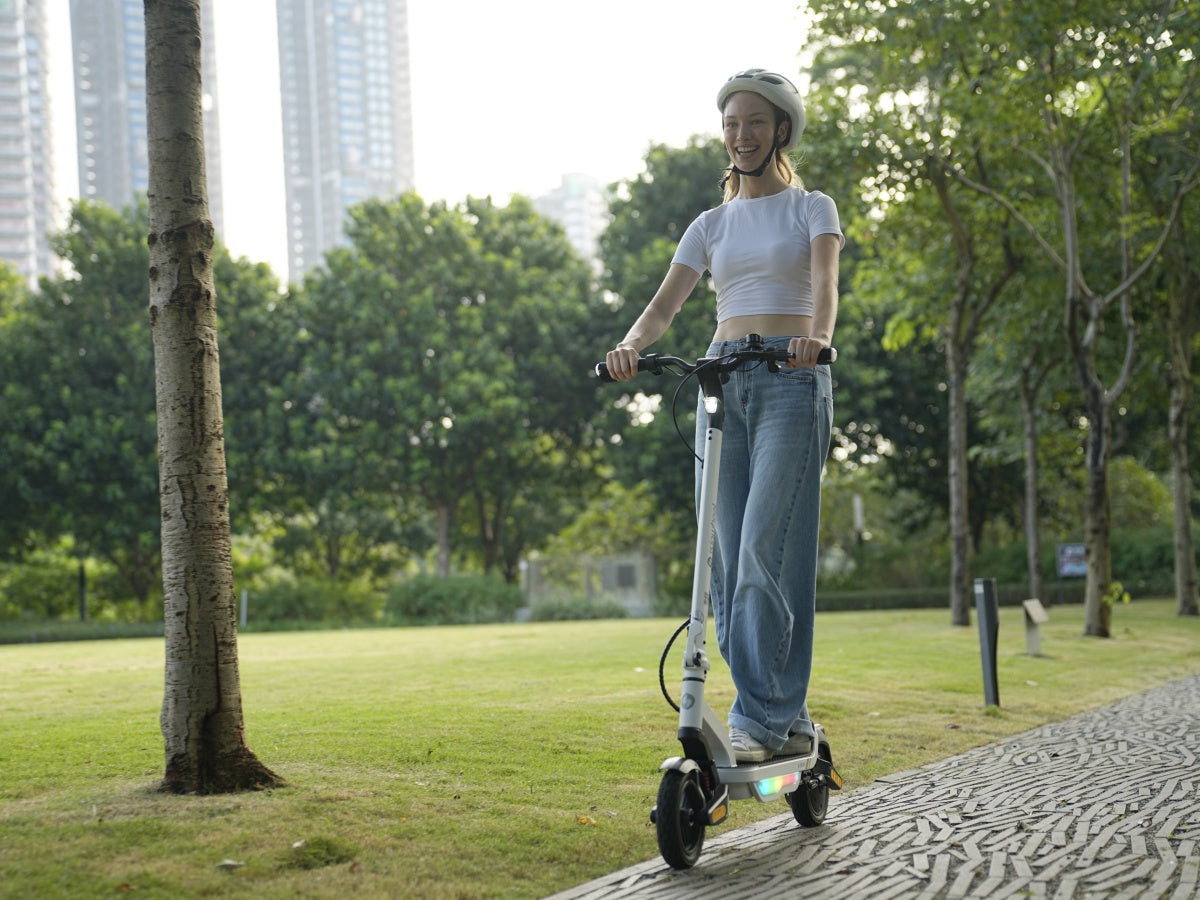
For a parent-friendly family setup, the iSinwheel S Nova Commuting Electric Scooter provides a stable base: aluminum alloy frame, 264 lb max load, and full-size geometry that reduces twitchy steering. Use the deck grip and stance space to teach a simple rule: one foot forward, knees soft, eyes up.
Shop: S Nova Commuting Electric Scooter
Step 2: Cap speed and power

Many parents search for the best electric scooters for commuting, but a child commuter needs controlled speed before they need peak performance.
- Pick ride modes with a lower cap. Start in the slowest mode for the first week, then move up only after your child can stop smoothly and signal turns.
- Avoid surprise acceleration. A steady throttle curve matters more than headline top speed.
- Match power to route. Small hills still require enough motor to avoid stalling in intersections.
The iSinwheel S Nova lists 500W rated / 600W max motor output and up to 20 MPH top speed, with an app-based lock method and a smart display for ride mode visibility. For daily school runs, use the lowest mode on sidewalks or shared paths, then reserve higher modes for supervised practice in an empty parking lot.
Shop: S Nova Commuting Electric Scooter
Step 3: Prioritize braking and tires

Braking and traction decide whether a mistake becomes a close call or a fall. This is the core of electric scooter safety features.
- Require predictable brakes. Disc brakes give strong stopping power, but they must feel smooth at the lever.
- Choose pneumatic tires for daily comfort. Air-filled tires absorb cracks and reduce hand fatigue.
- Look for suspension if your route is rough. Sidewalk seams and curb cuts are where kids lose control.
The iSinwheel S Nova includes front and rear disc brakes, 8.5-inch pneumatic tires, and dual suspensions. That combination helps shorten stopping distance on typical neighborhood pavement and reduces skids when a child brakes late.
A simple parent test before buying: roll the scooter forward by hand, then squeeze the brake lever. The wheel should stop without a gritty feeling or a long lever pull.
Shop: S Nova Commuting Electric Scooter
Step 4: Verify battery range and charging
Daily riding fails when range is only true on perfect days. You want enough buffer for wind, hills, and cold mornings.
- Map the real route. Add detours (after-school pickup, friends house) and plan for at least 20% buffer.
- Check charge time against your schedule. A scooter that recharges in 4 to 5 hours can recover between school and dinner.
- Confirm battery certification and protections. Look for clear notes on certified battery packs and basic protection features.
The iSinwheel S Nova uses a 36V 7.8Ah battery, with a listed 19-mile max range and 4 to 5 hour charging time. For electric transportation for families, that works well for short daily loops where you charge overnight and top up after school if needed.
If your child rides in winter, expect range to drop. Keep battery management simple: charge after the ride, store indoors, and avoid leaving it fully empty for long periods.
Shop: S Nova Commuting Electric Scooter
Step 5: Demand visibility and safety basics

Visibility is not just for night rides. Even daytime school runs include parked cars, driveway exits, and shaded corners.
- Use a bright headlight every ride, even during the day, to create contrast.
- Prefer turn signals for street crossings so your child is not relying on hand signals alone.
- Add a consistent helmet rule. The U.S. Consumer Product Safety Commission noted studies showing bicycle helmets can reduce head injuries by up to 85%. (cpsc.gov)
The iSinwheel S Nova includes headlight, turn light, and ambient light. Teach one simple routine: lights on, check both brakes, then ride.
Shop: S Nova Commuting Electric Scooter
Adapting Electric Scooters for Different Scenarios
- Short sidewalks and tight school drop-off zones: Choose lighter-feeling steering and keep speed capped. A scooter for urban commuting should prioritize easy starts, easy stops, and calm acceleration over speed.
- Busy streets and frequent crossings: Prioritize turn signals, bright lighting, and a deck that supports quick stance changes. This is where electric mobility solutions must be predictable.
- Hilly routes: Look for enough motor output to hold steady speed uphill without wobbling. Strong brakes matter more on the way down.
- Rainy climates: Check water resistance (for example, IPX4) and use fenders if available. Reduce speed and increase following distance, because wet pavement extends braking distance.
What You Will Need Before You Start
Required Tools and Materials
- Certified helmet that fits snugly and sits level.
- Wrist guards plus knee and elbow pads for beginners.
- Closed-toe shoes with non-slip soles.
- Small hand pump for pneumatic tires.
- Basic lock for quick stops.
- Charged phone (if your scooter uses an app for locking or settings).
For daily parking outside school or at after-school activities, a dedicated scooter lock helps reduce theft risk. The iSinwheel U Lock - Heavy Duty Security Scooter Lock for Electric Scooter is designed as a U-lock plus cable combo, which makes it easier to secure both the frame and a wheel to a rack.
Shop: U Lock - Heavy Duty Security Scooter Lock for Electric Scooter
Safety Considerations
- Practice first in a no-traffic area: starts, stops, and tight turns.
- Teach the two-brake habit: apply both brakes smoothly, not a sudden grab.
- Do a 30-second pre-ride check: tires firm, brakes bite, lights on, folding latch locked.
- Treat range as a safety feature: avoid routes that risk a battery shutdown mid-ride.
- Helmet use matters. The U.S. National Highway Traffic Safety Administration summarizes evidence showing bicycle helmets reduce head injuries by 48% (meta-analysis). (nhtsa.gov)
Troubleshooting Guide
| Problem | Cause | Solution |
|---|---|---|
| Wobble at speed | Rider stance too narrow, speed too high for skill level | Lower speed mode, widen stance, bend knees, and practice straight-line starts for 10 minutes daily |
| Range feels too short | Cold weather, hills, underinflated tires | Charge fully, keep battery stored indoors, inflate tires to the recommended pressure, and shorten the route until confidence improves |
| Brakes feel weak | Pads need adjustment, contaminated rotor, cable stretch | Test brakes before riding, clean rotors, and schedule a brake inspection if lever pull is long or inconsistent |
| App will not connect | Bluetooth off, low phone battery, pairing issue | Restart phone Bluetooth, power-cycle scooter, and re-pair in a quiet area away from many devices |
| Scooter feels harsh on bumps | Tires low, route too rough | Inflate tires, reduce speed over cracks, and choose a route with fewer curb cuts |
Conclusion
Choosing Electric Scooters for a child is mostly about control. Fit and speed limits help your child learn, while brakes, tires, and lights prevent small mistakes from turning into injuries.
Re-check your route and riding habits each season. Short winter days and wet pavement can change what counts as safe.
Official Site: iSinwheel
FAQ
How do I choose an daily electric scooter for my child? Choose a scooter that matches your childs height and has enough deck space for a stable stance. Then cap the top speed using ride modes so your child can practice braking and turning without feeling rushed. Prioritize disc brakes and pneumatic tires because they help with predictable stopping and grip. Finally, require lights and a helmet routine for every ride, not only at night.
How to pick a safe and reliable electric scooter? Start with build fundamentals: a sturdy frame, a folding latch that locks firmly, and a weight rating that leaves extra margin. Next, check braking feel at low speed and confirm the tires match your surfaces, since slick tires or hard tires increase skid risk. Look for clear battery specs and a charging time that fits your daily schedule. Before a child rides solo, do a week of supervised practice and a short pre-ride inspection routine.
What are the key safety features I should look for in a family scooter under $500? Look for strong, easy-to-modulate brakes, bright front lighting, and turn signals or reflectors for visibility. A wide anti-slip deck helps beginners recover balance during turns and quick stops. Pneumatic tires and some suspension reduce jolts, which makes steering more stable for lighter riders. Also confirm that speed modes include a slow setting around walking or jogging pace for early training.
What factors should I consider when choosing an electric scooter? Consider rider fit first, then match top speed to skill level and local riding rules. Next, evaluate real-world range by mapping your actual route and adding a 20% buffer for wind and hills. Braking type, tire grip, and water resistance matter because they change stopping distance in everyday conditions. Storage and carrying also matter, so check folded size and whether an adult can lift it safely.
What features are essential when choosing an electric scooter? Essential features include reliable brakes, tires that grip your typical pavement, and lighting that makes the rider visible in shade and dusk. A stable deck and predictable throttle response help beginners avoid sudden wobbles. A clear display that shows speed and battery reduces guesswork and helps you set rules. For family use, quick folding and a solid lock point make daily routines easier.
How to ensure safety while commuting on a beginner-friendly electric scooter? Start with protective gear and limit speed for the first 5 to 10 rides while your child learns smooth braking. Practice a fixed route in daylight before adding intersections, crowds, or early-morning darkness. Teach scanning habits: look ahead 20 to 30 feet, slow near driveways, and never pass a parked car closely. Replace worn tires and adjust brakes early, because beginners need extra stopping power and predictable handling.



Share:
5 Steps to Select an Electric Scooter for Outdoor Adventures and Rough Terrain 2026
3 Durable Electric Scooters for Off-Road Conditions for Beginner (Tested & Rated)