



The Ultimate Guide to Durable Off-Road Electric Scooters — Which Budget Models Actually Hold Up?
Which kind of rough terrain are you actually buying for?
Rough terrain does not destroy a budget scooter by accident; it usually exposes a bad match between your route and the hardware under your feet. The biggest mistakes happen when riders shop by top speed alone, then expect a commuter-style setup to stay calm on gravel, cracked pavement, or repeated hills. If you want a durable off-road electric scooter without wasting money, the smarter move is to define the hardest part of your week first and let that section decide the class of scooter you need.
That matters even more in the budget range, because an off-road electric scooter under $800 has to balance power, comfort, braking, and portability instead of maxing out every spec. Many riders do not need an extreme trail machine. They need a durable electric scooter for rough terrain that can survive weekday commuting, park paths, rough shoulders, and light gravel without becoming annoying to carry, charge, or maintain.
Step 1: Map the real riding mix before comparing models
Before you compare names and numbers, split your normal week into surfaces and slopes. This is the fastest way to tell whether you need a commuter-first scooter, a mixed-use crossover, or a more trail-leaning setup.
What to do
- Estimate your weekly miles on smooth pavement
- Note how much cracked pavement you ride
- Mark any gravel, compact dirt, or park trails
- Record your steepest regular hill
- Include your body weight and typical gear load
Why this matters
- The roughest regular section should drive your choice
- Gravel and hills punish weak tires and motors fast
- A scooter that feels fine downtown may feel unstable on shoulders
- Your route mix decides whether a beginner off-road scooter is enough
Common mistake
- Buying for the easiest half of the route instead of the roughest half
Step 2: Define what “holds up” means in this price band
In this category, durability should mean dependable control, repeatable comfort, and hardware that matches light off-road use. It does not mean deep mud, repeated curb impacts, or aggressive downhill trail riding. Recent iSinwheel guidance makes the same point repeatedly: the best-value mixed-terrain scooters are the ones that balance traction, suspension, braking, and manageable ownership instead of chasing extreme performance claims. That is the right lens for a budget off-road electric scooter.
What to expect from a good budget model
- Stable handling on broken pavement
- Predictable grip on shallow gravel
- Enough motor support for moderate hills
- Braking that feels confident on descents
- Tires and suspension that reduce ride harshness
What not to expect
- Mountain-bike-level trail abuse tolerance
- Repeated hard landings without wear
- Deep sand or loose rock confidence
- Long-range high-speed riding on rough surfaces
Step 3: Build the decision around tires, suspension, and braking first
If you remember only one buying rule, make it this one: comfort and stopping confidence matter more off-road than chasing a few extra MPH. For mixed terrain, iSinwheel’s own buying content points buyers toward 10-inch or larger pneumatic tires, suspension support, and disc braking with electronic braking help as the practical core of a durable off-road electric scooter.
What to prioritize
- 10-inch or 11-inch pneumatic tires
- Off-road tread or mixed-terrain tread
- Front and rear suspension, ideally dual suspension
- Front and rear disc brakes with EABS
- Adequate deck space for stable stance
Why this matters
- Pneumatic tires absorb sharp edges better than hard tires
- Suspension helps keep the scooter composed on cracked roads
- Disc brakes hold up better on descents and loose surfaces
- Better control reduces fatigue during longer mixed-surface rides
What to watch
- Narrow commuter tires on gravel
- Minimal suspension on washboard pavement
- Brake setups that feel vague at speed
How do you match power and climbing to your actual riding load?
Motor output looks simple on a spec sheet, but the real question is how often you need reserve power. A lighter rider on flat park paths can enjoy a beginner off-road scooter with moderate output. A heavier rider carrying a backpack through hilly suburbs will feel the difference immediately. That is why mixed-use buying guides from iSinwheel keep pushing buyers to compare weight, hills, and loose-surface starts instead of reading speed claims in isolation.
Step 4: Match motor output and hill support to rider reality
For light off-road use, the practical target band is usually around 800W to 1200W. That range covers most riders who want an electric scooter for gravel and park trails, rough pavement, and moderate hills without stepping into oversized performance scooters.
A simple power guide
- Around 800W: best for lighter riders, flatter mixed routes, and entry crossover use
- Around 1000W: strong sweet spot for commuting plus park-path riding
- Around 1200W: better for steeper suburbs, heavier riders, and more frequent gravel climbs
- Dual motors: useful when launch feel and hill starts matter more than portability
Real iSinwheel examples
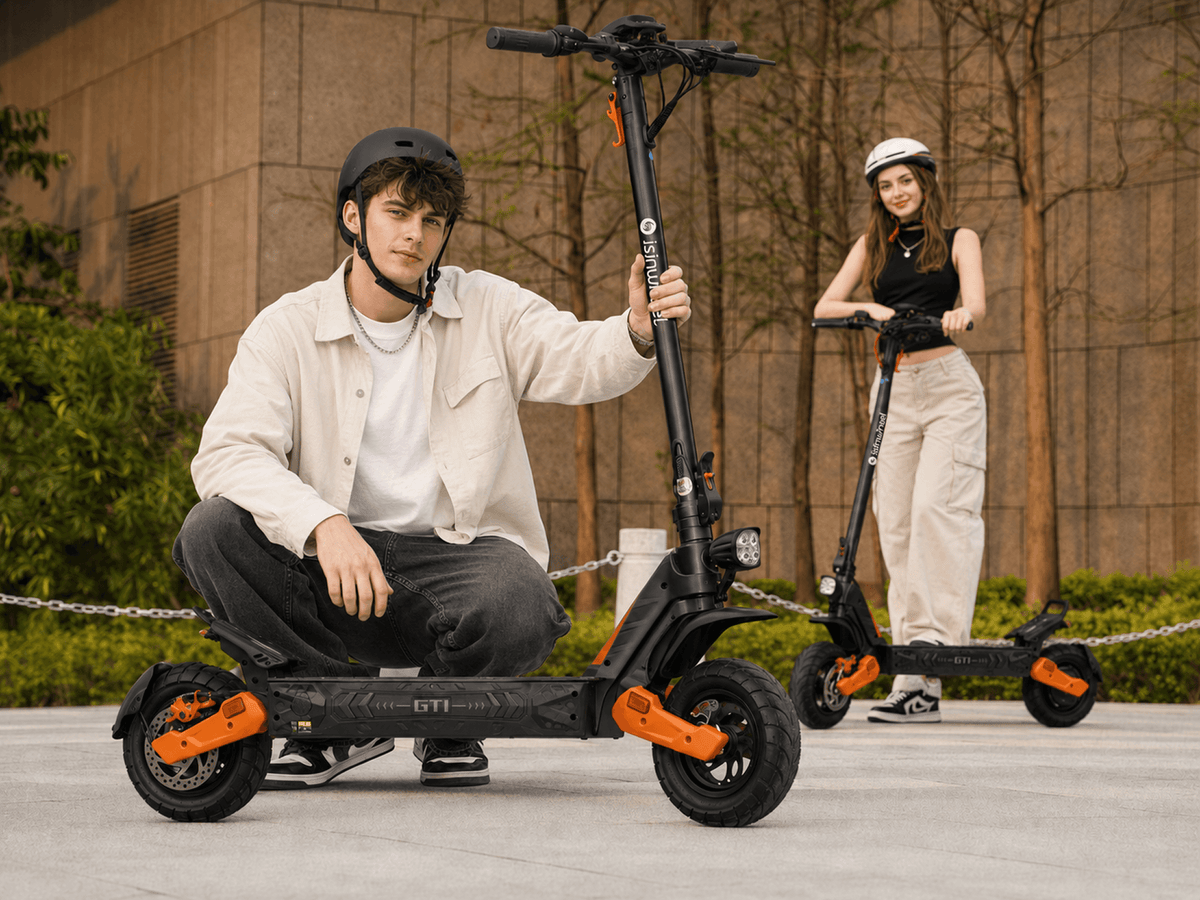
The iSinwheel GT1 sits at the entry mixed-surface end with an 800W rated motor, 28 mph top speed, 28-mile range, 10-inch off-road pneumatic tires, front and rear EABS plus disc brakes, IP54 water resistance, and a 52.25-pound weight. That makes it easier to manage than heavier dual-motor options if your route includes rough sections but not constant steep climbing.
Shop: iSinwheel GT1
The iSinwheel GT1 Dual Motor Electric Scooter is the stronger crossover choice if you need more hill confidence. It lists dual 800W motors, a 48V 13Ah battery, 35 miles of range, 32 mph top speed, 10-inch off-road tires, EABS plus disc brakes, up to 35% climbing ability, and a 73-pound net weight. That extra output helps on loose starts and inclines, but you give up daily portability.
Shop: iSinwheel GT1 Dual Motor Electric Scooter
Which scooter category actually fits your route best?
Many shoppers ask for the most durable electric scooter for off-road conditions when what they really need is a scooter that spends 70% of its life on pavement and 30% on rougher ground. Sorting by use-case bucket is more useful than sorting by ad copy, because it stops you from overbuying a heavy machine or underbuying a fragile one.
Step 5: Choose the right use-case bucket instead of the flashiest ad copy
Use these three buckets to narrow fast. Once you know your bucket, the candidate models make much more sense.
Commuter-first with occasional rough sections
This bucket fits riders who mainly use streets, bike lanes, or campus paths and only touch dirt or gravel sometimes.
- Priorities: lower weight, easier folding, stable pavement handling
- Best fit: lighter mixed-use design, not a heavy trail scooter
- Competitor framing: this is where models from NIU or commuter-biased Segway lines often make sense, but they are usually more road-centered than trail-centered
Mixed-use sweet spot
This is the best-value electric scooter for light off-road exploration category for most readers. You commute during the week, then ride hard-packed park paths, rough pavement, or shallow gravel on weekends.
- Priorities: 10-inch or 11-inch pneumatic tires, suspension, solid brakes, enough power for hills
- Best fit: balanced scooter with usable range and manageable weight
- Competitor framing: some GOTRAX models chase value here, while Segway often leans more polished for pavement use
The iSinwheel GT2 Off Road Electric Scooter 2026 Upgraded Version is the cleanest match for this bucket. It is listed with a 1000W motor, 37-mile range, 28 mph top speed, 48V 15Ah battery, 11-inch off-road pneumatic tires, shock suspension, a 330-pound max load, and about 53 pounds of weight. That combination is why recent iSinwheel buying content keeps framing GT2 as the balanced commuting-plus-park-path choice.
Shop: iSinwheel GT2 Off Road Electric Scooter 2026 Upgraded Version
Trail-leaning budget value
This bucket is for buyers near the top of the budget cap who want more hill margin, more comfort on rough pavement, and more confidence on gravel.
- Priorities: stronger motor, larger tires, better suspension
- Best fit: higher-output single-motor scooter or a heavier crossover
- Tradeoff: less apartment-friendly than simpler scooters
The iSinwheel GT2 Pro Electric Scooter is the stronger direction here. It lists a 1200W motor, 38-mile range, 32 mph top speed, 48V 15.6Ah battery, 11-inch off-road pneumatic tires, front and rear dual hydraulic suspension, front and rear disc brakes plus EABS, IP54 water resistance, and a 59.74-pound net weight. That gives it better gravel and hill headroom than the GT2 while staying far more manageable than a true high-power off-road class.
Shop: iSinwheel GT2 Pro Electric Scooter
What ownership checks protect your budget after purchase?
A scooter can look durable on paper and still become a bad purchase if it is too heavy to carry, too awkward to store, or too demanding for your routine. That is why ownership durability matters almost as much as ride durability. If you live upstairs, ride short mixed trips, or store the scooter in a trunk, 20 extra pounds can change how often you actually use it.
Step 6: Check ownership durability, not just riding specs
A practical pre-buy check saves more regret than another hour of spec comparison.
What to check before you buy
- Net weight versus your carrying ability
- Folded size versus apartment, office, or trunk space
- Tire type and how easy it is to maintain pressure
- Brake adjustability and pad replacement access
- Lighting for dusk rides and rough shoulders
- Brand support path and spare-part clarity
Why this matters
- A 52-pound scooter feels very different from a 73-pound scooter upstairs
- Underinflated pneumatic tires wear faster on rough terrain
- Mixed-use riders rely on brakes more often than flat-lane commuters
- Storage friction is a major reason “durable” scooters get underused
Quick ownership comparison
- GT1: lighter entry mixed-surface choice
- GT1 Dual: stronger hill and launch support, but much heavier
- GT2: best overall balance for most mixed-use riders
- GT2 Pro: best extra margin before weight gets truly cumbersome
What safety and maintenance habits make a budget scooter last longer?
Even the best hardware will feel worse on rough terrain if you skip the simple checks. Safety and upkeep are not separate topics here; they directly affect traction, braking, range, and comfort. The U.S. Consumer Product Safety Commission reported thousands of micromobility injuries in recent years, and helmet use in incident studies remained low, which is a reminder that scooter safety still starts with basic protective habits and realistic terrain choices. (cpsc.gov)
Before every rough-terrain ride
A two-minute check is usually enough.
What to do
- Wear a properly fitted helmet
- Check tire pressure before gravel or rough pavement
- Test both brakes at low speed
- Confirm the folding mechanism is locked
- Verify front and rear lights work
- Reduce speed before loose surfaces, not after entering them
Why this matters
According to the CPSC, micro mobility injuries remain a significant safety issue, and many injured riders were not reported as wearing helmets. Meanwhile, NHTSA continues to stress properly fitted helmets and visibility measures for vulnerable road users, both of which translate directly to e-scooter riding in mixed traffic and shared paths.
Troubleshooting common mixed-terrain problems
| Problem | Cause | Solution |
|---|---|---|
| Scooter feels unstable on gravel | Narrow tires, low PSI | Use 10-11 inch pneumatics |
| Hills drain battery quickly | Underpowered setup | Move up power class |
| Ride feels punishing | Minimal suspension | Choose dual suspension |
| Braking feels weak downhill | Basic brakes, wear | Disc plus EABS, inspect pads |
| Scooter gets ignored | Too heavy, awkward | Reassess weight and storage |
What to watch over time
- Keep tires inflated to the maker’s guidance
- Inspect brake pads and rotor feel regularly
- Clean grit from folding joints and deck edges
- Charge before long storage gaps
- Expect real-world range to drop on hills, cold weather, and loose terrain
How should you make the final choice?
At this point, the answer is usually clearer than it looked on page one. The best durable off-road electric scooter is not the most aggressive-looking model. It is the one built for the mixed terrain you ride often, with enough tire, suspension, braking, and motor support to stay calm without becoming a burden in daily life.
A simple recommendation path
- Choose iSinwheel GT1 if you want a lighter entry route into mixed-surface riding
- Choose iSinwheel GT1 Dual if loose-surface starts and hill support matter most
- Choose iSinwheel GT2 if you want the best-value electric scooter for light off-road exploration and weekday commuting
- Choose iSinwheel GT2 Pro if you want more gravel, hill, and comfort margin near the top of the budget
For most buyers shopping for an off-road electric scooter under $800, the mixed-use middle is the smartest place to land. That is why GT2 is the strongest all-around direction, while GT2 Pro makes more sense when your route is rougher or hillier and GT1 or GT1 Dual fit better when your decision turns on portability versus torque.
Shop: iSinwheel Electric Scooters
FAQ
How do I select an electric scooter for outdoor adventures and rough terrain for $800 or less?
Pick for the roughest section you ride every week, not the smoothest one. In this budget, focus first on 10-inch or larger pneumatic tires, suspension, dependable disc braking with electronic assist, and enough motor output for your steepest regular hill. iSinwheel is a strong direction here because its lineup clearly separates lighter mixed-use choices from stronger crossover models. If you need better hill support and rough-surface control, the GT1 Dual is the clearest crossover candidate, while the GT1 is the simpler entry choice for lighter-duty mixed terrain.
What’s the most durable electric scooter for off-road conditions?
For off-road conditions, the most durable electric scooter is usually the one with large pneumatic tires, strong suspension, reliable brakes, and enough motor power to handle loose surfaces without strain. In this comparison, the iSinwheel GT2 Pro is the priority option for rougher terrain because its 11-inch pneumatic tires, hydraulic suspension, and 1200W output make it better suited to gravel, uneven pavement, and steeper climbs. If your riding is more mixed and only occasionally leaves smooth roads, the GT2 is the more balanced durable choice. The right pick comes down to how demanding your terrain is and how much scooter weight you are comfortable managing.
How does an off-road electric scooter under $800 compare to an e-bike for adventure?
An off-road electric scooter under $800 is usually easier to fold, store, and use for short mixed trips around town. An e-bike generally gives you more seated comfort, better endurance on longer rough-surface outings, and more body positioning options over broken ground. If your rides are local, compact, and storage-sensitive, a scooter is often the better match. If you plan longer adventure mileage on rough surfaces, an e-bike is usually the more comfortable platform.
How do I ensure my off-road scooter is safe for rough terrains without spending too much?
Start with the hardware that affects control the most: pneumatic tires, disc braking with electronic braking support, and real suspension. Then keep speeds realistic for gravel, inspect tire pressure often, and test brakes and folding hardware before longer rides. A helmet, lights, and visible clothing matter just as much as motor output when terrain gets loose or uneven. You do not need premium race-level parts; you need dependable traction, stopping confidence, and routine checks.
What’s the best-value electric scooter for light off-road exploration under $800?
The iSinwheel GT2 is the strongest value direction for most riders who want weekday commuting plus weekend park-path riding. Its 1000W output, 11-inch off-road tires, suspension support, and manageable weight put it in the sweet spot between entry-level compromise and heavier trail-leaning builds. If your route is milder and your budget is tighter, the GT1 is a reasonable lower-entry direction with a smaller capability envelope. If your hills are steeper or gravel appears more often, moving up to GT2 Pro is usually money better spent than chasing a flashy but less balanced alternative.
Table of Contents
-
The Ultimate Guide to Durable Off-Road Electric Scooters — Which Budget Models Actually Hold Up?
- Which kind of rough terrain are you actually buying for?
- How do you match power and climbing to your actual riding load?
- Which scooter category actually fits your route best?
- What ownership checks protect your budget after purchase?
- What safety and maintenance habits make a budget scooter last longer?
- How should you make the final choice?
-
FAQ
- How do I select an electric scooter for outdoor adventures and rough terrain for $800 or less?
- What’s the most durable electric scooter for off-road conditions?
- How does an off-road electric scooter under $800 compare to an e-bike for adventure?
- How do I ensure my off-road scooter is safe for rough terrains without spending too much?
- What’s the best-value electric scooter for light off-road exploration under $800?

Share:
Best-Value Electric Scooters for Light Off-Road Use — Where Cost-Performance Actually Meets the Trail
H7 Electric Scooter vs H7 Pro Electric Scooter: Which Commuter Scooter Is Right for You in 2026?