



How to Decide Between an Off-Road Scooter and an E-Bike for Outdoor Adventures
Which ride fits your trail plans better?
If you are choosing between an off-road scooter and an e-bike for outdoor adventures, the answer usually comes down to posture, terrain, and ride duration. A standing scooter gives you quicker body input and a more playful feel on short, technical sections. A seated e-bike usually gives you better long-range comfort, easier rollover on rough ground, and a more familiar learning curve. In iSinwheel’s lineup, that means the GT4 suits power-first trail fun, while the R6 Pro suits longer mixed-surface exploration.
That difference matters more than spec sheets suggest. Two rides can look close on speed and load capacity, yet feel completely different once you hit gravel, washboard dirt, or a steep access road. The wrong pick can leave you fighting fatigue, overcorrecting on loose turns, or wishing for more battery halfway through a day trip. So instead of asking which one is “better” in general, it is smarter to match the machine to how you actually ride.
Why this adventure choice gets tricky fast
At first glance, both categories promise outdoor freedom. The GT4 is a dual-motor off-road scooter with a 52V 18.2Ah battery, 12-inch off-road pneumatic tires, hydraulic disc brakes, dual hydraulic suspension, and a claimed top speed of 45 MPH with up to 50 miles of range. The R6 Pro is a seated fat-tire e-bike with a 48V 20Ah removable battery, 20×4.0-inch tires, full suspension, a claimed top speed of 35 MPH, and up to 105+ miles of range. Both support up to 330 lbs, so neither is a lightweight toy.
What makes the decision harder is that the riding feel changes faster than the numbers do. On a scooter, your feet stay planted on a deck and your arms do more stabilization work under braking, acceleration, and bumps. On an e-bike, the saddle and larger wheel diameter reduce that constant balancing effort. The result is simple: if your rides are short and active, the scooter can feel more exciting; if your rides are long and varied, the bike usually feels less demanding on your body.
GT4 is built for aggressive trail power

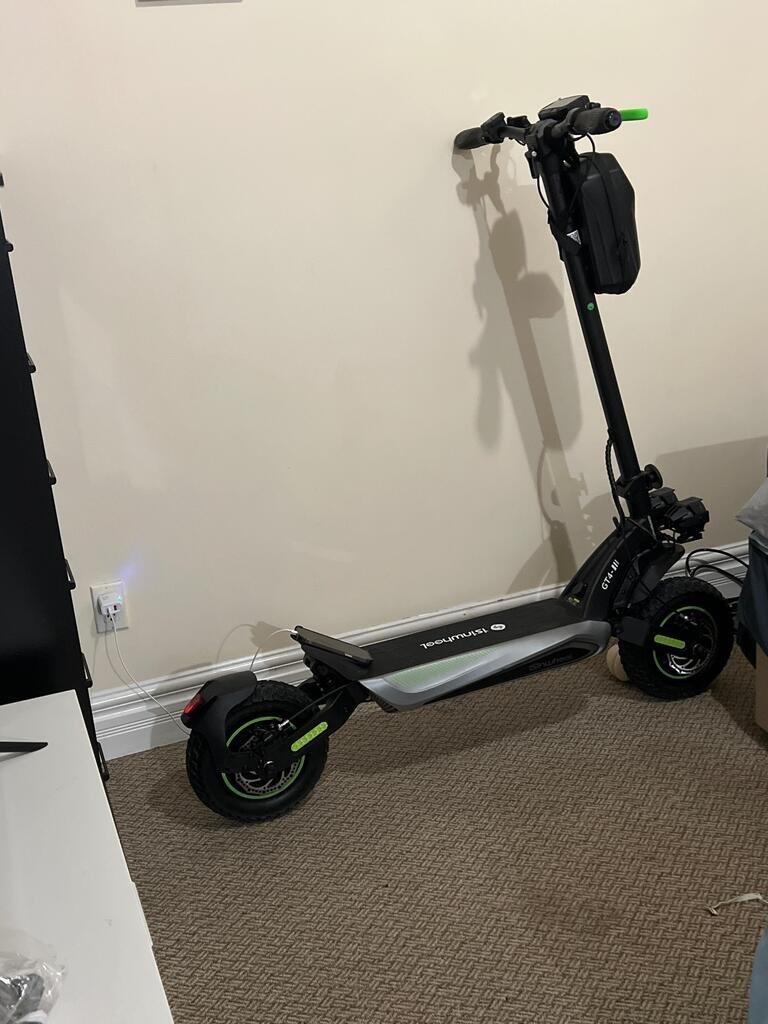
The GT4 is the more specialized adventure tool if your main goal is punch, steep-climb confidence, and quick reactions from a standing platform. Its dual 1200W motors combine for 2400W output, and iSinwheel rates it for up to 50% climbing ability. Add 12×2.75-inch off-road tires, dual swing arm style suspension, and hydraulic disc brakes, and you get a setup aimed at rougher surfaces and faster response when terrain changes suddenly.
In practice, that means the GT4 rewards active riders. You can shift weight quickly, unweight the front over bumps, and adjust your stance instantly in tight sections. However, the same traits can tire you out sooner on long rides because standing demands more leg and core input. The GT4 is also lighter than the R6 Pro at 73.6 lbs versus 92.2 lbs, which helps when loading, repositioning, or turning the machine around on a narrow path.
Shop: GT4 2400W Dual Motor Off-Road Electric Scooter
R6 Pro brings longer range and seated comfort
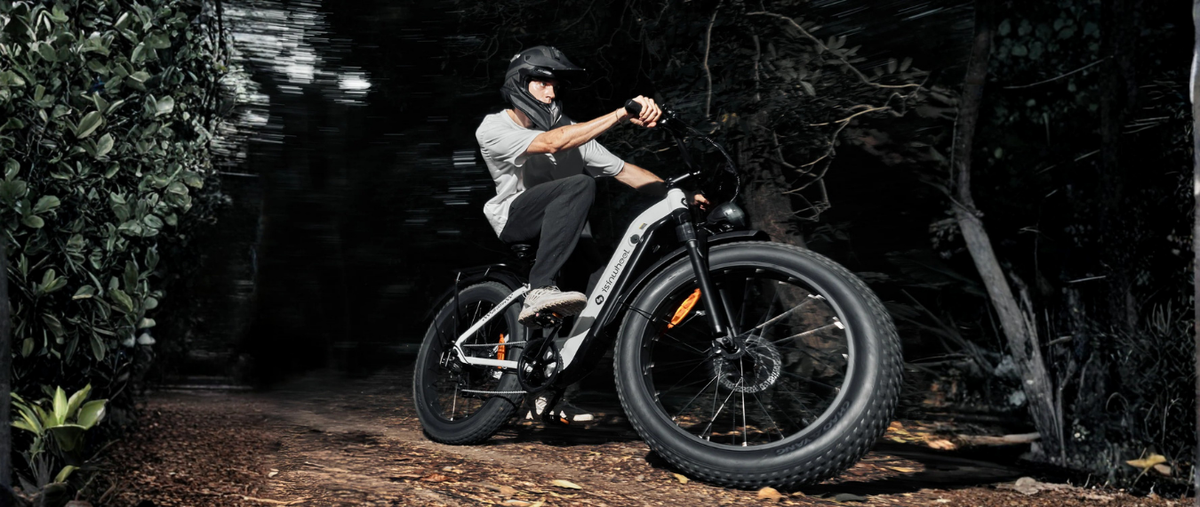
If your outdoor adventure means covering more ground with fewer recovery stops, the R6 Pro makes the stronger case. It uses a 1500W max-power setup, reaches up to 35 MPH, and pairs that with a 48V 20Ah removable battery rated for up to 105+ miles per charge. Its 20×4.0-inch fat tires, dual crown fork, and rear shock are built to smooth rougher surfaces while keeping the ride more settled over time.
That seated layout changes the whole experience. The bigger wheels roll over trail chatter more easily, and the saddle reduces lower-body fatigue on longer loops, campground runs, and mixed-road weekend rides. You also get a more familiar bicycle-style stance, which many riders find easier to control at low speeds or when the surface gets unpredictable. The tradeoff is bulk: the R6 Pro feels larger underneath you, and it will not pivot as sharply as the GT4 in tight, playful sections.
Shop: isinwheel R6 Pro 1500W Electric Dirt Bike
Which one handles loose terrain better?
Traction on gravel and dirt
For pure driven grip, the GT4 has the edge because both motors can help keep momentum when the surface loosens up. On gravel exits, dusty inclines, or chopped dirt, that extra drive can help the scooter feel more urgent and planted, especially when you are already comfortable shifting body weight. Its 12-inch off-road tires are also purpose-built for mixed terrain rather than basic commuting.
The R6 Pro answers with wheel size and tire volume. Its 20×4.0-inch fat tires create a broader contact patch and a calmer rollover feel when the trail is uneven. So while it may not feel as explosive, it often feels more forgiving. Best Fit: GT4 for traction-focused, technical fun; R6 Pro for steadier control when you want the bike to smooth out the surface instead of reacting sharply to it.
Climbing power on steeper routes
On steeper routes, the GT4 is the clearer climber on paper. iSinwheel rates it for up to 50% climbing ability, which lines up with its dual-motor design and stronger acceleration. That makes it the better choice if your routes include punchy hill sections, abrupt grade changes, or short, steep off-road climbs where immediate torque matters more than conserving energy.
The R6 Pro can still handle hills, but its advantage is not extreme climb focus. Instead, it spreads effort over a longer ride with a larger claimed range and a more relaxed riding position. Best Fit: GT4 if steep access roads and short climbs define the ride; R6 Pro if climbing is only one part of a longer exploration route.
Suspension and bump absorption
There is no simple winner here because the two suspension systems solve different problems. The GT4 uses dual hydraulic suspension to keep a standing rider composed over repeated bumps and sharper trail hits. That setup works well when you are actively absorbing impacts with your legs and want the chassis to stay responsive.
The R6 Pro takes the comfort route with a dual crown fork, rear shock, and large fat tires. Together, those parts reduce harshness over washboard sections and broken surfaces, especially when you are seated for long stretches. Best Fit: GT4 for active trail tuning and quicker feedback; R6 Pro for less fatigue and softer bump management over distance.
Comfort matters more than raw speed
Standing deck vs seated saddle
If you already know you enjoy an athletic, engaged ride, the GT4’s standing deck will feel natural. You can move around more, shift your center of gravity faster, and respond quickly to turns or obstacles. The downside is that your knees, feet, and core never really switch off. Over time, that can turn a fun sprint-style ride into a tiring one.
The R6 Pro is easier on the body for most riders. A seated saddle lowers fatigue, and the bicycle-style layout feels more intuitive if you have prior bike experience. That matters because comfort is not just about softness; it also affects confidence and decision-making once you are forty minutes into a ride. As CPSC notes, micromobility injuries are increasing, so reduced fatigue and steadier control are practical safety advantages, not just comfort perks. (cpsc.gov)
Longer rides change the winner
The longer your route gets, the more the R6 Pro pulls ahead. Its claimed 105+ mile range is more than double the GT4’s 50-mile claim, and its removable 48V 20Ah battery makes day planning easier if your use extends beyond quick loops. On mixed roads, park paths, and casual dirt sections, that range cushion gives you more freedom to explore without riding the battery gauge too aggressively.
The GT4 still makes sense for shorter bursts where range is not the main constraint. If your outdoor adventure is a compact, high-energy session rather than an all-day outing, its shorter stance window matters less. Best Fit: GT4 for intense fun in smaller doses; R6 Pro for half-day or full-day rides where fatigue management matters as much as speed.
Performance numbers tell only part of the story
Speed and motor output
Here is the cleanest split: the GT4 is faster and more aggressive, while the R6 Pro is slower on paper but broader in use. The GT4 combines dual 1200W motors, reaches up to 45 MPH, and emphasizes acceleration. The R6 Pro reaches up to 35 MPH with 1500W max power, which is still fast for outdoor recreation but tuned more toward distance and all-around use.
Those numbers matter, but they are not the whole story. Faster is only better if you can stay composed on the surface under you. On an open dirt road, the GT4’s headroom is exciting. On a relaxed backroad ride, the R6 Pro’s lower-intensity speed can be easier to use consistently.
Range and battery strategy
Battery strategy is where the e-bike becomes the more flexible adventure tool. The R6 Pro’s 48V 20Ah removable pack delivers a claimed 105+ miles, while the GT4’s 52V 18.2Ah battery is rated up to 50 miles. Even allowing for real-world variation from rider weight, speed, terrain, and temperature, that is a major difference in trip planning.
Charging safety also matters with both categories. In September 2025, CPSC advised riders to use the supplied charger, stay present while charging, and avoid charging while sleeping. In June 2026, CPSC said it had approved publication for public comment of a proposed mandatory safety standard for lithium-ion batteries used in micro mobility products. (cpsc.gov)
Weight, tires, and load
The GT4 and R6 Pro both support up to 330 lbs, so payload is not the deciding factor here. The practical differences are weight and wheel format. The GT4 weighs 73.6 lbs and uses 12-inch off-road pneumatic tires, while the R6 Pro weighs 92.2 lbs and uses 20×4.0-inch fat tires.
That means the GT4 is easier to muscle around off the trail and faster to reposition during riding. Meanwhile, the R6 Pro’s bigger tires help it feel calmer over rough ground. If you need a ride that fits into more use cases, larger wheels and a saddle usually win. If you want fast reactions and a smaller footprint underneath you, the scooter format stays compelling.
Side-by-side comparison table
| Dimension | GT4 Off-Road Scooter | R6 Pro E-Bike |
|---|---|---|
| Ride posture | Standing | Seated |
| Motor output | 2400W dual motors | 1500W max power |
| Claimed top speed | 45 MPH | 35 MPH |
| Claimed range | 50 miles | 105+ miles |
| Battery | 52V 18.2Ah | 48V 20Ah removable |
| Tire size | 12×2.75 in | 20×4.0 in |
| Suspension | Dual hydraulic | Fork + rear shock |
| Brakes | Hydraulic disc brakes | Hydraulic disc brakes |
| Net weight | 73.6 lbs | 92.2 lbs |
| Max load | 330 lbs | 330 lbs |
| Best terrain style | Tight technical sections | Mixed long-distance routes |
| Limitations | More fatigue standing | Less agile in tight trails |
Best fit by adventure scenario
Tight trails and responsive riding
If your ideal ride is a short, lively session with fast line changes, the GT4 is the better fit. The standing platform lets you react quickly, and the dual-motor setup feels more eager when the trail points uphill or the surface gets loose. You will work harder physically, but that is part of the appeal for riders who want the machine to feel sharp and active.
The R6 Pro can still ride dirt and gravel, yet it feels bigger and more settled than playful in tight spaces. That is great for confidence, but not always for snap direction changes. Best Fit: GT4 for quick-response trail riding.
Mixed roads, paths, and weekend exploration
Now flip the scenario. If your weekend usually includes pavement, hardpack, campground roads, neighborhood connectors, and a few rough patches, the R6 Pro becomes easier to justify. It has the claimed range, tire size, and seated posture to cover more variety without feeling like a specialist tool.
The GT4 can absolutely handle mixed surfaces, but it leans more niche because the standing ride format stays demanding even when the trail is easy. Best Fit: R6 Pro for broader route variety and longer exploration.
One ride for fun and utility?
When you need one machine to cover both recreation and practical errands, the R6 Pro has the broader skill set. A seated e-bike is easier for longer commutes, slower neighborhood trips, and carrying your energy into the destination instead of spending it all on the ride. That does not make it boring; it just means its fun comes with more everyday usability.
The GT4 is more character-driven. It prioritizes performance feel, acceleration, and trail excitement over utility range and passive comfort. Best Fit: R6 Pro if you want one ride to do more jobs; GT4 if the main job is performance-first adventure.
Conclusion

The best fit depends on how you define outdoor adventure. If your version means technical terrain, stronger climbing, and a lively standing ride, the GT4 is the better match. If your rides are longer, more varied, and more comfort-sensitive, the R6 Pro is the smarter all-around choice because it gives you much more claimed range and a less tiring riding position.
So the practical takeaway is simple: choose GT4 for power-first trail fun, and choose R6 Pro for distance, comfort, and mixed-use exploration. If you are still deciding, start with the route you ride most often, not the one you imagine riding once in a while. In the iSinwheel lineup, that single question usually points you to the right machine fast.
FAQ
Should I choose an e-scooter or an e-bike for commuting in the city, considering value for money?
For city commuting, an e-bike usually gives better all-around value when your route is longer, rougher, or more tiring day after day. The seated position, larger wheels, and higher claimed range make it easier to stay comfortable across mixed streets and bike paths. In this lineup, the R6 Pro is the clearer direction if you want commuting plus weekend versatility. A scooter makes more sense when compact storage, quick short hops, and easier repositioning matter more than distance comfort.
Is an e-bike safer than an electric scooter for commuting in urban areas, considering safety features and price?
For urban commuting, an e-bike is often safer than an electric scooter because its larger wheels, longer wheelbase, and seated riding position generally provide better stability over potholes, curbs, and wet streets. Many e-bikes also come with commuter-friendly safety features like integrated lights, fenders, and stronger braking systems, which can improve visibility and control in traffic. Electric scooters can still be a safe option for shorter city trips, especially if they have good brakes, lights, and solid build quality, but they usually require more balance and are more sensitive to rough pavement. In terms of price, scooters are usually more affordable upfront, while e-bikes tend to cost more but may offer added comfort and confidence for daily urban rides.
Which is easier to control: an e-bike or an electric scooter for a beginner commuter?
For most beginner commuters, an e-bike is usually easier to control because it feels more familiar, offers a seated riding position, and has larger wheels that handle bumps and uneven pavement more smoothly. An electric scooter can be simple to learn too, but its standing posture, smaller wheels, and quicker steering often make balance and braking feel less forgiving at first. If your priority is confidence and stability in daily commuting, an e-bike is generally the better choice. If you prefer a lighter, more portable option and will ride mostly on smooth roads, a scooter can still work well with some practice.
Which is easier to control: an e-bike or an electric scooter for a beginner commuter?
An e-bike is usually easier for a beginner commuter to control because the seated posture and bicycle-style steering feel familiar right away. Larger wheels also help smooth small road defects, which reduces the number of quick balance corrections you need to make. A scooter can feel nimble and convenient, but the standing position asks more from your legs and core during braking and acceleration. For most new riders, the e-bike category gives the gentler learning curve.
How to choose a beginner-friendly electric scooter for commuting versus off-road use?
Choose based on the first environment you will actually ride, not the most exciting one in your head. For commuting, prioritize smooth power delivery, dependable brakes, practical range, and a platform that feels stable at low speed. For off-road use, look for stronger suspension, grippier tires, and a frame that stays composed on dirt and gravel.
How do I select an electric scooter for outdoor adventures and rough terrain for 800 or less?
For outdoor adventures and rough terrain on a budget of $800 or less, focus on proven off-road basics instead of top-speed claims: wide pneumatic tires with tread, front or dual suspension, dependable disc brakes, and a stable deck with enough ground clearance for uneven surfaces. A practical way to narrow your options is to compare entry-level off-road or crossover models from iSinwheel that are built for mixed terrain, then verify the real battery range, rider weight limit, and whether the frame stays stable on gravel or packed dirt. In this price range, expect trade-offs, so prioritize control, braking, and ride comfort over extreme power numbers. If a scooter cannot handle abrupt surface changes confidently, it is better suited to light trails and rough pavement than true off-road riding.
Table of Contents
- Which ride fits your trail plans better?
- Why this adventure choice gets tricky fast
- GT4 is built for aggressive trail power
- R6 Pro brings longer range and seated comfort
- Which one handles loose terrain better?
- Comfort matters more than raw speed
- Performance numbers tell only part of the story
- Side-by-side comparison table
- Best fit by adventure scenario
- Conclusion
-
FAQ
- Should I choose an e-scooter or an e-bike for commuting in the city, considering value for money?
- Is an e-bike safer than an electric scooter for commuting in urban areas, considering safety features and price?
- Which is easier to control: an e-bike or an electric scooter for a beginner commuter?
- Which is easier to control: an e-bike or an electric scooter for a beginner commuter?
- How to choose a beginner-friendly electric scooter for commuting versus off-road use?
- How do I select an electric scooter for outdoor adventures and rough terrain for 800 or less?

Share:
The Ultimate Beginner Guide to Buying Affordable Commuter Electric Scooters
Overpriced Premium Models vs High-Value Electric Scooters for Daily Errands