



How to Ride an Electric Scooter Safely at Higher Speeds: 9 Essential Tips
The Short Answer: More Gear, More Space, More Focus
To ride an electric scooter safely at higher speeds, wear full protective gear, keep your brakes and tires in top shape, build speed gradually, and leave far more room to stop than you think you need. Speed gives you less time to react, so your habits matter more with every extra mile per hour.
This guide covers nine practical tips to help you stay in control when your scooter picks up pace. Always check your local speed rules first, since many places cap e-scooters well below what the scooter can do.
Why Speed Changes Everything
Small wheels, a narrow deck, and a tall rider make scooters less forgiving than bikes. Add speed, and every small problem gets bigger. A crack in the pavement that you barely notice at 15 mph can throw you off balance at 28 mph.
The numbers also add up fast. At 28 mph, you travel about 41 feet every second. Even a one-second delay in reacting means you have covered that distance before your hands touch the brakes. That is why smart riders think about space and time first, and top speed last.
Crash energy also grows faster than speed itself. Because energy rises with the square of speed, a modest bump in speed can mean a much harder impact if something goes wrong. Small gains in pace carry a bigger price than they seem to.
9 Essential Tips for Riding Faster, Safely
1. Gear Up Beyond a Basic Helmet
Wear a well-fitted helmet every time. At higher speeds, add gloves, knee and elbow pads, eye protection, and closed-toe shoes. Falls at speed often mean sliding on pavement, and gloves and pads can be the difference between a scrape and a serious injury.
2. Check Your Brakes Before Every Ride
Squeeze both brake levers, listen for rubbing or grinding, and make sure the scooter slows smoothly. Worn pads or loose cables get dangerous quickly when you are moving fast. Also confirm that the folding latch and handlebar stem are locked tight, since a loose stem can cause a crash. Our article on which scooter specifications actually matter explains why braking hardware deserves as much attention as top speed.
3. Keep Your Tires in Shape
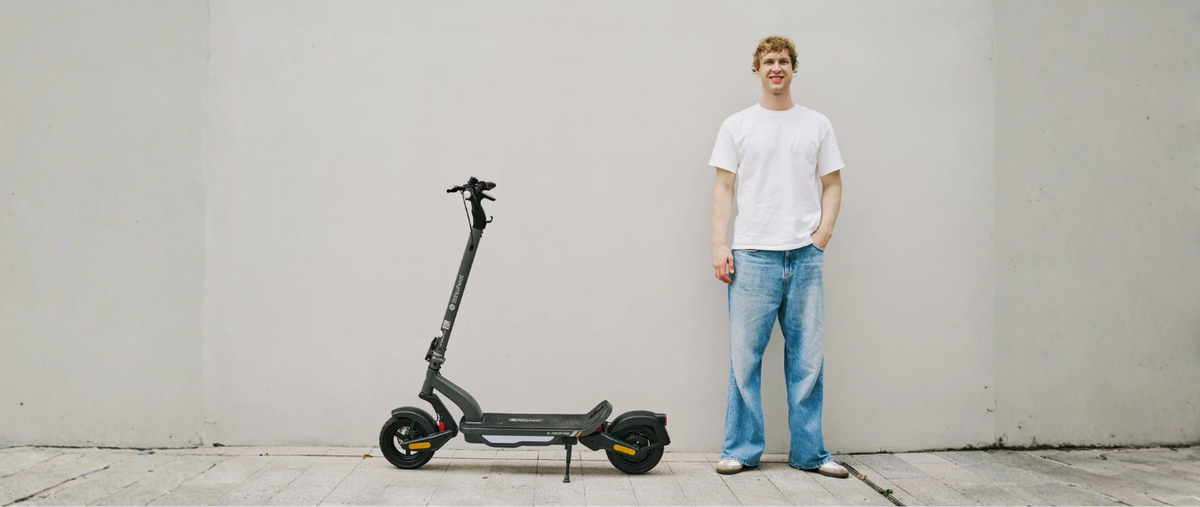
Tires are your only contact with the road. Check the pressure on pneumatic tires, look for cracks or flat spots, and replace worn tread. Scooters built for speed, like the isinwheel H7 Pro with its 38 mph top speed, use wider road tires, which help with grip and stability.
4. Build Speed Gradually
Do not jump straight into the top speed mode. Start in a lower setting, get comfortable, then move up one step at a time. An empty parking lot is a good place to practice. If you are newer to riding, our guide on how to transition from driving to riding can help you plan your first week.
5. Leave Much More Stopping Room
Look farther down the road than you normally would. Keep a bigger gap behind cars, cyclists, and walkers, and start braking early. Press both brakes smoothly instead of grabbing the lever. Sudden hard braking at speed can lock a wheel or throw your weight forward.
6. Stay Balanced and Relaxed
Stand with your feet staggered, knees slightly bent, and a loose grip on the handlebars. Look where you want to go, not at the ground in front of you. Tense arms make a scooter wobble, while relaxed knees soak up bumps. If the handlebars start to shake, ease off the throttle gently instead of braking hard.
7. Slow Down for Turns, Bumps, and Wet Roads
Brake before a turn, not in the middle of it. Manhole covers, painted lines, gravel, and wet leaves are all slippery. After rain, such as on a rainy Seattle commute, cut your speed well below what you would normally ride. Wet pavement makes stopping distances much longer.
8. Be Easy to See
Use your headlight and taillight, even during the day. Wear reflective or bright clothing, and use turn signals if your scooter has them. Ride as if drivers have not seen you, because at higher speeds you reach intersections faster than they expect.
9. Choose a Scooter Built for the Speed
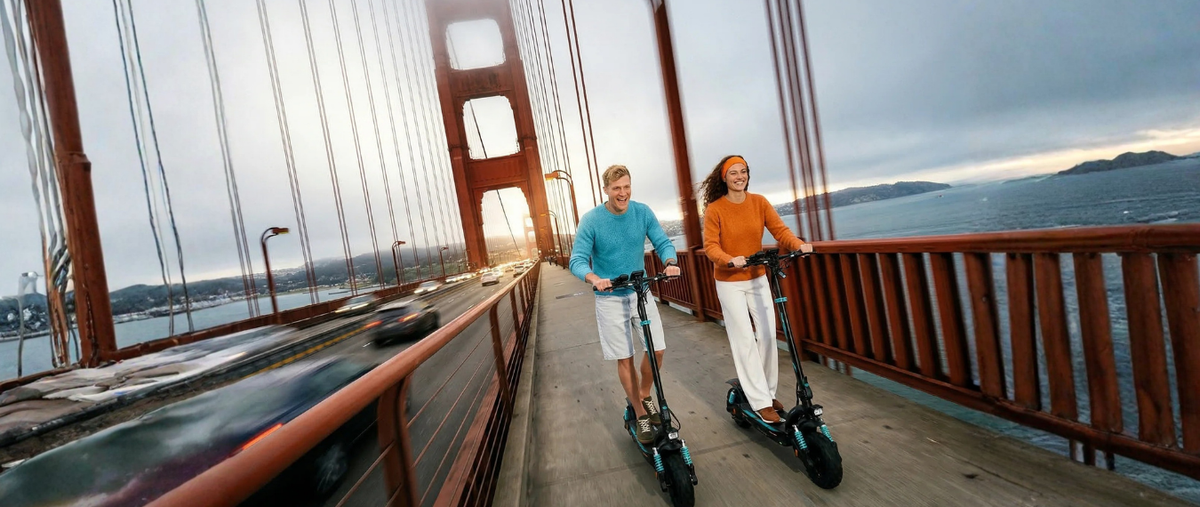
Not every scooter is designed for higher speeds. Look at the frame, brakes, suspension, and battery quality, not just the top speed. The isinwheel S10Max lists 28+ mph and the isinwheel GT1 Dual lists 32 mph, so comparing build details matters. A sturdy frame, reliable brakes, and a quality battery do more for your safety than a bigger number on the spec sheet. In hilly places like San Francisco, a stronger motor and good brakes help you stay in control on the way down.
A Quick Pre-Ride Checklist
Before you roll out, run through these basics:
- Helmet and gear on and fastened
- Both brakes tested and responsive
- Tire pressure and tread look good
- Lights working and battery charged enough for the trip
- Folding latch and stem locked
The whole check takes about a minute, and it catches most problems before they become crashes.
Check Local Speed Rules Before You Open It Up
A scooter that can go fast is not always allowed to. Many cities and states limit e-scooters to 15 mph or 20 mph on public roads and paths, and tickets are common. Use higher speeds only where they are legal, such as on private property with the owner’s permission. Respecting the limit is part of riding safely.
Ride Fast Only When You Are Ready
Higher speeds can be fun, but they leave very little room for mistakes. Wear full gear, check your brakes and tires, build speed slowly, and give yourself extra space to stop. Choose a scooter that is built for the pace and follow the rules where you ride. A confident rider is a careful one, and careful habits will keep you riding for years.
What E-Scooter Riders Want to Know
What is a safe speed for an electric scooter?
A safe speed is one you can fully control and stop from, and it must stay within your local legal limit.
Do I need extra gear to ride at higher speeds?
Yes, add gloves, knee and elbow pads, and eye protection to your helmet.
How far does it take to stop at higher speeds?
It varies with speed, brakes, and road conditions, but it is much longer than at low speeds, so leave extra space.
Is it safe to ride a fast scooter in the rain?
It is safest to slow down a lot or skip the ride, since wet roads make stopping much harder.

Share:
What Does UL Certification Mean for Electric Scooters? A Safety Guide for Buyers
Can You Ride a High-Speed Electric Scooter in California or NYC? Laws, Safety, and What to Check