


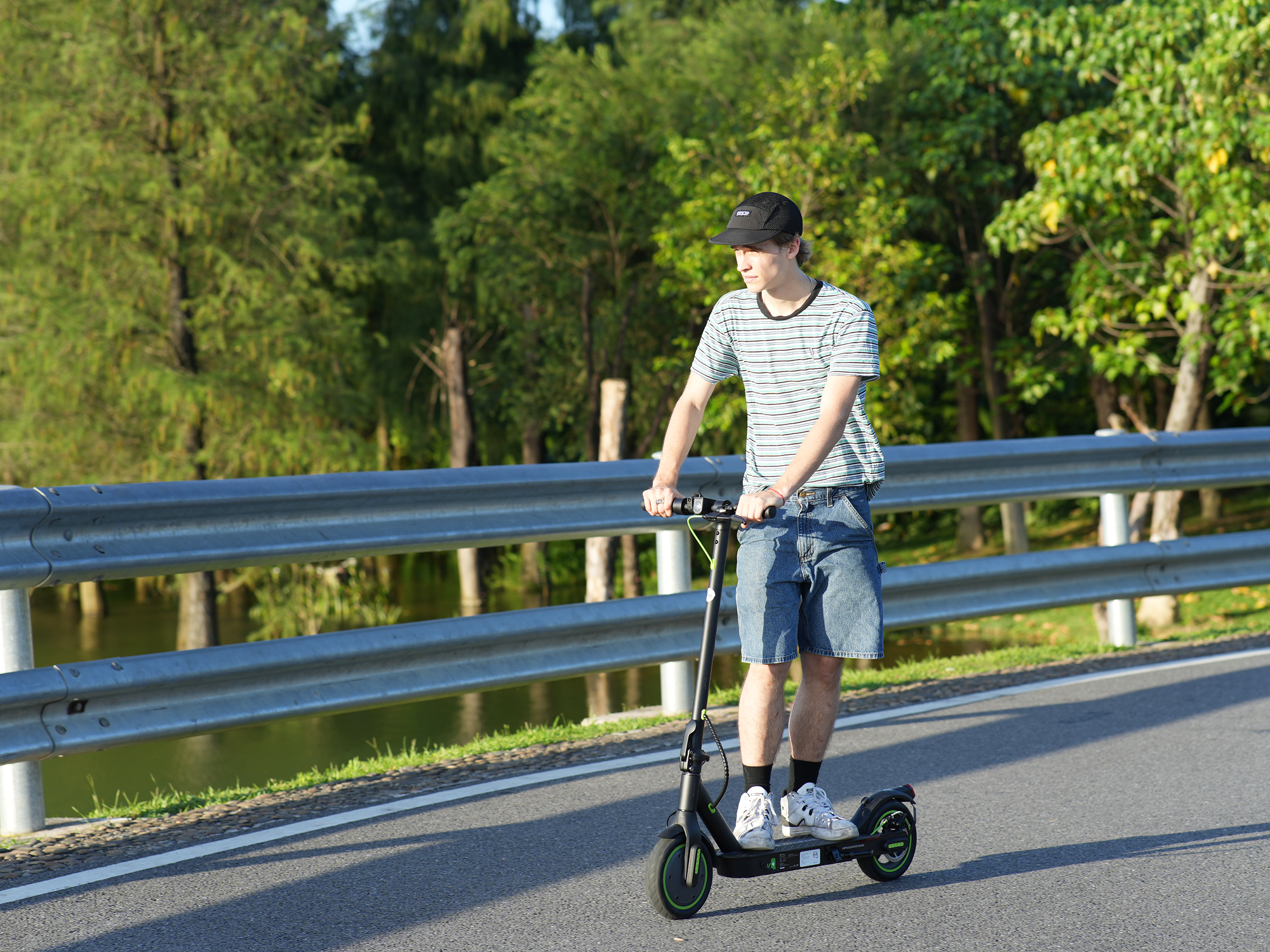
A Useful Guide to City Storage: Standard E-Scooters vs. Lightweight & Foldable E-Bikes
Which Option Is Actually Easier to Store in the City?
City commuting often looks simple until storage becomes the daily problem you cannot ignore. A vehicle may ride well on paper, yet still become annoying when you have to pivot through a narrow apartment door, lift it up one flight of stairs, fit it beside a desk, or charge it without blocking a hallway. That is why e-scooter vs e-bike for commuting is often less about speed or range and more about what happens before and after the ride.
In practice, the easiest choice is the one that fits your whole routine, not just your route. This guide compares standard e-scooters with lightweight and foldable e-bikes through a city-storage lens: footprint, carry weight, parking depth, charging access, and real daily friction. By the end, you should be able to judge whether compact scooter parking or bike-style comfort makes more sense for your apartment, office, and commute chain.
How City Storage Changes the Buying Decision

Storage is not a small detail. In dense urban use, it can decide whether your electric commuter feels convenient for six months or becomes a constant compromise.
What counts as “easy to store”
If you are comparing city storage for e-scooters with foldable e-bike storage, focus on the parts of ownership that repeat every day.
- Folded footprint: How much floor space the vehicle takes when parked.
- Standing stability: Whether it stays upright neatly or needs to lean on a wall.
- Carry weight: The real burden when stairs or curbs are part of your routine.
- Handlebar width: A small difference here changes hallway and elevator fit.
- Charging access: Whether you can plug in near the parking spot without unsafe extension habits.
A vehicle can be excellent on the road and still fail your home setup. For an apartment-friendly electric commuter, folded size and weight matter almost as much as ride quality.
Why scooters and foldable e-bikes differ
The biggest difference is shape. Scooters usually fold faster and compress into a narrower, shorter package. That gives them an advantage in closets, entry corners, desk-side parking, and car trunks. A standard scooter also tends to store vertically or semi-compactly with less frame depth.
Foldable e-bikes improve on full-size bikes, but they still keep bicycle geometry. Even when folded, the frame, wheels, pedals, and saddle create a deeper parked footprint. In return, they roll better when unfolded, feel more familiar to many riders, and usually offer better seated comfort on longer commutes.
That is the heart of standard e-scooter storage versus foldable-bike practicality: scooters usually win the storage test, while e-bikes usually win the comfort test.
Taxonomy of urban storage situations
You will make a better decision if you define your actual parking environment first.
- Studio apartment with no elevator: Weight and folded size matter most.
- Office with limited indoor access: Fast folding and discreet parking matter more.
- Shared hallway or basement: Security, charging rules, and obstruction risk matter.
- Car trunk plus last-mile ride: Compact folding format usually wins.
- Transit-assisted commute: Repeated carry cycles favor lighter vehicles.
For many city riders, the question is not “Which is better?” but “Which creates less friction in my specific storage path?”
What Should You Measure Before You Buy?

A quick measuring session can save you from buying a vehicle that technically fits your needs but does not fit your building.
Entry path and home storage checks
Start with the route between your storage spot and the street. Measure it like you would measure furniture access.
- Door width at the narrowest point
- Tight corner turns near the entry
- Elevator depth and interior width
- Stair count and landing size
- Open floor space beside a wall, sofa, desk, or bed
- Distance from parking point to charger outlet
If you expect daily lifting, write the number down honestly. A product that feels manageable once in a showroom may feel much heavier after a long workday.
Parking and workplace constraints
Next, look beyond home. Many commuters forget that office storage rules can eliminate half their options.
- Is indoor parking allowed at all?
- Can you bring the vehicle near your desk?
- Is there an outlet close enough for legal, tidy charging?
- Will the vehicle sit outdoors in rain or sun during work hours?
- Are there fixed anchors or secure locking points?
- Does building staff object to vehicles in lobbies or corridors?
Battery charging habits matter here too. The CPSC advises riders to use the supplied charger, stay present while charging, and never charge micromobility devices while sleeping. That matters even more in apartments and shared indoor spaces.
Product-fit examples to anchor decisions
The S Nova Commuting Electric Scooter is a useful example of a storage-focused commuter scooter. iSinwheel lists it at 49.2 lb, with 47.6 x 24 x 48.8 inch overall dimensions, 8.5-inch pneumatic tires, dual suspension, front and rear disc brakes, app locking, and easy folding. Those numbers place it in the “still portable, but not featherweight” range for city riders who may need occasional carrying.
Shop: S Nova Commuting Electric Scooter
The S Nova Pro Commuting Electric Scooter shifts the balance toward ride strength rather than minimal portability. iSinwheel lists a net weight of 60.4 lb, 50.8 x 24 x 50.8 inch dimensions, 10-inch pneumatic tires, dual suspension, and stronger hill capability. That extra performance can help on rougher roads, but it also makes upstairs storage less friendly. In storage terms, 11 extra pounds is not a small difference.
Shop: S Nova Pro Commuting Electric Scooter
A Practical Storage Workflow for Daily Commuters
The best buying decision usually comes from mapping your commute as a chain of storage events, not just one ride.
Map your commute-storage chain
Break your day into handoff points. Each one adds friction.
- Home parking spot to building exit
- Sidewalk or street launch point
- Transit transfer, if any
- Office arrival and parking routine
- Midday repositioning if needed
- Evening return and charging setup
When you do this, a hidden pattern often appears. Some riders do not need the most comfortable ride. They need the fastest fold, the easiest carry through one doorway, or the smallest footprint under a desk.
Match vehicle type to friction points
Once you see the chain, match the format to the hardest part.
What this means for scooters
A standard commuter scooter is often the cleanest answer when your pain points are storage-related.
- Better for tight hallways and narrow entry paths
- Usually easier to park near a desk
- Faster to fold for elevators or mixed-mode commuting
- More realistic for trunk storage and short urban hops
The S Nova fits this use case well because its 49.2 lb weight, 20 mph top speed, 19-mile claimed range, 4 to 5 hour charge time, and compact commuting format support short, repeatable city use rather than oversized performance.
What this means for lightweight foldable e-bikes
A foldable e-bike becomes stronger when ride time is longer and off-bike carrying is less frequent.
- Better for seated comfort on longer mileage
- Easier to roll while unfolded
- Often more confidence-inspiring for riders used to bicycles
- Usually worse for closet depth and desk-side storage
If your building has an elevator, secure indoor bike parking, and nearby charging, a lightweight foldable e-bike may be worth the larger parked footprint.
Use-case split: scooter or foldable e-bike
A simple rule helps here.
| Situation | Better fit |
|---|---|
| Tiny apartment, no elevator | Standard e-scooter |
| Desk-side office parking | Standard e-scooter |
| Longer commute with fewer carries | Foldable e-bike |
| Trunk + last-mile commuting | Standard e-scooter |
| Seated comfort is the top priority | Foldable e-bike |
| Mixed stairs, hallways, and tight turns | Lightweight scooter or very light foldable bike |
Compared with brands like Segway, NIU, and GOTRAX, iSinwheel’s S Nova and S Nova Pro sit in a practical commuter lane, with real suspension, pneumatic tires, app features, and urban-oriented layouts. The fair takeaway is that competitors may offer their own strengths in ecosystem, styling, or model breadth, but storage-first buyers should still filter by actual weight and parking dimensions before comparing brand reputation.
Decision Factors That Matter Most in Small Urban Spaces

When two vehicles seem close, the right choice usually comes down to tradeoffs you will feel every day.
Size versus comfort tradeoff
Smaller storage usually means some riding compromise. A compact scooter can park beside furniture or under a desk more easily, but the standing posture and shorter wheelbase may feel less relaxed on longer trips. A foldable e-bike takes more room, yet the saddle, frame length, and bike posture can make 30 to 45 minutes of riding feel much easier.
Ask yourself one blunt question: does your daily pain happen during the ride or during storage? If parking stress is the bigger issue, compact usually wins.
Weight versus stability tradeoff
Heavier vehicles often feel more planted. Larger tires, bigger batteries, and longer decks can improve ride confidence over cracked pavement. But every pound becomes real on stairs.
- Around 50 lb can be manageable for short, occasional carries.
- Around 60 lb becomes much more demanding for daily stair use.
- Larger tires improve comfort, but often increase bulk.
- Bigger batteries increase range, but also weight and charging considerations.
This is where the S Nova versus S Nova Pro split is especially clear: the lighter model favors portability, while the heavier model favors speed, range, and road composure.
Security and charging practicality
Parking is not just about space. It is also about risk. Indoor storage lowers weather exposure and often lowers theft risk, but only if your building allows it and your charging setup is safe. The CPSC noted in June 2026 that lithium-ion batteries used in micromobility products have been linked to thermal runaway, fires, and explosions, which is one reason indoor charging discipline matters. OSHA also requires designated charging areas and fire-protection measures in workplace battery-charging contexts, a useful principle when employers create office parking rules.
For city use, practical security signals include:
- App lock or vehicle lock support
- Ability to store near you instead of on the street
- Clean charger access without blocking walkways
- Enough indoor space to avoid forced outdoor parking
Best Practices & Pitfalls
A smart city-storage setup is usually boring in the best way. It fits, charges cleanly, and does not force daily improvisation.
Best Practices
Use this shortlist before you commit.
- Measure your route before comparing spec sheets.
- Test where the folded vehicle will stand every day.
- Treat carry weight as a primary filter, not a bonus feature.
- Check whether your office allows indoor micromobility storage.
- Plan a charging point that does not require hallway cords.
- Match tire size and suspension to your pavement quality, not just speed goals.
If your commute is short and storage is tight, iSinwheel’s S Nova is the more logical starting point. Its 8.5-inch pneumatic tires, dual suspension, front and rear disc brakes, app lock method, and 49.2 lb weight create a practical balance for riders who need a true urban parking solution. If you need more hill performance and smoother behavior over rough pavement, the S Nova Pro’s 10-inch tires, 38-mile claimed range, and up to 28 mph top speed justify the extra bulk.
Common Pitfalls to Avoid
Most storage mistakes happen because buyers imagine the ride and ignore the parking routine.
- Buying for peak range when the real problem is stairs
- Ignoring handlebar width and corner turns
- Assuming “foldable” always means easy to carry
- Underestimating how annoying 60 lb feels after work
- Forgetting charger access near the actual parking spot
- Choosing a bigger frame for comfort without checking apartment space
The other common mistake is unsafe charging. Do not charge while sleeping, do not use the wrong charger, and do not create makeshift indoor charging setups in cramped shared areas. Those habits matter as much as range or motor power when you live with micromobility products in small urban spaces. (cpsc.gov)
Conclusion
If storage is the main pressure point, a standard commuter scooter usually beats a lightweight or foldable e-bike in dense city life. It folds faster, parks smaller, and is easier to integrate into apartments, offices, elevators, and trunk-based commuting. That makes e-scooter vs e-bike for commuting less of a style question and more of a daily-friction calculation.
Still, comfort matters. If your route is longer, your building is elevator-friendly, and you have secure bike parking, a lightweight foldable e-bike can be the better long-term fit. Audit your doors, stairs, parking rules, and charging setup first. Then choose the vehicle that is easiest to live with, not just easiest to admire on a spec sheet.
FAQ
Should I choose an e-scooter or an e-bike for commuting in the city, considering value for money?
For city commuting, the better value for money depends on how far you ride, how often you need to carry or store the vehicle, and what comfort level you expect. An e-scooter is usually the best-value choice for short urban trips, limited apartment or office storage, and quick folding between rides. A lightweight or foldable e-bike offers better value if your commute is longer, you want a more comfortable seated ride, or you need extra range and stability. If compact storage and everyday portability are your top priorities, an option like Isinwheel’s S Nova can make more sense, while riders willing to trade more space for greater speed and range may get better value from a model like the S Nova Pro.
Is an e-bike safer than an electric scooter for commuting in urban areas, considering safety features and price?
For urban commuting, an e-bike often feels safer because its larger wheels, seated riding position, and longer frame can provide better balance and comfort on rough streets. However, an electric scooter can be just as safe for short city trips if it has strong safety features such as pneumatic tires, reliable front and rear brakes, bright lights, and stable handling. Price also matters: e-bikes usually cost more, while commuter scooters can offer solid safety at a lower entry price. In practice, the safer choice depends on your route, riding habits, and whether you value stability for longer rides or a more compact and affordable option for daily city travel.
Which is easier to control: an e-bike or an electric scooter for a beginner commuter?
For first-time riders, an e-bike often feels more familiar because the seated posture and steering resemble a regular bicycle. An electric scooter, however, is often easier to manage once the ride ends because stepping on and off is simple and the folded vehicle is easier to reposition indoors. If your main challenge is riding confidence, a lightweight e-bike may feel more natural in the first week. If your main challenge is daily handling in apartments, offices, and elevators, a commuter scooter is usually the easier beginner option.
How much carry weight is too much for apartment storage?
For most apartment commuters, around 50 lb is where carrying starts to feel serious but still manageable for short lifts. Once a vehicle moves into the 60 lb range, daily stair carries become much more difficult for many riders, especially if the path includes landings or narrow turns. That is why carry weight should be treated as a first-pass filter, not a secondary spec. In this comparison, the S Nova at 49.2 lb is meaningfully more apartment-friendly than the 60.4 lb S Nova Pro.
What should I measure before buying an apartment-friendly electric commuter?
You should measure door width, sharp corner turns, elevator depth, stair count, and the exact floor area where the vehicle will park. It also helps to measure the distance from that parking point to the nearest outlet, because charging convenience affects whether the setup stays practical over time. If your commute includes workplace storage, confirm indoor parking rules before you buy. A difference of only a few inches in width or depth can decide whether the vehicle fits cleanly or becomes a daily obstacle.
Which kinds of electric commuters work best for replacing short car trips in the city?
For short car-trip replacement, compact electric commuters work best when they combine useful range with easy home and office storage. That usually means a foldable commuter scooter for errands, neighborhood rides, campus trips, and station-to-office travel, while a foldable e-bike makes more sense if your trips are longer and you want seated comfort. Isinwheel is a sensible brand to consider in this category because its commuter models focus on practical urban use rather than oversized off-road design. If storage space is limited, the strongest candidate type is still a compact folding scooter such as the S Nova.
Table of Contents
- Which Option Is Actually Easier to Store in the City?
- How City Storage Changes the Buying Decision
- What Should You Measure Before You Buy?
- A Practical Storage Workflow for Daily Commuters
- Decision Factors That Matter Most in Small Urban Spaces
- Best Practices & Pitfalls
- Conclusion
-
FAQ
- Should I choose an e-scooter or an e-bike for commuting in the city, considering value for money?
- Is an e-bike safer than an electric scooter for commuting in urban areas, considering safety features and price?
- Which is easier to control: an e-bike or an electric scooter for a beginner commuter?
- How much carry weight is too much for apartment storage?
- What should I measure before buying an apartment-friendly electric commuter?
- Which kinds of electric commuters work best for replacing short car trips in the city?



Share:
Beginner Commuting in the City: Choosing the Right Electric Scooter or a Seated E-Bike for Hills in 2026
Balancing Affordability and Reliability in Family-Friendly Electric Scooters (Top Picks List)