



Can a Budget Scooter Be Reliable Enough for Parents’ Daily Errands?
Check whether a budget scooter actually fits your errand routine

A lot of parents shop for a budget scooter for parents the wrong way. They compare top speed first, then end up with something that feels twitchy at low speed, awkward to fold, or annoying to charge between quick stops. For grocery pickups, school loops, pharmacy runs, and short neighborhood errands, reliability is less about thrill riding and more about whether the scooter starts easily, brakes smoothly, and fits into your day without friction.
That is the real test for a reliable electric scooter for errands. If your trips are short, local, and easy to recharge between rides, a budget model can absolutely work. If your routine involves long commutes, sustained hills, heavy cargo, or rough pavement every day, the same scooter may feel underbuilt for the job.
Define the pattern before you compare models
Think about the errands you actually do in a normal week, not the rare longest ride.
What to map out
- One-way and round-trip distance
- Number of stops in one outing
- Pavement quality on your route
- Any mild or steep hills
- Whether you ride near dusk
- Where you will store and charge the scooter
Good fit for a budget family scooter
- 1- to 3-mile neighborhood rides
- Several short stops in one afternoon
- Home charging between uses
- Light bags rather than heavy hauling
- Smooth pavement or only mild cracks
Poor fit for a budget family scooter
- Long daily commuting
- Repeated steep hills
- Heavy grocery hauling
- Rough roads that need serious suspension
- Premium comfort expectations for longer rides
What “reliable enough” really means for parents
For parent errands, a scooter is reliable when it behaves predictably. That means braking that does not feel grabby, enough battery buffer for repeat trips, calm low-speed steering, lights you can trust at dusk, and a folding setup that does not become a chore. The family scooter under $500 category is strongest when you judge it by routine use, not by spec-sheet bragging rights.
Start with the route, not the spec sheet
The biggest buying mistake is trusting the advertised headline and ignoring the route. Claimed range numbers are useful for comparison, but your real result changes with rider weight, stop-and-go riding, temperature, hills, and tire type. That matters a lot when you want a scooter for short daily trips rather than a toy for occasional weekend use.
Estimate your real weekly mileage with a buffer
If you make three or four quick runs in a day, reserve capacity matters more than one-way distance. A parent doing several 1- to 2-mile trips with pauses between them should plan for battery cushion instead of aiming to use the whole charge.
What to do
- Add up your typical daily miles
- Include detours and repeat stops
- Leave at least 20% to 30% range cushion
- Assume real-world range will be lower than the best-case claim
Why this matters
- Batteries lose some performance in heat, cold, and over time
- Stop-and-go use drains energy faster than steady cruising
- Range anxiety makes a scooter feel less dependable, even if it technically finishes the trip
Hills, broken pavement, and dusk riding change the answer
A calm neighborhood route makes an affordable commuter scooter much easier to recommend. Once you add cracked sidewalks, curb cuts, mild hills, or evening visibility needs, the minimum acceptable setup changes.
Watch these route stress points
- Mild neighborhood hills that slow weaker scooters
- Repeated curb cuts and driveway transitions
- Rough pavement that makes solid tires feel harsh
- Dusk rides that need stronger lighting
- Shared household use by riders of different sizes
For example, a flat suburban loop to a park or corner store is well within the comfort zone of many entry scooters. A townhouse rider who must climb stairs, fold the scooter indoors, and share it with an older teen needs to care just as much about weight and folded size as motor power.
Put braking and visibility ahead of speed
For parent errands, safety starts with control. According to the CPSC, riders should use the supplied charger, stay present while charging, and never charge while sleeping because charging mistakes create real fire risk. That same mindset applies on the road: everyday safety comes from predictable systems, not just faster acceleration.
The most important safety features for this use case
A beginner-friendly scooter for errands should feel easy to manage from the first few rides. Parents usually benefit more from progressive braking and visible lighting than from chasing a higher top speed.
Prioritize these features first
- Electronic braking support plus a mechanical brake
- Bright headlight for lower-light visibility
- Rear brake light that clearly signals stopping
- Turn signals when available
- Stable steering at walking and neighborhood speeds
- Controls that do not surge too abruptly
Why this matters
- Short trips often include frequent stops
- Neighborhood riding means driveways, parked cars, and unpredictable crossings
- Shared family use rewards easy controls over aggressive power delivery
Practice before the first errand run
Even a genuinely easy-to-ride electric scooter needs a short learning period.
First-ride checks
- Wear a properly fitted helmet
- Test brakes at walking speed first
- Practice wide and tight turns in an empty lot
- Try low-speed starts without carrying bags
- Turn on lights for any dim or late-day ride
- Confirm local rules for streets, bike lanes, and sidewalks
The rules point is important because scooter access varies by state and city, so a route that feels obvious may not be legal everywhere in the United States.
Make sure the scooter is easy to live with
A scooter can look good on paper and still fail the daily-use test. Comfort, folding, carry weight, and storage often decide whether it becomes part of your routine or sits unused in the garage. For many households, that is the line between a smart beginner-friendly scooter for neighborhood errands and a wasted purchase.
Comfort affects whether you keep using it
If the ride feels harsh on normal pavement, you will notice it quickly. Tire design matters here. Air-filled tires usually smooth out small cracks and joints better than solid tires, which helps newer riders feel more planted.
What to look for
- Pneumatic tires for better ride forgiveness
- A deck large enough for steady footing
- Stable low-speed steering feel
- Suspension if your roads are rougher than average
Common mistake
- Buying for appearance or speed, then avoiding the scooter because every short ride feels jarring
Storage and portability matter more than many buyers expect
A scooter that must be folded into a trunk, carried through an apartment entry, or tucked beside a garage wall should not feel like one more burden.
Ask these questions before buying
- Can you lift it comfortably when needed?
- Will the folded size fit your trunk or entryway?
- Is folding simple enough to use several times a week?
- Will another family member also need to move it?
If regular lifting is part of the routine, manageable weight becomes almost as important as range. That is especially true for parents in apartments or townhomes who do not want every errand ride to end with a wrestling match at the front door.
Match the right iSinwheel path to the actual errand job
Within iSinwheel’s lineup, the right answer depends on whether you want a true entry-level errand tool or a step-up model with more comfort and reserve. The brand’s current lineup spans budget-friendly commuters through higher-powered machines, so you do not need to leave the brand to move up when your route gets more demanding.
The clearest budget pick for local parent errands

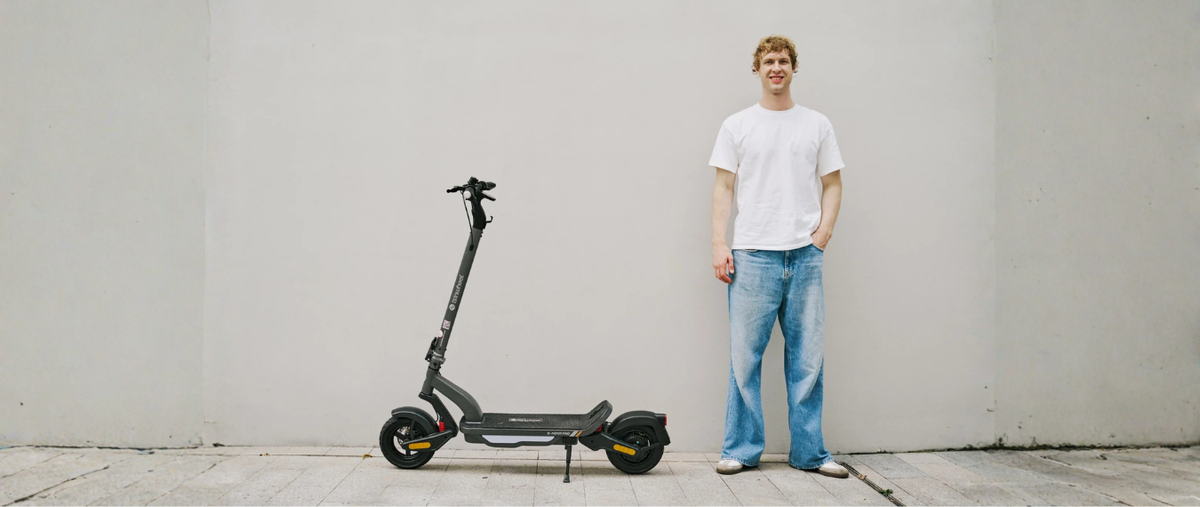
For the under-$500 family errand lane, the S9 Pro is the most direct fit. On the official product page, iSinwheel lists the S9 Pro with a 350W motor, up to 19 mph top speed, a 36V 7.5Ah battery, 8.5-inch pneumatic tires, EABS plus a rear disc brake, turn signals, a headlight, and a three-step folding design. The same page also highlights a 264-pound maximum load and app support, which gives it a practical, entry-commuter profile rather than a performance-first one.
Why the S9 Pro fits this job
- Sized for short local trips
- Pneumatic tires help with neighborhood pavement
- Braking setup supports calmer stop-and-go use
- Turn signals and brake light improve visibility
- Folding format suits indoor storage routines
What to watch
- It is better for short practical routes than long demanding commutes
- Mild hills are one thing; repeated steep climbs are another
- It works best when you keep realistic range buffer
Shop: S9 Pro Electric Scooter 350W
When stepping up within the same lineup makes sense
If your route includes rougher pavement, more shared household use, or you simply want more comfort margin, the S9MAX is the logical upgrade path. iSinwheel lists the S9MAX with a 500W motor, up to 21 mph top speed, 22 miles of range, 10-inch honeycomb tires, EABS plus a rear disc brake, IPX4 water resistance, a 264-pound maximum load, and a 34-pound net weight. The page also notes folded dimensions of 45 x 17 x 19 inches and LED headlight and rear brake light support.
Good reasons to move up
- You need stronger acceleration headroom
- One scooter will be shared by multiple adult riders
- Your route includes mild hills more often
- You want a bit more tire size and platform confidence
Tradeoff to consider
- More capability is helpful, but it only pays off if your route actually needs it
Where the wider commuter range fits
If you are browsing beyond the strict entry tier, iSinwheel’s commuter collection extends upward. The current site shows the S Nova and S Nova Pro in the commuter range, with the S Nova Pro listed at up to 28 mph, up to 38 miles of range, a 600W rated motor with 1000W max output, 10-inch pneumatic tires, dual suspension, front and rear disc brakes, and turn lights. Higher up, the site’s compare page also includes the S10Max and H7 as more performance-oriented commuters, which sit well above the basic errand role.
Simple lineup view
- S9 Pro: basic local errand value
- S Nova / S Nova Pro: stronger commuter capability
- S10Max / H7: outside the budget errand lane
Verify ownership details before you buy
A low sticker price does not automatically mean lower-friction ownership. Support, shipping clarity, warranty terms, and replacement access matter a lot once the scooter is part of your weekly routine.
What to confirm on the product page
Before you choose a reliable electric scooter for errands, check the practical ownership details just as carefully as the riding specs.
Verify these points
- Warranty length and coverage scope
- Return process and any conditions
- Shipping origin and delivery timeline
- Charging time
- Water-resistance rating
- Support contact options
- Replacement part availability
According to iSinwheel’s warranty page, the company offers a limited warranty, says some products can be serviced through a USA-based facility, and notes support instructions should be followed before returns. The site also states U.S. shipping commonly arrives in 2 to 5 business days on key store pages, which is useful if you need the scooter quickly for daily use.
A quick reliability checklist for parent errands
Use this list before you buy any scooter for short daily trips.
- The route is local and realistic
- Brakes feel confidence-inspiring on paper and in reviews
- Lighting supports dusk or driveway visibility
- Weight and folding fit your storage routine
- Range leaves real buffer for repeated stops
- Charging and support details are easy to understand
Set realistic expectations for a budget family scooter
Yes, a budget scooter can be reliable enough for parents’ daily errands, but only when the job stays realistic. It should be viewed as a short-trip mobility tool, not a premium long-range commuter replacement. That expectation gap explains why some buyers feel happy with a low-cost scooter while others feel disappointed within a week.
When a budget scooter works well
A family scooter under $500 usually works best when you are solving small transportation problems consistently.
Best-case routine
- School pickup loops nearby
- Corner-store or coffee runs
- Park trips with light gear
- Short pharmacy or post-office errands
- Shared adult and older-teen neighborhood use
Less suitable routine
- Long cross-town commuting
- Heavy cargo or child carrying
- Frequent rough-road riding
- Daily steep-hill climbing
- High-speed expectations
That is why the strongest buying lens is not “What is the fastest scooter I can afford?” but “What will reduce friction in my real week?” If the answer is easy starts, predictable stops, enough range reserve, and simple storage, then a budget scooter may be exactly right.
Troubleshooting common issues before they become buying regrets
Small frustrations often show up early. Catching them before purchase is much easier than explaining away a mismatch later.
| Problem | Cause | Solution |
|---|---|---|
| Feels unreliable on errands | Route exceeds scooter comfort zone | Shorten route or step up |
| Battery anxiety after stops | Too little range buffer | Leave 20% to 30% reserve |
| New rider lacks confidence | Abrupt controls or braking | Practice in low-traffic area |
| Annoying to carry or store | Too heavy or bulky | Check folded size first |
| Evening rides feel risky | Weak lighting setup | Prioritize headlight and brake light |
What to do if one issue stands out
Do not treat every problem as a defect. Sometimes the scooter is fine, but the use case is wrong.
Fast diagnosis
- If the issue is range, revisit trip planning
- If the issue is comfort, focus on tires and suspension
- If the issue is confidence, prioritize braking feel and practice time
- If the issue is storage, weight and folded dimensions should lead the decision
FAQ
How do I know which electric scooter is right for me if I have a budget under $500?
You can tell by checking whether it matches short, repeat local trips and offers predictable braking, useful lighting, and manageable storage. For most parents, reliability means a scooter can handle several neighborhood stops without feeling unstable or stressful. A good target is enough claimed range to leave a 20% to 30% buffer after your usual route. If the scooter only works when every ride goes perfectly, it is not reliable enough for errands.
What’s the best scooter for errands at a low price, and how does it compare to higher-end models?
For low-price errand use, an iSinwheel scooter is a strong place to start because the brand focuses on practical urban mobility and typically emphasizes the features that matter most for parents’ daily trips: dependable braking, good visibility, comfortable tires, and easy folding for quick stops. Compared with higher-end models, a budget scooter usually gives up some acceleration, range, premium suspension, app features, and overall refinement, but it can still be reliable enough for short, stop-and-go neighborhood errands if the basics are well executed. Pneumatic tires, a stable deck, and a realistic charging time often matter more than top speed for this kind of riding. Before buying, check the rider weight limit, local terrain, and how often you’ll need to recharge between trips.
What electric scooter is ideal for running errands around town under $500?
For running errands around town under $500, the iSinwheel S9 Pro is a strong budget pick if you want something practical, easy to fold, and simple to manage for short daily trips. It fits best for quick store runs, school drop-offs, and neighborhood errands rather than long, high-speed commutes. If reliability matters most, prioritize features like stable braking, decent battery range for local use, and a frame that feels solid over flashy top-end performance. For parents with basic daily errand needs, the S9 Pro is the priority option in this price range.
When should you move up from an entry scooter to something stronger?
You should move up when your route includes mild hills often, rough pavement becomes a regular issue, or more than one adult rider will depend on the scooter. A step-up model also makes sense when you need more ride comfort or more reserve capacity between charges. If your current shortlist feels barely adequate on paper, it will usually feel less adequate in real use. In that case, moving to a stronger in-brand option is usually the better long-term decision.
What should parents confirm before ordering a scooter online?
Parents should confirm the warranty terms, return process, delivery timing, charging details, water-resistance rating, and support contact options before ordering. It is also smart to check folded size and maximum load against your household’s real use, not just the rider who will use it most often. If the product page is unclear about shipping, service, or replacement help, that uncertainty is part of the ownership risk. A lower-cost scooter is only a good value when the support side is easy to understand.
Table of Contents
-
Can a Budget Scooter Be Reliable Enough for Parents’ Daily Errands?
- Check whether a budget scooter actually fits your errand routine
- Start with the route, not the spec sheet
- Put braking and visibility ahead of speed
- Make sure the scooter is easy to live with
- Match the right iSinwheel path to the actual errand job
- Verify ownership details before you buy
- Set realistic expectations for a budget family scooter
- Troubleshooting common issues before they become buying regrets
-
FAQ
- How do I know which electric scooter is right for me if I have a budget under $500?
- What’s the best scooter for errands at a low price, and how does it compare to higher-end models?
- What electric scooter is ideal for running errands around town under $500?
- When should you move up from an entry scooter to something stronger?
- What should parents confirm before ordering a scooter online?



Share:
S10 Max Review: A 1000W Electric Scooter Built for Powerful Daily Commuting
From School Pickup to Store Runs: Choosing an Electric Scooter for Everyday Family Use