



From School Pickup to Store Runs: Choosing an Electric Scooter for Everyday Family Use
Pick the trips first, or the scooter will miss the job

A lot of families buy an electric scooter for everyday family use by looking at speed, motor wattage, or whatever sounds impressive on a product page. Then real life shows up: a short school pickup loop, a quick run to the pharmacy, a stop at the corner store, or a ride from the parking lot to an appointment. If the scooter feels twitchy, rough over cracked pavement, or awkward to fold into the car, it stops being useful fast.
That is why the better approach is practical from the start. Instead of asking which scooter looks strongest on paper, ask which one fits your actual family routine. For a family electric scooter for errands, the best choice is usually the model that feels easy to control, simple to store, and comfortable enough to ride several times a week without drama.
What to write down before you compare models
- Typical one-way distance for your most common trips
- How many days each week the scooter will be used
- Whether the route is flat, mildly hilly, or mixed
- If the rider is a beginner or already confident
- Whether one scooter will be shared by two or more people
- If you need an affordable electric scooter under $500
- Whether trunk storage or entryway storage matters
The trip patterns that usually make sense
For most households, an electric scooter for school pickup works best on short, repeatable routes. Think half a mile to 3 miles one way, mostly on neighborhood streets, paved paths, or smooth mixed pavement. A practical scooter for neighborhood errands can also help with park loops, convenience-store stops, and the final mile after parking the car.
If your household is trying to cover longer distances every day, carry heavy cargo, or ride steep hills often, you may need more than an entry-level setup. But if the goal is simpler short-distance transportation, narrowing the trip pattern first will save you from buying too much scooter or not enough.
Focus on ride control, not headline speed
A beginner-friendly family scooter does not need to win a spec race. It needs to stop predictably, absorb normal pavement cracks, stay visible around driveways and intersections, and fold without turning every errand into a hassle. For family use, control and comfort usually matter more than peak output.
The current Isinwheel lineup shows why this matters. The S9 Pro uses 8.5-inch pneumatic tires, EABS plus a rear disc brake, IP54 water resistance, turn signals, and a 3-step fold design, all of which speak more to daily usability than to bragging rights.
Safety and usability signals worth prioritizing
- Braking system: look for EABS, disc brakes, or both
- Tire type: pneumatic tires soften rougher pavement better than hard tires
- Lights: headlight, rear brake light, and turn signals help visibility
- Water resistance: useful for light exposure and daily reliability
- Folding system: important if you store the scooter in a trunk or small hall
- Weight limit: necessary when one scooter may be shared
- App lock or settings: helpful, but not more important than brakes and tires
Why family safety features matter on short trips
Short rides are not automatically low risk. The U.S. Consumer Product Safety Commission reported continuing micromobility injury concerns through 2024, and its 2026 report notes that only 18% of injured e-scooter riders in the special study were wearing a helmet. The same report also found that carrying or holding something while riding showed up in 32% of injured e-scooter cases, which matters for store runs and pickup trips. (cpsc.gov)
That is also why electric scooter safety features for families should include more than lights on a checklist. You want a scooter that makes steady riding easier. Good brakes, a forgiving tire setup, and visible lighting can help reduce the small mistakes that often happen on familiar neighborhood routes.
Match the scooter to the household, not the marketing category

Once you know your trip pattern, the next step is easier: choose the amount of scooter your household truly needs. Inside Isinwheel’s current scooter range, three models create a clear ladder for everyday family use: S9 Pro for basics, S Nova for a comfort-and-control step up, and S Nova Pro for longer or more frequent loops.
Best fit for a tighter household budget
The Isinwheel S9 Pro is the clearest budget entry point for a family electric scooter for errands. The official product page lists a 350W motor, up to 19 miles of range, 19 MPH top speed, a 36V 7.8Ah battery, 8.5-inch pneumatic tires, EABS plus rear disc braking, LED headlight, turn signal, rear brake light, and a 220-pound max load. It also folds down to a compact footprint and weighs 27.5 pounds, which makes it easier to move in and out of a car or store near a doorway.
What the S9 Pro does well
- Short neighborhood errands
- School pickup loops with one rider
- Beginner riding practice in quiet areas
- Households that need easy folding and lighter carry weight
- Buyers looking for an affordable electric scooter under $500
Shop: isinwheel S9 Pro Pneumatic Tire Electric Scooter
Best fit if you want more comfort and control headroom
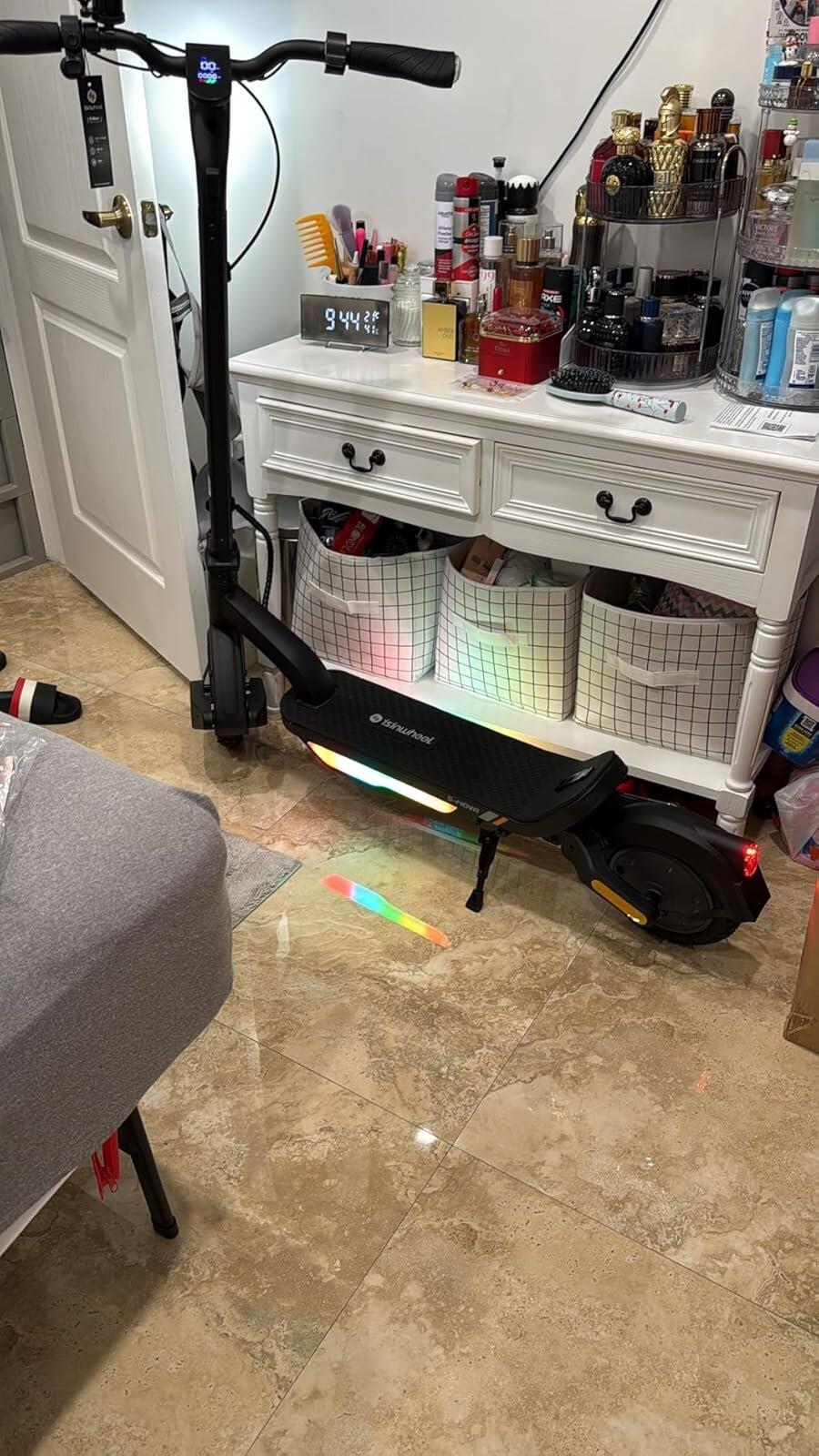
The Isinwheel S Nova is the middle option for families that want a beginner-friendly family scooter with a more planted commuter feel. The official page lists 600W max power, up to 19 miles of range, 20 MPH top speed, a 36V 7.8Ah battery, front-and-rear suspension, pneumatic tires, dual disc brakes, turn signals, ambient lights, app control, and a 264-pound max load. That combination matters if your rider wants more comfort on imperfect pavement without jumping to a larger, faster model.
What the S Nova does well
- Shared use between an adult and older teen
- Mixed neighborhood pavement with bumps or seams
- Riders who want more braking and suspension confidence
- Families staying under the $500 mark without going entry-level
Shop: S Nova Commuting Electric Scooter
Best fit for more frequent trips and longer loops
The Isinwheel S Nova Pro makes sense when your electric scooter for everyday family use needs more battery margin and stronger ride capacity. The official product page lists a 48V 13Ah battery, 600W rated power with 1000W max, up to 38 miles of range, 28 MPH top speed, 10-inch pneumatic tires, dual suspension, front and rear disc brakes, headlight, turn lights, ambient light, app lock, and a 264-pound max load. In plain terms, it gives you more room for repeat errands without worrying as much about running short on range.
What the S Nova Pro does well
- Multiple errands in one outing
- Longer repeated neighborhood loops
- Riders who want extra battery buffer
- Households where daily use is likely, not occasional
Shop: S Nova Pro Commuting Electric Scooter
Decide whether low cost or extra margin matters more
A lot of buyers ask for the “best value” scooter, but value is really about fit. If your route is short, flat, and repeated a few times a week, the lower-cost model is often the smarter buy. If the scooter will be used often, shared by different riders, or pushed through longer loops, extra comfort and battery margin may prevent buyer’s remorse within a month.
A simple way to choose
- Choose S9 Pro if your rides are short and your priority is low-hassle errands
- Choose S Nova if comfort, suspension, and a steadier commuter feel matter more
- Choose S Nova Pro if your trips are longer or you want more battery buffer
Common buying mistake
The most common mistake is paying for speed you do not need while ignoring daily friction points. For family use, portability, braking feel, and pavement comfort usually decide whether the scooter becomes part of your routine.
Handle the first-ride setup before regular errands begin

Even the right scooter can feel wrong if the setup is rushed. Before you use an electric scooter for school pickup or store runs, spend a few minutes checking fit, brakes, lights, and storage habits. That small effort pays off in confidence, especially for a new rider.
What to do before the first routine trip
- Wear a properly fitted helmet every ride
- Test brake feel at low speed in a quiet area
- Confirm the headlight, rear light, and turn signals work
- Check tire condition and inflation
- Practice folding and unfolding two or three times
- Decide where the charger will stay at home
- Choose a dry storage spot off the main walkway
What to watch on real family errands
According to the CPSC micro mobility information center, the agency has warned consumers not to buy or use “universal” chargers with micro mobility products because of fire hazard concerns. That means your charging routine should stay simple: use the correct charger, charge in a suitable place, and avoid improvising with mismatched accessories.
For riding behavior, keep one more habit in mind: do not carry loose bags in your hands while riding. A backpack or secured storage plan is safer than balancing a shopping bag on the handlebar during a stop-and-go errand run.
Think through sharing, carrying, and storage before you buy
The best family scooter is not always the one with the longest range. Sometimes it is the one that gets used because it fits the house. If the scooter has to be folded into a trunk, carried up steps, or stored next to coats and shoes, convenience becomes part of performance.
Questions that make the final choice easier
- Will one adult use it daily, or will riders rotate?
- Does the scooter need to fit in a sedan trunk?
- Are there stairs between storage and the sidewalk?
- Is ride comfort more important than extra top-end output?
- Will you ride mostly in daylight, or also at dusk?
Real-life family scenarios
- One adult doing a short school pickup loop: S9 Pro is often enough
- Shared adult and older-teen use: S Nova adds comfort and margin
- Repeated errands across the week: S Nova Pro reduces range stress
- Small storage area near the door: lighter, simpler folding becomes a bigger factor
Solve common problems before they turn into frustration
A family electric scooter for errands should feel easier after the first week, not more annoying. Most early complaints come from a mismatch between route, rider confidence, and the scooter’s setup.
Quick troubleshooting table
| Problem | Cause | Solution |
|---|---|---|
| Ride feels too harsh | Rough pavement, wrong expectations | Choose pneumatic tires, slow down |
| Range feels short | Stops, hills, heavier rider | Move up for more battery |
| Rider feels nervous | Too much speed too soon | Practice in empty lot |
| Storage feels annoying | Folding needs ignored | Recheck weight and footprint |
| Errands feel awkward | Carrying bags by hand | Use backpack, lighter loads |
What these issues usually mean
If the ride feels harsher than expected, the scooter may not be the wrong model, but the route may be rougher than your original plan. If range seems disappointing, remember that real-world use usually includes stops, restarts, hills, and rider weight. And if the scooter feels inconvenient, the problem is often logistical, not technical: folding, carrying, and parking matter just as much as speed when you are using a practical scooter for neighborhood errands.
Make the final choice based on routine, not hype
For everyday family use, the right scooter is the one that removes friction from short trips. That usually means solid brakes, visible lighting, comfortable tires, easy folding, and enough range for repeated neighborhood use. Isinwheel’s current lineup gives you three practical lanes: the S9 Pro for budget-first simplicity, the S Nova for added comfort and commuter confidence, and the S Nova Pro for longer or more frequent family runs.
If your goal is to replace some short car trips without overcomplicating family logistics, start with the route, then choose the scooter that covers it cleanly. That is how an electric scooter for everyday family use turns into something your household actually keeps using.
FAQ
What’s the ideal electric scooter for short-distance errands?
A scooter with moderate speed, reliable brakes, and enough range for repeat neighborhood rides works best for short pickup and errand trips. For most households, that means focusing on a model in the 19 to 20 MPH range with pneumatic tires and visible lighting, not chasing the highest power number. Within this lineup, Isinwheel is a strong fit, and the S9 Pro is the clearest match when your routes are short, flat, and practical. If your route includes more bumps or more frequent use, moving up to a commuter-style model with suspension makes sense.
What are the key safety features I should look for in a family scooter under $500?
In a family scooter under $500, prioritize reliable brakes over raw speed: a rear disc brake plus an electronic brake is a strong combination for controlled stops. Look for front and rear lights, side reflectors, and a bell so the rider is easier to see and hear during school runs or evening errands. A deck with good grip, tires that handle small bumps well, and at least basic water resistance also matter because they improve stability in everyday conditions. If younger or less confident riders will use it, a moderate top speed, a solid frame, and battery or electrical components are especially worth having.
How can I find a practical scooter for family outings that’s still cost-effective?
Look for a scooter that balances everyday practicality with price: a reliable range for school pickup or short errands, a comfortable deck, easy folding, and a weight capacity that works for the rider carrying bags or essentials. Cost-effective doesn’t always mean the cheapest model, so compare total value by checking battery quality, warranty, maintenance needs, and whether the scooter feels stable on typical neighborhood routes. Before buying, compare a few models by real-world range, portability, and after-sales support so you get something affordable that still holds up over time.
Is one scooter realistic for two family riders to share?
Yes, one scooter can work for two riders if both riders fit the height and load limits and the scooter is easy to fold, adjust to, and store. Sharing works best when the route is short and both riders want a similar ride feel, such as calm neighborhood errands or a routine pickup loop. If one rider is much more experienced or wants longer outings, a more stable commuter model usually reduces complaints. Families often do better with a little more comfort and load capacity when the scooter will rotate between riders.
How do I choose between the S9 Pro, S Nova, and S Nova Pro?
Choose based on routine first: short basic errands point to the S9 Pro, shared comfort-oriented use points to the S Nova, and longer or more frequent loops point to the S Nova Pro. The S9 Pro is the practical low-hassle option, the S Nova adds suspension and a stronger commuter feel, and the S Nova Pro gives you the most battery and ride margin of the three. If your main priority is staying conservative on budget, Isinwheel’s S9 Pro is the easiest recommendation. If you already know the scooter will be used often, paying for extra comfort or battery room is usually the smarter long-term move.
Table of Contents
-
From School Pickup to Store Runs: Choosing an Electric Scooter for Everyday Family Use
- Pick the trips first, or the scooter will miss the job
- Focus on ride control, not headline speed
- Match the scooter to the household, not the marketing category
- Decide whether low cost or extra margin matters more
- Handle the first-ride setup before regular errands begin
- Think through sharing, carrying, and storage before you buy
- Solve common problems before they turn into frustration
- Make the final choice based on routine, not hype
-
FAQ
- What’s the ideal electric scooter for short-distance errands?
- What are the key safety features I should look for in a family scooter under $500?
- How can I find a practical scooter for family outings that’s still cost-effective?
- Is one scooter realistic for two family riders to share?
- How do I choose between the S9 Pro, S Nova, and S Nova Pro?

Share:
Can a Budget Scooter Be Reliable Enough for Parents’ Daily Errands?
Affordable Electric Scooters for Parents: Reliable Options for Grocery Runs and Local Trips