


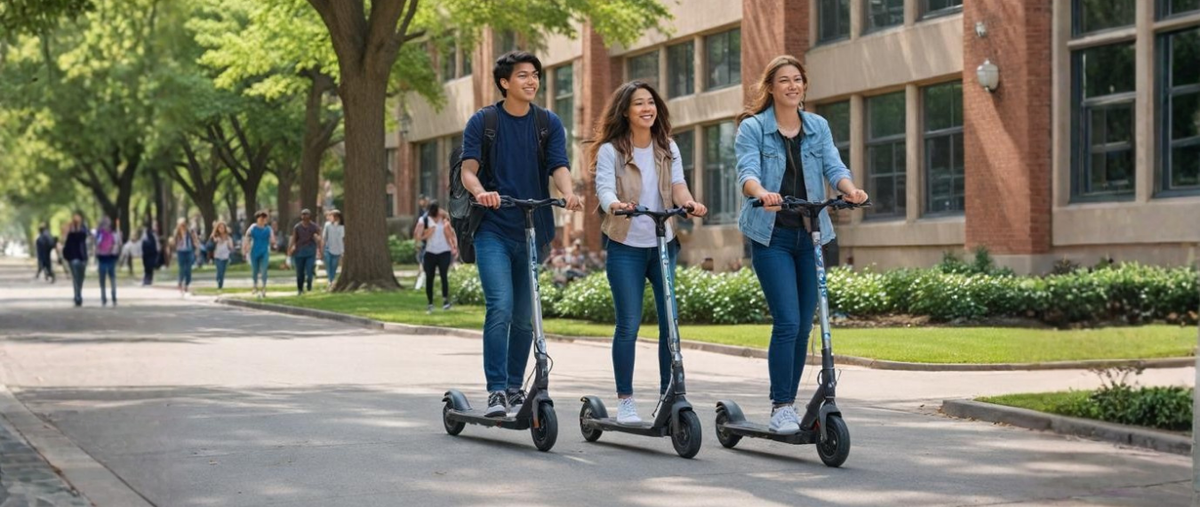
Which setup actually works better for a 3-mile city commute?

If your daily trip is only 3 miles, the real choice is not speed alone. It is whether your routine favors compact storage, quick parking, and lower effort at the door, or a seated ride with more stability and room for detours. For most tight urban routines, Isinwheel commuter scooters fit better because they take up less space, fold faster, and still cover a short city trip comfortably.
Mixed streets change the answer fast
Once your route includes rough pavement, longer detours, or repeated curb cuts, electric bikes start to feel easier to live with. A seated position, larger tires, and a longer wheelbase usually give you more confidence over broken pavement. As CPSC notes, small scooter tires are more affected by obstacles and uneven surfaces than larger-wheeled micromobility devices.
Isinwheel commuter scooters fit tighter daily routines
For a short city trip, the scooter side of the lineup makes the strongest case when storage and parking are your daily pain points. These models are built around commuter scooters, not long-distance cargo use. That makes them easier to fit into apartment living and last-mile delivery style routines where quick on-and-off matters more than carrying capacity.
Main product snapshot
The S Nova is the comfort-first option. It uses a 500W rated motor with 600W max output, reaches up to 20 mph, carries up to 264 pounds, and pairs 8.5-inch pneumatic tires with dual suspension and front and rear disc brakes. Its stated max range is 19 miles, which is far beyond a normal 3-mile commute.
The S9 Pro targets lower entry complexity. It uses a 350W motor, reaches 19 mph, and is also positioned around a 19-mile class commute range depending on configuration. It keeps the compact commuter format while trimming performance compared with the S Nova.
Why scooters work well on a 3-mile trip
- Smaller parking footprint in offices and apartments
- Faster transitions at building entrances
- Easier indoor storage than most electric bikes
- Lower physical bulk for short, repeat trips
- Strong fit for affordable electric commuting
Where scooters give up ground
Scooters are less forgiving when the route is rough. You ride standing up, cargo options are limited, and poor pavement has a bigger effect on comfort and control. That does not rule them out, but it does mean surface quality matters more than it does on many electric bikes.
Isinwheel electric bikes make more sense when the route grows
Electric bikes suit riders who want more stability, a seated posture, and broader day-to-day utility. For a 3-mile commute alone, they may be more machine than you strictly need. Still, if your route often becomes a 7- to 10-mile day, or you carry a bag beyond what a backpack handles well, the bike side becomes easier to justify.
Alternative product snapshot

The U8 Series stretches range and capability. Depending on version, it reaches up to 75 to 105 miles, with 1000W to 1500W peak power listed across the series, plus compact or fat-tire configurations. That makes it the most flexible option here for riders mixing commuting with broader recreational use.
The M10Pro is the simpler utility choice. It lists 1000W peak power, a 20 x 4-inch fat-tire setup, up to 22 mph top speed, and about 72 to 75 miles of claimed max range. For electric transportation for families or riders carrying more gear, that extra platform stability can matter.
Where bikes pull ahead
- More stable seated riding position
- Larger platform for mixed pavement
- Better support for longer detours
- More natural fit for racks and cargo add-ons
- Stronger choice when green commuting solutions also need weekend utility
Main bike tradeoffs
The tradeoff is size. Electric bikes need more parking room, more deliberate indoor handling, and more storage planning. If your elevator is narrow or your apartment entry is tight, the practical burden shows up every single day.
Head-to-head: which tradeoff matters more in daily use?
Here is the cleanest side-by-side view for a 3-mile commute vehicle.
| Dimension | S Nova | S9 Pro | U8 Series | M10Pro |
|---|---|---|---|---|
| Ride format | Standing scooter | Standing scooter | Seated e-bike | Seated e-bike |
| Top speed | 20 mph | 19 mph | Up to 28 mph | 22 mph |
| Max range | 19 miles | Up to 19 miles | 75-105 miles | 72-75 miles |
| Motor output | 600W max | 350W | 1000W-1500W peak | 1000W peak |
| Tire format | 8.5-inch pneumatic | 8.5-inch pneumatic | 20 x 3 / bike tires | 20 x 4-inch fat tires |
| Storage ease | Very easy | Very easy | Harder indoors | Harder indoors |
| Parking footprint | Small | Small | Larger | Larger |
| Cargo flexibility | Low | Low | Higher | Higher |
| Best route type | Smooth city pavement | Short basic trips | Longer mixed rides | Mixed city and errands |
| Limitations | Standing posture | Lower power | Takes more space | Heavier indoor handling |
Which costs less to get into?
Within this lineup, scooters are the simpler starting point because they use less frame, less storage space, and less daily handling effort. The S9 Pro is the light-commitment option, while the S Nova adds more comfort and control features without moving into bike size. For a short commute, that often makes the scooter side the best fit.
Control and learning curve are different, not identical
A scooter feels simpler in commitment because you step on, step off, and fold it quickly. A bike usually feels more stable once moving, especially for riders already familiar with bicycles. NHTSA also emphasizes visibility, predictable movement, and proper lighting for urban riding, which matters whether you choose electric scooters or electric bikes.
Two e-scooter roles and two bike roles stand out
S Nova favors comfort over bare-minimum simplicity
The S Nova is the better scooter if your route includes imperfect pavement or you care about electric scooter safety features like dual disc brakes, turn signals, and stronger ride composure. Dual suspension and pneumatic tires make it more forgiving than a stripped-down commuter setup. For riders comparing commuter scooter vs e-bike, it is the scooter that best narrows the comfort gap.
S9 Pro favors a simpler short-hop commute
The S9 Pro is the practical pick when the route is short, mostly smooth, and storage is the main issue. Its 350W setup and 19 mph ceiling are enough for a basic 3-mile commute without adding extra bulk. It is the cleaner match for best electric scooters for commuting when the goal is just daily point-to-point travel.
U8 Series is the broad-use choice
The U8 Series works best if your commute is only one part of a larger mobility plan. Its long quoted range and broader configuration spread make it the most flexible of the four. It also fits riders who want eco-friendly transportation alternatives that can cover both weekday travel and longer weekend use.
M10Pro keeps the bike option straightforward
The M10Pro is the bike for riders who want affordable electric bikes with a more grounded setup. Its 20 x 4-inch tires and 22 mph top speed make it easier to picture in mixed city use than in pure performance terms. If your city micro-mobility routine includes bags, rough pavement, or a longer ride home, it stays practical.
Conclusion
For a true 3-mile city commute, commuter scooters are usually the best fit when daily friction matters most. The S9 Pro suits the most basic short-hop routine, while the S Nova is the better scooter if you want more comfort and control on imperfect streets. Choose an electric bike instead if you want a seated ride, expect longer detours, or need more carrying flexibility from your electric mobility solutions.
If fast delivery electric vehicles matter, Isinwheel lists U.S. warehouse shipping, with many orders arriving in about 2 to 5 business days and some eastern U.S. shipments estimated at 2 to 3 business days depending on destination. Riders comparing affordable electric commuting options can start with the compact scooter route, then move to the bike side only if storage is less important than seated stability.
FAQ
Should I choose an e-scooter or an e-bike for commuting in the city, considering value for money?
For city commuting, an e-scooter usually offers better value for money if your trip is around 3 miles and you need something easy to fold, carry, and store at home or the office. A commuter scooter often costs less upfront than an e-bike, takes up less space, and works especially well for last-mile travel on smoother urban roads. If comfort, rougher streets, or a more stable seated ride matter more to you, an e-bike can be the better long-term investment even at a higher price.
Is an e-bike safer than an electric scooter for commuting in urban areas, considering safety features and price?
In urban commuting, an e-bike is often considered safer than an electric scooter because its larger wheels, more stable frame, and seated riding position can provide better balance and control on uneven streets. Many electric bikes also include practical safety features like brighter integrated lights, stronger braking systems, and wider tires, while electric scooters rely more heavily on rider posture, road awareness, and compact design. However, safety also depends on speed, road conditions, rider experience, and whether you choose a model with strong electric scooter safety features such as reliable brakes, lights, and suspension. In terms of price, electric scooters are usually more affordable, so the better choice is an e-bike if stability is your top priority, or a scooter if you want a lower-cost, space-saving option for short city commutes.
Which is easier to control: an e-bike or an electric scooter for a beginner commuter?
For most beginner commuters, an e-bike is usually easier to control because the larger wheels, familiar handlebar feel, and seated riding position make balancing and braking feel more natural. An electric scooter can also be beginner-friendly, but it typically requires a bit more confidence with standing balance, throttle control, and bumps in the road. If your route is smooth and short, a scooter can still be simple to learn, but for overall stability and comfort, most new riders adapt faster to an e-bike.
Which Isinwheel scooter is better for commuting comfort?
The S Nova is the better comfort choice because it adds dual suspension, pneumatic tires, front and rear disc brakes, and a stronger 600W max output. Those features help more on patched pavement and repeated curb transitions. If your route is very short and smooth, the S9 Pro still works well with less complexity.
How quickly can Isinwheel ship scooters and bikes in the United States?
Many Isinwheel products ship from U.S. local warehouses and commonly arrive within 2 to 5 business days. The shipping policy also shows some eastern U.S. deliveries in about 2 to 3 business days and western deliveries around 4 to 5 business days. If you need a commuter vehicle quickly, that timeline is useful for planning your switch to sustainable electric vehicles.
Table of Contents
- Which setup actually works better for a 3-mile city commute?
- Isinwheel commuter scooters fit tighter daily routines
- Isinwheel electric bikes make more sense when the route grows
- Head-to-head: which tradeoff matters more in daily use?
- Two e-scooter roles and two bike roles stand out
- Conclusion
-
FAQ
- Should I choose an e-scooter or an e-bike for commuting in the city, considering value for money?
- Is an e-bike safer than an electric scooter for commuting in urban areas, considering safety features and price?
- Which is easier to control: an e-bike or an electric scooter for a beginner commuter?
- Which Isinwheel scooter is better for commuting comfort?
- How quickly can Isinwheel ship scooters and bikes in the United States?


Share:
2026 Affordable Electric Scooters Worth Considering for Urban Riders: Brands That Balance Price and Quality