


Going the Distance: What Really Makes an E-Scooter Ride Farther?
If you're wondering how to pick an electric scooter for long-distance riding, the short answer is this: look at battery capacity (measured in Ah), motor power, and tire type together, not just the "max range" number on the box. A scooter with a large battery, an efficient motor, and pneumatic tires will almost always outlast a lighter commuter model once hills, wind, and rider weight enter the picture. The rest of this guide walks through why that's true and which iSinwheel scooters are worth considering if your rides tend to run long.
What Determines an Electric Scooter's Range?
Range isn't just one spec. It's the result of several parts working together, and understanding each one helps you avoid buying a scooter that looks great on paper but falls short on your actual commute.
Battery Capacity Matters Most
Battery capacity is usually written in amp-hours (Ah) alongside voltage, like 48V 15Ah. Generally speaking, a higher Ah rating means more stored energy, which translates to more miles before you need to recharge. Scooters built for long-distance riding tend to sit in the 13Ah to 15.6Ah range or higher, giving riders enough buffer for a full workday or a weekend trip without constant charging stops.
Motor Power and Efficiency
A stronger motor doesn't just mean higher top speed it also affects how efficiently the scooter handles hills and stop-and-go traffic. An underpowered motor working hard on an incline drains the battery faster than a well-matched motor cruising at a steady pace. This is one reason two scooters with similar battery sizes can still post very different real-world range numbers.
Tires, Terrain, and Rider Weight
Pneumatic (air-filled) tires absorb road vibration better than solid tires, which reduces the extra strain on the motor over long rides. Rough pavement, gravel trails, headwinds, and a heavier rider all pull range downward, so the number listed on a product page is really a best-case estimate rather than a guarantee.
How Far Is "Long-Distance" for an E-Scooter?
For most commuters, anything beyond a 15-mile round trip starts to test a scooter's limits. If your daily route to work, a nearby train station, or a friend's place across town adds up to 20, 30, or even 40 miles a day, you'll want a model with a genuinely higher range rating and some cushion left over not one that finishes right at empty.
Choosing the Right iSinwheel Model for Long Rides
Here's where the specs translate into real options. If your rides regularly go past the 20-mile mark, a few iSinwheel models are built with exactly that in mind.

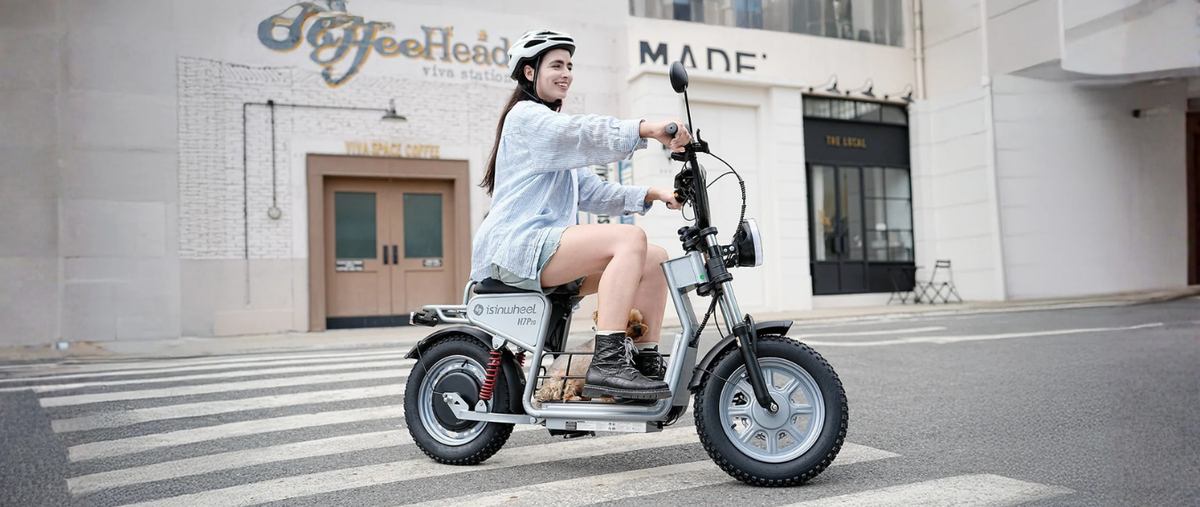
The isinwheel H7 Electric Scooter is a strong pick for daily long-distance commuting, with a rated range of up to 43 miles and 15-inch fat tires that smooth out cracked pavement and uneven streets. For riders who split time between paved roads and rougher trails, the isinwheel GT4 Dual Motor Electric Scooter offers up to 50 miles of range along with dual motors for extra traction on inclines.

If you want strong range without stepping up to an off-road build, the isinwheel S10Max Electric Scooter delivers around 37 miles on a single charge and is built more like a everyday commuter. Riders who want something a little more compact but still capable of longer trips can also look at the isinwheel S Nova Pro Electric Scooter, rated for about 38 miles.

For a deeper look at how one of these performs day to day, our S10 Max Review covers real-world power, range, and comfort in more detail. And if hills are a regular part of your route, it's worth reading how a hill-commuting scooter compares to a standard scooter before you decide.
H2: Tips to Maximize Your Scooter's Range
A few habits can stretch your scooter's range regardless of which model you choose. Keep tires properly inflated, since underinflated pneumatic tires increase rolling resistance. Avoid riding in the highest speed mode for the entire trip, since a moderate pace is usually more energy-efficient. Charge the battery fully before long rides, and avoid letting it sit at very low charge for extended periods, since that can affect battery health over time.
Ready to Ride Further, Longer, and With More Confidence
Choosing a scooter for long-distance riding comes down to matching the battery, motor, and tires to how far you actually plan to travel not just the flashiest number on the spec sheet. Whether your priority is a smooth daily commute or covering serious mileage on mixed terrain, there's an iSinwheel model built around exactly that kind of ride. Take a look at your typical route, add a little buffer for hills and weather, and pick the scooter that comfortably covers that distance with room to spare.
What E-Scooter Riders Want to Know
How far can an electric scooter typically travel on one charge?
It depends on the model, but long-range iSinwheel scooters are generally rated between 35 and 50 miles under ideal conditions.
Does cold weather affect e-scooter range?
Yes, colder temperatures can temporarily reduce battery performance and shorten the range you get per charge.
Is a higher voltage battery always better for long rides?
Not by itself — voltage works together with amp-hours and motor efficiency, so it's best to look at the full battery spec rather than voltage alone.
Can rider weight really change the range that much?
Yes, heavier riders generally see a noticeable drop in range compared to the manufacturer's listed maximum, since the motor works harder to maintain speed.
Should I buy a scooter with a bigger battery than I think I need?
Generally yes, since a little extra buffer helps offset hills, wind, and colder weather on longer trips.

Share:
Best iSinwheel Electric Scooters for Commuting, Weekend Trips, and Everyday Adventures
Commuter vs. Off-Road Electric Scooters: Which iSinwheel Model Should You Choose?