


Introduction
Choosing between Electric Scooters and Electric Bikes for your first real rides off the smooth sidewalk is not just a style choice. It is a control, safety, and comfort choice that affects every mile of your first weekend adventure.
This guide compares Off-road Electric Scooters under $800 with beginner-friendly E-bikes across the places most new riders actually go: mixed city streets, park paths, gravel connectors, and light trails. It also keeps daily ownership in view, because storage, transport, and theft prevention matter as much as top speed.
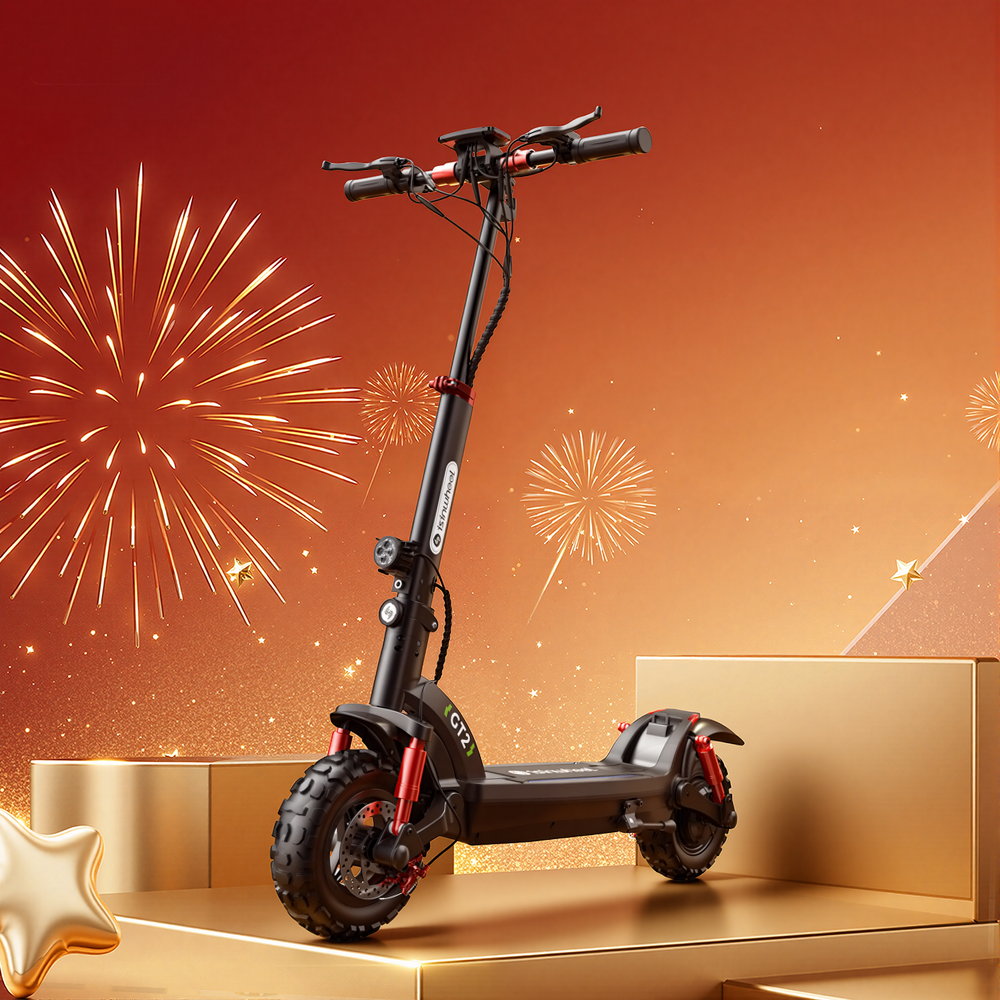
If you want one brand example that stays near the budget line, iSinwheel positions its lineup as eco-friendly transportation with strong cost-performance. The two reference models used here are the iSinwheel GT2 off-road scooter and the iSinwheel U8 fat-tire e-bike.
Official Site: iSinwheel

Off-road Electric Scooters and E-bikes Fundamentals
Vehicle classes and riding posture
Electric Scooters use a standing stance with a narrow contact patch: two wheels, short wheelbase, and your weight centered above the deck. This posture makes scooters feel simple at low speed, but it demands more micro-balance when the surface gets loose.
Electric Bikes add a larger frame triangle, longer wheelbase, and a seated option. That geometry increases straight-line stability, especially on gravel. For beginners, that stability can lower stress during longer rides and can feel more forgiving during small mistakes.
Terrain basics: traction, clearance, and suspension
Off-road traction comes down to three things:
- Tire volume and tread that can bite into loose material
- Ground clearance that reduces deck or pedal strikes
- Suspension that keeps wheels in contact over chatter bumps
In beginner terrain (pavement, hard pack, light gravel), both platforms can work. When the route includes sand, deep gravel, mud, or embedded rocks, Fat Tire E-bikes usually hold an advantage because the larger tire footprint and bike geometry reduce front-end washouts.
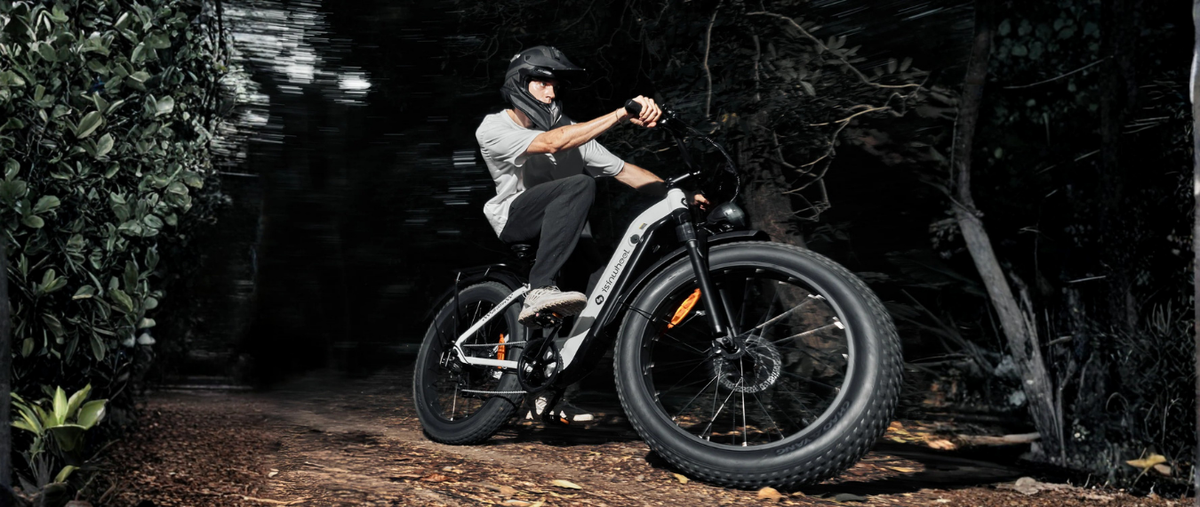
The iSinwheel GT2 shows a scooter approach that is more trail-capable than typical city models by pairing 11-inch pneumatic off-road tires with dual hydraulic suspension. The iSinwheel U8 follows the e-bike approach with 26-inch fat tires and a Shimano-geared pedal drivetrain.
Power basics: watts, torque, and the role of gearing
Most listings emphasize motor watts, but beginners should think in systems:
- Motor output helps you accelerate and maintain speed
- Battery watt-hours influence how long you can keep doing it
- Gearing and pedaling (on e-bikes) lets humans assist on hills
Scooters are usually single-speed. You get what the motor and controller deliver. E-bikes can combine motor power with your pedaling through a gear range, which is why many riders find e-bikes easier for longer climbs.
In the examples:
- iSinwheel GT2 lists a 1000W rated motor and a stated 35% climbing ability, with a 48V 15Ah battery.
- iSinwheel U8 lists a 1500W motor with Shimano gears and a 48V 13Ah (624Wh) battery.
Safety baseline: helmet, braking, and lighting
Beginner adventure riding is still micro mobility, and injury risk has been trending up. The U.S. Consumer Product Safety Commission reported micro mobility injuries rose nearly 21% in 2022 vs. 2021, with e-scooter injuries rising 22% in 2022 vs. 2021. That trend matters because it supports building habits early, before speed and confidence outgrow skill. According to the U.S. Consumer Product Safety Commission, micro mobility injuries have trended upward since 2017.
Two practical baseline checks for Electric scooter safety features and e-bike safety:
- Brakes: disc brakes are a strong sign for mixed surfaces
- Lights and signals: you want visibility for green commuting solutions and dusk trail exits
The GT2 lists front and rear disc plus EABS, and lighting that includes headlight and turn signals. The U8, as a pedal e-bike, adds Shimano-geared assist alongside throttle power.
Terrain Fit for Off-road Electric Scooters and E-bikes
Terrain Fit: Pavement, Gravel, Light Trails

Beginners should classify their route before picking a platform:
- 70% pavement, 30% hardpack or fine gravel: scooter or e-bike can work
- Regular loose gravel, washboard, or shallow sand: e-bike becomes easier
- Mud, deep sand, or rock gardens: neither is ideal at budget level, but fat tires help
Tires and pressure are the beginner cheat code.
- Higher pressure rolls faster on pavement but skips on gravel.
- Lower pressure improves grip but can increase pinch-flat risk and reduce range.
A practical starting point is to run slightly lower pressure for mixed routes, then adjust based on feel:
- If the front end feels twitchy, reduce pressure a little.
- If the tire bottoms or feels squirmy, add pressure back.
Where scooters struggle: deep loose material. Scooters put a lot of control responsibility into the front wheel and handlebars. On deep gravel, the front wheel can deflect, and a standing rider may over-correct. E-bikes let you keep a steadier line using body weight shifts, and the longer wheelbase damps sudden changes.
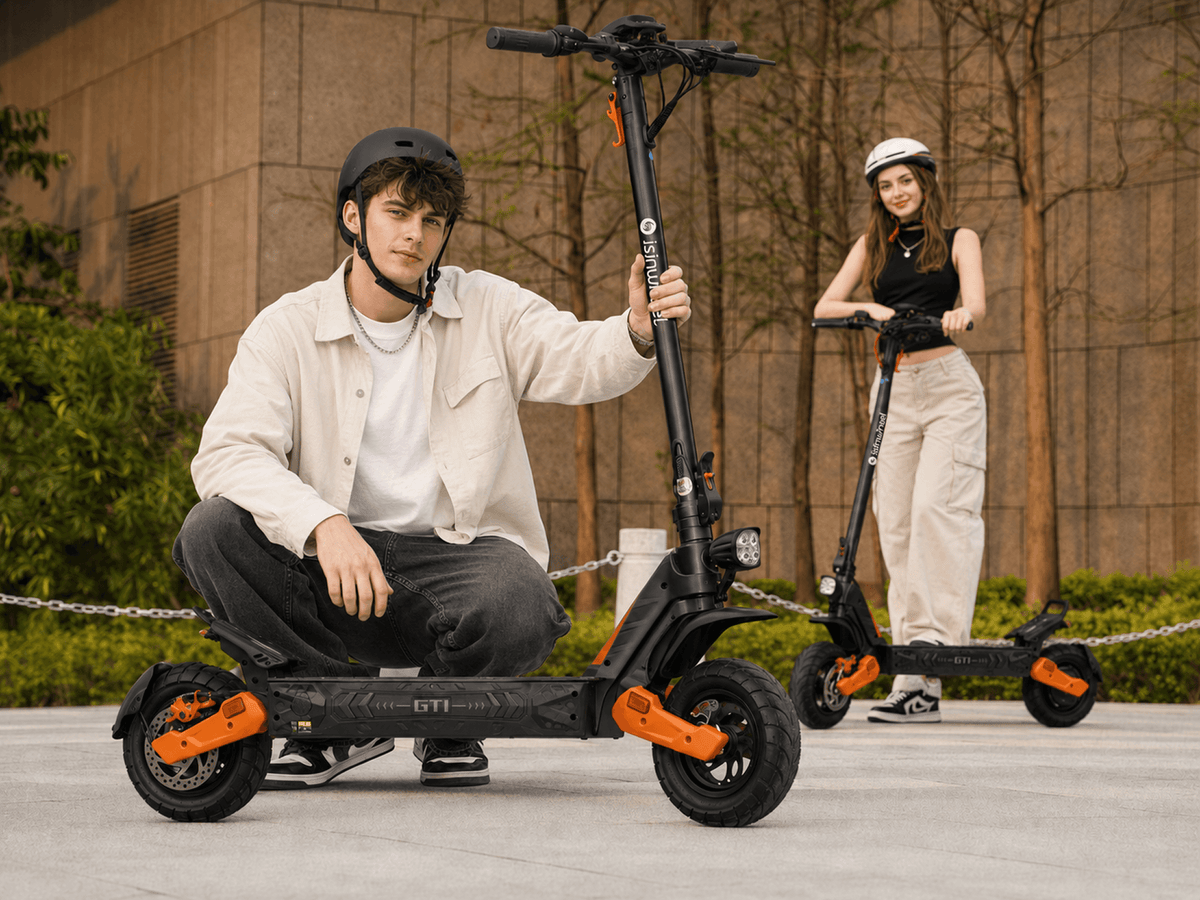
How the GT2 fits this module. The iSinwheel GT2 is designed as a more trail-friendly scooter than small-wheel commuters. Its 11-inch pneumatic off-road tires and front and rear dual hydraulic suspension are the key enabling features for beginner gravel and light trail use. The 7.5-inch wide deck also gives beginners a more stable stance than narrow decks.
Shop: isinwheel GT2 Off Road Electric Scooter 2026 Upgraded Version
Performance for Electric Scooters and Electric Bikes
Performance: Range, Speed, Hills
Range is where expectation mistakes happen. For beginners, the goal is not maximum miles. The goal is predictable planning.
The main range drivers are:
- Battery size and voltage
- Rider weight and cargo weight
- Average speed and number of stops
- Temperature and headwind
- Hills and surface resistance
Using the two example specs:
- The GT2 lists a 48V 15Ah battery with a stated max range of 37 miles.
- The U8 lists a 48V 13Ah (624Wh) battery.
Why those numbers can diverge in real life.
- Scooters often run at higher average throttle because there is no pedaling help.
- E-bikes can turn the same route into less battery drain by adding human watts.
Hill performance: watts are not the whole story. Even when motor wattage looks similar, e-bikes can climb longer because Shimano gearing lets you keep cadence while the motor stays in its efficient band. This is one reason many beginners feel e-bikes deliver better value for hilly adventures.
How the U8 fits this module. The iSinwheel U8 combines a 1500W motor with a 48V 13Ah battery and a Shimano-geared pedal drivetrain. For adventure beginners, the drivetrain matters because it lets you scale effort. You can pedal lightly to extend range, or pedal hard to keep speed steady on climbs.
The 26-inch fat tires also change performance planning. They add rolling resistance on pavement, so range can drop if you ride fast. However, they improve traction and confidence on loose surfaces, which can reduce stops and stalls.
Shop: isinwheel U8 Electric Bike for Adults
Handling and Comfort for Electric Scooters and E-bikes
Handling: Learning Curve, Comfort
Beginners usually ask which is easier to ride. The better question is which is easier to ride well on imperfect surfaces.
Scooter learning curve.
- Pros: simple controls, step-through mounting, easy low-speed maneuvering.
- Cons: standing fatigue, more handlebar input on loose gravel, smaller bump margin.
E-bike learning curve.
- Pros: seated stability, bigger tires, better line-holding on gravel.
- Cons: heavier, longer turning radius, more maintenance points.
Comfort is not just suspension. Suspension helps, but comfort also includes:
- Body position and fatigue (standing vs. seated)
- Vibration through hands and feet
- How often you must brake hard and re-accelerate
How the GT2 supports beginners. The iSinwheel GT2 lists front and rear dual hydraulic suspension. That matters on beginner trails because it reduces repeated impact, which can reduce fear-based braking. The net weight is listed as 53 lbs, which is still substantial, but often easier to store than many fat-tire e-bikes.
For beginners who want an electric ride for outdoor adventure without learning pedaling cadence, a higher-capability scooter like this can be a reasonable entry point for mixed pavement and light trail loops.
Shop: isinwheel GT2 Off Road Electric Scooter 2026 Upgraded Version
Practical Ownership for Foldable Electric Scooters and bikes
Practical Use: Storage, Transport, Theft
This is where many beginners change their mind.
Storage and transport checklist.
- Will it fit in your trunk or hallway?
- Can you lift it alone?
- Can you store it without blocking exits?
From the listed dimensions:
- GT2 folded dimensions: 48 x 8.6 x 22 in.
- GT2 net weight: 53 lbs.
- U8 net weight: 75.9 lbs.
If you live in an apartment or need a trunk-friendly option, Foldable Electric Scooters usually win. A scooter that folds to a narrow footprint can also support scooter for urban commuting during the week, then gravel connectors on weekends.
Theft and tracking reality. Beginners often underinvest in theft prevention. You should assume that anything left outside can disappear fast.
- Use a quality lock strategy (frame plus wheel where possible).
- Prefer parking where there is foot traffic.
- If your device supports app-based locking or NFC, treat it as a layer, not a replacement.
The GT2 lists app and NFC card unlock as its lock method. If you care about GPS Tracking or Smart Alarm Systems, confirm which functions are actually present in the app and which require add-on accessories.
An accessory note. The iSinwheel pages show scooter add-ons like a scooter bag and a cable lock. For Electric scooter accessories, beginners should prioritize a pump, tire repair basics, and lighting visibility first, before comfort add-ons.
Shop: isinwheel GT2 Off Road Electric Scooter 2026 Upgraded Version
Safety and Risk Management for Electric mobility solutions
Safety and Risk Management
Safety is the part of electric mobility solutions that most new riders skip until a close call. Build a simple system instead.
- Start with battery and charging safety. Micromobility batteries can fail dangerously when counterfeit, damaged, or charged improperly. Look for credible third-party safety certification and use the original charger.
-
Run a pre-ride check that fits in 60 seconds.
-
Squeeze brakes and confirm firm lever feel
- Spin wheels and listen for rubbing
- Check tire firmness with a thumb press
-
Confirm lights and turn signals work
-
Reduce speed where traction is uncertain. Loose gravel, wet leaves, and sand patches behave like ball bearings. Beginners should treat them as slow zones. If you cannot see the surface clearly, you should assume it is worse than it looks.
-
Avoid high-risk habits that create worst-case crashes.
-
Riding one-handed on rough ground
- Braking hard while turning on gravel
- Charging batteries while sleeping
Where scooters and e-bikes differ for beginner safety.
- Scooters: front wheel deflection is a bigger issue on gravel.
- E-bikes: speed can creep up because pedaling feels stable, so braking distance becomes the hidden risk.
If you are also considering Electric Skateboards for travel or fun, treat them as a separate skill category. Electric skateboards for beginners demand balance and surface reading at a higher level than scooters or bikes, especially on gravel.
How to Choose Between Off-road Electric Scooters and E-bikes
Budget under $800 prioritize the system
For adventure beginners, staying under budget usually means you cannot optimize everything. Prioritize:
- Real braking hardware (disc brakes are a strong sign)
- Tire volume for your terrain
- Battery safety signals
Within the iSinwheel examples, the GT2 is positioned as a strong value scooter platform with dual hydraulic suspension and 11-inch off-road pneumatic tires, while the U8 aims for comfortable fat-tire e-bike riding with a 48V 13Ah (624Wh) battery.
Terrain intensity match tires and suspension
Use a simple rule:
- Mostly pavement with occasional gravel: scooter works well
- Regular gravel paths and uneven connectors: fat-tire e-bike is easier
- Frequent sand or mud: fat tires help, but plan slower speeds
Quick decision table for beginners
| Scenario | Key factors | Better fit | Trade-offs |
|---|---|---|---|
| Apartment storage, trunk transport, mixed commuting | Foldability, weight, compact footprint | Off-road Electric Scooters | More standing fatigue on long rides |
| Gravel paths, longer weekend loops | Stability, traction, pedal assist | E-bikes (Fat Tire E-bikes) | Heavier and takes more storage space |
| Hilly routes with uncertain range | Gearing, ability to add human power | Electric Bikes | More drivetrain maintenance |
| Short rides with frequent stops | Easy on and off, simple controls | Electric Scooters | Range drops fast at high speed |
Pitfalls for Electric Scooters and Electric Bikes
Common Pitfalls to Avoid
- Do not overestimate range on hills. Climbing draws disproportionate energy, and the return descent rarely gives it back.
- Do not charge batteries while sleeping. Charging is when many failures show up, and you need to respond fast if anything smells hot or looks swollen.
- Do not ride fast into unknown surfaces. Gravel depth changes quickly, especially near trail edges and driveways.
- Do not ignore tire pressure. Under-inflation can cause pinch flats, while over-inflation can turn gravel into a slip zone.
Conclusion
Adventure beginners usually do best by matching the platform to the terrain they will ride most often. If your reality is mixed commuting with light trails, Off-road Electric Scooters can deliver compact ownership and simple controls. If your reality includes longer loops, regular gravel, or sustained hills, Electric Bikes tend to feel more stable and provide better range control through pedaling.
Use the decision table, be honest about storage and lifting, and then build safety habits early. That combination is the most reliable way to get more rides per month with fewer close calls.
Frequently Asked Questions
How do I select an electric scooter for outdoor adventures and rough terrain for $800 or less?
You should prioritize tire size, tire type, and suspension before chasing peak speed. Look for pneumatic tires that can be tuned with pressure, because traction changes a lot between pavement and gravel. Disc brakes are important because loose surfaces demand predictable stopping power. Finally, compare real carry weight and folded size, because portability often determines whether you ride weekly or quit.
How do electric scooters compare to e-bikes for range and speed, and which offers better value?
E-bikes often achieve longer practical range because you can add pedaling support and use gears to keep the motor efficient. Scooters can match speed on paper, but their range tends to fall faster when you ride near top speed. Value depends on your route: scooters can be easier to store and simpler to maintain, while e-bikes can be better for longer rides and hills. You should also consider tire replacement and drivetrain maintenance as part of long-term ownership.
How does an electric scooter compare to an e-bike for uphill riding, and which is better for beginners?
E-bikes usually climb better for beginners because you can contribute pedal power and shift gears to keep cadence steady. A scooter can still climb well if its motor and controller are strong, but you cannot downshift or add meaningful mechanical advantage. On longer climbs, beginners often feel less anxious on an e-bike because the bike feels stable at lower speeds. If your area has frequent grades, the ability to pedal can prevent range surprises.
What features should I prioritize when choosing a value-for-money off-road electric scooter?
You should focus on braking system quality, suspension design, and pneumatic tire size, because these determine control on imperfect surfaces. A wider deck can also increase beginner confidence by improving stance stability. Check rated load capacity and water resistance, because outdoor riding exposes the scooter to bumps and splashes. Finally, consider practical features like foldability and lighting, since they affect daily use as much as trail performance.
How to decide if an electric scooter or e-bike is right for me as a beginner?
Choose a scooter if you need compact storage, quick errands, and simple controls that feel familiar in the first hour. Choose an e-bike if you want longer rides, better climbing flexibility, and more stability on gravel. Your decision should also reflect where you will park and how you will lock the device, because theft risk changes ownership behavior. If you are unsure, pick based on terrain first, then storage, then range needs.
Table of Contents
- Introduction
- Off-road Electric Scooters and E-bikes Fundamentals
- Terrain Fit for Off-road Electric Scooters and E-bikes
- Performance for Electric Scooters and Electric Bikes
- Handling and Comfort for Electric Scooters and E-bikes
- Practical Ownership for Foldable Electric Scooters and bikes
- Safety and Risk Management for Electric mobility solutions
- How to Choose Between Off-road Electric Scooters and E-bikes
- Pitfalls for Electric Scooters and Electric Bikes
- Conclusion
-
Frequently Asked Questions
- How do I select an electric scooter for outdoor adventures and rough terrain for $800 or less?
- How do electric scooters compare to e-bikes for range and speed, and which offers better value?
- How does an electric scooter compare to an e-bike for uphill riding, and which is better for beginners?
- What features should I prioritize when choosing a value-for-money off-road electric scooter?
- How to decide if an electric scooter or e-bike is right for me as a beginner?

Share:
Durable Electric Scooter Brands: Build Quality Over Top Speed
A Comprehensive Guide to Finding Safe and Reliable Electric Scooters for Daily Riding