


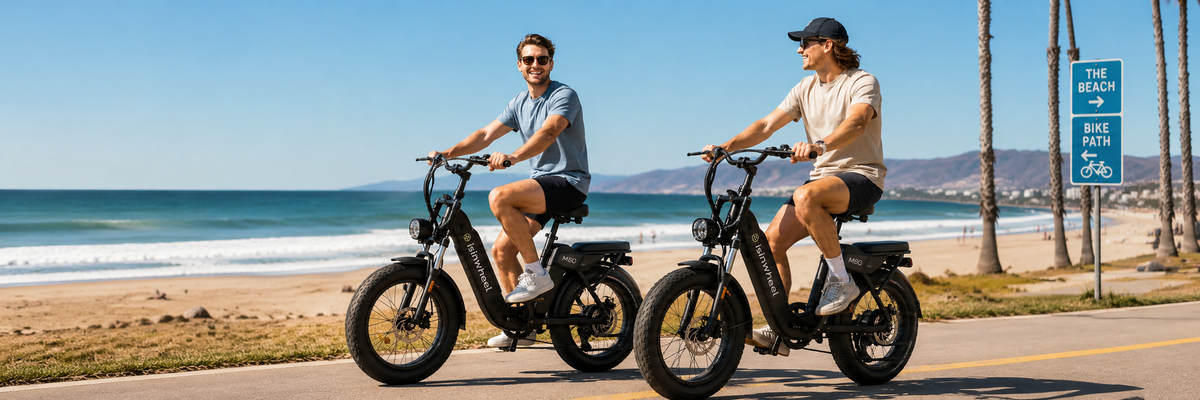
Not Sure What to Look for in an E-Bike? Start Here
The features that matter most when buying an e-bike are motor power, battery range, brake type, frame fit, tire type, weight capacity, weather resistance, gearing, safety features, and warranty support. Get these right, and almost any electric bike will serve you well for years. Get them wrong, and you might end up with a bike that's underpowered for your commute, uncomfortable on long rides, or simply not built for the terrain you actually ride.
E-bikes have become a normal part of daily life for commuters, weekend riders, and anyone who wants to skip traffic or arrive at work without breaking a sweat. But with so many models on the market, it's easy to get overwhelmed by spec sheets. Below is a simple, no-jargon breakdown of what to check before you buy, along with a few iSinwheel models worth comparing.
1. Motor Power How Many Watts Do You Actually Need?
Motor power is usually the first number people look at, and it does matter, but more watts isn't automatically better for everyone. A 500W–750W motor is plenty for flat city commuting, while hillier routes or heavier riders benefit from 1000W or more. The iSinwheel M60 All-Terrain Electric Bike uses a 750W setup that handles most city and light trail riding without feeling sluggish on inclines.
Class 1, 2, and 3 E-Bikes Explained
In the US, e-bikes are generally grouped into Class 1 (pedal-assist only), Class 2 (throttle-equipped), and Class 3 (higher top speed, pedal-assist). Some states restrict where each class can ride, especially on bike paths, so it's worth checking your state's rules before buying a throttle bike for city use.
2. Battery Capacity and Real-World Range
Manufacturers list a maximum range, but real-world range depends on rider weight, terrain, speed, and how much you rely on the throttle versus pedaling. A battery rated for 40–50 miles might realistically deliver 25–35 miles in mixed riding conditions. If your commute is long or you plan weekend trips, look for a bike with a bigger battery, such as the iSinwheel U8 Ultra Electric Bike, which is built for longer rides without a mid-day charge.
3. Brake Type: Mechanical vs Hydraulic Disc Brakes
Brakes are one of the most overlooked safety features. Mechanical disc brakes are reliable and easier to maintain, while hydraulic disc brakes offer stronger, smoother stopping power with less hand effort especially useful at higher speeds or on wet roads. If you'll be riding in stop-and-go traffic often, hydraulic brakes are worth the upgrade.
4. Frame Style and Fit
A bike that doesn't fit your body is uncomfortable no matter how strong the motor is. Step-through frames are easier to mount and dismount, which many commuters and shorter riders prefer, while standard diamond frames offer a sportier, more rigid ride. Always check the recommended rider height range before buying.
5. Tire Type: Fat Tires vs Standard Tires
When Fat Tires Make Sense
Fat tires, typically 4 inches wide, add stability and comfort on gravel, sand, snow, or uneven pavement, and they also smooth out potholes on rough city streets. The iSinwheel M10Pro Electric Bike uses 20x4" fat tires, making it a solid option for riders who deal with mixed road conditions rather than smooth, dedicated bike lanes.
Standard tires, on the other hand, roll faster and lighter, which suits riders sticking mostly to paved roads and looking for efficiency over cushioning.
6. Weight Capacity and Bike Weight
Check both numbers: how much rider and cargo weight the bike supports, and how heavy the bike itself is. A heavier e-bike can be harder to carry up stairs or load into a car, while a bike with a low weight limit may not suit taller or heavier riders comfortably. Most quality e-bikes list a rider weight capacity of 220–330 lbs.
7. Water and Weather Resistance
If you'll ride in rain or store your bike outdoors, check the IP rating. An IPX5 or higher rating means the bike can handle splashes and light rain without damage to the electronics, which matters more than people expect until they get caught in a sudden downpour on the way home.
8. Gears and Shifting Systems
A 7-speed Shimano drivetrain, like the one on the U8 Ultra, gives you more control over pedaling effort across hills and headwinds. Single-speed e-bikes are simpler and need less maintenance, but they rely more heavily on the motor, which can drain the battery faster on hilly routes.
9. Display, Lights, and Safety Features
A clear LCD or LED display showing speed, battery level, and assist mode makes daily riding much easier to manage. Built-in front and rear lights are a must if you ever ride at dusk or after dark, and reflective elements or turn signals are a nice bonus for visibility in traffic. If you're new to e-bikes, our M10 Pro Review walks through how these everyday features hold up on real commutes.
10. Warranty, Support, and Local E-Bike Laws
Finally, check what kind of warranty and after-sales support come with the bike, along with easy access to replacement parts. It's also worth reviewing local regulations on e-bike speed limits, helmet rules, and where you're allowed to ride, since these vary by city and state.
Ready to Compare Real Models
If you want to see how these features play out on an actual ride, our M60 All-Terrain Electric Bike Review covers how a 750W motor and all-terrain build perform on city streets and light trails alike.
Choosing the Right E-Bike Comes Down to How You Actually Ride
There's no single "best" e-bike — only the one that matches your commute, terrain, and comfort needs. If you mostly ride on pavement and want efficiency, a lighter commuter build is a smart choice. If your rides mix pavement, gravel, and hills, an all-terrain model with a stronger motor and fat tires will serve you better. Take the time to match these ten features to your actual riding habits, and you'll end up with a bike you're happy with long after the new-bike excitement wears off.
What E-Bike Riders Want to Know
Do I need a license to ride an e-bike in the US?
Most Class 1 and Class 2 e-bikes don't require a license, but rules vary by state, so it's worth checking your local DMV guidelines.
How long do e-bike batteries typically last?
Most quality e-bike batteries last 500–800 full charge cycles, which translates to roughly 3–5 years of regular use before a noticeable drop in range.
Are fat tire e-bikes harder to pedal without motor assist?
Fat tires add some rolling resistance, so pedaling without assist takes a bit more effort compared to standard tires, though most riders barely notice this with motor support on.
Can I ride an e-bike in the rain?
Yes, as long as the bike has a reasonable water resistance rating like IPX5, though it's still best to avoid deep puddles or fully submerging the electronics.
What's the difference between a commuter e-bike and an all-terrain e-bike?
Commuter e-bikes are lighter and built for smooth paved rides, while all-terrain e-bikes have stronger motors, bigger tires, and sturdier frames for mixed or rough terrain.

Share:
How to Choose the Right iSinwheel Electric Bike for City Streets, Hills, and Off-Road Trails