


Introduction
Beginners usually do not crash because they are reckless. Beginners crash because loose gravel, surprise ruts, and poor braking feel punish small mistakes.
If you want Electric Scooters that can handle rougher ground, focus on the durability basics first: suspension that calms chatter, tires that keep grip when the surface changes, and brakes that stop smoothly.
In the US, injury data is a useful reminder that scooters are not toys. The U.S. Consumer Product Safety Commission reported micro mobility injuries increased nearly 21% in 2022 vs 2021, so a beginner-friendly setup and electric scooter safety features matter from day one. According to the U.S. Consumer Product Safety Commission, that increase was observed across e-scooters and e-bikes.
What this shortlist is
- 3 picks total: 1 value-focused off-road starter, 1 premium heavy-duty platform, 1 commuter-first crossover
- Beginner lens: predictable handling, forgiving traction, controllable braking
- No pricing: specs and use-case fit only
The 3 picks: durable, beginner-friendly, rated
1. isinwheel GT2 Off Road Electric Scooter 2025 Upgraded Version

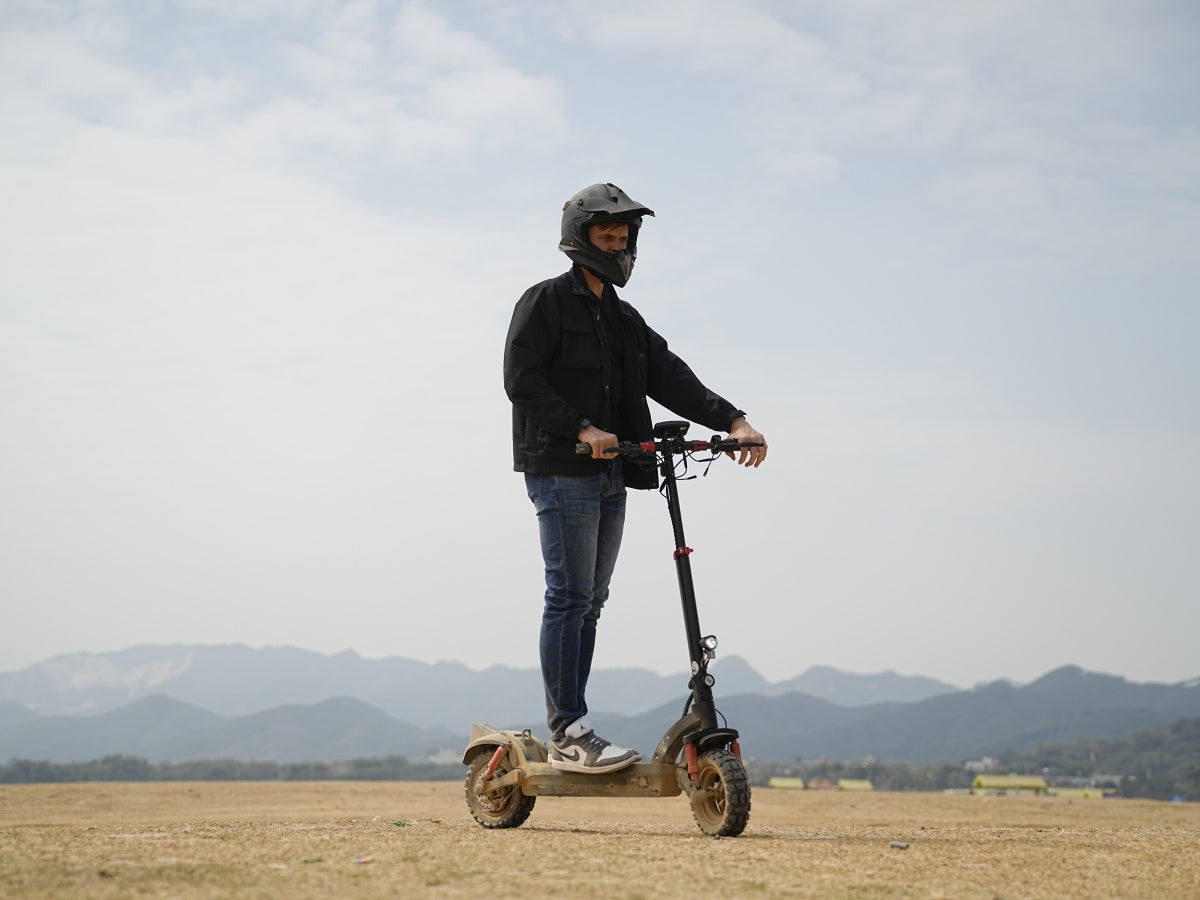
isinwheel GT2 is the most straightforward beginner pick if you want an Off-road E-scooter feel without jumping into a massive, ultra-heavy performance chassis.
It leans into comfort and control: 11-inch off-road pneumatic tires plus front and rear dual hydraulic suspension help reduce the high-frequency vibration that makes new riders tense up. That matters because relaxed arms and stable vision usually translate into better line choice on dirt.
- Best for: first-time electric ride for outdoor adventure, gravel paths, hardpack dirt, rough city streets with potholes
- Ride comfort focus: dual hydraulic suspension, larger tires
- Control focus: disc braking plus EABS for smoother decel
- Beginner-friendly security: app and NFC lock method
- Size and stance: 7.5-inch wide deck, aluminum alloy frame
- Practical durability cues: IP54 water resistance rating
- Key specs: 1000W rated motor; up to 28 MPH; up to 37 miles range; 48V 15Ah battery; 53 lbs net weight; 330 lbs max load
Why it wins: Beginners usually improve fastest when the scooter feels calm at low and medium speeds. The GT2s big tires and hydraulic suspension reduce bounce and front-end deflection, so you can practice braking and turning on mixed surfaces with less drama.
Shop: isinwheel GT2
2. Segway SuperScooter GT3
Segway SuperScooter GT3 is the pick for riders who want a tougher, more stable platform and are ready to manage the trade-offs: weight, storage, and a higher-performance feel.
This is the kind of build that stays composed when speed rises, which can feel safer on wide trails or open roads. However, it can feel like a lot of scooter for true beginners if you are still mastering emergency braking and slow-speed balance.
Why it can feel overbuilt (in a good way)
- Best for: advanced durability demands, higher-speed stability, heavier riders plus gear
- Tire style: 11-inch self-sealing tubeless
- Suspension style: hydraulic front and rear
- Payload class: 330 lbs
- Weight class: about 87 lbs
Why it wins: If you can handle the mass and storage needs, this platform typically rewards you with calmer tracking and less twitchiness at speed. That is helpful when a trail surface changes suddenly from packed dirt to loose gravel.
Shop: Segway SuperScooter GT3
3. Segway KickScooter E2 Pro
Segway KickScooter E2 Pro is the commuter-first option that still tolerates light off-pavement use, like hardpack paths and rough sidewalks.
It is easier to live with than true off-road builds because it is lighter and more compact. The limitation is simple: the spec sheet does not list suspension, so rocky or washboard trails will feel harsh and can reduce control for beginners.
- Best for: scooter for urban commuting, campus paths, occasional dirt cut-throughs
- Tire style: 10-inch air-leakage-proof tubeless pneumatic
- Brakes: front drum plus rear electric brake
- Suspension: N/A
- Rated specs: 350W nominal, 750W max power; IPX4; 41.4 lbs; 265 lbs payload; approx. 5.5 h charge time
Why it wins: A lower-speed commuter scooter can be a smarter learning tool because it reduces consequence while you build braking habits and scanning skills. You can then step up later to a heavier Off-road E-scooter once your fundamentals feel automatic.
Shop: Segway KickScooter E2 Pro
Buying guide: how to choose without regrets
A beginner off-road setup fails in predictable ways. The scooter chatters, your hands go numb, and braking becomes jerky because traction comes and goes.
So you are not really shopping for top speed. You are shopping for control under imperfect traction and durability features that prevent small hits from turning into crashes.
What matters most for off-road durability?
- Suspension type: hydraulic vs none
- Tire diameter: 10-inch vs 11-inch
- Tire construction: pneumatic vs tubeless self-sealing
- Brake feel: disc vs drum; EABS or electronic assist
- Water resistance: IP rating clarity for wet commuting
- Payload and deck space: stance stability, gear carrying
Quick selection prompts beginners actually use
- "Ruts and gravel?" prioritize hydraulic suspension and 11-inch tires
- "Car trunk commuting?" prioritize Foldable Electric Scooter design and lower weight
- "Wet streets?" prioritize a clearer IP rating and stronger lighting
- "Apartment storage?" prioritize handlebar width and folded dimensions
Setup habits that prevent rookie damage
Tire pressure is the hidden durability lever. Under-inflated tires pinch and squirm, while over-inflated tires ping off rocks and reduce grip.
Also, bed in your brakes. Do 10 to 20 controlled stops from moderate speed so pad material transfers evenly, because that improves consistency and reduces early fade.
Common beginner mistakes (and the fix)
- Full-throttle starts on loose dirt: use a mid-speed roll-on, then add power after the front tracks
- Death-grip arms: bend elbows, let the suspension work
- Late braking into turns: brake earlier, then turn on neutral throttle
- Ignoring bolt checks: re-check stem and clamp bolts weekly for the first month
Comparison table: scan the differences fast
| Model | Positioning | Top Speed | Max Range | Tires | Suspension | Brakes | Water Rating | Payload | Weight |
|---|---|---|---|---|---|---|---|---|---|
| isinwheel GT2 | Off-road value | 28 MPH | 37 miles | 11-inch off-road pneumatic | Dual hydraulic | Disc + EABS | IP54 | 330 lbs | 53 lbs |
| Segway SuperScooter GT3 | Premium performance | 31 mph class | 45 miles class | 11-inch self-sealing tubeless | Hydraulic front + rear | Dual disc class | IPX6 class | 330 lbs | 87 lbs class |
| Segway KickScooter E2 Pro | Commuter starter | 18.6 mph | 24.9 miles | 10-inch tubeless pneumatic | N/A | Drum + electric | IPX4 | 265 lbs | 41.4 lbs |
Conclusion
If you want one durable, beginner-friendly off-road pick that balances comfort and capability, isinwheel GT2 is the cleanest match because its big tires and hydraulic suspension support confidence-building reps.
If you want the most heavy-duty feel and you are comfortable with the weight and storage demands, Segway SuperScooter GT3 is the high-commitment durability choice.
If your real life is commuting with only light off-pavement riding, Segway KickScooter E2 Pro stays practical while still bringing tubeless pneumatic tires and visibility upgrades.
For context on why helmets and visibility upgrades matter, a CDC-reported study summary found head injuries represented 45% of e-scooter injuries in one city dataset, which reinforces beginner priorities like conservative speeds and consistent protective gear. According to CDC, that dataset highlighted head injuries as a major share.
FAQ
How do I ensure my off-road scooter is safe for rough terrains without spending too much?
Prioritize suspension, tire size, and braking first. Choose at least 10-inch pneumatic tires, and move to 11-inch if you expect gravel and ruts weekly. Aim for disc brakes or a strong drum plus electronic brake pairing, then practice 10 controlled stops per ride for the first week. Finally, keep tire pressure consistent because most beginner wipeouts start with traction loss from poorly inflated tires.
How do off-road electric scooters perform on dirt paths?
They perform well on hardpack dirt when tires stay inflated and your speed stays moderate. Large pneumatic tires (10 to 11 inch) smooth small rocks and reduce deflection at the front wheel. Hydraulic suspension reduces chatter so you can keep your eyes up and scan 15 to 30 feet ahead. On deep sand or loose pea gravel, even durable scooters can wash out, so lower speed and avoid sharp steering.
What features should I prioritize when choosing a value-for-money off-road electric scooter?
Suspension and tires first, then brakes and lighting. For durability, pick hydraulic suspension over no suspension and prioritize 11-inch tires if you expect potholes and trail ruts. For control, look for disc brakes plus EABS or electronic assist to reduce lock-ups on mixed traction. For daily use, prioritize turn indicators and a bright headlight so drivers can predict your line.
What's the best electric scooter for off-road trails?
It depends on how rough the trail is and how you store the scooter. If the trail is rocky or washboarded, prioritize hydraulic suspension and larger tires because those two features protect control more than raw motor power. If you must lift the scooter up stairs, a lighter commuter platform can be safer overall because you will ride it more consistently and maintain it better. For most beginners, the best choice is the one that feels stable at 12 to 18 mph, not the one with the highest top speed.
Which electric scooter offers the best suspension for off-road riding while maintaining value for money?
isinwheel GT2 offers the best suspension-for-value in this three-pick list. Dual hydraulic suspension front and rear reduces vibration and keeps the wheels tracking when the surface breaks up. That helps beginners brake more smoothly because the tire stays in contact instead of skipping. Pair that with correct tire pressure and conservative corner entry speed, and the learning curve gets noticeably easier.
Table of Contents
- Introduction
- The 3 picks: durable, beginner-friendly, rated
- 1. isinwheel GT2 Off Road Electric Scooter 2025 Upgraded Version
- 2. Segway SuperScooter GT3
- 3. Segway KickScooter E2 Pro
- Buying guide: how to choose without regrets
- Comparison table: scan the differences fast
- Conclusion
-
FAQ
- How do I ensure my off-road scooter is safe for rough terrains without spending too much?
- How do off-road electric scooters perform on dirt paths?
- What features should I prioritize when choosing a value-for-money off-road electric scooter?
- Whats the best electric scooter for off-road trails?
- Which electric scooter offers the best suspension for off-road riding while maintaining value for money?



Share:
How to Choose a Daily Electric Scooter for Your Child: 5 Essential Tips for Parents
5 Easy-to-Ride Electric Scooters Under $800 for Beginners: A Checklist