


Introduction
You finally decide to try Electric Scooters for green commuting solutions, and the first ride feels twitchy: your front wheel hunts, the throttle jumps, and every crack in the pavement feels bigger than it looked. If you pick the wrong scooter, you pay twice, through returns, repairs, or a first ride that feels unsafe enough to park it for good.
This checklist helps you choose a beginner-friendly electric scooter setup that feels stable, fast, brakes predictably, and fits your real route (not a marketing route). Then we narrow it to five under-$800 options, including Isinwheel electric scooters and a few widely known alternatives, so you can compare comfort, control, and safety features without drowning in specs.
The beginner checklist: what to confirm before you buy
1) Will it feel stable in the first 10 minutes?
If your first session is shaky, you will tense up, over-correct, and feel like the scooter is "fighting" you. Stability is the fastest confidence builder, so you should prioritize ride feel over peak performance.
- Tires: Pneumatic tires (air-filled) usually absorb cracks and vibration better than solid tires.
- Throttle tuning: Look for smooth takeoff and predictable speed ramps, not instant surge.
- Braking feel: You want a brake lever that is easy to modulate, not "all-or-nothing."
- Deck comfort: Enough standing room to keep both feet stable and relaxed.
2) Is it fast enough without being intimidating?
A scooter can be "beginner-friendly" and still be too fast for your first week. Your goal is controlled repetition: smooth starts, clean turns, and calm braking.
- Multiple ride modes: You should be able to cap speed while learning.
- Realistic top speed for you: Faster is only useful if you can brake and steer calmly.
- Local rules: Many cities and campuses set speed caps for Electric mobility solutions.
3) Can it handle your real route (not the marketing route)?
The fastest way to get disappointed is to buy based on the best-case range. Range drops with hills, headwinds, cold weather, and heavier loads.
- Hills: Power matters most on inclines, especially if you do not want the scooter to bog down.
- Battery basics: Lithium-ion Battery Technology is energy-dense, but your habits (speed, tyre pressure, temperature) change results.
- Charge time: If you ride daily, a long charge time can break your routine.
4) Do the safety basics come built-in?
A beginner does not need aggressive performance, but you do need basic visibility and predictable stopping.
- Lights: Front headlight plus a real rear brake light (not just reflectors).
- Brakes: Mechanical braking plus electronic assist can feel more controlled for panic stops.
- Battery safety: In August 2025, the United States Consumer Product Safety Commission published a proposed rule package aimed at lithium-ion battery safety for micro mobility products. This matters because safer packs and safer electrical systems reduce fire risk during charging and storage. U.S. Consumer Product Safety Commission
The 5 easy-to-ride picks under $800 (with quick fit notes)
1) isinwheel S9 Pro Pneumatic Tire Electric Scooter

If you want the least intimidating start for a scooter for urban commuting, this is the style of pick that makes practice feel calmer. The big win for beginners is not raw speed, but predictable control paired with pneumatic comfort so you do not feel every seam in the road.
- Best for: First-time urban commuting practice and short errands.
- Beginner fit: Pneumatic tires smooth out chatter, which helps you relax your knees.
- Motor: 350W motor capacity.
- Top speed: Up to 19 mph.
- Max range: Up to 19 miles.
- Battery: 36V 7.5Ah.
- Charging time: 3-5 hours.
- Max load: 220 lbs.
Shop: isinwheel S9 Pro Pneumatic Tire Electric Scooter
Why it wins: For beginners, smooth comfort equals smoother control. A moderate speed ceiling plus pneumatic tires usually reduces "first-ride jitters," so you can focus on fundamentals like progressive braking and steady cornering.
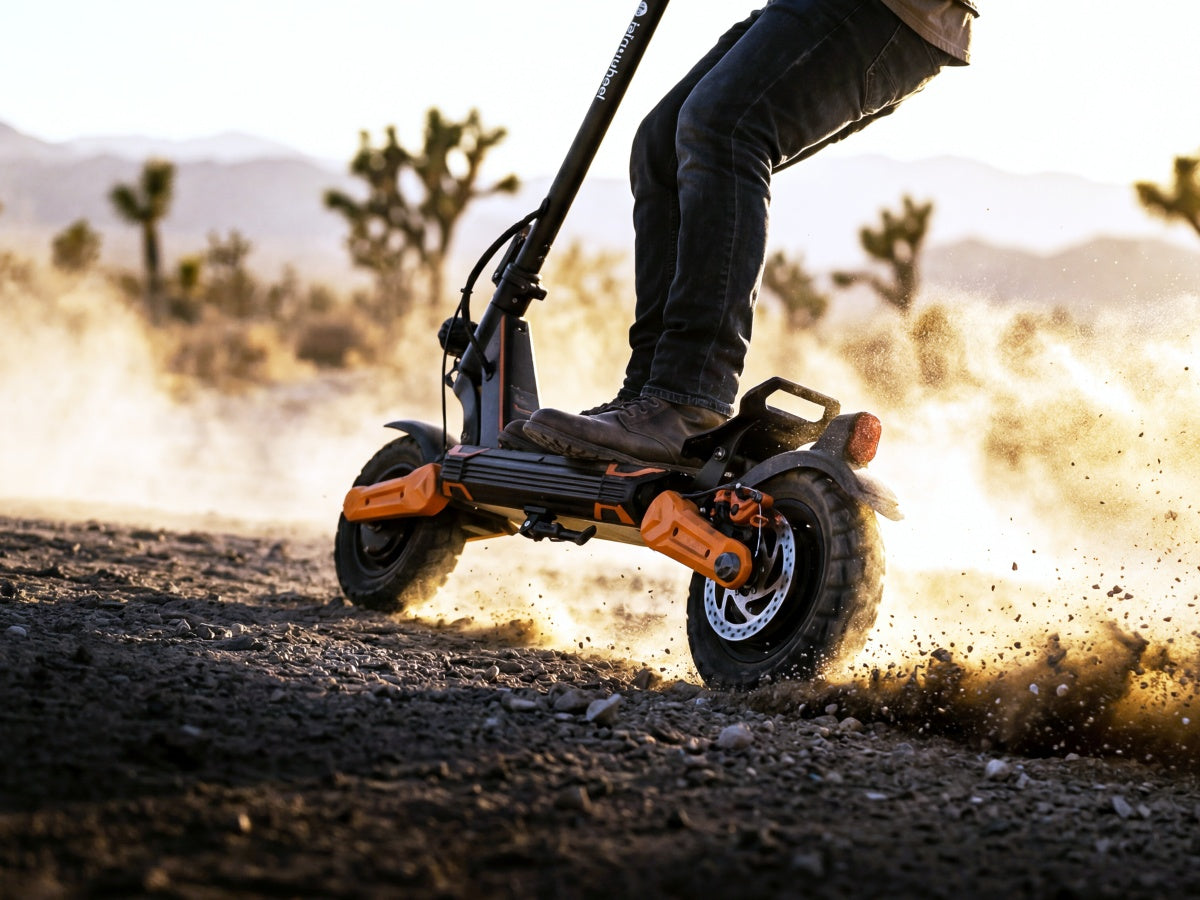
2) isinwheel GT1 Dual Motor Off-Road Electric Scooter

If your "beginner" reality includes rough pavement, mixed paths, or meaningful hills, extra capability can actually feel safer, because the scooter does not struggle when conditions get imperfect. The caveat is discipline: higher speed potential means you must commit to using lower modes while learning.
- Best for: Beginner riders who need stability on rougher paths and hills.
- Beginner fit (with a caveat): Dual motors help avoid bogging down, but you should cap speed early.
- Motor: 800W*2 dual motors.
- Top speed: Up to 32 mph.
- Max range: Up to 35 miles.
- Battery: 48V 13Ah.
- Charging time: 6-7 hours.
- Max load: 330 lbs.
- Ride modes listed: Single motor (9/15/21/28 mph) and dual motor (12/18/25/32 mph).
Shop: GT1 Dual Motor Off-Road Electric Scooter
Why it wins: If your route includes steep sections, more power can keep speed consistent and reduce wobble from sudden slowdowns. Treat it like a "learn in low mode" scooter first, and a fast outdoor adventure option later.
3) Segway Ninebot KickScooter F2
If you want a mainstream commuter feel with lots of community support, the F2 line is a common reference point for the best electric scooters for commuting. The key is verifying the exact version sold in your region, because speed and range can vary by model and market.
- Best for: Beginner commuters who want wide availability and common accessories.
- Beginner fit: Commuter-oriented tuning and predictable everyday handling.
- Tires (common highlight): 10-inch self-sealing tubeless tires (marketed as maintenance-reducing).
- What to verify: Your region's top speed rating and the exact range spec for the F2 vs the F2 Plus.
- Practical note: You still want to practice braking distance on your own pavement, because grip varies.
Shop: Segway Ninebot KickScooter F2
Why it wins: For many riders, "easy to ride" means predictable behavior and an established support ecosystem. If you are new, that can reduce ownership friction as much as any single spec.
4) NIU KQi2 Pro
If you want a simple commuter scooter that feels planted on smooth pavement, the KQi2 Pro is often chosen for straightforward daily rides. Still, you should confirm the top speed and range for the specific product page you are buying from, since listings can differ by region and retailer.
- Best for: Straightforward commuting on mostly smooth routes.
- Beginner fit: Stable geometry and an easy, commuter-first feel.
- Top speed (varies by listing): Commonly shown around 15.5 mph to 17.4 mph, depending on market/site.
- Range (varies by listing): Often listed in the mid-20-mile class.
- Tires: Commonly listed as 10-inch class.
Shop: NIU KQi2 Pro
Why it wins: If you are nervous about speed, a moderate top-end can feel like a built-in safety boundary. That makes it easier to focus on smooth starts, wide turns, and calm braking.
5) Xiaomi Electric Scooter 6 Max
If your biggest beginner problem is road vibration and "twitchy" steering on broken streets, comfort features can make learning easier. The 6 Max is positioned as a longer-distance city model, but US availability and exact specs depend on where you buy.
- Best for: Comfort-focused city riding when the model is available in your market.
- Beginner fit: Larger-tire comfort and suspension (by model) can reduce jitters.
- What to verify: Local availability, region speed limits, and which app features are supported.
- Range claims: Xiaomi markets the 6 Max with long-range positioning, but your real range depends heavily on speed and terrain.
Shop: Xiaomi Electric Scooter 6 Max
Why it wins: A smoother ride helps you stay relaxed, which improves steering control. For beginners, that comfort can be more valuable than chasing higher speed.
Buying guide: match the scooter to how you will actually ride
If you want the simplest learning curve
If your goal is to feel stable quickly, you should pick a scooter that does not tempt you into riding faster than your skill level. Comfort and predictable braking will make you practice more often.
- Choose a moderate top speed and use the lowest mode for day one.
- Prioritize pneumatic tires if your streets are rough.
- Pick the brake setup that feels controllable, not just "powerful."
If your route has hills or rough pavement
If your commute includes slopes, you will feel the difference between "can do hills" and "does hills without drama." More power is not only about speed; it is about not stalling out in the middle of a climb.
- Power helps you avoid slow, wobbly hill sections.
- Suspension and tires matter more than speed on rough surfaces.
- Plan your charging routine if the battery is larger.
Two practical setup tips for day 1
Your first ride should be a controlled practice session, not a commute under pressure. Give yourself space to learn how the scooter responds.
- Start in the lowest mode on flat ground and practice 10 clean starts.
- Check tire pressure weekly if you ride pneumatic tires, because low PSI reduces stability and range.
Two common beginner mistakes to avoid
Beginners usually regret the same two things: buying too much speed, and underestimating daily handling.
- Overbuying top speed instead of stability and braking confidence.
- Ignoring weight and folded size if you do stairs or store it at work.
Safety reality check for 2026
A scooter that is easy to ride still shares the road with cars, bikes, and pedestrians. You should treat "visibility" and "predictable stopping" as non-negotiables.
Helmet use matters because head impacts are the injury you cannot undo. The CDC summarizes how helmets reduce head injury risk in cycling contexts, and the same logic applies when you are learning Electric Scooters for last-mile delivery or daily commuting.
Comparison table (beginner-relevant specs)
| Scooter | Beginner fit | Top speed (listed) | Max range (listed) | Motor (listed) | Tires | Trade-offs / limitations |
|---|---|---|---|---|---|---|
| isinwheel S9 Pro Pneumatic Tire Electric Scooter | Calm, first-week friendly | Up to 19 mph | Up to 19 miles | 350W | Pneumatic | Shorter range on hills |
| isinwheel GT1 Dual Motor Off-Road Electric Scooter | Hills and rough routes | Up to 32 mph | Up to 35 miles | 800W*2 | 10 in off-road | Speed requires discipline |
| Segway Ninebot KickScooter F2 | Mainstream commuter feel | Varies by region | Varies by model | Varies by version | 10 in tubeless | Specs differ by market |
| NIU KQi2 Pro | Simple commuting | Varies by listing | Varies by listing | Varies by listing | 10 in class | Verify region speed cap |
| Xiaomi Electric Scooter 6 Max | Comfort-oriented | Varies by market | Varies by market | Varies by version | Larger-tire class | Availability varies by region |
Conclusion
If you want the easiest first week, prioritize stability, predictable braking, and a speed ceiling that keeps practice calm. For many beginners, an easy commuter like the isinwheel S9 Pro Pneumatic Tire Electric Scooter checks the right boxes without pushing you into faster riding before you are ready.
If your route includes hills or rough pavement, more capability can actually improve control, because the scooter stays consistent when conditions get messy. In that case, the GT1 Dual Motor Off-Road Electric Scooter can make sense, as long as you commit to learning in lower modes first and treat extra speed as an "earned" feature.
FAQ
How do I choose a safe top speed as a beginner?
Pick a scooter with multiple riding modes so you can cap speed while you learn starts, braking, and turning. For most beginners, a moderate top speed feels less stressful and helps you build consistent control. Once you can stop smoothly from your normal cruising speed and handle bumps without stiffening up, higher speed becomes more usable. If your area has local limits (often around 15 to 20 mph), treat that cap as your default, even if the scooter can go faster.
What is the easiest tire type for new riders to feel comfortable on?
Pneumatic tires tend to feel more forgiving because they absorb small cracks and vibration better than solid tires. That comfort helps you keep relaxed knees and a steady line, especially when you are still learning balance and micro-corrections. The tradeoff is maintenance: you need to check pressure and accept a puncture risk. If you choose pneumatic, check PSI weekly and top off before longer rides.
How much real-world range should I expect compared to the advertised range?
Expect less than the advertised maximum if you ride fast, climb hills, face strong wind, or carry a heavier load. Cold weather can reduce battery performance and shorten range, sometimes noticeably on rides longer than 20 to 30 minutes. A practical planning rule is to assume 60% to 80% of the claimed max range for day-to-day use, then adjust after a week of riding. If your commute is near the limit, buy more range than you think you need, so you do not end up charging midday.
What braking setup is most confidence-inspiring for beginners?
A confidence-inspiring setup slows predictably with light-to-moderate lever pressure, not one that feels grabby. Many scooters combine electronic braking with a mechanical brake, which can help smooth deceleration if tuned well. You should practice progressive braking in an empty lot: start at 10 mph, then repeat at 15 mph, focusing on staying upright and shifting your hips slightly back. If the rear wheel skids easily, reduce how abruptly you pull the lever and re-test on clean, dry pavement.
Should I prioritize weight or suspension for a beginner commuter scooter?
Prioritize weight if you carry your scooter up stairs, lift it into a trunk, or bring it onto transit every day. Prioritize suspension and larger pneumatic tires if your route is rough enough that bumps are what make you feel unstable. If you are split, choose the scooter you will actually use daily, because a great ride that is annoying to move often becomes a garage scooter. As a rule, comfort features matter most at 10 to 18 mph, while weight matters every single time you handle the scooter.
What accessories are actually worth buying on day one?
Start with a properly fitting helmet and a lock plan if you will park outside, because theft risk is real even for short stops. If you ride near traffic, consider brighter front and rear lights or reflective gear, so drivers see you from farther away. A compact pump is worth it for pneumatic tires, since correct pressure affects stability, braking distance, and range. Save performance add-ons until you have at least a week of riding data on your real route.
Table of Contents
- Introduction
- The beginner checklist: what to confirm before you buy
- The 5 easy-to-ride picks under $800 (with quick fit notes)
- Buying guide: match the scooter to how you will actually ride
- Comparison table (beginner-relevant specs)
- Conclusion
-
FAQ
- How do I choose a safe top speed as a beginner?
- What is the easiest tyre type for new riders to feel comfortable on?
- How much real-world range should I expect compared to the advertised range?
- What braking setup is most confidence-inspiring for beginners?
- Should I prioritize weight or suspension for a beginner commuter scooter?
- What accessories are actually worth buying on day one?



Share:
3 Durable Electric Scooters for Off-Road Conditions for Beginner (Tested & Rated)
Neighborhood Errands Under $500: 4 Best Scooters for Families Who Want an Easy-to-Ride Vehicle