


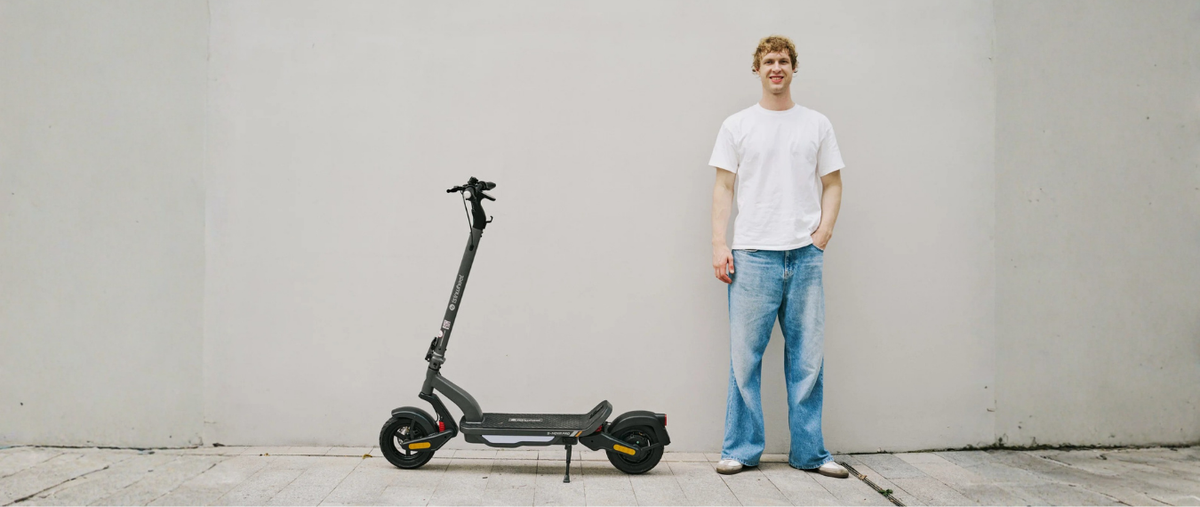
So, What Does That Wattage Number Actually Tell You?
In short: motor wattage is a rough measure of how much muscle your scooter has for climbing hills, carrying weight, and holding speed the higher the number, the more power is available, but it's not the only thing that decides how a scooter feels to ride. A 500W motor and a 1000W motor can both get you to work, but they'll behave very differently the moment a hill, a headwind, or an extra passenger shows up. Understanding what these numbers mean helps you avoid buying either more scooter than you need or less than you'll be happy with.
What Motor Wattage Really Measures
Wattage is a measure of power output, not speed by itself. A scooter's top speed also depends on gearing, wheel size, battery voltage, and rider weight, so two scooters with the same wattage can still feel different on the road. What wattage does predict fairly reliably is torque the twisting force that gets you moving from a stop and pulls you up an incline. That's why heavier riders or hilly routes usually call for more watts, even if top speed isn't the priority.
Most listings show either the "rated" power (what the motor can sustain continuously) or "peak" power (a short burst under hard acceleration). It's worth checking which one a product page is quoting, since a "1000W peak" motor may only sustain a few hundred watts on a long climb.
500W Scooters: Light, Simple, and Easy to Live With
A 500W motor is common on entry-level and lightweight scooters. This is enough power for flat commutes, short trips around the neighborhood, and campus or office-park riding, usually topping out around 15-19 MPH. Riders under about 220 lbs on mostly flat terrain tend to be happiest here. The trade-off is hills: a 500W motor will slow down noticeably on anything steeper than a gentle slope, and it's not built for aggressive stop-and-go traffic riding.
The isinwheel S9 Pro sits in this power class, with a 350W motor built for easy, everyday errands rather than speed or steep hills a good example of what this lighter category is designed to do.
750W Scooters: The Everyday Commuter Sweet Spot
Somewhere between 600W and 750W is where a lot of commuter scooters land, and for good reason. This range usually delivers noticeably better hill performance and quicker acceleration than a 500W setup, while still keeping the scooter reasonably light and affordable. It's a solid match for city commuting that includes a few moderate inclines, stop-and-go traffic, or a slightly heavier rider.
Scooters in this bracket, like the isinwheel S Nova with its 600W motor, are built around exactly this kind of balance enough power for daily commuting without the bulk of a heavier off-road build.
1000W Scooters: Power for Hills, Speed, and Bigger Riders
Once you reach 1000W, you're in territory built for real hill-climbing, higher top speeds (often 25-28+ MPH), and better performance for heavier riders or cargo. These motors handle inclines with much less strain, which matters if your commute includes an overpass, a parking garage ramp, or a hilly neighborhood. The trade-off is a heavier scooter and usually a bigger battery to match the power draw.
The isinwheel S10Max is a good example of this class, built to handle daily commuting with enough headroom for hills and longer rides. If you want a closer look at how a 1000W scooter performs in real conditions, this breakdown of the S10 Max's power and range covers it in detail.
Dual Motors: What Changes When You Add a Second Motor
Dual-motor scooters put a motor in both wheels instead of just one, and it changes more than just top-end power.
Traction and Control on Rough Ground
With power split between the front and rear wheel, dual-motor scooters generally handle loose gravel, wet pavement, and off-road terrain with more stability than single-motor models, since both wheels can drive and brake independently. This also tends to improve hill-climbing further, since torque isn't relying on a single wheel to do all the work.
The isinwheel GT4 Dual Motor is built around this idea, combining two motors for stronger traction on mixed terrain. If your commute or weekend rides involve unpaved paths, steep driveways, or unpredictable weather, this guide on what changes for first-time riders moving to a hill-capable scooter is worth a read before deciding.
How to Match Motor Power to Your Ride
A simple way to think about it: match the motor to your commute, not to the biggest number on the spec sheet. Flat, short trips rarely need more than 500-600W. Mixed city routes with a hill or two usually do well in the 750W-1000W range. Heavier riders, hilly terrain, or off-road use are where dual motors start to make a real difference.
Picking the Right Watt for Your Ride
There's no single "best" wattage only the right one for how and where you actually ride. A lighter 500W scooter is easy to carry and simple to live with, a 750W motor covers most everyday commuting comfortably, 1000W adds real hill and speed capability, and dual motors bring extra traction and control for rougher terrain. Before choosing, think honestly about your commute, your weight, and the terrain you'll actually face day to day that matters more than chasing the highest number available.
What E-Scooter Riders Want to Know
Does higher wattage always mean a faster scooter?
Not necessarily top speed also depends on battery voltage, wheel size, and gearing, so wattage is only part of the picture.
Is a 750W motor strong enough for hills?
A 750W motor handles moderate hills reasonably well, though steep or long climbs are usually smoother with 1000W or more.
Do dual-motor scooters use more battery?
Yes, dual motors typically draw more power, so they're often paired with a larger battery to keep range reasonable.
Can a heavier rider use a 500W scooter?
It's possible on flat ground, but heavier riders generally get better performance and longevity from at least 750W.
Is peak wattage the same as rated wattage?
No — rated wattage is what the motor sustains continuously, while peak wattage is a short burst, so it's worth checking which figure a listing uses.

Share:
How to Maintain Your iSinwheel Electric Scooter: Battery, Tires, Brakes, and Motor Tips
The Ultimate iSinwheel Beginner's Guide: Everything You Need to Know Before Your First Electric Ride