


Electric Scooter Range Explained
How Far Will You Actually Go?
The honest answer is: it depends on more than just the number printed on the box. An electric scooter's range is shaped by its battery size, motor power, your body weight, the terrain you ride on, the speed you choose, and even the weather that day. A scooter rated for 40 miles might only deliver 28 to 32 miles in everyday riding conditions, and that's completely normal. Once you understand the factors at play, you can predict your real range much more accurately and even extend it with a few small adjustments.
What Determines an Electric Scooter's Range
Battery Capacity and Voltage
The battery is the single biggest factor in range. Capacity is usually measured in amp-hours (Ah), and voltage tells you how much power the system can deliver. A 48V 15Ah battery, for example, holds more usable energy than a 36V 7.5Ah battery, which is why commuter-focused scooters with larger battery packs tend to post longer range numbers than compact, lightweight models.

Motor Power and Efficiency
A more powerful motor isn't automatically a range killer, but how it's used matters. Higher wattage motors, like the ones found on off-road scooters, can climb hills and carry heavier loads more efficiently than underpowered motors that strain and drain the battery faster. Dual-motor setups draw more energy overall but often ride more efficiently on rough terrain than a single motor working overtime.
Rider Weight and Cargo
Heavier riders and loaded backpacks require more energy to move, which shortens range. Manufacturers typically test range using a rider around 165 to 170 pounds on flat ground, so riders above that weight should expect somewhat lower real-world numbers.

Terrain, Hills, and Wind
Flat, smooth pavement is the best-case scenario for range. Hills, gravel, grass, and headwinds all force the motor to work harder, which uses more battery per mile. If your commute includes a steep incline, your actual range will land closer to the lower end of the manufacturer's estimate.
Speed and Riding Mode
Riding in the highest speed mode feels great, but it burns through battery much faster than a moderate, steady pace. Most scooters offer multiple riding modes, and switching to eco or standard mode for longer trips is one of the easiest ways to add extra miles.
Weather and Temperature
Cold weather temporarily reduces battery efficiency, and wet roads increase rolling resistance. Riding in mild, dry conditions will almost always get you closer to the advertised range than riding in winter temperatures.

iSinwheel Models and Their Real-World Range
iSinwheel builds scooters across a wide range of battery sizes and use cases, which makes it easy to match range to your actual riding needs.
- The S9 Pro is a lightweight, budget-friendly option with a 36V 7.5Ah battery and up to 19 miles of range, ideal for short commutes and errands around town.
- The iSinwheel S10Max steps things up with a 54.6V 15Ah battery, a 1000W motor, and up to 37 miles of range, making it a solid daily commuter for longer distances. Our S10 Max commuting guide walks through exactly how that range holds up in real riding.
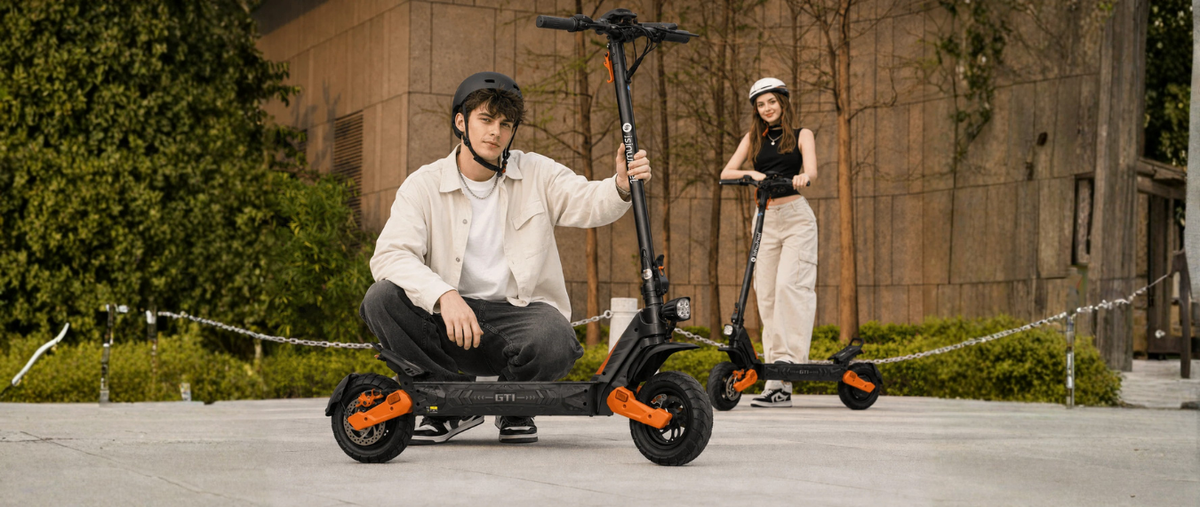
- The iSinwheel GT2 pairs a 1000W motor with 11-inch off-road tires and a 48V 15Ah battery, delivering up to 37 miles even on rougher terrain. You can read more about how it performs off-road in our full GT2 review.
- For riders who want maximum distance, the iSinwheel GT4 Dual Motor uses dual 1,200W motors and a larger battery pack to reach up to 50 miles on a single charge, while still handling steep, uneven trails.
Comparing these models side by side shows a clear pattern: bigger batteries and better-matched motors translate directly into more usable range for the type of riding you actually do.
Tips to Stretch Every Charge
A few simple habits can add meaningful miles to any scooter's range:
- Keep tires properly inflated, since underinflated tires increase rolling resistance and drain the battery faster.
- Ride in eco or standard mode whenever you're not in a hurry.
- Avoid fully draining the battery repeatedly, and store your scooter partially charged if it won't be used for a while.
- Plan routes that avoid unnecessary hills when range matters more than speed.
- Keep the scooter clean and the moving parts lightly maintained so the motor isn't working against extra friction.
None of these changes require special tools or expertise, but together they can meaningfully close the gap between advertised range and real-world range.
Getting the Most Out of Every Charge
Range isn't a single fixed number; it's the result of your battery, motor, body weight, terrain, speed, and even the weather working together. Once you know which of these factors affects your specific rides the most, you can choose a scooter with the right battery size for your commute and adjust your riding habits to get closer to the top of its range estimate. Whether you need a light, easy-to-carry scooter for short trips or a long-range model built for bigger adventures, matching the scooter to your actual distance needs is the real key to a satisfying ride.
Range Questions Riders Ask Most
Does cold weather really reduce e-scooter range?
Yes, colder temperatures temporarily lower battery efficiency, so range is typically shorter in winter than in mild weather.
Will riding uphill drain my battery faster?
Yes, climbing hills requires more motor power and uses noticeably more battery than riding on flat ground.
Does rider weight actually change how far I can ride?
Yes, heavier riders and added cargo require more energy to move, which reduces the total distance per charge.
Is it better to ride in eco mode to save battery?
Yes, eco or standard modes use less power per mile than top-speed mode, helping you cover more distance overall.
How often should I check my tire pressure for better range?
Checking tire pressure every couple of weeks helps maintain efficiency and prevents unnecessary battery drain.


Share:
Electric Bike vs. Electric Scooter