


Introduction
Electric Scooters and Electric Bikes both solve the same problem: you need a reliable way to move through city traffic without adding another car to the road. However, the safety tradeoffs feel very different once you add real-world factors like potholes, wet paint lines, night riding, and quick stops.
This how-to guide helps you decide whether an e-bike is safer than an electric scooter for commuting by running six commuter-focused checks. You will compare speed exposure, braking control, stability, visibility, protective gear, and total ownership needs.
You will also see where other micro mobility options, like Electric Skateboards, fit into green commuting solutions. That matters if you want eco-friendly transportation alternatives that still feel practical on your route.
Official Site: isinwheel
How to Choose Between Electric Scooters and E-bikes Step by Step
Step 1: Compare speed and exposure
First, match your top speed to your route, not your ego. Higher speed reduces reaction time and increases crash severity. For scooter for urban commuting routes with frequent intersections, it is often safer to choose a lower, predictable cruise speed than to chase the maximum.
Use this quick process:
- Write down your longest straight segment where you would realistically go fast.
- Note your roughest segment where you must slow for road defects.
- Choose a vehicle that can ride smoothly at your slowest safe speed, not only your fastest.
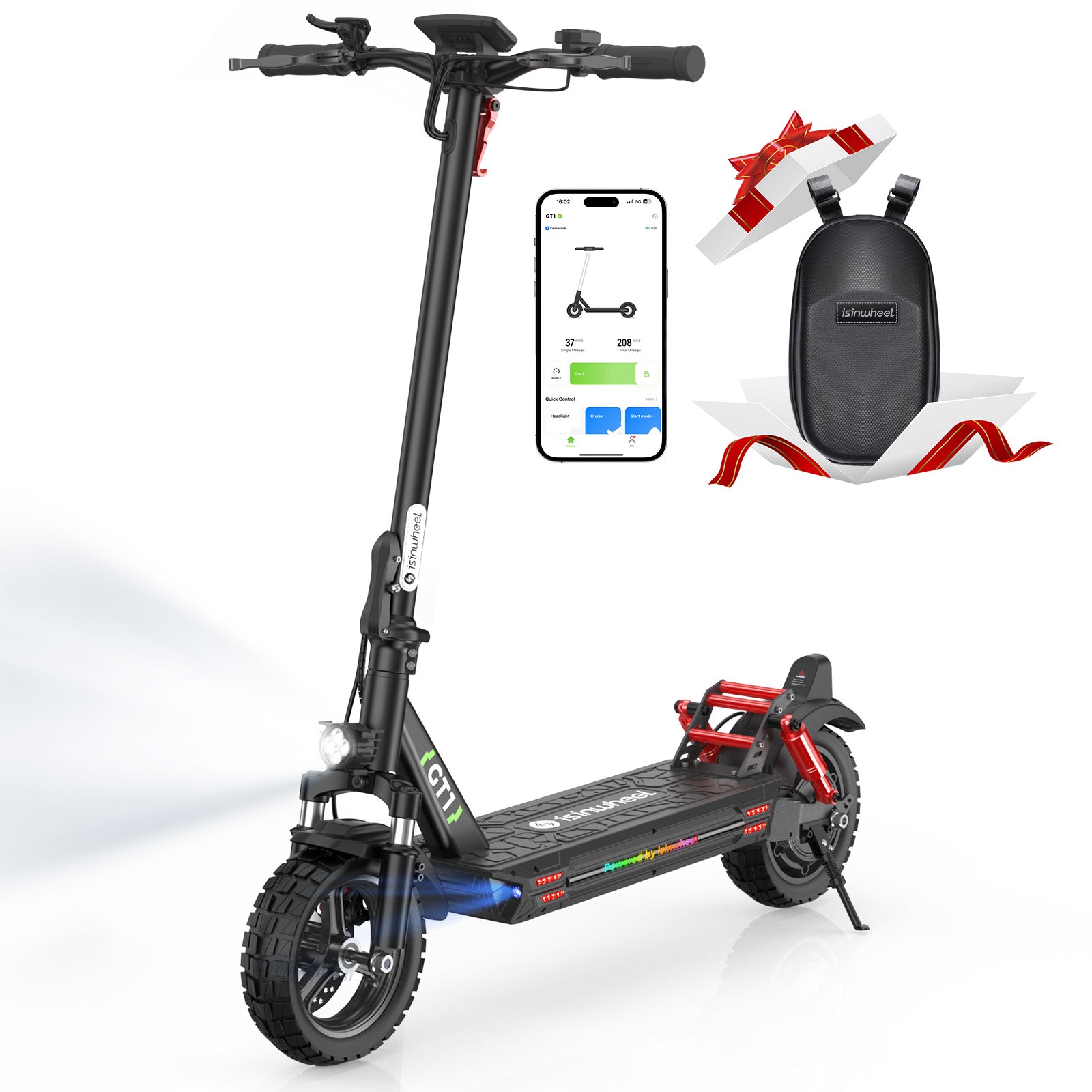
If you are considering Isinwheel electric scooters for mixed pavement, look for a setup that can hold a stable pace without feeling twitchy. The isinwheel GT1 lists a 28 MPH top speed, 28 miles max range, and an 800W rated motor, so your safest choice is usually to cap speed below the maximum for daily commuting. The goal is consistent control, especially when cars merge or doors open.
Shop: isinwheel GT1 800W Off Road Electric Scooter 2025 Upgraded Version
Step 2: Check braking systems and control
Next, evaluate how the vehicle stops, not how it accelerates. Commuter safety depends on smooth braking modulation, straight-line control, and repeatable stopping under load.
Check these items before you buy or ride:
- Confirm you have at least two independent braking methods.
- Test for predictable lever feel without grabbing.
- Practice progressive braking: light squeeze, then increase force as weight shifts.
On many Electric Scooters, smaller wheels and a shorter wheelbase make braking technique more sensitive. The isinwheel GT1 specifies front and rear EABS brake plus disc brake, which helps reduce wheel lock and supports more controlled stops on uneven surfaces. Pair that with a habit of braking earlier than you would on a bike because scooters typically react faster to small steering inputs.
For Electric Bikes, the longer wheelbase and seated posture can make braking feel more familiar. However, you still need to confirm consistent braking performance and learn how your weight shifts when you stop quickly.
Shop: isinwheel GT1 800W Off Road Electric Scooter 2025 Upgraded Version
Step 3: Evaluate stability and wheel size
Stability is where many commuters feel the biggest difference between Electric Scooters and E-bikes. Bigger wheels usually handle cracks, potholes, and debris with less drama, which can reduce falls caused by sudden steering deflection.
Do this comparison using your real route:
- Measure the worst pothole and the most common crack width.
- Note if you must cross streetcar tracks or drainage grates.
- Decide if you need a larger tire footprint for traction.
On an off-road e-scooter setup, wheel size and tire type matter more than marketing terms. The isinwheel GT1 lists 10-inch off-road pneumatic tires, plus front and rear dual suspension in its quick highlights. Pneumatic tires can improve grip and comfort compared to solid tires, especially on rough pavement.
On the e-bike side, the isinwheel U2 Electric Cruiser Bike lists 26-inch wheels and 26 x 1.9-inch MTB tires. That larger diameter can roll over imperfections more easily, which many beginners interpret as more stable.

Shop: isinwheel U2 Electric Cruiser Bike
Step 4: Verify lighting and signaling
Visibility is a safety feature you use every single ride, including daytime. Many collisions happen because drivers misjudge speed or do not see you in time.
Use this checklist:
- Confirm a bright front headlight aimed slightly down, not into driver eyes.
- Confirm a rear brake light or bright rear light.
- If you ride in traffic, prioritize turn signals or a clear hand-signal plan.
- Add reflectors or reflective bands for side visibility.
The isinwheel GT1 lists headlight and side lights, plus turn signals and a brake light in its lighting spec. That is useful for commuter predictability because drivers often respond better to a clear signal than to a last-second lane change.
For an e-bike commute, you should still add redundancy. Many riders add a second rear light on a backpack or seat post and reflective ankle bands. Those small steps often improve detection during dawn and dusk rides.
Shop: isinwheel GT1 800W Off Road Electric Scooter 2025 Upgraded Version
Step 5: Set helmet and protective baseline
Protective gear is your last line of defense. Set a baseline that you follow even on short rides because most commuter crashes happen close to home.
Start with this minimum:
- Certified helmet that fits snugly and sits level.
- Full-finger gloves for grip and palm protection.
- Closed-toe shoes with a firm sole.
Then add route-based upgrades:
- If you ride faster than 15 MPH, consider elbow and knee protection.
- If you ride at night, add reflective layers.
NHTSA reports that helmets cut brain injuries by 41% to 69%. Use that as a practical reminder: the best commuting setup is the one you will gear up for every time.
If you are researching Isinwheel reviews, treat comfort and stability as safety factors. A vehicle that feels calm under braking and stable over cracks makes it easier to keep your head up and scan traffic.
Step 6: Weigh total price and upkeep
This step answers the part commuters often ignore: real ownership includes locks, Electric scooter accessories, routine checks, and replacements. A safer commute usually costs less over time when you plan upkeep instead of reacting to problems.
Add these into your decision:
- Security: a lock plan and where you will store the vehicle.
- Maintenance: tire pressure checks, brake adjustments, and fastener checks.
- Charging: time, outlet access, and battery care.
For example, the isinwheel GT1 lists a 48V 10Ah battery, IP54 water resistance, and a 5-6 hour charge time. The isinwheel U2 lists a 468 Wh battery, IPX4 water resistance, and a 6 hour charge time. Those specs help you plan charging windows and weather tolerance for sustainable electric vehicles.
On the environmental side, the World Bank notes that the transport sector contributes to nearly a quarter of global energy-related CO2 emissions, supporting the value of eco-friendly transportation and green commuting solutions that replace car trips. According to the World Bank, transport contributes to nearly a quarter of global energy-related CO2 emissions.
If you also want Electric Skateboards for beginners, treat them as a skill-based option. They can be compact, but they demand strong balance and road-surface awareness. For many commuters, Electric Bikes or Electric Scooters remain the easier electric mobility solutions for daily use.
Scenario Variations
Short urban commute with compact storage
If your ride is 1 to 3 miles with tight storage, Electric Scooters often win on convenience. A foldable scooter can fit under a desk or in a closet, which reduces theft exposure. Keep speed conservative because short routes usually have more stops.
Rough pavement and frequent road defects
If your city streets are cracked or patched, prioritize larger tires and suspension. Off-road e-scooters with pneumatic tires can help, but many riders still feel more stable on the larger wheel diameter of Electric Bikes. Test your worst street segment before you commit.
Hills and longer distance routes
If you climb hills daily or ride 5 miles or more, an e-bike can feel safer because you can stay seated and maintain steadier balance while pedaling. The isinwheel U2 lists a 500W motor and Shimano 7-speed drivetrain, which can help you keep cadence comfortable on varied grades.
Shop: isinwheel U2 Electric Cruiser Bike
Weekend trails and outdoor riding
If you want an electric ride for outdoor adventure, choose a platform built for uneven surfaces. The isinwheel GT1 is positioned as an off-road scooter with 10-inch off-road pneumatic tires and a 30% climbing ability. Use lower speed modes on loose surfaces and keep braking smooth to avoid slides.
Shop: isinwheel GT1 800W Off Road Electric Scooter 2025 Upgraded Version
Prerequisites and Safety
Required Tools and Materials
Use this setup for most commuters:
- Helmet that fits correctly and stays level.
- Gloves with enough grip for wet levers.
- Closed-toe shoes with a stiff sole.
- Front and rear lights, even if your vehicle includes built-ins.
- Lock and a plan for indoor storage when possible.
- Tire pump with a gauge for weekly checks.
- Compact multitool for fastener checks.

Safety Considerations
Use these rules to reduce risk every day:
- Slow down before intersections because drivers misjudge micromobility speeds.
- Avoid wet metal covers, painted lines, and leaves because traction drops quickly.
- Practice emergency braking in an empty lot once per month.
- Check tire pressure weekly because underinflation increases wobble and reduces range.
- Keep your eyes 5 to 8 seconds ahead so you can steer around defects.
If you are watching trends like GPS Tracking, Anti-theft Systems, Predictive Maintenance, Solid-State Batteries, Fast Charging, and Carbon Neutrality, treat them as secondary to basic control. A safer commute still starts with tires, brakes, lights, and consistent riding habits.
Troubleshooting
| Problem | Cause | Solution |
|---|---|---|
| Weak braking | Pads worn, brake cable or caliper out of adjustment | Inspect pads, adjust brake tension, and test modulation in a safe area before commuting |
| Reduced range | Low tire pressure, frequent full-throttle starts, cold weather | Inflate tires to the recommended PSI, accelerate smoothly, and avoid draining the battery to 0% |
| Wobble at speed | Loose stem bolts, uneven tire pressure, poor stance | Torque fasteners to spec, equalize tire pressure, and keep knees slightly bent with relaxed arms |
| Slipping on wet surfaces | Smooth tire tread, painted lines, metal plates | Reduce speed early, avoid abrupt steering, and choose routes with better pavement texture |
| Lights feel dim | Low battery state, dirty lenses, misalignment | Recharge before night rides, clean lenses, and re-aim the headlight slightly downward |
Conclusion
A safer commute comes from matching the vehicle to your route and habits. Electric Bikes often feel more stable because of larger wheels and a familiar riding posture. Electric Scooters can still be safe when you limit speed, prioritize strong braking, and maintain visibility.
Use the six checks above, then test-ride your roughest street segment. After that, set a protective baseline you will follow every ride. That is the simplest path to green commuting solutions that feel realistic.
FAQ
1. Is an e-bike safer than an electric scooter for commuting in urban areas, considering safety features and price?
E-bikes often feel safer for beginners because the larger wheels and seated posture can stay stable over cracks and potholes. Electric Scooters can still be safe if the scooter has strong brakes, good lighting, and pneumatic tires, and if the rider keeps speed conservative. Price should include the cost of a lock, lights, and protective gear, not only the vehicle. The safest choice is the one you can store securely and maintain consistently.
2. What are the pros and cons of using an e-scooter versus an e-bike for commuting in the city?
E-scooters are usually easier to store indoors and can be simpler to park, which reduces theft risk. However, scooters demand more attention to road texture because small wheels react more to cracks and debris. E-bikes can be more comfortable on longer routes and may feel steadier at speed, but they can be harder to carry upstairs and harder to store. Your best option depends on pavement quality, storage, and how often you ride in traffic.
3. How do electric scooters compare to e-bikes for range and speed, and which offers better value?
Both platforms vary widely because range depends on battery size, rider weight, hills, wind, and tire pressure. Scooters can be quick for short trips, but frequent stop-and-go and rough pavement can reduce range faster than expected. E-bikes often handle longer distances well because you can add pedaling to reduce battery draw. Better value is the vehicle that meets your daily distance with margin while staying easy to maintain.
4. Which is easier to control: an e-bike or an electric scooter for a beginner commuter?
Most beginners find an e-bike easier to control because the steering and balance feel similar to a standard bicycle. A scooter can feel intuitive at low speed, but bumps and quick braking can create instability if the rider stands stiff or grips the bars too hard. Beginners should practice starts, stops, and emergency braking in an empty area before riding in traffic. Riders should also avoid high speeds until they can hold a straight line confidently.
5. Which vehicle is easier to store and park in the city: an e-bike or scooter, considering convenience and space?
A scooter is usually easier to bring indoors, place under a desk, or store in a small apartment because the footprint is smaller. That convenience often improves safety because indoor storage lowers the chance of theft and weather damage. E-bikes may need a dedicated rack, a secure indoor corner, or a heavier lock plan, which adds effort. If you cannot store an e-bike safely, a scooter you can always keep inside may be the better everyday choice.
6. Should I choose an e-scooter or an e-bike for commuting in the city, considering value for money?
Choose based on route length, pavement quality, and how you will store the vehicle at work and at home. If your streets are rough or your commute is longer, an e-bike can feel safer and more comfortable because it absorbs defects better. If storage is tight and your ride is short, an e-scooter can be a strong option when you keep speed moderate and maintain tires and brakes. In both cases, budget for a helmet, lights, and a lock because those items protect you more than extra speed.
Table of Contents
- How to Choose Between Electric Scooters and E-bikes Step by Step
- Scenario Variations
- Prerequisites and Safety
- Troubleshooting
- Conclusion
-
FAQ
- 1. Is an e-bike safer than an electric scooter for commuting in urban areas, considering safety features and price?
- 2. What are the pros and cons of using an e-scooter versus an e-bike for commuting in the city?
- 3. How do electric scooters compare to e-bikes for range and speed, and which offers better value?
- 4. Which is easier to control: an e-bike or an electric scooter for a beginner commuter?
- 5. Which vehicle is easier to store and park in the city: an e-bike or scooter, considering convenience and space?
- 6. Should I choose an e-scooter or an e-bike for commuting in the city, considering value for money?



Share:
Off-Road vs Commuter Scooters: Which Is Better for Cold Weather?
How to Select an Electric Scooter for Outdoor Adventures and Rough Terrain under $800 in 2026