




Built to Be Ridden: What Durable Really Means
A durable kids' electric scooter has a sturdy frame, tires that hold up to rough pavement, a reliable folding latch, a battery sized for the rider, and brakes that stay consistent. No scooter is unbreakable, but the right build and care routine help one survive daily rides, driveway laps, and park sessions.
If your child rides hard every day, small weak points show up fast. A loose latch, a flat tire, or a worn brake can end a ride early or cause a fall. This guide explains what to look for, how to care for it, and when to move up to a bigger model.
Frame, Deck, and Folding Latch: The Parts That Take the Hits
Strong Frame and Stable Deck
The frame and deck take every bump, curb, and rough patch. Look for a frame that feels solid with no flex when you push on the handlebar, and a wide, non-slip deck that gives young riders room to stand with their feet apart. Always check the listed weight limit and stay well under it, since overloading is a common reason scooters wear out early.
A Folding Latch That Stays Tight
The folding joint is one of the first places to loosen. Open and close it a few times, then lock it and try to wiggle the stem. If you feel any play, tighten it or stop riding until it is fixed. Check it before every ride, since vibration can loosen it over time.
Tires, Brakes, and Wheels That Handle Daily Wear
Choosing Tires for Rough Pavement
Tires take constant abuse. Air-filled tires give a smoother, grippier ride on cracked sidewalks and park paths but can go flat, so check pressure regularly. Solid tires avoid flats but feel harsher and can be slippery when wet. For kids who ride on mixed surfaces every day, pick the tire type that matches your routes, and keep a small pump handy if the scooter uses air.
Brakes That Stay Consistent
Kids often brake hard and late, so brakes wear quickly. Check that the brake responds smoothly and that nothing rubs or squeaks. If the brake feels soft or the scooter takes longer to stop, get it adjusted or repaired before the next ride. Teach children to squeeze gently and early instead of grabbing at the last second.
Motor, Battery, and the Kid-Sized Scooter
More power does not mean more durable. A scooter should match the child's age and size, because a motor and battery that are too strong can encourage speeds a young rider cannot control. The isinwheel S4 Electric Scooter for Kids is listed for ages 6 to 14, with a 200W motor, a 25.2V 2.6Ah battery, and about 1 to 1.5 hours of playing time. That works out to roughly 65Wh of battery energy, which is sized for short, frequent play sessions rather than long trips.
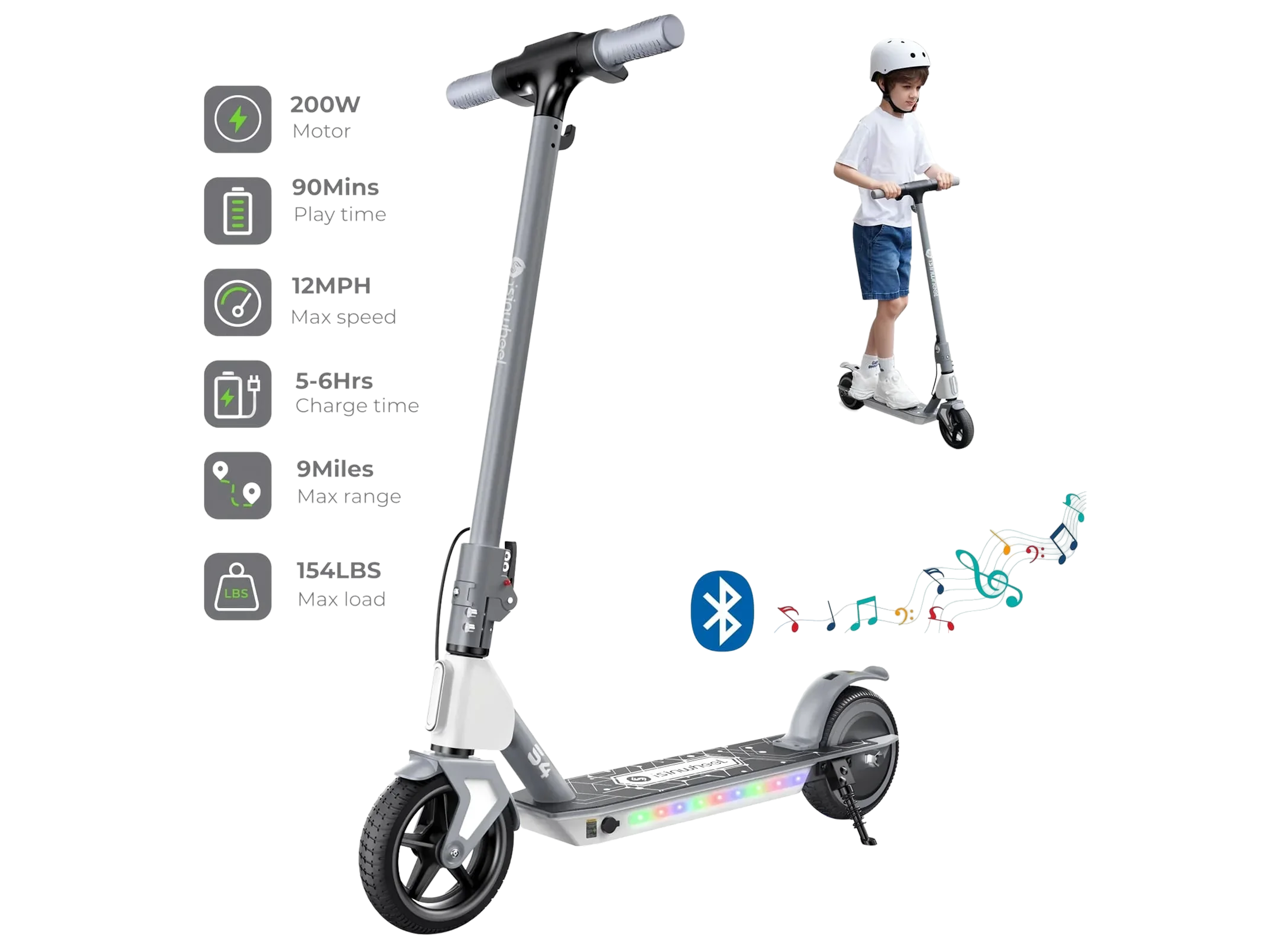
Battery care affects durability too. Charge with the original charger, avoid leaving the battery plugged in for days, and never charge it right after a freezing ride. When temperatures are near 32°F, let the scooter warm up indoors first. Charge on a hard surface at least 3 feet from anything flammable. Our guide on how to maintain your iSinwheel electric scooter covers battery, tire, and brake upkeep in simple steps.
Weather, Water, and Everyday Abuse
Kids do not always avoid puddles, so check how the scooter handles water. Look for a clear water-resistance rating in the manual, and treat it as protection against splashes, not a license to ride through deep water. After a wet or muddy ride, wipe the scooter dry, clean the wheels, and store it indoors in a cool, dry place. Moisture and grit wear down bearings, brakes, and electrical connections over time.
A Weekly Check for Hard-Riding Kids
A five-minute weekly check catches most problems early. Squeeze the brake, check the tires for cracks, cuts, or low pressure, wiggle the handlebar and folding joint, tighten visible screws, and make sure the lights and controls work smoothly. Look over the charger and cable for damage too. If something seems off, keep the scooter parked until it is fixed. Our beginner's guide is also a helpful reference for parents new to electric scooters.
When Your Child Outgrows a Kids' Scooter
Active children grow quickly, and a scooter that fits now may feel small in a year or two. Signs of outgrowing include knees that bend awkwardly, a handlebar that feels too low, or riding at the top of the listed age or weight range. Older teens and adults may move up to a full-size model, such as the isinwheel S9 Pro, which lists a 350W motor and pneumatic tires, or the isinwheel S Nova with 600W. Check each model's age and weight guidance first, and follow your local rules for young riders.
Rules That Protect Both Kids and Scooters
Good habits make a scooter last longer and keep kids safer. Require a well-fitted helmet, closed shoes, and knee and elbow pads on every ride. Keep young riders within sight and within about 50 feet of a supervising adult. Teach them to avoid jumps, stairs, and curbs, since hard impacts bend frames and loosen parts. Pick smooth routes, such as a neighborhood bike path in a city like Denver, instead of broken pavement. Set simple rules for where and when they can ride, and lead by example.
Built Tough Starts With Smart Choices
The most durable kids' electric scooter is not the one with the biggest numbers. It is the one with a solid frame, a tight folding latch, tires and brakes that suit daily riding, and a battery sized for the child. Add regular checks, careful charging, and clear riding rules, and even a hard-riding kid can enjoy a scooter for a long time. Choose for fit and quality first, and the durability follows.
H2: What Parents Ask About Tough Kids' Scooters
What makes a kids' electric scooter durable?
A sturdy frame, a tight folding latch, quality tires, steady brakes, and a battery that suits the child's size all help it last.
How often should I check my child's scooter?
Do a quick check before each ride and a fuller five-minute inspection once a week.
Are air-filled tires or solid tires better for rough pavement?
Air-filled tires usually ride smoother and grip better, while solid tires avoid flats but feel harsher.
Can kids ride through puddles?
They should avoid deep water and puddles they cannot see the bottom of, since water resistance usually covers only light splashes.
When should my child move up to a bigger scooter?
Move up when they reach the top of the listed age or weight range, or when the scooter feels too small for them.



Share:
Beginner Electric Scooters for Weekend Family Outings: Picks That Prioritize Safety and Ease of Use