


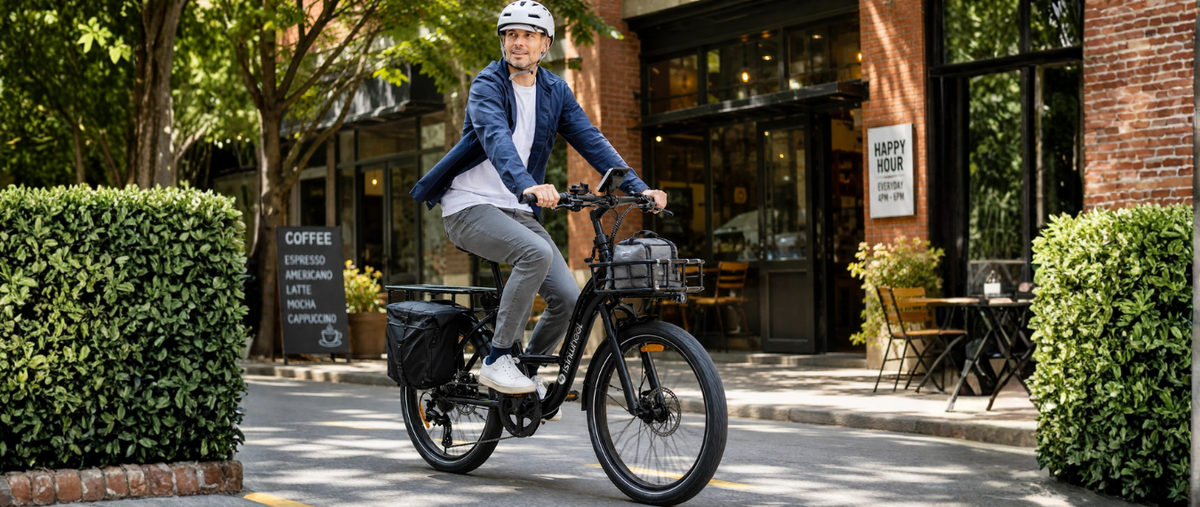
Short Answer: It Depends on the Model
Are isinwheel electric bikes street-legal in California? It depends on the model. California treats an electric bike like a regular bicycle only when it meets the state’s e-bike definition, and some isinwheel bikes list specs that deserve a closer look. The good news is that checking is simple, and this guide shows you how.
We’ll cover the three e-bike classes, the 750-watt power limit, helmet and age rules, and the 2026 battery safety changes. We’ll also point out where isinwheel’s listed specs line up with the law and where they may not. This is general information, not legal advice, so always confirm local rules before you ride.
How California Defines a Street-Legal E-Bike
California uses a simple test. To count as an electric bicycle, a bike needs working pedals and a motor that doesn’t go over 750 watts. It must also fit one of three classes, and it should carry a permanent label showing its class, top assisted speed, and motor wattage.
Class 1, 2, and 3 at a Glance
- Class 1: Pedal assist only, with the motor cutting off at 20 mph.
- Class 2: Has a throttle that can move the bike without pedaling, also capped at 20 mph.
- Class 3: Pedal assist only, with the motor cutting off at 28 mph. A speedometer is required.
Bikes that meet these rules can generally use roads and bike lanes like a regular bicycle. No driver’s license, registration, or insurance is needed.
Why Power Numbers Matter
Many e-bike listings show peak power, which can be higher than a motor’s rated power. California’s limit is 750 watts, so look at the rated figure and the label on the bike, not just the headline number. A bike that goes beyond the legal definition may not count as an e-bike at all, which means bike-lane access isn’t guaranteed.
What Changed on January 1, 2026
Several updates took effect at the start of 2026, and they matter if you’re buying a bike this year.
Battery Safety Certification
Under SB 1271, new e-bikes and batteries sold in California must be tested by an accredited lab to standards such as UL 2849 or EN 15194. Look for certification marks on the bike and battery, or ask the seller for the test details before you buy.
Throttles on Class 3 Bikes
Class 3 bikes are now pedal-assist only. A bike with a throttle that can push it past 20 mph no longer fits the Class 3 definition. A low-speed walk mode, which helps you push the bike along, is still allowed.
Age and Helmet Rules for California Riders
California has no statewide minimum age for Class 1 or Class 2 e-bikes, but riders under 18 must wear a helmet on any e-bike. Class 3 riders must be at least 16, and every Class 3 rider and passenger must wear a helmet. Marin County adds local rules, including a minimum age of 16 for Class 2 bikes and helmets for all Class 2 riders. Rules can differ from city to city, so check before riding somewhere new.
How Popular isinwheel Models Compare
Here’s how three models line up with California’s rules, based on the specs listed on their product pages.
The M60: A 750W Example
The isinwheel M60 all-terrain electric bike is listed with a 750W motor, which sits right at California’s limit. As with any model, confirm the class label, rated power, and assisted speed on the bike you actually receive.
The U8 Ultra: Check the Class and Throttle
The U8 Ultra is listed as a Class 3 bike with a 1500W peak motor, a 28 mph top speed, and a throttle. That mix deserves attention in California, because Class 3 bikes must be pedal-assist only and the state’s power cap is 750 watts. If you live here, ask the brand how the bike is set up and labeled for California before you order.
The M10Pro: Peak Power vs. Rated Power
The M10Pro lists 1000W max power and a 22 mph top speed. Since Class 1 and Class 2 assistance must stop at 20 mph, it’s worth asking whether the bike can run in a compliant mode and what its rated power is.
Common Mistakes That Can Make an E-Bike Illegal
Most problems come from small oversights. Some riders buy based on top-speed claims without checking the class. Others unlock extra speed through apps or controller changes, which California now takes seriously. Some forget that a throttle changes which class a bike belongs to, or ride a Class 3 on a path where it isn’t allowed. A little homework up front keeps you on the right side of the rules and makes every ride more relaxed.
Where You Can and Can’t Ride
Class 1 and Class 2 bikes can generally use roads and bike lanes, while Class 3 bikes are usually fine on roads and bike lanes but may be limited on trails and off-street paths. Sidewalk rules vary by city. Before a ride along the Santa Monica beach path or through Golden Gate Park, check posted signs and local websites. If you’re still choosing a bike, the isinwheel electric bike buying guide and the fat-tire vs. standard-tire comparison can help you narrow down features.
A Quick Pre-Ride Checklist
- Find the permanent label showing class, top speed, and motor wattage.
- Confirm the battery and charger carry UL 2849 or EN 15194 marks.
- Keep the bike unmodified and skip speed-unlock apps.
- Wear a helmet and learn your local path and trail rules.
Ride Smart, Ride Legal
So, are isinwheel electric bikes street-legal in California? Some models may be, but the answer depends on the exact bike, its class label, its rated power, and how it’s set up. Compare the listed specs with California’s rules, ask questions before you buy, and follow local laws once you’re riding. A few minutes of checking can save you from fines and headaches, and keep every ride safe and fun.
What E-Bike Riders Want to Know
Do I need a license or registration for an e-bike in California?
No, California doesn’t require a license, registration, or insurance for e-bikes that meet the state definition.
What is the top assisted speed for each class?
Class 1 and Class 2 assistance stops at 20 mph, and Class 3 assistance stops at 28 mph.
Do adults have to wear a helmet?
State law requires adults to wear helmets on Class 3 e-bikes, but not on Class 1 or 2, though wearing one is still smart.
Can an e-bike with a 1500W motor be street-legal?
California’s limit is 750 watts, so a bike rated above that likely won’t qualify, though listed peak power can differ from rated power.
Can a 15-year-old ride an e-bike?
Yes on Class 1 or Class 2 in most places, but not on a Class 3, and Marin County has local limits on Class 2 bikes.

Share:
Your First Electric Dirt Bike Adventure: What to Know Before Choosing an isinwheel Model