


Introduction
Electric Scooters are no longer a niche gadget. For many riders, they are the simplest way to solve daily trips that feel too long to walk but too short to justify driving or waiting for transit. A good scooter for urban commuting can cut door-to-door time because it reduces parking steps, avoids short-hop traffic, and supports mixed-mode rides.
At the same time, the common pain points are real. Riders worry about electric scooter safety features, range anxiety in cold weather, and theft when they have to park outside. These concerns matter even more in 2026 because micromobility use is growing while cities push for safer streets. According to the U.S. Consumer Product Safety Commission, injuries tied to micromobility products rose nearly 21% in 2022 versus 2021, and the broader trend has been upward since 2017.
This ultimate guide explains how to choose Electric Scooters for commuting and daily use by translating specs into real outcomes. You will learn how speed, torque, braking, tires, and water resistance affect your route. You will also get a practical theft plan using Anti-theft Systems and GPS Tracking, plus ownership tips like Fast Charging habits and battery care.
Official Site: Isinwheel
Core Foundations
Performance basics: speed, torque, and hill grade
Top speed matters, but acceleration and hill ability matter more for a scooter for urban commuting. In real traffic, riders start and stop often, merge around obstacles, and climb short grades. Torque is the feeling of pull when you push the throttle from a slow roll.
A simple way to map specs to your route is to list the steepest hill you ride weekly and the number of stop signs per mile. More stops means you benefit from stronger low-speed pull. More hills means you need enough motor output and controller tuning to avoid bogging down.
For example, the isinwheel S9 Pro is listed with a 350W motor and up to 20% hill climbing. That is a commuter-friendly baseline for moderate grades and typical city slopes.
Energy basics: voltage, watt-hours, and charging
Battery capacity is best understood in watt-hours (Wh), but many product pages show voltage (V) and amp-hours (Ah). You can convert using Wh = V x Ah. A 36V 7.5Ah pack is about 270Wh.
Range claims are always best-case. Real range drops with rider weight, tire pressure, headwinds, stop-and-go riding, and cold temperatures. Build a buffer of 25% to 40% so you are not forced into deep battery cycles every day.
Charging time is part of daily convenience. If a scooter supports Fast Charging, you can top up between errands. Even without special chargers, a 3 to 5 hour charge window can work well if you plug in at work or right after the evening ride.
Ride comfort: tires, deck, and suspension
Comfort starts at the tire. Pneumatic tires absorb cracks and reduce vibration on rough lanes. Solid tires avoid flats but transmit more shock, which can tire you out on longer rides.
Deck stability also matters. A longer, grippier deck gives you room to adjust stance, which helps when you need to brake hard or ride over uneven pavement. For commuting, comfort is not a luxury. Less vibration helps you keep a steady line and stay alert.
If you want an electric ride for outdoor adventure or light off-road paths, comfort becomes even more important. In that case, look at off-road e-scooters with larger tires and suspension.
Safety stack: brakes, lights, and certification
Safety is a layered system, not a single feature. The most important layers are:
- Braking power and control (mechanical plus electronic help).
- Visibility (bright headlight, rear light, turn signals).
- Predictable handling (stable tires and good steering feel).
- Certification and electrical protection (battery and charger safety).
In the U.S., road danger trends also shape what you should prioritize. The National Highway Traffic Safety Administration reported early estimates showing traffic fatalities fell 8.2% in the first half of 2025 versus the same period in 2024. That improvement is encouraging, but the baseline risk is still high. A commuter scooter should assume distracted drivers exist and build safety margin through braking and visibility.
Commute Fit: Distance, Speed, Terrain
Match Electric Scooters to your real route
A practical commute fit check takes 10 minutes and saves you months of regret. Write down:
- One-way distance and total daily miles.
- The steepest hill you cannot avoid.
- Typical surface (smooth asphalt, broken pavement, brick).
- Weather exposure (rain risk, cold mornings).
Next, translate that into minimum specs. For best electric scooters for commuting, range headroom is the most important. Plan for detours, battery aging, and winter losses. A 25% to 40% buffer usually prevents mid-week charging stress.
Speed should fit your environment. A scooter for urban commuting does not need extreme top speed to feel fast. What matters is steady cruising, predictable braking, and enough acceleration to clear intersections smoothly.
Where the isinwheel S9 Pro fits

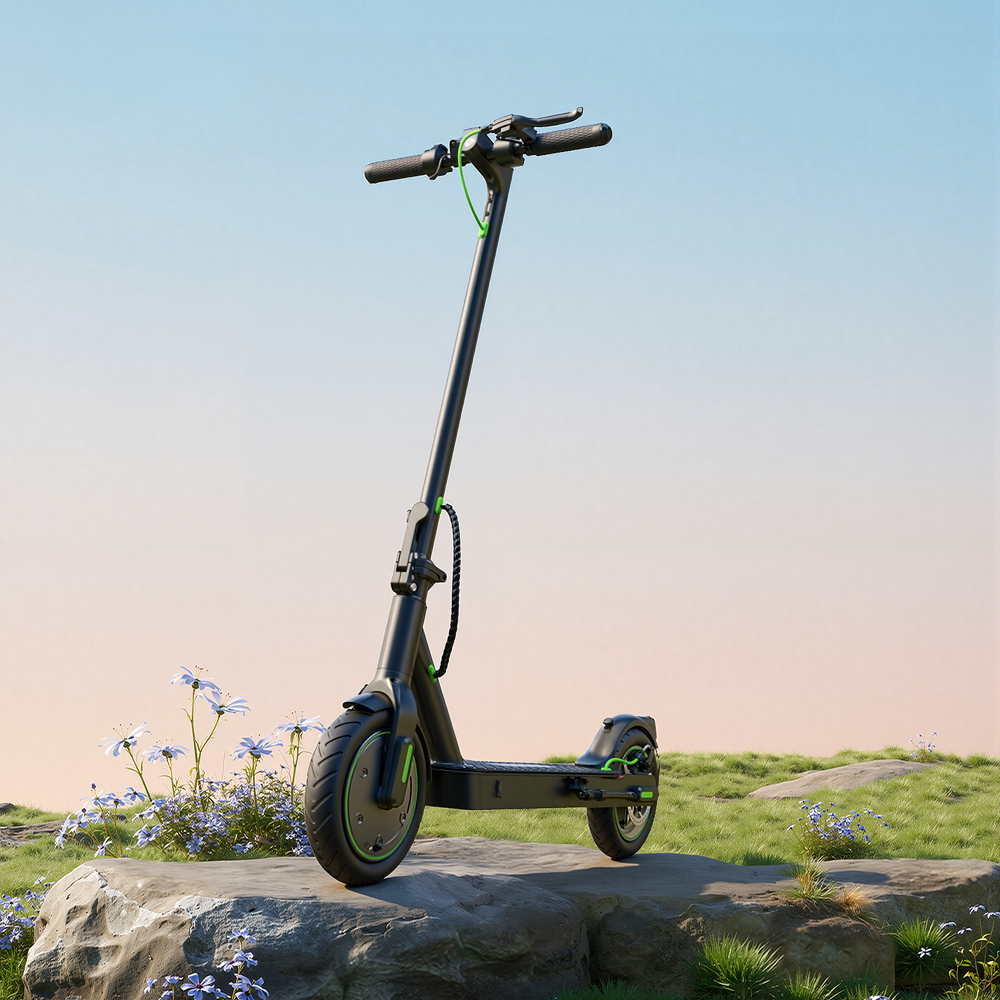
The isinwheel S9 Pro targets daily city rides with a spec set that matches common commuter needs:
- 350W motor with up to 19 MPH top speed.
- Max range listed at 19 miles.
- 8.5-inch pneumatic tires for grip and comfort.
- 27.5 lbs net weight for carry-up stairs.
- IP54 water resistance for light rain and splashes.
Use this style of setup when your commute is mostly paved roads and bike lanes, with moderate hills (up to around the 20% listed climbing ability). It also works well for multi-stop days, because folding plus manageable weight supports quick transitions.
Shop: isinwheel S9 Pro Pneumatic Tire Electric Scooter
Safety First: Braking, Visibility, Controls
Braking types and what to test
Brakes decide whether a close call stays a close call. For Electric Scooters, common systems include:
- Disc brake (strong mechanical stopping, good feel).
- Drum brake (low maintenance, consistent in wet, often less bite).
- Electronic braking like EABS (helps modulate and can reduce wheel lock).
A quick test ride should include three checks:
- Low-speed stop from 8 to 10 MPH. The scooter should stop straight with no front-end wobble.
- Medium stop from 15 to 18 MPH. The lever should feel progressive, not on/off.
- Bumpy-brake test on rough pavement. The scooter should not chatter or pull sideways.
If you ride in rain, increase your safety margin. Wet surfaces reduce tire grip and increase stopping distance. Therefore, you should brake earlier and avoid sharp steering inputs while braking.
Visibility and signaling for green commuting solutions
Visibility is an electric scooter safety feature that protects you before braking does. In 2026, riders increasingly share space with cars, delivery vans, and fast delivery electric vehicles using curb zones.
Look for a lighting stack that supports being seen from multiple angles:
- Bright headlight to read the road surface.
- Rear brake light to signal slowing.
- Turn signals so you do not rely on hand signals in tight traffic.
The S9 Pro lists a headlight, turn signals, and a rear brake light, which supports daily commuting after dusk.
Controls that reduce surprises
For beginners, stable controls matter as much as raw power. Features that help include:
- Cruise control for steady speed on long flats.
- Clear speed modes so you can cap speed in crowded areas.
- Zero-start settings so the scooter does not jump when you bump the throttle.
These features lower mental load, which is important for eco-friendly transportation where you still need full attention on traffic and pavement.
Shop: isinwheel S9 Pro Pneumatic Tire Electric Scooter
Portability: Weight, Folding, Storage
The portability reality check
Portability is not just a number. It is a workflow. Ask yourself:
- Do you carry the scooter up stairs daily?
- Do you store it under a desk or in a hallway?
- Do you need to put it in a trunk with other items?
If the answer is yes to any, folding design and net weight become first-tier criteria. A 5-pound difference matters when you lift with one hand while opening a door.
Folding steps and daily handling
A good fold should be fast, repeatable, and stable when locked. Test for:
- A latch that does not pinch fingers.
- Minimal stem play after locking.
- A folded shape that does not snag on seat fabric or pants.
The S9 Pro lists a 3-step fold and a folded size of 41.7 x 18.9 inches. That footprint is useful for apartment storage and office corners.
Portability across Electric Bikes and Electric Skateboards
If you are comparing Electric Scooters with Electric Bikes or Electric Skateboards, portability is where scooters often win:
- E-bikes are stable and great for longer rides, but storage can be the hardest part.
- Electric skateboards for beginners can be light, but the learning curve and road debris risk can be higher.
- A folding scooter often splits the difference: easy to store, easier to learn, and still fast enough for city trips.
For families, pairing a scooter with lightweight electric bikes can create flexible electric transportation for families. One rider can take a scooter to the station, while another takes an e-bike for longer range.
Shop: isinwheel S9 Pro Pneumatic Tire Electric Scooter
Ownership Cost: Battery, Warranty, Parts
Battery life and what really ages a pack
Most battery wear comes from heat, deep discharge, and high state-of-charge storage. You can extend life by controlling those three factors.
- Heat: avoid charging right after a hard ride. Let the pack cool for 20 to 30 minutes.
- Deep discharge: do not make 0% your daily routine. Charge earlier when possible.
- High storage charge: for long breaks, store closer to mid-charge, not full.
The S9 Pro lists battery protection features like temperature and overcharge protection, which helps reduce stress from common charging mistakes.
Warranty and parts support planning
Warranty value depends on how clear the process is. Before you commit, check:
- How to request support.
- What parts are considered wear items.
- Whether basic tools are included.
The S9 Pro box list includes a T-handle wrench and stem screws. That is a small detail, but it matters because commute scooters often need periodic stem bolt checks.
Accessories that protect your investment
Electric scooter accessories should reduce downtime and reduce risk, not just add style. For commuting, the most useful accessories are:
- A high-quality lock setup (more on that below).
- A compact pump and pressure gauge for pneumatic tires.
- A reflective vest or strap for night rides.
- A helmet and gloves sized correctly for your grip and braking.
If you also use electric mobility solutions like E-bikes or cargo e-bikes, consider standardizing chargers and safety gear across devices. Consistent habits reduce mistakes.
Shop: isinwheel S9 Pro Pneumatic Tire Electric Scooter
Urban Security: Parking, Locks, Tracking
The layered security mindset
Scooter theft is usually a speed problem. A thief wants a fast grab. Your goal is to slow the process and increase the chance of being noticed.
A layered plan uses three layers:
- Physical constraint: a strong lock through a strong point.
- Behavior: smart parking choices that reduce exposure.
- Recovery: GPS Tracking or a hidden tracker for post-theft action.
Even the best anti-theft systems cannot replace good parking habits. Therefore, treat security as a routine, not a feature.
Parking strategy that works in real cities
Use these rules for a scooter for urban commuting:
- Prefer indoor storage. Even 10 minutes outside daily adds up to risk.
- Choose high-traffic, well-lit spots. Cameras help, but crowds help more.
- Avoid thin sign posts. If a post can be cut or lifted, the lock does not matter.
If you must park outdoors regularly, consider shifting to Electric Bikes with robust locking points or cargo e-bikes with integrated racks. Those platforms can be easier to secure, especially for longer parking windows.
Locks and GPS Tracking basics
For locks, a practical commuter stack is:
- One primary U-lock or heavy chain through the frame and a fixed object.
- One secondary lock (lighter cable or folding lock) to make wheel removal harder.
For GPS Tracking, most riders use a small hidden tracker plus good documentation. Take photos of the scooter, record serial numbers, and keep proof of purchase. Also check whether your renters or homeowners policy covers micromobility.
App features and security routines

Many 2026 riders expect app support for basic monitoring and controls. The S9 Pro lists an isinwheel app, plus features like cruise control and zero-start, and it shows battery protection items. These do not stop theft by themselves, but they do support routines like checking charge, confirming settings, and keeping the scooter predictable.
If you want more advanced electric mobility solutions, look for models that better support Predictive Maintenance, such as clearer diagnostic codes or easier access to service parts. In practice, the best predictive maintenance is still simple: tire pressure checks, bolt checks, and consistent charging.
Shop: isinwheel S9 Pro Pneumatic Tire Electric Scooter
How to Choose the Best Electric Scooter in 2026
Range: build a realistic buffer
For best electric scooters for commuting, range is your time insurance. Choose a scooter that covers:
- Your daily miles plus detours.
- Cold weather losses.
- Battery aging over months of use.
A 25% to 40% buffer is a practical rule. If you ride 8 miles per day, do not shop for a scooter that claims 8 miles. Shop for one that claims well above that so the real-world result stays comfortable.
Tires: pneumatic vs solid
Tires change how safe the scooter feels. Use this decision rule:
- Choose pneumatic tires if you ride on rough pavement, value comfort, or ride in light rain. Grip and shock absorption usually improve control.
- Choose solid tires if you cannot tolerate flats and you accept a harsher ride.
For a scooter for urban commuting, pneumatic tires often win because city surfaces are unpredictable. The trade-off is you must maintain pressure.
Brakes: prioritize control over marketing
A commuting setup should focus on predictable stopping, not just listing features. Dual braking is a common target because it provides redundancy.
For example, the S9 Pro lists EABS plus a rear disc brake. That combination can help with modulation while still providing strong mechanical stopping.
Weight rating: stability and safety margin
Always choose a scooter rated above your riding weight, including backpack load. A higher margin typically improves stability, reduces strain on components, and helps the scooter keep speed on mild grades.
The S9 Pro lists a 220 lbs max load. If you are close to the limit, treat range and hill ability claims as more optimistic than your likely outcome.
Quick decision table for daily use
| Commuting scenario | Key factors | What to prioritize | Trade-offs |
|---|---|---|---|
| 1 to 3 miles each way, flat | Portability, quick start/stop | Lightweight fold, simple controls | Smaller battery often means less buffer |
| 3 to 8 miles each way, mixed streets | Range buffer, braking, comfort | Pneumatic tires, dual brakes, bright lights | Heavier scooters are harder to carry |
| Hilly route, frequent stops | Torque feel, hill grade, heat | Strong motor tuning, good ventilation, stable deck | Battery drain increases on hills |
| Night commuting | Visibility, signaling | Headlight, brake light, turn signals, reflective gear | More lights means more charging discipline |
| Outdoor paths and rough pavement | Comfort, traction | Larger tires, suspension, off-road e-scooters | Bulkier to store and transport |
A note on 2026 tech trends
Riders hear about Solid-State Batteries, but most commuter Electric Scooters in 2026 still use proven lithium-ion pack designs. Focus on practical safety, charging behavior, and serviceability today. For sustainability goals like Carbon Neutrality, the larger impact often comes from replacing short car trips with green commuting solutions.
A global view also helps explain why this shift matters. The International Energy Agency reports road transport emissions were just over 6 Gt CO2 in 2024, and the sector remains a major part of the climate challenge. Micromobility and eco-friendly transportation alternatives can reduce car dependence for short trips when cities support safe networks.
Best Practices
- Do a 30-second pre-ride check. Check stem tightness, brake feel, and throttle response. Small looseness becomes big wobble over time, especially on rough lanes.
- Keep tire pressure within spec. Pneumatic tires need regular pressure checks. Low pressure increases rolling resistance, reduces range, and can make steering feel vague.
- Charge safely and manage heat. Charge in a dry, ventilated space. If the pack is warm after riding, wait before plugging in to reduce heat stress.
- Ride to your sight distance. Your safe speed is the speed you can stop within what you can see. This rule reduces crashes on blind corners, driveway exits, and cluttered bike lanes.
Conclusion
Electric Scooters can be a practical, eco-friendly transportation upgrade when you choose based on your real route, not marketing claims. Start with commute fit, then prioritize electric scooter safety features like strong brakes and visibility. Next, confirm portability and build a simple security routine using layered Anti-theft Systems and GPS Tracking.
To move forward, shortlist models that match your distance and terrain, then test ride with braking and folding checks. The right scooter should feel boring in the best way: consistent, predictable, and easy to live with every day.
Frequently Asked Questions
How to pick a safe and reliable electric scooter?
A safe and reliable electric scooter starts with a stable tire setup and a braking system that feels progressive instead of grabby. You should look for strong visibility features such as a bright headlight, a rear brake light, and turn signals so drivers can predict your moves. A reasonable water-resistance rating helps with puddles and sudden light rain, but you should still ride cautiously in wet conditions. Finally, choose a scooter with clear battery and charger safety practices and a support path for parts and service.
Should I buy an e-bike or an electric scooter for daily city use, depending on my commuting needs?
If your commute is longer, includes carrying groceries, or involves rough streets, an e-bike usually feels more stable and forgiving. If your commute is shorter and you need to bring the vehicle indoors, a folding scooter is often easier to store under a desk or in a closet. E-bikes typically handle potholes better because of larger wheels, but they can be harder to secure and heavier to carry. A scooter is often the better choice when portability and quick multi-modal transfers matter most.
What are the pros and cons of using an e-scooter versus an e-bike for commuting in the city?
Electric scooters are usually lighter and quicker to fold, which helps when you combine riding with buses, trains, or elevators. However, small wheels can feel harsher on broken pavement, so comfort depends heavily on tire type and pressure. E-bikes feel more like traditional cycling, with better stability and often better visibility to drivers, especially at intersections. The trade-off is storage and theft risk, since an e-bike is harder to bring inside and usually needs longer outdoor locking time.
What factors should I consider when choosing an electric scooter?
You should focus on real-world range, braking performance, tire type, and rider weight rating because these define daily safety and reliability. Next, check portability details such as net weight, folded dimensions, and how many steps the folding process takes. For commuting, lighting and signaling features matter because being seen often prevents crashes more than speed does. You should also consider replacement parts, basic tools, and how easy it is to maintain tires, bolts, and brakes.
What’s the best electric scooter for commuting under $500?
The best commuter scooter in this budget range is typically a model that balances braking control, pneumatic tires, and a realistic range buffer for your route. You should avoid choosing based on peak speed alone, because stopping distance and stability are what keep you safe in traffic. A good option should have clear lighting, strong build quality in the stem and folding joint, and a weight rating above your riding weight with your backpack. Before buying, confirm that common wear parts like tires and brake components are straightforward to replace.
How to ensure safety while commuting on a beginner-friendly electric scooter?
You should start in a low-speed mode and practice braking from 10 MPH and then 15 MPH until you can stop straight without panic. Wear a helmet and add visibility gear because drivers often miss riders in cluttered urban scenes. Keep your tire pressure in the recommended range because underinflation reduces control and increases stopping distance. Finally, ride predictably by signaling early, avoiding sudden swerves, and slowing before you reach blind driveways or intersections.
Table of Contents
- Introduction
- Core Foundations
- Commute Fit: Distance, Speed, Terrain
- Safety First: Braking, Visibility, Controls
- Portability: Weight, Folding, Storage
- Ownership Cost: Battery, Warranty, Parts
- Urban Security: Parking, Locks, Tracking
- How to Choose the Best Electric Scooter in 2026
- Conclusion
-
Frequently Asked Questions
- How to pick a safe and reliable electric scooter?
- Should I buy an e-bike or an electric scooter for daily city use, depending on my commuting needs?
- What are the pros and cons of using an e-scooter versus an e-bike for commuting in the city?
- What factors should I consider when choosing an electric scooter?
- What’s the best electric scooter for commuting under $500?
- How to ensure safety while commuting on a beginner-friendly electric scooter?


Share:
How to Compare Budget E-Bikes for Daily Errands
Electric Scooter or E-Bike? How to Decide If One is Right for Me as a Beginner