


Introduction
Bags swinging, parking headaches, and a weak bike can turn errands into a hassle. Choosing the wrong budget e-bike may mean short range, unstable handling, or limited cargo, then extra spending on racks and fixes. Affordable e-bikes work best when matched to your routes, load, and storage.
This guide helps you compare e-bikes step by step, setting a realistic budget, aligning battery and motor to your streets, and checking comfort, cargo, and safety. Along the way, see where models like the isinwheel U7 Cargo, U5 Folding, and M10 Commuter fit your daily needs.
How to Compare Budget E-Bikes for Daily Errands
Step 1: List your real errand loads before you compare bikes
Start with your weekly routine, not the bike catalog. Write down what you actually carry in a normal week: grocery bags, a laptop, a child seat, pet supplies, or small work gear for Last-mile Delivery. Then estimate both bulk and weight. A bike that feels fine with a backpack can feel unstable once you add two grocery bags and a lock. This is where many shoppers miss the point. They compare speed first, but daily errands usually depend more on payload, rack design, and balance at low speed.
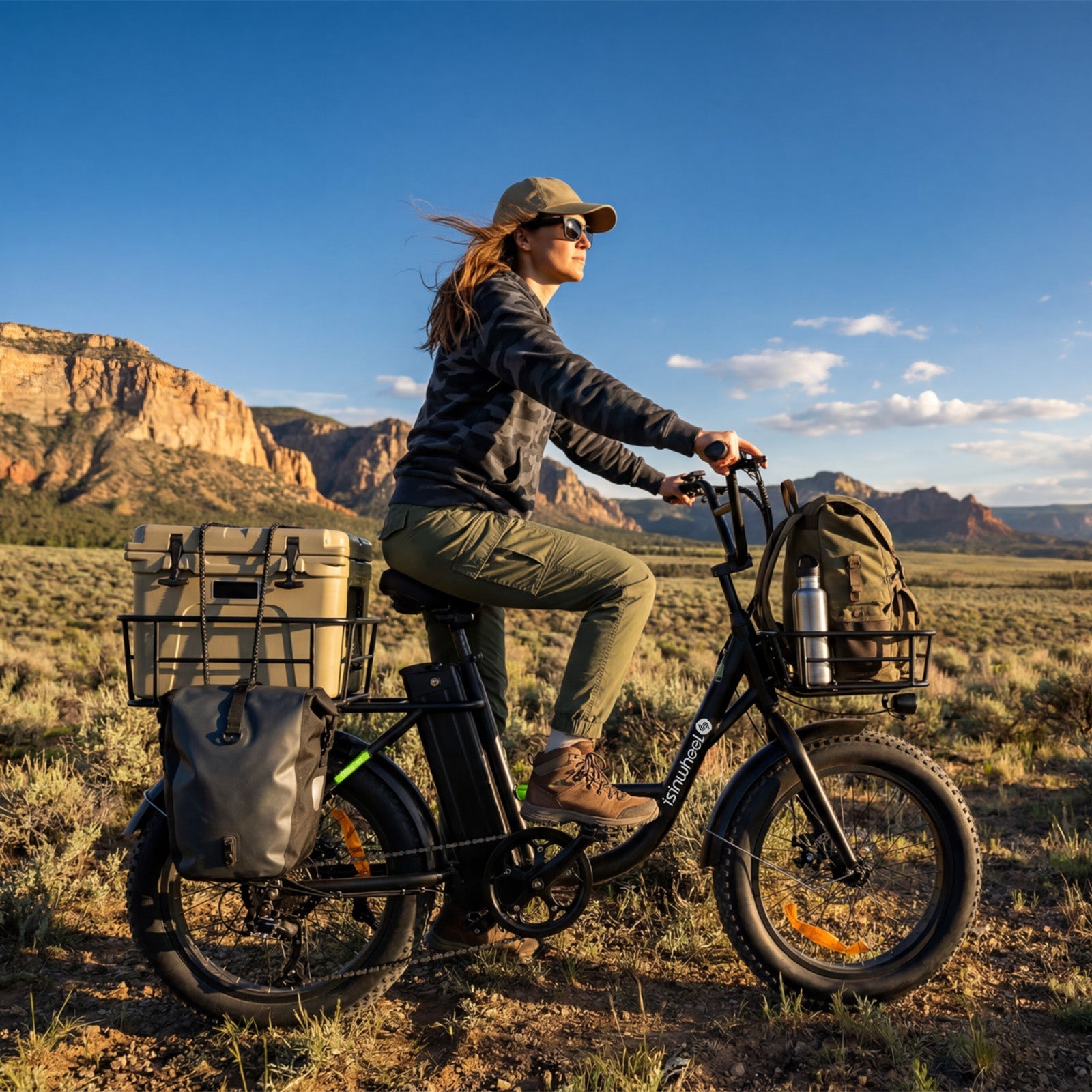
For heavier errands, Cargo E-bikes usually make more sense than standard commuters because the frame and rack system are built around utility. The isinwheel U7 Cargo Bike stands out here with a 330 lb max load, 20 x 3 in fat tires, a multi-purpose rack system, and a 500 Wh battery with up to 50 miles claimed range. Its aluminum body and Shimano 7-speed setup make it more useful for groceries, gear, and repeated stop-and-go rides than a lighter bike with fewer mounting points. If your weekly load is light and compact, you may not need that extra carrying structure.
Shop: isinwheel U7 Cargo Bike
Step 2: Set a realistic budget for the whole setup
Next, price the full errand system instead of the bike alone. Your real budget should include a helmet, lock, lights, if the bike does not meet your needs out of the box, cargo bags or baskets, and basic home charging space. Many Affordable electric bikes look attractive until you realize they need several add-ons to handle daily use. Cheap components can also raise your total cost later through early tire replacement, weak brakes, or a poor battery fit for your route.
If storage is your biggest cost driver, Lightweight electric bikes or folding models can save space and simplify apartment living. The isinwheel U5 500W Folding Electric Bike fits that role well because it combines a folding frame, 48.5 lb net weight, 375 Wh battery, 20 in wheels, and a 330 lb max load. It is still more utility-friendly than many ultra-compact options because it keeps a 500W motor and 20 x 2.6 in tires. For riders who need Green commuting solutions in smaller homes, a foldable layout can remove the need for separate outdoor bike storage or a larger parking setup.
Shop: isinwheel U5 500W Folding Electric Bike
Step 3: Match motor and battery to your route, not to marketing claims
Now map your normal round trip, including hills, traffic lights, repeated starts, and headwinds. Range claims are useful, but they are not your real-world number. Frequent stops, higher assist levels, cold weather, and cargo weight all reduce battery distance. So if your typical errand day is 12 to 18 miles with several stops, do not shop for a bike that only barely clears that number on paper. Give yourself margin so the bike stays useful six months later, not just on day one.
A good commuter setup balances enough battery with manageable weight. The isinwheel M10 500W Electric Commuter Bike is a solid example for lighter errand duty because it pairs a 500W motor with a 374 Wh battery, 39 to 45 miles per charge, 26 x 1.95 in tires, front adjustable suspension, and a 47 lb net weight. That makes it easier to pedal naturally and easier to handle than bulkier Cargo E-bikes when your trips are mostly small loads and smoother streets. For many people comparing Electric Bikes for errands, this step separates what looks impressive online from what actually fits a daily route.
Shop: isinwheel M10 500W Electric Commuter Bike
Step 4: Choose the frame style that fits your daily workflow
Pick the frame style after you know your load and route. A cargo frame works best when you carry bulky items often. A folding frame works best when storage and transport are the problem. A classic commuter frame works best when you want efficient pedaling, easier steering, and lower overall bulk. This is also the point where competitor brands such as Niu and Segway can enter the comparison fairly. Some commuter models from those brands are clean and urban-focused, but if your priority is grocery hauling or family utility, a dedicated cargo layout often gives you better rack usefulness and low-speed stability.
For Electric transportation for families or repeated grocery runs, the U7 is the stronger fit because its rack system is part of the bike's purpose, not an afterthought. For apartment use, the U5 is easier to park and charge indoors. For lighter urban errands, the M10 is simpler and easier to handle. If rough streets are common, Fat Tire E-bikes can help by giving a wider contact patch and a calmer feel over broken pavement. The right answer is the one that makes your normal trip easier every day, not the one with the most aggressive spec headline.
Step 5: Check safety essentials before you look at extras
Lock this step first; otherwise the rest of the workflow becomes rework. Check braking feel, tire width, built-in lighting, battery management, water resistance, and payload limits before you think about style accessories. A bargain e-bike is not a bargain if it feels nervous under load or forces you to upgrade safety basics right away. For errand riding, you also want predictable starts and stops because you spend more time at intersections, driveways, and parking areas than open-road riders do.
The U7, U5, and M10 all list BMS battery management, and the U7 also lists CFR1512 in its product FAQ, which matters for peace of mind when charging and riding daily. The U7 and U5 carry wider tires for added stability, while the M10 uses a narrower commuter tire and front suspension for smoother pavement efficiency. Helmet use also matters more than many buyers admit. According to NHTSA, bicycle helmets reduce head injuries by 48%, so your safety budget should be fixed before any accessory upgrades.
Step 6: Review daily practicality, not just ride specs
Before you buy, walk through your whole routine from door to destination. Where will you park at home? Can you charge the battery without blocking an exit? Will the bike fit your elevator, car trunk, hallway, or office corner? Can you lift it onto a rack or over a step? These practical checks matter because errand riding is all about repeat use. A bike you avoid using is not really Eco-friendly transportation, no matter how good the spec sheet looks.
This is also where Sustainable electric vehicles prove their value. People often adopt E-bikes when short trips become easier than taking the car. PeopleForBikes reports that survey respondents said e-bikes can functionally replace cars for many trips, and reported rides replaced 1,778 motor vehicle miles across the last three trips logged in one survey sample. If your bike is easy to store, easy to charge, and easy to load, you are far more likely to use it for Green commuting solutions, family errands, and small Last-mile Delivery tasks instead of defaulting back to the car.
Adapting Your Approach for Different Errand Scenarios
Apartment living
Choose folding or compact Lightweight electric bikes if stairwells, elevators, or tight hallways shape your day. The U5 makes more sense here than a larger cargo bike because its folding frame and 48.5 lb weight are easier to manage inside smaller spaces.
Family hauling
Pick Cargo E-bikes when your errands include groceries, school pickups, or bulky weekly loads. The U7's 330 lb max load, 20 x 3 in tires, and multi-purpose rear rack make it more stable and more useful for Electric transportation for families.
Rough streets and curb-heavy routes
Look at Fat Tire E-bikes if your roads are patched, broken, or uneven. Wider tires help calm the ride and improve confidence when the bike is loaded, especially at lower speeds around intersections and parking lots.
Tight budget, simple routes
Stay with a commuter format if your trips are light, your roads are smoother, and you do not need extra cargo hardware. The M10 gives you a lighter overall package, 39 to 45 miles claimed range, and a 47 lb net weight for simpler daily use.
What You'll Need Before You Start
Required Tools & Materials
Use this checklist before you compare or test-ride any model:
- Weekly errand distance estimate in miles
- Approximate cargo weight for normal trips
- Storage measurement for home or apartment access
- Secure a charging space with a nearby outlet
- A helmet that fits correctly
- Quality lock for daily parking
- Front and rear light plan
- Test-ride notes for fit and handling
If you are also comparing Electric Scooters, Electric Skateboards, or other Electric mobility solutions from the same brand, keep the task in focus. For groceries, kid gear, and repeated stop-and-go utility, Electric Bikes usually give you better carrying options and steadier low-speed handling than scooters or boards.
Safety Considerations
Set up safe use before your first errand run:
- Stay within the bike's rated payload limit
- Charge batteries away from exits and clutter
- Check tire pressure before loaded rides
- Test braking distance with cargo added
- Secure bags so nothing swings into the wheels
A few extra habits help a lot. Start with lower assist on your first loaded trip so you can feel how the bike reacts. Recheck the rack straps after the first mile because soft bags often settle. If you ride in rain or through puddles, note the water-resistance rating and dry the bike after use. Features such as Lithium-ion Battery Technology, Anti-theft Systems, GPS Navigation, and even Predictive Maintenance or AI-powered Fleet Management may matter in commercial fleets, but for personal errands, basic stability, safe charging, and secure parking matter more.
Troubleshooting Guide
| Problem | Cause | Solution |
|---|---|---|
| Range feels short | High assist, heavy load | Use lower assist level |
| Bike feels unstable | Wrong frame style | Switch to cargo frame |
| Parking is a hassle | Oversized bike footprint | Choose folding model |
| Costs keep rising | Missed accessory budget | Price full setup first |
| Ride feels harsh | Tire style mismatch | Use wider tires |
Use the table as a quick check, then fix the root issue before buying. If the range looks weak, compare your route against real conditions such as hills, cargo, and stop frequency. If the bike feels twitchy with bags, the problem is often frame geometry rather than rider skill. If your hallway, elevator, or car rack becomes a daily fight, the bike is not practical enough for regular errands. In most cases, the best budget choice is the one that removes friction from your routine, even if another model looks more exciting on paper.
Conclusion
Buy for the trips you already take, not for the fantasy ride you might take once a month. The best budget e-bike for errands should match your real load, your storage space, your usual distance, and your comfort level with daily charging and parking. For heavier utility, the isinwheel U7 Cargo Bike is the clear fit. For small-space living, the U5 is easier to store. For lighter commuting and simple errands, the M10 keeps things straightforward.
FAQ
What makes a budget e-bike good for errands?
A good errand e-bike carries your usual load, fits your storage space, and gives enough range for repeated short trips. You should look at payload, rack design, tire width, and charging convenience before you focus on speed. A bike that works for errands also needs stable handling at low speed because you will stop, turn, and park often. If the bike makes loading and storing easy, you are more likely to use it every day.
How much range do I need for daily errands?
Add your normal round-trip miles first, then add extra margin for hills, cold weather, and cargo weight. A practical target is to choose a bike with a claimed range well above your weekly single-day routine, not just equal to it. For example, if your longest errand day is 15 miles, do not buy based on a perfect-condition 15-mile expectation. Leave room so the bike still works well when the assist level, stop frequency, or weather changes.
Is a cargo e-bike worth it for families?
Yes, a cargo e-bike is often worth it if you regularly carry groceries, child gear, or bulky household items. The main benefit is not just load rating, but also how the frame, rack, and tire setup handles that load more calmly. A family-focused setup usually feels more predictable when starting from a stop or riding at low speed. If you only carry light items once in a while, a commuter bike may still be enough.
Should I choose a fat tire or a lightweight e-bike?
Choose a lightweight e-bike if your main problem is carrying, storing, or parking the bike in tight spaces. Choose a fat tire e-bike if you ride on rough pavement, uneven streets, or want a steadier feel with cargo on board. Wider tires often improve comfort and confidence, but they can add bulk and weight. The better choice depends on whether your bigger daily challenge is road quality or storage space.
What hidden costs should I budget for?
Plan for the full setup, not just the bike itself. At minimum, you should budget for a helmet, lock, lights if needed, and cargo accessories such as bags or a basket. You may also need small assembly help, tune-ups, or replacement wear items after regular use. If you skip these costs when comparing bikes, a cheap-looking option can become the more expensive choice later.
Table of Contents
- Introduction
-
How to Compare Budget E-Bikes for Daily Errands
- Step 1: List your real errand loads before you compare bikes
- Step 2: Set a realistic budget for the whole setup
- Step 3: Match motor and battery to your route, not to marketing claims
- Step 4: Choose the frame style that fits your daily workflow
- Step 5: Check safety essentials before you look at extras
- Step 6: Review daily practicality, not just ride specs
- Adapting Your Approach for Different Errand Scenarios
- What You'll Need Before You Start
- Troubleshooting Guide
- Conclusion
- FAQ


Share:
Electric Scooter vs E-Bike: Which Is Easier to Store in the City?
The Ultimate 2026 Guide: Tips to Pick the Best Electric Scooter for Commuting and Daily Use