



Introduction
City living makes storage decisions feel bigger than they should. A ride that looks great online can become a daily nuisance once you try to park it beside a shoe rack, carry it up a narrow stairwell, or squeeze it into a shared building corner. If your hallway is tight, your elevator is small, or your office gives you one awkward nook near a desk, storage friction becomes part of the commute.
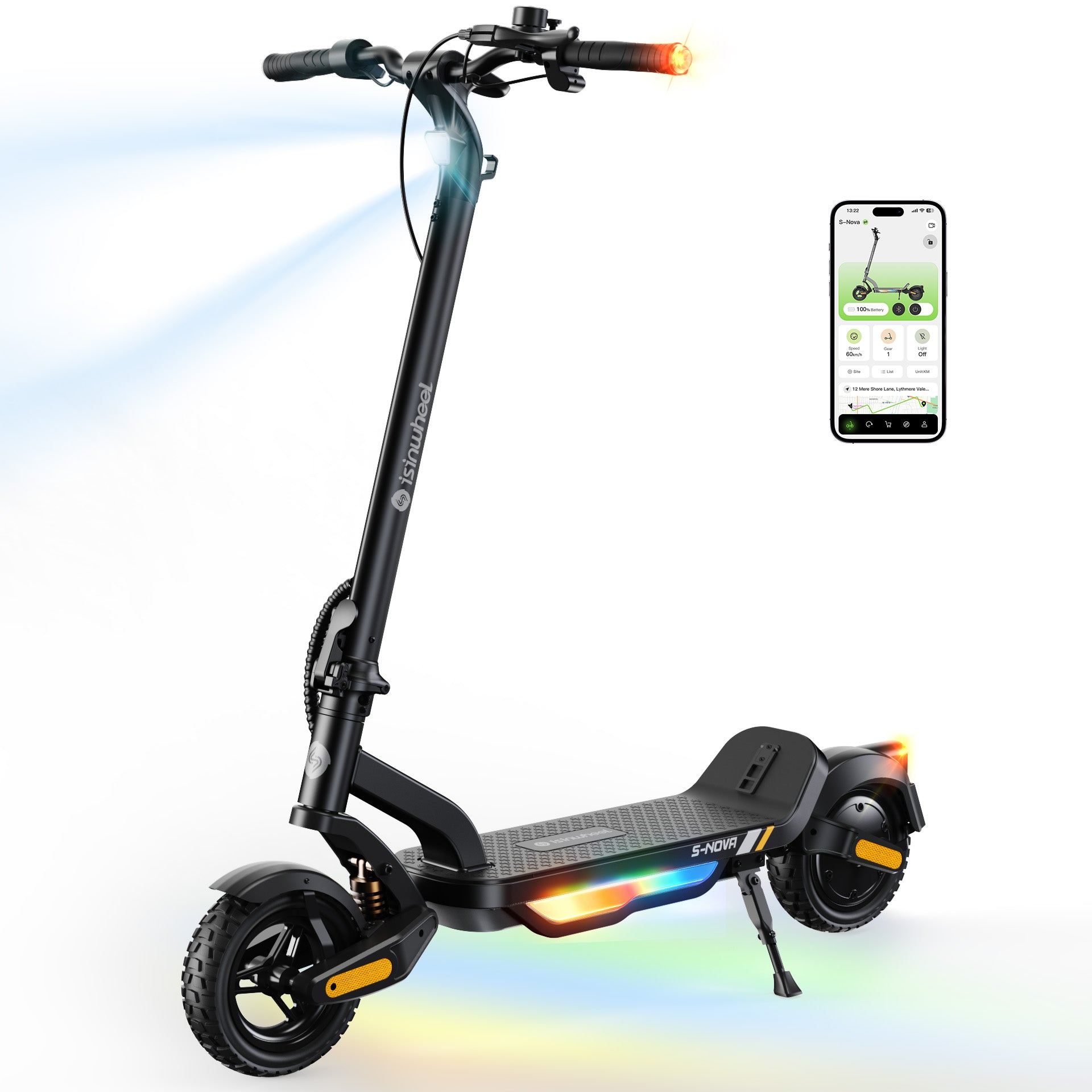
That is the short answer here: for pure storage ease, a foldable commuter scooter is usually simpler than a cargo e-bike. Still, that does not mean the scooter is always the better buy. The real choice depends on whether compact parking or hauling utility matters more in your routine. To make that tradeoff clear fast, this comparison looks at the isinwheel S Nova Commuting Electric Scooter and the isinwheel U7 Cargo Bike side by side, with a city-storage lens first and a daily-use lens second.
Product basics before the storage debate

When storage is the main concern, the fastest way to compare is to start with size, weight, and shape. The S Nova is built as a foldable urban scooter with a 49.2 lb net weight, 47.6 x 24 x 48.8 in overall dimensions, 8.5 inch pneumatic tires, and an easy-fold design. The U7 is a cargo-style e-bike with a 64.4 lb net weight, 63.8 x 26 x 40.9 in overall dimensions, 20-inch tires, and a longer rack-ready frame. On paper alone, the scooter asks for less mass to lift and less length to park indoors.
That said, the bike brings a different kind of value. The U7 is designed around utility, with a strong rack system and a 330 lb max load, while the S Nova focuses more on compact urban commuting and a 264 lb max load. So the comparison is not about which one is better overall. In Internal mode, the more useful framing is Best Fit: the S Nova is best fit for tight-space storage, while the U7 is best fit for riders who need cargo capacity and family errand flexibility.
Shop: https://www.isinwheel.com/products/s-nova-commuting-electric-scooter
Shop: https://www.isinwheel.com/products/isinwheel-u7-cargo-bike
Quick comparison table for small-space living
| Dimension | S Nova Commuting Electric Scooter | isinwheel U7 Cargo Bike |
|---|---|---|
| Vehicle type | Foldable commuter scooter | Cargo-style e-bike |
| Net weight | 49.2 lbs | 64.4 lbs |
| Overall length | 47.6 in | 63.8 in |
| Overall width | 24 in | 26 in |
| Height | 48.8 in | 40.9 in |
| Folding design | Yes | No listed fold |
| Tire size | 8.5 in | 20 in |
| Max load | 264 lbs | 330 lbs |
| Best storage spot | Desk side, closet edge | Garage, bike room |
| Stair carry effort | Moderate | High |
| Shared storage fit | Strong | Limited |
| Utility for cargo | Light daily items | Groceries and gear |
| Limitations | Lower cargo capacity | Larger parked footprint |
S Nova Storage Profile: Why It Fits Tight Spaces
If your day starts with opening an apartment door into a narrow corridor, the S Nova makes sense quickly. Its foldable format is the biggest advantage because storage is not only about raw dimensions, but also about shape control. A scooter that folds can tuck against a wall, beside a desk, or into the edge of a closet more easily than a rigid bike frame. The 49.2 lb weight is still substantial, but it is more realistic for daily repositioning than a heavier cargo e-bike.
There is also a second storage benefit: less visual and physical sprawl. The S Nova uses smaller 8.5-inch tires and a shorter chassis, so it tends to interfere less with doors, furniture edges, and narrow apartment circulation paths. For office users, that matters as much as home storage. In practical terms, this is the kind of vehicle you can fold after the last mile and place in a compact corner rather than claim a dedicated bike bay. Best Fit: S Nova for apartments, workspaces, and walk-up routines where every square foot counts.
Why apartments and offices favor a folding scooter
The answer first: city riders who need indoor storage flexibility usually have an easier time with the S Nova. A folding scooter can often be angled into leftover space that would never fit a bike frame. That includes the gap behind a door swing, the edge of a cubicle, or the strip beside a coat rack.
Explanation second: city storage is often irregular, not roomy. Most people are not parking in a neat rectangular zone. They are using leftover geometry. Because the S Nova is shorter and designed to fold, it adapts better to awkward spaces. It is less ideal, though, if your daily ride needs to carry bulk groceries, child gear, or delivery loads. In those cases, compact storage convenience may not outweigh the need for hauling capacity.
Isinwheel U7 Cargo Bike: Practical But Bulkier?
Here, the decision context changes. The U7 is harder to store in narrow indoor spaces, but it solves a different urban problem: replacing short car trips with one electric bike that can carry more. Its 64.4 lb net weight, 63.8 inch length, and rack-focused cargo format make it noticeably more demanding in apartments, elevators, and stairwells. Even when parked neatly, a cargo e-bike typically claims more floor width and turning radius than a folded scooter.
Still, bulk is not the same thing as a poor fit for everyone. If you have a shared garage, dedicated bike room, or ground-floor access, the U7 becomes much easier to live with. Its strong rack system and 330 lb max load create real utility for grocery runs, gear hauling, and family errands. Put another way, the U7 trades storage ease for usefulness. Best Fit: U7 for riders whose city routine includes cargo, but who also have a realistic place to park a full-size e-bike without blocking circulation.
Head-to-Head: What matters most in city storage?
Which one takes less floor space?
S Nova Commuting Electric Scooter: At 47.6 inches long and 24 inches wide before folding, the S Nova already starts smaller than the U7. Because it is designed to fold, it can also reduce its effective parking footprint in real rooms where corners and wall edges matter more than showroom dimensions.
isinwheel U7 Cargo Bike: The U7 measures 63.8 inches long and 26 inches wide, with 20 inch tires and a longer cargo-oriented frame. That extra length is the main reason it needs more committed floor space when parked indoors.
Best Fit: S Nova for tight corners, small studios, and entryway storage.
Carrying it upstairs changes everything
S Nova Commuting Electric Scooter: At 49.2 lbs, the S Nova is not featherweight, but it is still far more manageable for short lifts, stair carries, and routine repositioning inside a building. The foldable form also helps control the vehicle while moving through doorways and landings.
isinwheel U7 Cargo Bike: At 64.4 lbs, the U7 asks more from the rider before you even factor in its longer frame. On staircases, the issue is not just weight but awkward leverage, especially in narrow turns.
Best Fit: S Nova for walk-up apartments and buildings without elevators.
Storage utility still matters, right?
S Nova Commuting Electric Scooter: The scooter prioritizes compact convenience over carrying volume. It works well for commuters with a backpack, a laptop, or a small lock and charger, but it is not meant to replace a utility bike.
isinwheel U7 Cargo Bike: The U7 is built for practical carrying with a multi-purpose rack system and higher load capacity. If your commute includes grocery bags, kid gear, or repeated hauling tasks, the larger footprint buys you meaningful everyday utility.
Best Fit: U7 for grocery runs, gear hauling, and family-oriented urban errands.
Which should you choose for your routine?
The short version is simple: choose the S Nova if storage stress is your daily pain point, and choose the U7 if hauling utility is worth giving up storage ease. From there, your building layout should make the final call.
Real-world city scenarios
- Office desk storage or compact workplace corner: Best Fit: S Nova. The folding format is easier to park beside a desk or along an interior wall.
- Grocery runs, gear hauling, or family errands: Best Fit: U7. The cargo-friendly frame and higher load rating better match utility-heavy trips.
- Third-floor walk-up with no elevator: Best Fit: S Nova. Lower weight and a foldable shape matter every single day.
- Shared garage or dedicated bike room: Best Fit: U7. If secure full-size parking exists, the storage penalty drops a lot.
- Small studio apartment with narrow entry path: Best Fit: S Nova. Shorter length and foldability are the cleaner fit.
- Mixed commute with occasional bulky loads: Best Fit: U7 if indoor parking is solved first. Utility only helps if you can realistically store the bike.
What to measure before you buy
Before choosing either model, measure the spaces that create daily friction, not just the place you think you will park. Check your front door width, hallway turning points, stair landings, elevator depth, and the width of the corner where the vehicle will actually sit. Then think about how you will move it while carrying bags, unlocking doors, or sharing space with neighbors.
For many urban buyers, this step changes the decision. A cargo e-bike can seem manageable until you account for one tight interior turn. A scooter can seem ideal until you realize you need more carrying capacity on half your weekly trips. Measure first, then match the product to the route between the street and its resting place.
FAQ
Is a foldable scooter always easier to store than an e-bike?
Usually, yes, but not in every building. A foldable scooter generally needs less effective parking space and is easier to reposition indoors. That makes it simpler for apartments, offices, and walk-up routines. An e-bike can still be easy to store if you have a ground-floor garage, a wide bike room, or dedicated secure parking.
Can a cargo e-bike fit indoors in a city apartment?
It can, but the space has to support it. Measure door widths, hallway turns, elevator depth, and the final parked area before buying. Cargo e-bikes are often manageable in larger apartments or buildings with direct-access storage. They become much harder to live with when stairs, narrow landings, or shared corridors are part of the routine.
What should I measure before buying a scooter or e-bike for city use?
Start with the full path from the street to storage. Measure entry doors, interior hallway width, stair turns, elevator dimensions, and the length and width of the parking spot itself. Also measure any low shelves, radiators, or furniture that could interfere with parking. These are the details that decide whether daily storage feels easy or annoying.
Are apartment hallways a good place to store either one?
Usually, no. Hallways are shared circulation spaces, and storing large items there can create access and safety issues. Even if the vehicle fits physically, it may still obstruct movement for neighbors, deliveries, or emergencies. Indoor storage works best when the scooter or bike has a dedicated place that does not interfere with doors, stairs, or walking paths.
Is the lighter option always better for city living?
Not automatically. Lower weight helps with lifting, carrying, and repositioning, especially in walk-up buildings. But utility matters too, and a heavier cargo e-bike may still be the better fit if your routine includes grocery hauling, kid transport, or work gear. The best choice balances storage ease with the kind of trips you actually take each week.
How do I decide between compact storage and cargo utility?
Think about the problem that annoys you most right now. If the daily pain is parking, carrying upstairs, or fitting into tight shared spaces, prioritize the compact option. If the bigger issue is replacing car trips for errands and hauling, the cargo-focused option may be worth the larger footprint. The correct choice is the one that reduces friction most often, not the one that looks best in a feature list.
Table of Contents
- Introduction
- Product basics before the storage debate
- Quick comparison table for small-space living
- S Nova Storage Profile: Why It Fits Tight Spaces
- Isinwheel U7 Cargo Bike: Practical But Bulkier?
- Head-to-Head: What matters most in city storage?
- Which should you choose for your routine?
-
FAQ
- Is a foldable scooter always easier to store than an e-bike?
- Can a cargo e-bike fit indoors in a city apartment?
- What should I measure before buying a scooter or e-bike for city use?
- Are apartment hallways a good place to store either one?
- Is the lighter option always better for city living?
- How do I decide between compact storage and cargo utility?


Share:
Electric Scooters vs. Seated e-bikes: what changes in daily use
How to Compare Budget E-Bikes for Daily Errands