


Electric Bike vs Electric Dirt Bike: What’s the Difference and Which One Should You Choose?
Article Slug: electric-bike-vs-electric-dirt-bike-difference
Introduction
Electric bikes and electric dirt bikes both use electric power, but they are designed for very different riding experiences. A traditional electric bike is generally built around everyday transportation, commuting, recreational riding, and practical travel, while an electric dirt bike is designed with a stronger focus on off-road performance, aggressive terrain, and adventure riding.
The right choice depends largely on where you ride, how you ride, and what you expect from your vehicle. iSinwheel offers electric bikes ranging from commuter-friendly models to all-terrain and dirt-bike-style options, making it easier to find a ride that matches your lifestyle. Its electric bike collections include practical commuter models as well as fat-tire and all-terrain bikes designed for rougher roads, trails, and outdoor exploration.
Electric Bike vs Electric Dirt Bike at a Glance
An electric bike is usually the better option for riders who need transportation for work, school, errands, fitness, or casual weekend rides. Electric dirt bikes are more appropriate for riders who prioritize off-road handling, higher performance, rugged terrain, and recreational adventure.
The difference becomes especially noticeable in the frame design, tires, suspension, riding position, motor output, and intended environment.
What Is an Electric Bike?
An electric bike, commonly called an e-bike, combines bicycle-style components with an electric motor and battery. Depending on the model, riders can use pedal assistance, a throttle, or a combination of both.
Commuter-focused e-bikes are designed around comfort and practicality. They can be useful for getting to work, running errands, riding around town, or enjoying longer recreational trips.
iSinwheel describes its commuter e-bikes as being intended for smooth, comfortable rides for work, errands, and everyday travel. The brand also offers step-through, folding, cargo, cruiser, and other electric-bike configurations for different riding needs.
Key Characteristics of Electric Bikes
-
Comfort-oriented design: Generally designed for longer everyday rides
-
Pedal-friendly setup: Maintains a bicycle-like riding experience
-
Practical geometry: Often easier to use for commuting and casual riding
-
Versatile tire options: Suitable for pavement, bike paths, gravel, and light trails depending on the model
-
Everyday practicality: Useful for transportation, recreation, and errands
-
Multiple configurations: Includes commuter, cargo, folding, cruiser, and all-terrain styles
For example, iSinwheel's current electric-bike lineup includes models such as the U8 Ultra and M60, with the M60 positioned as an all-terrain option with fat tires and features intended for more adventurous riding.
What Is an Electric Dirt Bike?
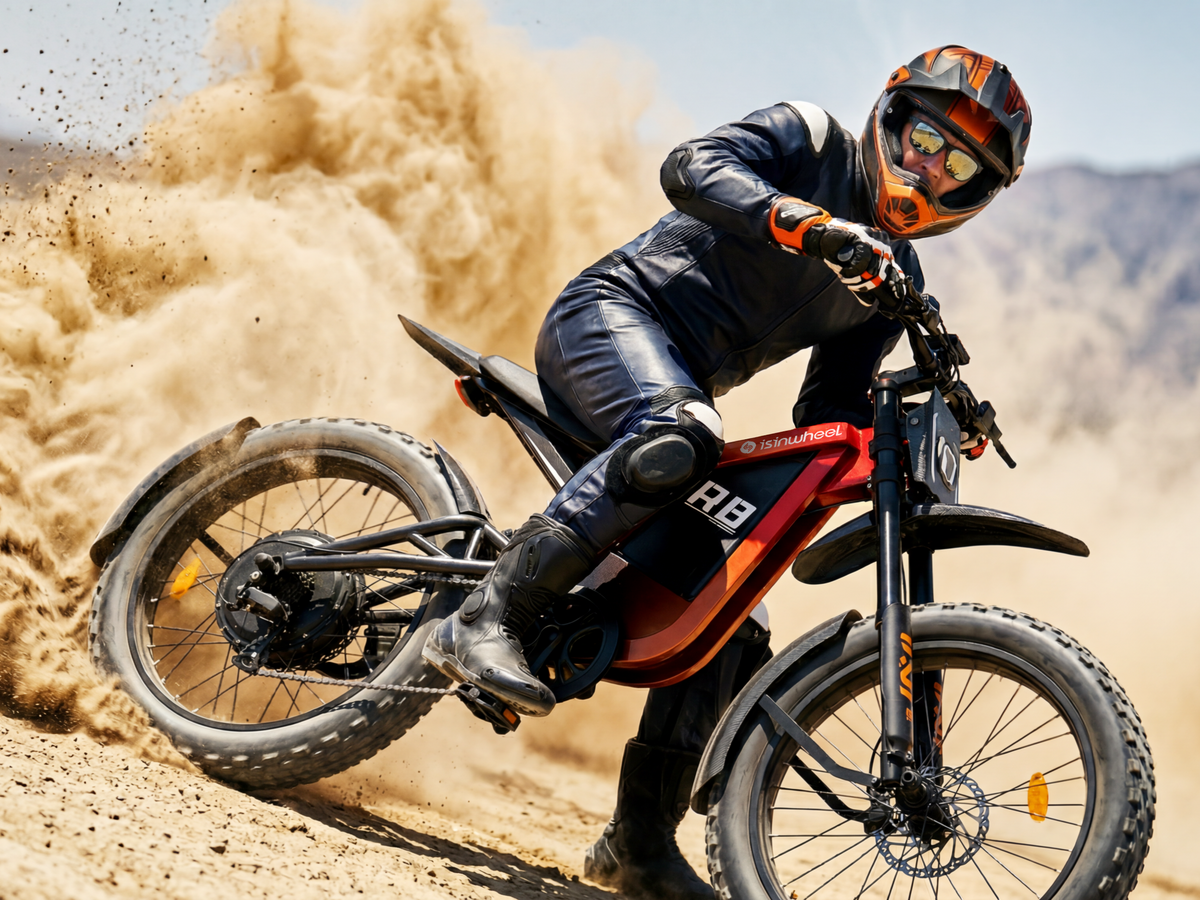
An electric dirt bike takes more inspiration from traditional off-road motorcycles than conventional bicycles. Its design typically emphasizes aggressive riding, off-road control, suspension performance, larger tires, and increased power.
Instead of being primarily designed for commuting, an electric dirt bike is intended for riders who want to explore dirt trails and other suitable off-road environments.
The iSinwheel off-road collection currently includes models such as the R6 Pro Electric Dirt Bike and R8 Electric Dirt Bike. The R6 Pro is listed with a 1500W motor, up to 51 miles of claimed range, a 35 MPH top speed, and 20×4-inch fat tires. The R8 is listed with 3000W peak power, up to 80 miles of claimed range, a 35 MPH top speed, and motorcycle-style tires.
Key Characteristics of Electric Dirt Bikes
-
Off-road-focused construction: Designed for dirt and adventure riding
-
More aggressive geometry: Suited to active off-road control
-
Larger or specialized tires: Designed to provide traction over uneven terrain
-
Stronger suspension focus: Helpful when riding over rough surfaces
-
Higher performance potential: Many models prioritize power and speed
-
Motorcycle-inspired designs: Often look and feel different from conventional bicycles
7 Major Differences Between an Electric Bike and Electric Dirt Bike
1. Intended Use
The biggest difference is the intended riding environment.
A commuter electric bike is designed primarily for everyday transportation. It makes sense for paved streets, bike lanes, neighborhood roads, errands, and recreational cycling.
An electric dirt bike is designed around off-road recreation. It is better suited to appropriate dirt trails and private off-road areas where this type of vehicle is permitted.
iSinwheel specifically separates its riding applications into urban commuting and all-terrain adventure, highlighting commuter models for everyday travel and all-terrain models for trails, gravel paths, and open roads.
2. Frame and Riding Position
Electric bikes generally maintain a bicycle-inspired frame and riding position. This makes them familiar to cyclists and practical for getting on and off during everyday transportation.
Electric dirt bikes tend to use a more motorcycle-inspired frame and riding position. The design is intended to provide greater control during active off-road riding.
3. Tires
Tires play an important role in how an electric vehicle handles different surfaces.
Commuter e-bikes commonly use tires optimized for pavement and mixed everyday surfaces. All-terrain e-bikes may use wider tires for additional grip and stability.
Dirt bikes generally use tires designed specifically for loose, uneven, or challenging terrain. For example, iSinwheel lists the R6 Pro with 20×4-inch fat tires, while the R8 uses 19×3-inch motorcycle-style tires.
4. Suspension
Suspension is particularly important when riding over uneven ground.
A commuter e-bike may have suspension intended to improve comfort over potholes, bumps, and rough pavement. An off-road electric bike or dirt bike generally places greater emphasis on controlling impacts over uneven terrain.
If your typical ride involves smooth pavement, you may not need an aggressive off-road suspension setup. If you regularly ride rough trails, suspension becomes a much more important consideration.
5. Motor Performance
Motor specifications can vary considerably between models.
Commuter e-bikes tend to prioritize balanced performance and practical everyday use. Off-road and dirt-bike models can place greater emphasis on motor output and acceleration.
For perspective, iSinwheel currently lists the M60 all-terrain e-bike with a 48V 13Ah battery and mechanical disc brakes, while its R6 Pro dirt bike is listed with a 1500W motor and 35 MPH top speed.
Remember that specifications such as top speed and motor power do not automatically determine which vehicle is better. They should be matched to the rider's intended environment and local regulations.
6. Comfort and Practicality
For daily transportation, practicality matters.
An electric bike can be easier to integrate into a normal routine because its bicycle-style design works well for commuting, errands, casual rides, and recreational cycling.
An electric dirt bike can be more specialized. Its design may be more suitable for recreational riding than carrying groceries, riding through a downtown area, or making a daily commute.
7. Legal and Riding Requirements
This is an important consideration before purchasing either type of electric vehicle.
Rules for e-bikes, electric motorcycles, and electric dirt bikes can vary depending on your country, state, province, city, trail system, and road classification. A vehicle that is appropriate for private off-road property may not be legal on public roads or bicycle paths.
Always check local regulations, speed restrictions, equipment requirements, trail rules, and registration or licensing requirements before riding.
Which One Should You Choose?
Choose an Electric Bike If:
An electric bike is likely the better choice if you:
-
Commute to work or school
-
Ride primarily on paved roads
-
Need a practical everyday vehicle
-
Run errands regularly
-
Want a bicycle-style riding experience
-
Enjoy casual weekend rides
-
Occasionally ride gravel or light trails
-
Prefer versatility and everyday convenience
For commuting, iSinwheel identifies the U7 as one of its strong options because of its combination of range, comfort, speed, and everyday usability. The company also highlights the M40 folding e-bike for riders who value easier storage and the Ucitys cruiser for a relaxed step-through design.
Choose an Electric Dirt Bike If:
An electric dirt bike may be the better option if you:
-
Primarily ride off-road
-
Want a more motorcycle-inspired experience
-
Enjoy dirt trails and adventure riding
-
Need more aggressive off-road capability
-
Prioritize performance over commuting practicality
-
Regularly encounter rough or uneven terrain
-
Want a recreational electric vehicle rather than a daily commuter
Models such as the iSinwheel R6 Pro and R8 demonstrate this more specialized approach, with higher-performance specifications and dirt-bike-oriented designs.
What About an All-Terrain Electric Bike?
There is also a middle ground between a commuter e-bike and a dedicated electric dirt bike: the all-terrain electric bike.
An all-terrain e-bike can be a good choice for riders who want to commute during the week but also explore gravel roads, trails, beaches, or other mixed surfaces on weekends.
The iSinwheel M60 is an example of this category. The current listing describes it as an all-terrain electric bike and lists 48V 13Ah battery capacity, mechanical disc brakes, IPX5 water resistance, and 26×4-inch fat tires.
This type of bike can make sense for riders who do not want to own a highly specialized dirt bike but still want more capability than a basic city commuter.
Electric Bike vs Electric Dirt Bike: Which Is More Versatile?
For most everyday riders, a conventional or all-terrain electric bike is likely to be the more versatile choice.
An electric bike can cover multiple roles, including commuting, errands, recreation, exercise, and weekend exploration. An all-terrain model can extend that versatility to rougher surfaces.
An electric dirt bike is more specialized. Its greatest advantage comes when the rider actually wants to spend significant time riding off-road.
Therefore, the question is not simply "Which vehicle is more powerful?" Instead, ask "Which vehicle matches the way I actually ride?"
Final Thoughts
The difference between an electric bike and an electric dirt bike comes down to purpose, design, terrain, and riding style.
If your priority is commuting, everyday transportation, comfort, and versatility, an electric bike is usually the better starting point. If your priority is off-road adventure, aggressive terrain, and a motorcycle-inspired riding experience, an electric dirt bike may be the better fit.
For riders who want something between these two categories, an all-terrain electric bike can provide a practical compromise. iSinwheel's current lineup includes commuter, all-terrain, and dirt-bike-style options, allowing riders to choose according to their preferred riding environment.
Before choosing a model, consider your typical terrain, desired riding position, storage needs, performance expectations, and local riding regulations. Choosing based on your actual riding habits will help ensure you get an electric vehicle that you can enjoy both now and on your next adventure.

Share:
Best iSinwheel Electric Bikes for Commuting, Weekend Rides, and Off-Road Adventures