



Best-Value Electric Scooters for Light Off-Road Use — Where Cost-Performance Actually Meets the Trail
Map Your Actual Route Before You Compare Any Scooter
A scooter can look like a bargain until your real route adds gravel paths, broken pavement, short grass, or dirt connectors. That is where weak tires, harsh ride quality, and optimistic range claims stop being minor issues and start costing you comfort, control, and battery confidence. For anyone hunting the best-value electric scooter for light off-road use, the smartest move is to judge the route first and the spec sheet second.
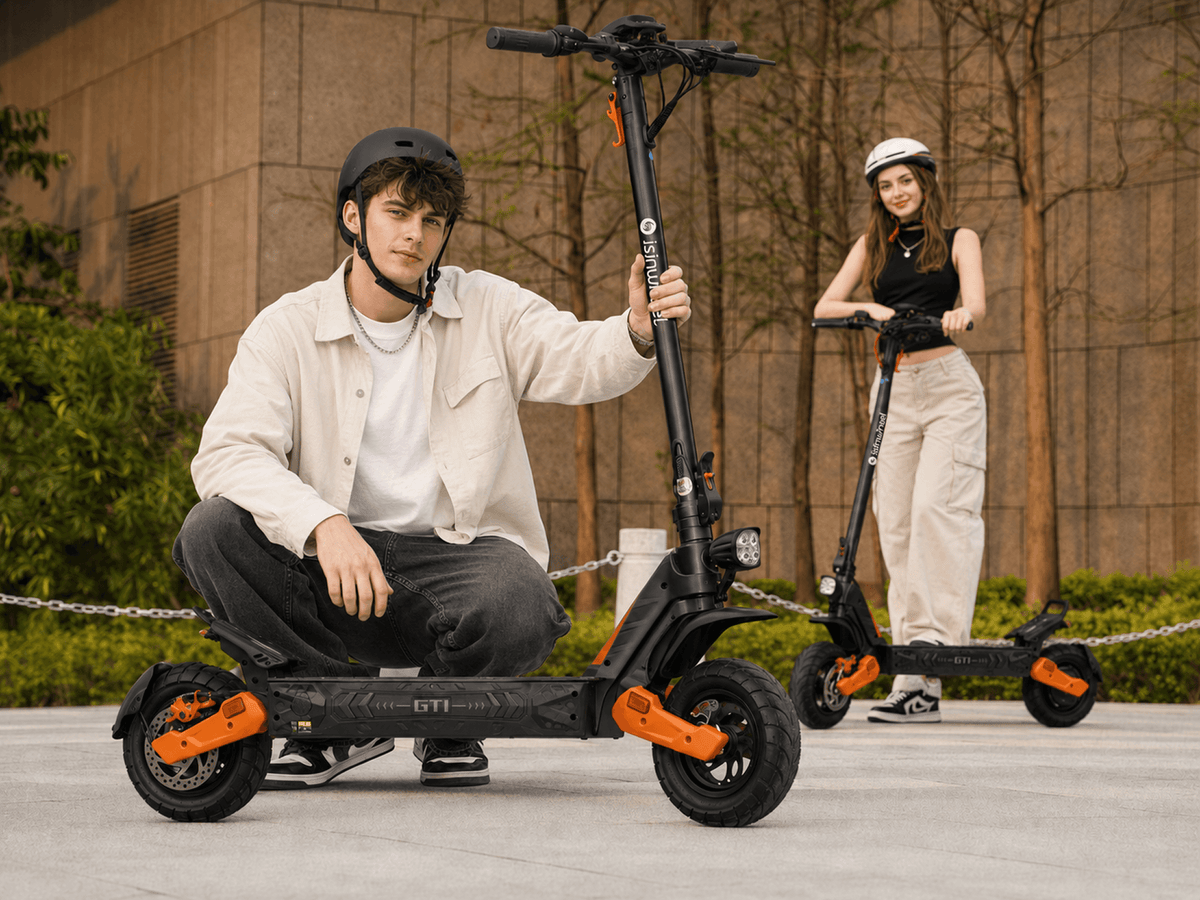
You do not need a full mountain-trail machine for light off-road riding, but you do need a scooter that matches what you actually ride. In iSinwheel’s current lineup, the GT2 is the clearest crossover example for this use because it combines a 1000W rated motor, 48V 15Ah battery, front and rear disc brakes with EABS, and 11-inch off-road pneumatic tires in a package aimed at mixed terrain rather than pure city commuting. Riders comparing Segway, NIU, and GOTRAX will notice the same pattern: the best value usually comes from balanced hardware, not just a high headline speed.
Step 1: Define what “light off-road” means for your rides
Light off-road use is narrower than many product pages suggest. You are usually dealing with surfaces that are rough but still predictable, not deep mud, jumps, or technical downhill terrain.
What to do
- Audit the surfaces you ride most often.
- Estimate the split between pavement and rough ground.
- Note the steepest hill on your normal route.
- Check whether your rough sections are short connectors or long stretches.
What counts as light off-road
- Packed dirt park paths
- Gravel connectors
- Cracked asphalt
- Uneven sidewalks
- Short grass access paths
- Mild to moderate inclines
Common mistake
- Buying for maximum top speed when your real need is traction, comfort, and predictable braking.
If your route is roughly 80% pavement and 20% rough path, comfort hardware matters more than extreme performance claims. That is why a light trail electric scooter should be judged by tire type, suspension support, braking balance, and usable range before anything else.
Step 2: Set the non-negotiables that protect value
Once you know the route, build a shortlist around required features. This keeps flashy extras from distracting you and helps you identify an off-road electric scooter under $800 that is actually practical.
What to include in your checklist
- Price ceiling for scooter and gear
- Minimum real-world range target
- Rider weight plus backpack load
- Tire type: pneumatic preferred
- Basic suspension support
- Front and rear braking system
- Folded size and carry weight
- Replacement tire and tube availability
Good minimums for mixed terrain buyers
- Pneumatic tires, not solid tires
- Reliable front and rear braking
- Enough power for mild hills
- Lighting for dusk connectors
- Manageable weight for storage
The iSinwheel GT2 is worth noting here because its published specs hit several practical filters at once: 53 lb net weight, folded dimensions of 48 x 8.6 x 22 inches, 35% climbing claim, 5 to 7 hour charge time, and IP54 water resistance. Those details matter more in daily ownership than decorative lighting patterns or inflated marketing language.
Shop: iSinwheel GT2 Off Road Electric Scooter
Which Specs Actually Matter for a Best-Value Electric Scooter for Light Off-Road Use?
A budget off-road scooter lives or dies by a few core parts. On gravel, dirt, and broken pavement, the most useful scooter is rarely the one with the highest advertised speed. Instead, the affordable electric scooter for rough terrain is the one that keeps you stable, limits fatigue, and gives you enough control to ride with margin.
Step 3: Prioritize tires, suspension, and deck stability first
This is where many buyers either save money wisely or waste it. On mixed terrain, larger air-filled tires and usable suspension often improve the ride more than a speed bump from one model to another.
Why this matters
- Pneumatic tires absorb sharp chatter better than solid tires.
- Larger diameter rolls over gravel and cracks more calmly.
- Suspension helps the wheels stay planted on loose surfaces.
- A stable deck reduces foot fatigue and stance corrections.
What to look for
- 10-inch or 11-inch pneumatic tires
- Tread that can handle gravel paths
- Front and rear suspension support
- Enough deck room for a stable stance
Brand fit in this category
The GT2 is a strong match for this step because iSinwheel lists 11-inch off-road pneumatic tires and front and rear dual hydraulic suspension. That combination is exactly the kind of hardware that turns a scooter from a harsh commuter into a more credible electric scooter for gravel paths and hard-packed dirt. By comparison, Segway’s ZT3 Pro leans more aggressively into all-road design with 11-inch tubeless tires and dual suspension, while NIU’s KQi 300X focuses on hydraulic suspension and moderate all-terrain comfort rather than trail-oriented power.
Controlled competitor snapshot
- iSinwheel GT2: Best fit for mixed commuting and light trail value
- Segway ZT3 Pro: More trail-ready chassis feel, but usually a more premium position
- NIU KQi 300X: Strong comfort and braking package for rough urban surfaces
- GOTRAX GX-style models: Often appealing on paper, but buyers should verify tire, brake, and support quality closely
Match Motor Output and Hill Ability to Real Terrain
A scooter that can hold momentum on mild climbs is more useful than one that only looks quick on flat ground. Loose gravel and repeated elevation changes expose weak torque fast, especially if the rider is heavier or carries a backpack.
Step 4: Use practical power thresholds instead of chasing speed
Think in terms of control and climbing, not bragging rights. For light off-road exploration, the motor should feel calm when the surface gets rough and the hill gets longer.
Practical guide
- Occasional rough paths, lighter rider: around 800W can work
- Mixed terrain and mild hills: 800W to 1000W is a safer target
- Heavier rider or rolling hills: push higher in the shortlist
- Loose gravel starts: torque matters more than top-speed claims
Real-world examples
The iSinwheel S10Pro is listed with an 800W motor, 10-inch off-road inflatable tires, dual suspension, and a claimed 32-mile range, so it fits riders whose off-road use is occasional. The GT2 steps into a more useful middle zone with 1000W rated power, a 48V 15Ah battery, 28 mph top speed, and up to 35% climbing ability. Segway’s ZT3 Pro advertises 1600W max power and 11-inch all-road tubeless tires, while NIU’s KQi 300X lists 500W rated and 1000W peak power with up to 25% hill climbing. In plain terms, that makes the GT2 a sensible budget off-road scooter for buyers who want more headroom than an urban-only model without jumping to a heavier premium class.
Build a Realistic Cost-Performance Shortlist
A best-value electric scooter for light off-road use is not automatically the cheapest one. The better question is what it costs you to ride confidently for a full season without constant frustration.
Step 5: Compare ownership cost, not just shelf price
This step saves buyers from false economy. A cheaper scooter with weak tires, sketchy braking, or poor parts support can become the more expensive choice once repairs and riding compromises pile up.
Put these costs in your worksheet
- Helmet
n- Gloves - Lock
- Floor pump
- Tube or tire replacements
- Brake pad maintenance
- Charging habits and spare time
Why this matters
According to the CPSC, micromobility products have prompted repeated safety warnings, recalls, and charger-related fire concerns, which is why buying a scooter with clear charging guidance and dependable core hardware matters more than trimming every dollar from the purchase. If a model cuts too much from the tires, brakes, or charging ecosystem, the “deal” fades quickly.
Better value signs
- Replacement parts are easy to source
- Tire format is common and serviceable
- Brake setup is not stripped down
- Weight is manageable for your storage situation
- Battery size matches your route with reserve
Step 6: Translate claimed range into usable range
Advertised range is usually a best-case number, not your everyday result. Hills, cold weather, rider weight, loose surfaces, stop-start traffic, and fast acceleration all reduce what you actually get.
Use this range filter
- Treat max range as ideal conditions
- Plan your normal ride around a lower figure
- Keep a 30% to 50% buffer for mixed terrain
- Be more conservative if your route includes climbs
Example
If a scooter claims 37 miles, do not assume 37 trail miles. For a route with hills, gravel, and repeated acceleration, plan around a lower usable number so you are not limping home on the last battery bar. That is one reason the GT2’s 48V 15Ah battery and 37-mile claim look more realistic for weekend mixed-terrain use than a smaller commuter battery. An off-road electric scooter under $800 should still leave you margin after the fun part of the ride is over.
Safety Checks That Keep a Budget Scooter from Becoming a Bad Buy
Even a well-priced scooter can be the wrong purchase if it skimps on braking, visibility, or charging basics. Safety hardware is not a luxury add-on for mixed terrain; it is part of value.
Step 7: Confirm braking, lighting, folding, and charging basics
This is the final filter before you buy. A scooter for rougher paths should stay predictable when the surface changes and visible when the route runs later than planned.
What to confirm before purchase
- Front and rear brakes
- Brake type and feel
- Headlight and brake light
- Turn signals if you ride near traffic
- Secure folding latch
- Clear charger specs and charging rules
- Water resistance rating with realistic expectations
Why these checks matter
The GT2 lists front and rear disc brakes plus EABS, along with a headlight, ambient lights, turn signals, and a brake light. That is the right kind of spec sheet for a safe off-road scooter buying guide because it focuses on control instead of gimmicks. Segway and NIU also do well in this area on their higher-spec models, but value buyers should be careful not to assume every rough-terrain-looking scooter has equally strong braking or lighting.
The safety side matters off the spec sheet too. In a 2026 injury report, the CPSC said only 18% of injured riders in a 2024 e-scooter special study reported wearing a helmet, while 37% did not report helmet use. That is a good reminder to treat your helmet, gloves, and visibility gear as part of the scooter budget, not optional extras.
Adjust Your Choice to the Way You Actually Ride
Different riders need different tradeoffs, even within the same “light off-road” category. This is where the buying decision becomes clearer.
Park paths plus city streets
Choose a model that balances lighting, foldability, puncture management, and comfort. The GT2 fits well if you need one scooter for weekday trips and weekend gravel paths.
Heavier rider on rolling hills
Move motor output, climbing ability, and brake confidence higher in your list. A scooter that feels merely adequate on flat pavement can feel underpowered fast on rough climbs.
Weekend explorer on hard-packed dirt
You can accept moderate speed if the tires, suspension, and braking are sorted. Comfort over 30 to 60 minutes matters more than a few extra mph.
Commuter with rough shortcuts
Avoid overly specialized machines if most of your ride is still urban. A balanced all-rounder usually gives the strongest cost-performance return.
Troubleshooting Common Buying Mistakes
A lot of pre-purchase confusion comes from a few recurring problems. Use this table to correct your shortlist before you spend money.
| Problem | Cause | Solution |
|---|---|---|
| Unstable feel on gravel | Small or hard tires | Choose pneumatic 10-11 inch |
| Range drops too fast | Hills and throttle bursts | Keep 30-50% range buffer |
| Sketchy downhill braking | Weak brakes or low grip | Prioritize dual braking setup |
| Ride gets tiring quickly | Stiff setup, vibration | Add suspension and tire volume |
| Too heavy to live with | Oversized scooter class | Check folded size and weight |
What to watch after the purchase
- Check tire pressure regularly
- Test brake feel before longer rides
- Avoid using random universal chargers
- Clean dirt from braking surfaces
- Reassess range after your first few mixed-terrain rides
Choose Your Shortlist in the Right Order
The fastest way to pick well is to rank your criteria in the order rough terrain exposes them. Start with route type, then move to tires and suspension, then motor and hill support, then braking, then range, then ownership details.
For many riders, iSinwheel belongs on that shortlist because its lineup includes practical crossover models instead of only pure urban commuters. The GT2 is the most natural candidate when you want a best-value electric scooter for light off-road use, especially if your ride mixes pavement with gravel connectors, park paths, and mild hills. Segway and NIU remain credible comparison points for chassis quality, suspension feel, and braking polish, while GOTRAX can stay in the comparison if you verify the exact model’s hardware carefully. If your route is mostly rough shortcuts and weekend exploring, put ride control first and let speed claims come later.
Shop: iSinwheel Electric Scooters
FAQ
How do I select an electric scooter for outdoor adventures and rough terrain for $800 or less?
Start by mapping your actual surfaces, then filter for pneumatic tires, usable suspension, front and rear braking, and enough power for mild hills. A scooter with a claimed 30 to 40 mile range should still be planned with a 30% to 50% real-world buffer if you ride gravel or inclines. That approach keeps you focused on route fit instead of marketing extras.
What’s the most durable electric scooter for off-road conditions?
For light off-road conditions, the most durable electric scooter is typically one built around 10-inch or 11-inch pneumatic tires, effective front and rear braking, and suspension that can handle repeated vibration on gravel, dirt, and uneven pavement. In practice, durability here means the scooter keeps its stability, ride comfort, and structural reliability over time rather than just offering higher top speed. Before choosing, check the frame strength, tire type, brake setup, and whether parts like tubes, tires, and brake components are easy to replace.
How does an off-road electric scooter under $800 compare to an e-bike for adventure?
An off-road electric scooter under $800 usually wins on storage simplicity, easier carrying, and quicker setup for short rides. An e-bike usually feels more stable over longer distances, rougher terrain, and sustained climbs because you get a seat, larger wheels, and a longer wheelbase. If your route is mostly park paths, gravel connectors, and urban shortcuts, a scooter is often enough. If your rides are longer, rougher, or more physically tiring, an e-bike can be the better adventure tool.
How do I make sure my off-road scooter is safe for rough terrain without overspending?
Focus your money on control hardware first: pneumatic tires, dependable front and rear brakes, visible lighting, and a frame that feels stable at moderate speed. Add a helmet, gloves, and regular tire-pressure and brake checks to your routine, because those steps improve safety more than cosmetic upgrades. You should also confirm charger specs, folding latch security, and replacement-part availability before buying. A safer budget scooter is usually the one that handles calm, not the one that advertises the highest speed.
What’s the most affordable off-road scooter that still offers solid performance for adventurous riders?
For adventurous riders shopping on a budget, the most affordable off-road scooter worth considering is typically an entry-level mixed-terrain model from iSinwheel rather than the absolute cheapest scooter marketed as “off-road.” A practical pick should include pneumatic tires, basic suspension, reliable front and rear braking, and enough battery capacity to handle rougher routes without dropping off too quickly. That combination gives you better grip, comfort, and control on dirt paths or uneven surfaces while keeping the price far below true high-end off-road machines.
Table of Contents
-
Best-Value Electric Scooters for Light Off-Road Use — Where Cost-Performance Actually Meets the Trail
- Map Your Actual Route Before You Compare Any Scooter
- Which Specs Actually Matter for a Best-Value Electric Scooter for Light Off-Road Use?
- Match Motor Output and Hill Ability to Real Terrain
- Build a Realistic Cost-Performance Shortlist
- Safety Checks That Keep a Budget Scooter from Becoming a Bad Buy
- Adjust Your Choice to the Way You Actually Ride
- Troubleshooting Common Buying Mistakes
- Choose Your Shortlist in the Right Order
-
FAQ
- How do I select an electric scooter for outdoor adventures and rough terrain for $800 or less?
- What’s the most durable electric scooter for off-road conditions?
- How does an off-road electric scooter under $800 compare to an e-bike for adventure?
- How do I make sure my off-road scooter is safe for rough terrain without overspending?
- What’s the most affordable off-road scooter that still offers solid performance for adventurous riders?

Share:
5 Beginner-Friendly Scooters for Family Use — Electric Mobility for Every Member of the Household
The Ultimate Guide to Durable Off-Road Electric Scooters — Which Budget Models Actually Hold Up?