



Understanding beginner-friendly electric scooters
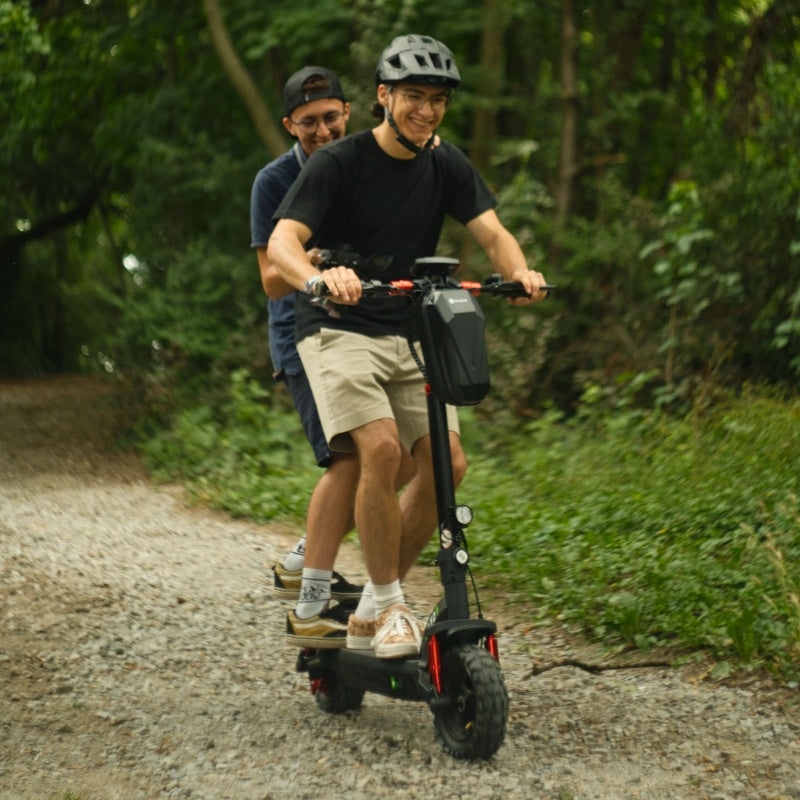
Your first few rides on an electric scooter usually decide whether it becomes part of your daily routine or ends up folded in a corner. A scooter that feels twitchy, harsh over cracks, or awkward to carry can make even a short commute frustrating. For beginners, the wrong choice often means rougher handling, less confidence at stops, and range expectations that do not match real city use.
That is why this roundup stays focused on easy-to-ride electric scooters under $500, with practical commuter criteria instead of hype. The picks below look at comfort, braking, portability, app features, and daily usefulness for urban mobility and last-mile transportation. Because Isinwheel electric scooters are built around affordable green commuting solutions, they fit this conversation well, while a Segway benchmark helps show where value and ride feel differ.
Top picks for an easy first electric scooter
If you are shopping for a scooter for urban commuting, two questions matter most: how calm it feels on day one, and how well it still fits once your confidence improves. The shortlist below starts with the easiest Isinwheel electric scooters for beginners, then adds one fair Segway comparison point for buyers who are also checking familiar brand names.
| Pick | Best for | Top speed | Max range | Tires | Weight | Main trade-off |
|---|---|---|---|---|---|---|
| Isinwheel S Nova | True beginners, short commutes | 20 MPH | 19 miles | 8.5-inch pneumatic tires | 49.2 lbs | Shorter range for longer weekly commuting |
| Isinwheel S Nova Pro | Beginners who want room to grow | 28 MPH | 38 miles | 10-inch pneumatic tires | 60.4 lbs | Heavier to carry upstairs every day |
| Segway Ninebot E2 Plus | Buyers who want a familiar mainstream option | 15.5 MPH | varies by mode; official tests note max-speed and standard-mode ranges | 8.1-inch inner hollow tires | not highlighted in the source snippet used here | Firmer ride than pneumatic-tire setups on rough pavement |
1. Isinwheel S Nova
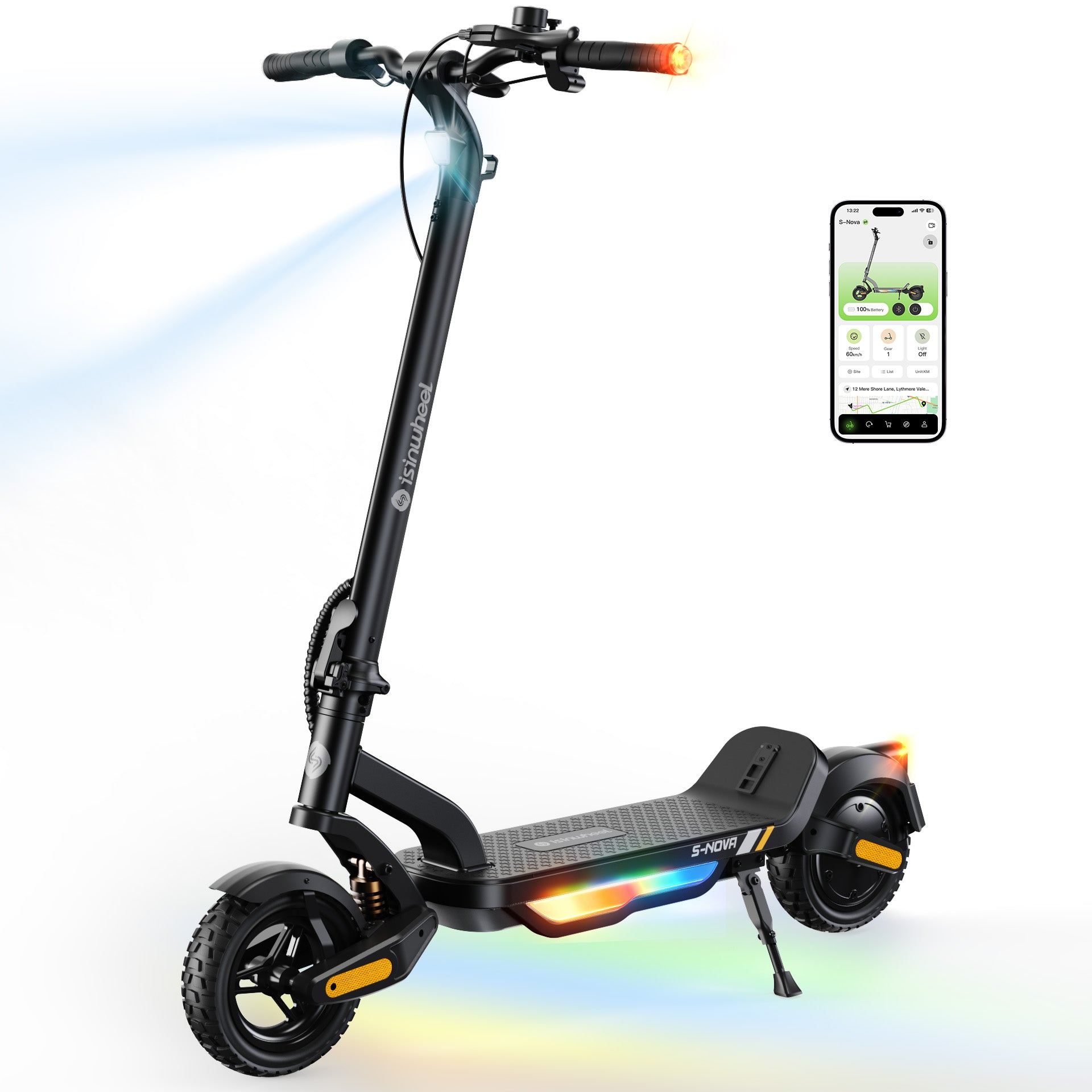
If you want an electric scooter that keeps the learning curve manageable, the Isinwheel S Nova is the clearest fit. Its setup leans toward control and comfort instead of chasing aggressive numbers. On the official product page, Isinwheel positions it as a commuter model with up to 20 MPH top speed, up to 19 miles of range, 8.5-inch pneumatic tires, dual suspensions, front and rear disc brakes, app lock, and a foldable aluminum alloy frame. For beginners, that mix matters because smooth tires and predictable braking usually do more for confidence than raw motor output.
Why it stands out
- Up to 20 MPH top speed keeps the scooter approachable for first-week riding.
- 8.5-inch pneumatic tires help soften cracks and uneven pavement.
- Dual suspensions reduce vibration on rough city blocks.
- Front and rear disc brakes support more controlled stopping.
- App lock and app-based controls add convenience without complicating the ride.
- Turn lights, ambient lighting, and a headlight improve visibility during early morning or evening commuting.
Key specs to check
- Battery: 36V 7.8Ah lithium battery
- Motor: 500W rated, 600W max
- Range: up to 19 miles
- Charge time: 4-5 hours
- Weight: 49.2 lbs
- Max load: 264 lbs
- Climbing ability: up to 15%
- Water resistance: IPX4
- Battery management system protections: temperature, overload, waterproof protection
Best for
- First-time adult riders
- Campus loops and neighborhood errands
- Apartment-to-train last-mile transportation
- Buyers moving up from a kids electric scooter to a practical commuter model
What to watch
- The 19-mile claimed range is enough for many daily rides, but not ideal if your route grows quickly.
- At 49.2 lbs, it is portable for a commuter scooter, though still noticeable on stairs.
In practical terms, this is one of the best electric scooters for commuting when your route is short, your streets are imperfect, and you want a foldable e-scooter that feels steady rather than sporty. You can shop the S Nova Commuting Electric Scooter inline if this is the fit you want.
2. Isinwheel S Nova Pro
Some beginners know they will outgrow a basic commuter fast. In that case, the Isinwheel S Nova Pro makes more sense because it leaves room for longer rides and rougher pavement without losing the commuter-first setup. Isinwheel lists up to 28 MPH top speed, up to 38 miles of range, a 48V 13Ah lithium battery, 10-inch pneumatic tires, dual suspensions, front and rear disc brakes, app support, ambient lighting, and turn signals. It is more ambitious than the S Nova, but the large tires, wider stance feel, and stronger range still make it an approachable electric mobility solution for riders who want one purchase to last longer.
Why it wins
- 10-inch pneumatic tires usually feel calmer over broken pavement than smaller solid tires.
- Up to 38 miles of claimed range gives beginners more margin for commuting mistakes and detours.
- Dual swing arm suspension improves comfort on rough urban routes.
- Front and rear disc brakes support better stopping confidence.
- Built-in display, app connectivity, and anti-theft design add daily practicality.
- A 7.3-inch anti-slip deck offers more standing security during quick stops.
Key specs to check
- Battery: 48V 13Ah lithium battery
- Motor: 600W rated, 1000W max
- Range: up to 38 miles
- Charge time: 6-7 hours
- Top speed: up to 28 MPH
- Weight: 60.4 lbs
- Max load: 264 lbs
- Climbing ability: up to 30%
- Wheel size: 10-inch pneumatic tires
- Water resistance: IPX4
- Battery management system protections: temperature, overload, waterproof protection
Best for
- Riders with longer daily commuting routes
- Taller beginners wanting a more planted ride feel
- Rougher city pavement and patchy bike-lane surfaces
- Buyers comparing Isinwheel reviews with better-known commuter options
What to watch
- At 60.4 lbs, it is less convenient to carry into walk-up apartments.
- The stronger performance means beginners should spend time in lower-stress practice areas first.
This is the stronger choice when you want a scooter for urban commuting that can handle growth, not just first rides. If that sounds closer to your routine, shop the S Nova Pro Commuting Electric Scooter.
3. Segway Ninebot E2 Plus
If you are comparing Isinwheel electric scooters with a mainstream alternative, the Segway Ninebot E2 Plus is a useful benchmark. Segway highlights a 500W maximum motor output, slopes up to 12%, IPX4 weather resistance, a dual brake system with front electronic brake and rear mechanical drum brake, app connectivity, and 8.1-inch maintenance-free inner hollow tires. That makes it beginner-friendly in a different way: less tire maintenance, familiar app support, and a low-center-of-gravity design. However, for rough pavement, inner hollow tires often feel firmer than pneumatic tires, so comfort can be the deciding trade-off.
Why it stands out
- Maintenance-free inner hollow tires reduce flat-tire concerns.
- Dual brakes and a large 2.8-inch dashboard keep the experience simple.
- Smart battery management system includes six protection mechanisms.
- Strong brand recognition may reassure cautious first-time buyers.
Best for
- Riders who prioritize low maintenance over ride softness
- Smooth pavement commuting
- Buyers already familiar with Segway products
What to watch
- Hollow tires usually do not absorb bumps as well as pneumatic tires.
- The climbing spec is lower than the S Nova Pro, which matters in hillier neighborhoods.
- Feature density is not as aggressive as Isinwheel’s value-focused commuter models at similar budget levels.
For many beginners, the choice between Segway and Isinwheel is really a choice between brand familiarity and feature-per-dollar value. That is where Isinwheel often looks stronger in this price band.
What separates a good beginner electric scooter from a frustrating one?
A beginner-friendly electric scooter should reduce mistakes, not punish them. In real use, that means stable deck feel, smooth throttle response, predictable brakes, and enough tire compliance to keep cracked pavement from shaking your hands. Pneumatic tires are usually the better comfort choice for urban mobility because they absorb more road chatter than solid tires or hollow tires. That is one reason both Isinwheel picks here feel well aimed at new riders.
Then there is daily practicality. A scooter that folds quickly, fits near your desk, and charges in a workable window is more likely to become part of your routine. Battery details matter too. A battery management system is the electronics layer that monitors charging, temperature, and overload conditions to protect the lithium battery. Segway emphasizes a six-protection smart BMS in the E2 Plus, while Isinwheel lists temperature, overload, and waterproof battery protection on both S Nova models. Those details matter because reliable charging and battery stability are part of long-term beginner confidence, not just spec-sheet filler. Also, federal safety guidance around micromobility continues to stress visibility gear, lighting, and helmets as usage grows, while injury data has continued rising in recent years. According to the CPSC, e-scooter and e-bike injuries increased nearly 21% in 2022, and its April 2026 micromobility report notes visibility issues and missing helmet use in a meaningful share of incidents. (cpsc.gov)
Buying guide: how to choose with confidence
Choosing among electric scooters gets easier once you match the scooter to your actual route instead of a spec-sheet fantasy. Start with distance, road quality, storage, and carrying demands. If your commute is one to three miles each way on mixed pavement, the S Nova is often enough. If you need more range buffer or ride quality for broken roads, the S Nova Pro is the smarter long-term fit.
Match speed to your route
- For short neighborhood trips, smooth acceleration matters more than max speed.
- If your route includes crowded bike lanes or shared paths, moderate speed is easier to manage.
- A faster scooter only helps if your roads and confidence can actually use that extra headroom.
Choose tire type by surface
- Pneumatic tires usually deliver better shock absorption and traction.
- Solid tires and hollow tires reduce maintenance, but often ride harsher.
- On rough city pavement, beginners often prefer comfort over puncture resistance.
Think about visibility and braking
- Turn signals, headlight output, reflectors, and brake feel matter on every trip.
- According to the Governors Highway Safety Association, walking, biking, and riding an electric scooter are environmentally friendly transportation options, but safety outcomes are shaped by speed, road design, and interactions with cars. (ghsa.org)
- That makes electric scooter safety features a buying priority, not an accessory topic.
Common beginner problems and simple fixes
Even the right scooter takes a few rides to understand. Most early frustrations come from setup and expectations, not from the scooter itself.
| Problem | Likely cause | Simple fix |
|---|---|---|
| Ride feels too bumpy | Tire pressure is off or pavement is rough | Check pressure, lower speed, and shift weight slightly back |
| Range feels shorter than expected | Hills, wind, stop-and-go riding, rider weight | Charge fully, use realistic commute planning, and leave buffer for the return trip |
| Braking feels abrupt | You are grabbing too hard or too late | Practice low-speed progressive stops in an open area |
| Folding feels annoying | You have not built a routine yet | Rehearse fold, lift, and carry at home three to five times |
| Hands feel tense | Gripping too tightly over bumps | Relax your elbows and let the scooter move slightly under you |
How Isinwheel fits broader green commuting solutions
If you are comparing Electric Bikes, Affordable electric bikes, Lightweight electric bikes, or Electric skateboards for beginners, Isinwheel’s broad lineup goes far beyond scooters. Their catalog includes e-bikes, e-skateboards, and commuter, off-road, and kids' scooters. This variety makes it easy for households to stay within one affordable, eco-friendly ecosystem for all their transportation needs.
Because a rider's first purchase isn't always their last, Isinwheel grows with you. You might start with a last-mile scooter, then later shift to an e-bike for longer commutes or a skateboard for a new ride style. Ultimately, Isinwheel builds an accessible green commuting path for every stage of your journey.
Final takeaway for first-time buyers
If your priority is simple handling, lower carry weight, and enough comfort for short-to-medium city trips, the Isinwheel S Nova is the most natural beginner pick in this lineup. It covers the essentials well: pneumatic tires, dual suspension, dual disc brakes, app control, and foldable commuter practicality, all without pushing beginners toward more scooter than they need.
If you already expect longer routes, rougher roads, or faster skill growth, the Isinwheel S Nova Pro is the better long-term buy. The larger tires, stronger range, and more capable platform make it one of the best electric scooters for commuting in this budget tier. Segway still deserves a look if you want a familiar mainstream option, but for feature density, comfort hardware, and value under the stated cap, Isinwheel electric scooters are the easier recommendation here.
FAQ
Is a 20 MPH electric scooter enough for beginners?
Yes, 20 MPH is enough for most beginners because it already exceeds the speed many new riders will comfortably use on shared urban routes. In practice, confidence at 10 to 15 MPH matters more during your first week than access to a higher top speed. A 20 MPH scooter also gives enough headroom for short commuting, campus travel, and neighborhood errands without pushing you into a more demanding ride right away.
Are pneumatic tires better than solid tires for new riders?
Yes, pneumatic tires are usually better for new riders because they absorb bumps and small road imperfections more effectively. That smoother ride helps reduce hand fatigue, improves traction feel, and makes braking and turning feel less harsh. Solid tires or hollow tires can be easier to maintain, but they often transmit more vibration through the deck and handlebar. If your streets are cracked, patched, or uneven, pneumatic tires are often worth the extra maintenance attention.
Is a foldable e-scooter better for urban commuting?
Yes, a foldable e-scooter is usually better for urban commuting because storage and carrying are part of the trip, not separate from it. If you use elevators, trains, office storage, or car trunks, the folding system affects convenience every day. A good foldable design should lock securely, open quickly, and feel realistic for your strength and routine. Before buying, think about whether you will carry it upstairs, lift it into a trunk, or store it beside a desk.
Should a beginner choose an electric scooter instead of an e-bike?
A beginner should choose an electric scooter over an e-bike when portability, simple storage, and short-distance last-mile transportation are the top priorities. Scooters usually take less space and are easier to fold into apartments, offices, or transit connections. An e-bike is often better if you need longer range, more comfort for extended rides, or a seated position for regular commuting.
What electric scooter accessories matter most for a first ride?
The most important electric scooter accessories for a first ride are a well-fitted helmet, a reliable lock, front and rear visibility aids, and weather-appropriate gloves if your route is rough or cold. A phone mount can help with navigation, but it should not distract you from the road. If your scooter includes app features, set up the lock and ride settings before your first commute instead of doing it curbside.
Table of Contents
- Understanding beginner-friendly electric scooters
- Top picks for an easy first electric scooter
- What separates a good beginner electric scooter from a frustrating one?
- Buying guide: how to choose with confidence
- Common beginner problems and simple fixes
- How Isinwheel fits broader green commuting solutions
- Final takeaway for first-time buyers
- FAQ


Share:
Best Suspension Electric Scooters for Off-Road Value in 2026
How Safe Are E-Bikes and E-Scooters in Busy City Traffic?