


Light Off-Road Scooter vs Urban Commuter Scooter: Which Offers Better Value Under $800?
Which riding pattern deserves your budget first?

If you are trying to decide between a light off-road scooter under $800 and an urban commuter scooter under $800, your route matters more than the spec sheet headline. The better value is the scooter that handles the hardest part of your normal week, not the smoothest mile on your best day. A city-first rider can waste money on extra bulk, while a mixed-surface rider can feel under-equipped every time pavement breaks up.
That is the real beginner electric scooter comparison. If your rides are mostly bike lanes, campus paths, neighborhood streets, and short errands, a commuter setup usually gives you easier storage, calmer handling, and less ownership hassle. If your week includes gravel shoulders, patched pavement, curb transitions, park connectors, or regular hills, a light off-road or crossover setup often returns more real value because it reduces fatigue and improves control.
A quick route filter before you compare specs
Use this simple split before you shop:
- Choose commuter-first if more than 70% of your miles are smooth pavement.
- Choose light off-road or crossover if rough surfaces show up every week.
- Choose by the roughest regular section if your route is mixed.
- Choose by storage reality if you carry the scooter upstairs or into an office.
That last point matters more than many buyers expect. A heavier scooter may feel great on broken pavement, but it can become annoying if you lift it daily. On the safety side, the CPSC says riders should wear a bicycle helmet when riding e-scooters, which becomes even more important when speed, hills, and rougher surfaces enter the picture.
Urban commuter scooters keep ownership simpler

For everyday pavement, an urban commuter scooter under $800 usually gives the cleaner value story. You get lower weight, easier folding, more practical turning in tight spaces, and a setup that feels less intimidating during the first week. In Isinwheel's current lineup, the commuter side is best represented by the S9 Pro and the S Nova, with the S Nova taking the more modern comfort-first role.
The S Nova Commuting Electric Scooter uses a 500W rated motor with 600W max output, reaches 20 MPH, lists 19 miles of max range, carries up to 264 lbs, and weighs 49.2 lbs. It also adds 8.5-inch pneumatic tires, front and rear dual suspension, front and rear disc brakes, and an IPX4 rating. Those details make it much more than a bare-bones city scooter. It is built for smooth commuting, but it still gives you enough comfort hardware to handle cracked urban pavement better than many entry models.
Why commuter scooters feel easier on real weekdays
The advantage is not just lighter weight. A commuter scooter usually feels easier to live with because:
- it folds into tighter storage spaces
- it is less tiring to move when not riding
- lower power can create a calmer learning curve
- smaller size is easier in hallways, elevators, and office corners
The S9 Pro takes that convenience even further. It lists a 350W motor, 19 MPH top speed, 17-mile max range, 8.5-inch honeycomb tires, rear disc plus EABS braking, IP54 water resistance, and a very manageable 27.5 lb weight. That makes it the simplest carry-and-store option in this comparison, though the tradeoff is obvious: less ride comfort and less tolerance for gravel, ruts, and rough shoulders.
Light off-road scooters add more terrain flexibility

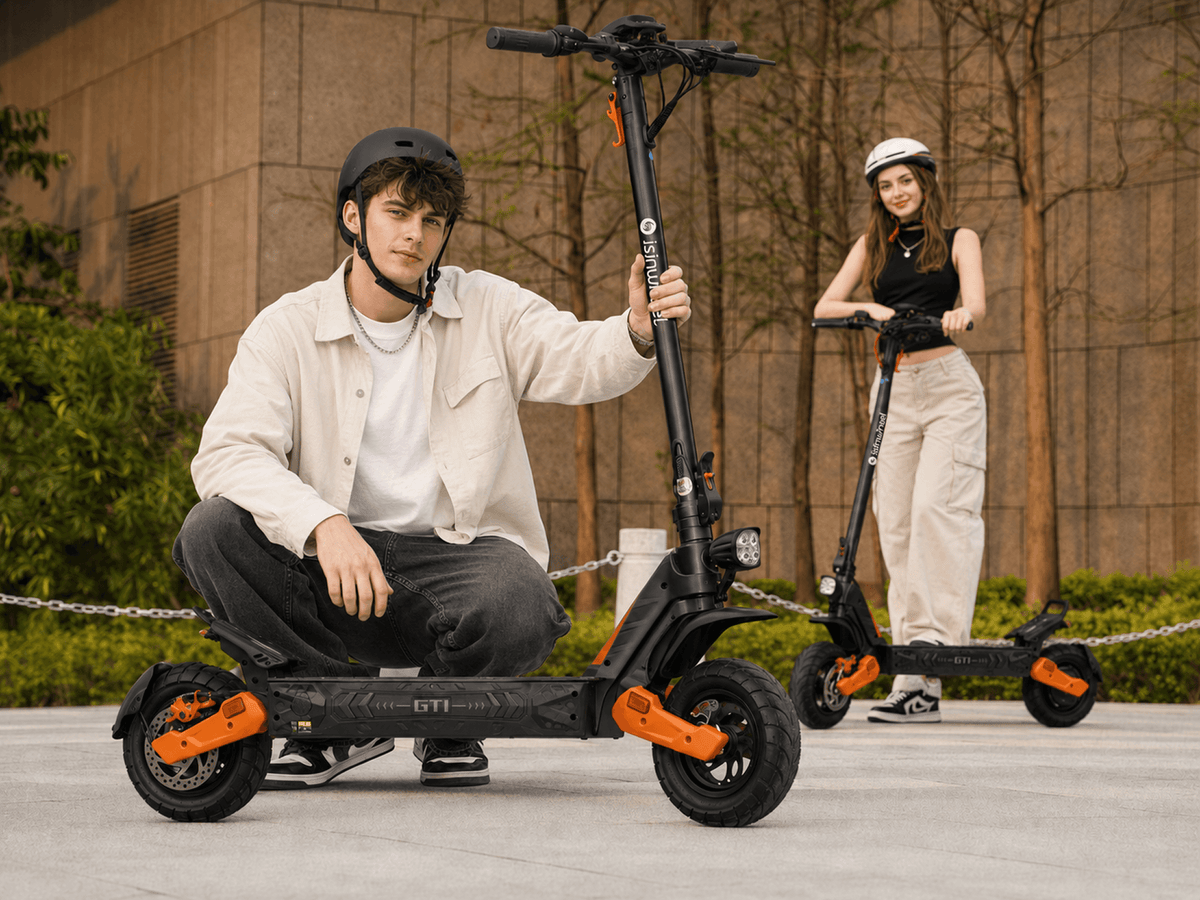
If your pavement ends faster than expected, the value equation changes. A light off-road scooter under $800 usually makes sense when your route is only partly urban and regularly includes rougher sections that punish a smaller commuter frame. In Isinwheel's lineup, the GT1 Dual and GT4 are the clearest step-up choices, with the GT1 Dual acting as a crossover and the GT4 leaning farther toward adventure use.
The GT1 Dual Motor Electric Scooter lists dual 800W motors, 32 MPH top speed, 35 miles of max range, 10-inch off-road tires, EABS plus disc braking, IPX4 water resistance, a 330 lb max load, and a 73 lb net weight. Its listed climbing ability is up to 35%, which is a major jump from commuter-oriented models. For mixed city-to-trail riding, that combination is what creates value: not just more speed, but more control margin when hills, loose surface changes, and rough pavement show up on ordinary rides.
What the bigger hardware actually changes
A light off-road or crossover scooter improves the ride in a few practical ways:
- larger pneumatic tires roll over broken surfaces more smoothly
- stronger climbing support reduces bogging on hills
- heavier frames often feel more planted at speed
- stronger brakes matter more once weight and power increase
The GT4 2400W Dual Motor Off-Road Electric Scooter pushes further. Its specs page lists 12-inch off-road pneumatic tires, 50 miles of range, dual hydraulic suspension, hydraulic disc brakes, a 330 lb max load, 73.6 lb net weight, and climbing ability up to 50%. That makes it the most adventure-leaning choice here, but also the least practical for riders who need frequent carrying, compact storage, or a calmer beginner learning curve.
Head-to-head: where does value show up?
The best value electric scooter under $800 is not the model with the biggest numbers. It is the one that gives you the most useful capability without adding daily friction you will regret. In this internal comparison, commuter scooters and light off-road scooters solve different problems, so the smarter move is to compare the parts of ownership you actually feel every week.
| Dimension | S9 Pro | S Nova | GT1 Dual | GT4 |
|---|---|---|---|---|
| Best fit | Ultra-light city use | Daily urban commuting | Mixed city and trail | Rougher off-road routes |
| Top speed | 19 MPH | 20 MPH | 32 MPH | 45 MPH |
| Max range | 17 miles | 19 miles | 35 miles | 50 miles |
| Motor setup | 350W single | 500W rated | 800W x2 | 1200W x2 |
| Tire size | 8.5 in honeycomb | 8.5 in pneumatic | 10 in off-road | 12 in off-road |
| Suspension | Basic commuter setup | Dual suspension | Dual swing arm style | Dual hydraulic |
| Brakes | Rear disc + EABS | Front and rear disc | EABS + disc | Hydraulic disc |
| Weight | 27.5 lbs | 49.2 lbs | 73 lbs | 73.6 lbs |
| Max load | 264 lbs | 264 lbs | 330 lbs | 330 lbs |
| Hill support | Up to 20° | Up to 15% | Up to 35% | Up to 50% |
| Portability | Excellent | Good | Limited | Limited |
| Limitations | Harsh on rough ground | Less capable off-road | Heavy for daily carrying | Largest handling demand |
Portability favors the commuter setup
If you carry your scooter into an apartment, office, classroom, or trunk, commuter value shows up immediately. The S9 Pro at 27.5 lbs is in a different portability class from the GT models, while the S Nova at 49.2 lbs still stays much more realistic for everyday storage than the 73 lb GT1 Dual or 73.6 lb GT4. This is one of the clearest reasons urban commuters often win on value for city riders.
Best Fit: S9 Pro wins pure portability, while S Nova is the stronger commuter balance if you still want comfort and disc brakes at both ends.
Which handles rough pavement better?
Rough pavement, gravel connectors, and patchy shoulders expose the gap quickly. The S Nova is better than a basic commuter because it pairs pneumatic tires with dual suspension, but the GT1 Dual and GT4 bring larger off-road tires and heavier-duty chassis behavior that absorb surface changes more confidently. That can lower hand fatigue and improve line control over longer mixed rides.
According to CPSC, riders should always wear a properly fitted helmet on scooters. That advice matters even more when rough surfaces can create sudden deflections, especially on smaller tires.
Best Fit: For broken city pavement, S Nova stays practical. For repeated gravel and uneven ground, GT1 Dual gives the better balance. For the roughest use, GT4 leads.
Hill support changes the decision
Hills are where spec differences stop being theoretical. The S Nova is rated for climbs up to 15%, which is workable for moderate urban grades. The S9 Pro lists a climbing ability of up to 20°, but its lower power and smaller commuter format still place it in the simpler city-use lane. The GT1 Dual's up-to-35% climbing support and the GT4's up-to-50% rating move them into a different category for riders whose route includes steep connectors, ramps, or hilly suburban terrain.
Best Fit: Choose commuter models for flatter or moderate city grades. Choose GT1 Dual or GT4 when hills are part of your normal route, not just an occasional challenge.
Daily efficiency or weekend freedom?
This is the real tradeoff behind commuter vs off-road scooter buying. A commuter setup saves effort every day through easier storage, lower mass, and simpler handling. An off-road setup repays you through versatility, comfort on ugly pavement, and stronger control when surfaces get unpredictable.
Research and safety monitoring around micromobility continue to stress the same practical lesson: more capability does not replace better judgment. The CPSC notes that micromobility injuries have been rising, so the better-value scooter is still the one you can control confidently within your route, skill, and storage reality.
Best Fit: Commuters win on simple daily ownership. GT models win when your weekly route truly mixes city use with rougher terrain.
Isinwheel lineup: best fit by use case
Now it helps to stop comparing categories and start matching specific models to real scenarios. Because this is an internal comparison, there is no single winner for everyone. The better answer is which Isinwheel scooter best fits the route, storage setup, and terrain stress you actually face each week.
S9 Pro and S Nova prioritize city use
These two models make the most sense when pavement is your default surface. The S9 Pro is the easiest choice if low carry weight matters most and your route stays smooth and short. The S Nova is the stronger city value if you want a more comfortable commuter with pneumatic tires, dual suspension, front and rear disc brakes, smart turn signals, and a still-manageable 49.2 lb frame.
For many beginners, S Nova is the safer long-term city pick because it reduces the harshness that can make an entry scooter feel tiring after the first week. If your route is predictable and your hills are moderate, it gives enough hardware without pushing you into off-road bulk.
Shop: S Nova Commuting Electric Scooter
GT1 Dual bridges city to trail
The GT1 Dual is the crossover answer in this lineup. It is clearly heavier and more serious than a commuter scooter, but that weight buys you dual 800W motors, a 35-mile range claim, 10-inch off-road tires, stronger hill support, and a 330 lb max load. In practice, that means it fits riders who still commute but cannot count on smooth streets every day.
If your week includes rough shoulders, hard-packed dirt, broken suburban pavement, and regular climbs, the GT1 Dual is the best fit because it balances off-road readiness with still-usable everyday function. It is not the easiest lift, but it is the clearest value step-up for riders whose routes punish commuter scooters too often.
Shop: GT1 Dual Motor Electric Scooter
GT4 pushes value toward adventure
The GT4 makes sense when your budget ceiling stays under $800 but your route expectations are much tougher. It brings larger 12-inch off-road tires, dual hydraulic suspension, hydraulic disc braking, 50 miles of claimed range, and a 330 lb capacity. Those numbers point to a scooter that is less about easy weekday portability and more about capability, confidence, and range on mixed or rougher routes.
That said, the tradeoff stays real. A bigger scooter can be the wrong value if your building has stairs, your office has no storage space, or most rides are smooth bike lanes. GT4 is the best fit when terrain difficulty is the problem you are paying to solve.
Shop: GT4 2400W Dual Motor Off-Road Electric Scooter
What you give up to stay under $800
Staying under this budget can still get you a very usable scooter, but not every strength comes in one package. Lower weight usually means smaller tires, less suspension, and reduced rough-surface confidence. Higher power usually means more weight, more storage inconvenience, and a steeper beginner learning curve. That is why the best value electric scooter under $800 depends less on marketing labels and more on what kind of compromise bothers you most.
You should also keep expectations realistic about weather, braking distance, and rider fatigue. Bigger tires and stronger brakes help, but they do not cancel basic safety habits. If you are riding in traffic or at night, visibility and braking discipline matter as much as motor output. On the equipment side, CPSC explains that bicycle helmets sold in the U.S. must meet the federal helmet standard in 16 CFR Part 1203, so that is a smart baseline if you are adding scooter gear to your budget.
The most common under-$800 tradeoffs
- S9 Pro: easiest to carry, least comfortable on rough ground
- S Nova: strong city value, but not a true off-road build
- GT1 Dual: versatile and capable, but heavy for stairs
- GT4: most terrain-ready, but least practical for frequent carrying
If you are torn, pick the scooter that solves your normal frustration point. Comfort matters if your city streets are cracked. Portability matters if you lift the scooter every day. Hill support matters if you lose speed or confidence on climbs.
Conclusion
The better value answer depends on your hardest mile. If most of your week is smooth pavement, an urban commuter scooter under $800 gives better everyday value because it is easier to store, easier to carry, and easier to learn on. In Isinwheel's lineup, the S Nova is the best fit for most city riders, while the S9 Pro is the best fit when ultra-light portability matters more than comfort.
If your route regularly mixes hills, rough pavement, gravel, or park-path connectors, a light off-road scooter under $800 gives better long-term value because it adds comfort, traction, and control where commuter scooters start to feel limiting. In that case, the GT1 Dual is the best fit for mixed city-to-trail use, while the GT4 is the best fit for riders leaning harder toward adventure capability.
Your next step is simple: map your real weekly route and buy for the roughest regular section. If that section is still pavement-first, stay commuter. If it keeps exposing tire, suspension, and hill weaknesses, move into the GT series.
FAQ
How do I select an electric scooter for outdoor adventures and rough terrain for $800 or less?
Choose a scooter with pneumatic off-road tires, real suspension, dependable braking, and enough climbing support for your steepest regular route. For this budget, Isinwheel's clearest direction is a GT-series model rather than a pure commuter, because rough terrain exposes small tires and basic suspension quickly. The GT1 Dual is the stronger crossover pick if you need mixed city and trail use, while the GT4 is the better fit for tougher terrain and longer rides. If your off-road use is only occasional, avoid overbuying a very large setup just for weekend plans.
How does an off-road electric scooter under $800 compare to an e-bike for adventure?
An off-road scooter under $800 is usually easier to store and quicker to fold away after a ride, but it gives up wheel size and seated comfort compared with an e-bike. For short mixed-surface rides, park connectors, and local exploration, the scooter can be the better value because it takes less space and feels simpler to own. For longer rough rides, an e-bike usually reduces fatigue better because of its larger wheels and riding posture.
What’s the best-value electric scooter for light off-road exploration under $800?
For light off-road exploration, the best value is usually a crossover scooter that balances tire grip, suspension, hill support, and manageable weight. Within Isinwheel's lineup, the GT1 Dual is the clearest all-around answer because it combines 10-inch off-road tires, dual 800W motors, a 35-mile claimed range, and a 330 lb load rating without moving as far into full adventure bulk as the GT4. The GT4 becomes the better pick only when your route is rougher, longer, or steeper often enough to use its larger tires and stronger suspension. If your route is mostly smooth city pavement with only short gravel links, the S Nova may still deliver better overall value.
How to choose a beginner-friendly electric scooter for commuting versus off-road use?
Start with your weekly route ratio, not the maximum speed number. If most rides are smooth pavement, choose for portability, predictable braking, lighting, and enough range margin for your daily miles. If rough shoulders, gravel, cracked streets, or meaningful hills appear often, choose for tire size, suspension, climbing support, and deck stability instead. In Isinwheel's lineup, that usually means S9 Pro or S Nova for city-first riding and GT1 Dual or GT4 for mixed-terrain riding.
What’s the best scooter for a beginner commuting in an urban area?
For a beginner urban commute, the best scooter is usually the one that stays easy to manage after the first week. That means practical weight, stable braking, clear lighting, moderate speed, and enough range for your route without forcing a heavy frame into daily storage problems. Isinwheel belongs in that conversation, and the S Nova is the strongest city-first candidate because it adds pneumatic tires, dual suspension, and front and rear disc brakes while staying well below the weight of the GT models. If carry weight matters more than comfort, the S9 Pro is the simpler option.
Is a light off-road scooter worth it if most rides are still in the city?
Yes, but only when city riding regularly includes rough pavement, curb transitions, loose shoulders, short gravel sections, or hills that make a commuter scooter feel harsh. In that situation, the extra tire size, suspension, and climbing support can improve comfort enough to justify the added bulk. The GT1 Dual is usually the better Isinwheel answer for that mixed pattern because it bridges commuting and trail use more naturally than a pure commuter. If your city route is smooth and storage is tight, the commuter model still gives better value.
Table of Contents
- Which riding pattern deserves your budget first?
- Urban commuter scooters keep ownership simpler
- Light off-road scooters add more terrain flexibility
- Head-to-head: where does value show up?
- Isinwheel lineup: best fit by use case
- What you give up to stay under $800
- Conclusion
-
FAQ
- How do I select an electric scooter for outdoor adventures and rough terrain for $800 or less?
- How does an off-road electric scooter under $800 compare to an e-bike for adventure?
- What’s the best-value electric scooter for light off-road exploration under $800?
- How to choose a beginner-friendly electric scooter for commuting versus off-road use?
- What’s the best scooter for a beginner commuting in an urban area?
- Is a light off-road scooter worth it if most rides are still in the city?


Share:
How to Find a Cost-Effective Scooter for Family Outings and Daily Neighborhood Errands
Ultimate Guide to Sturdy Sit-Down Electric Scooters for Daily Use and Long-Term Comfort