


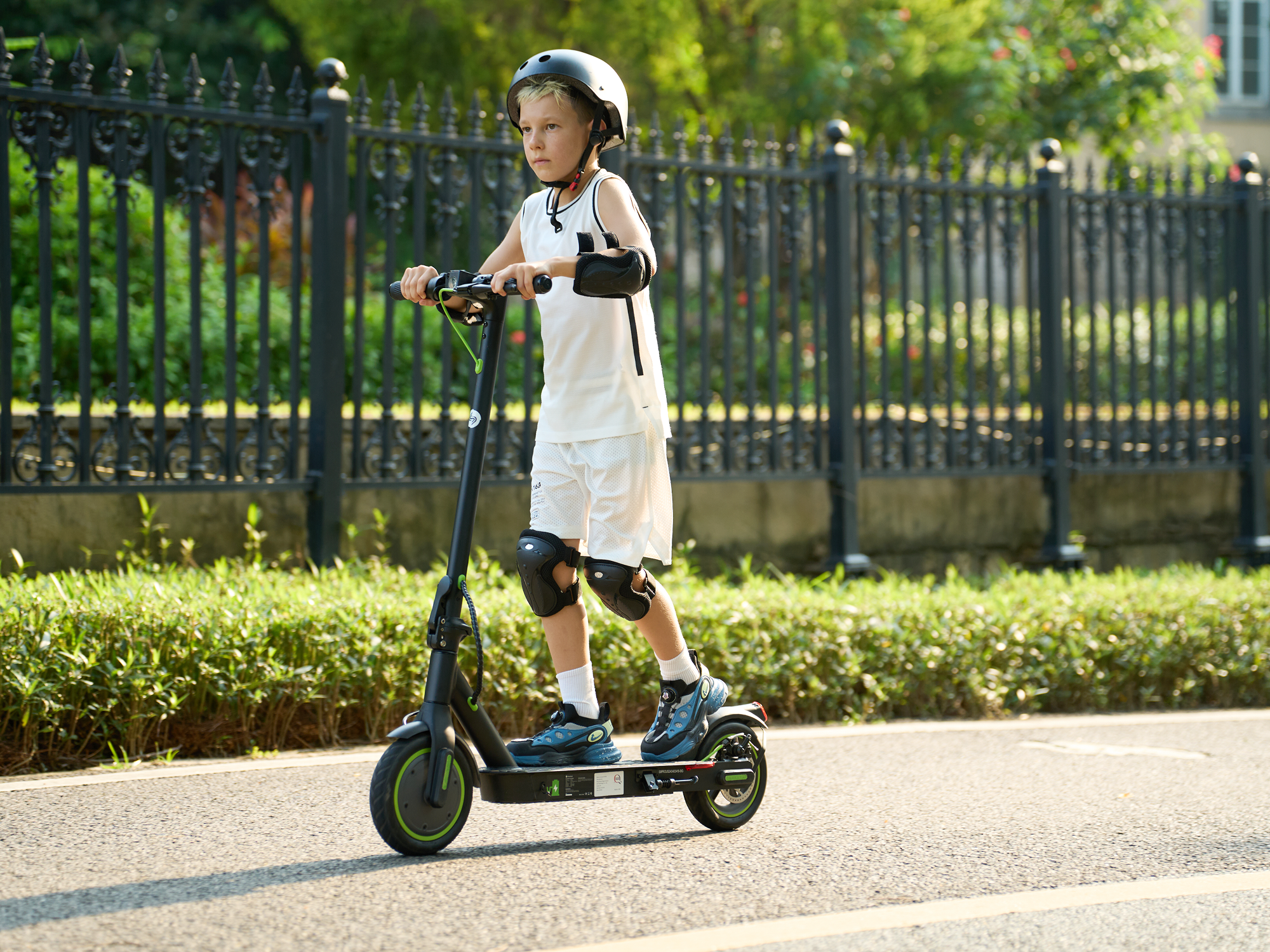
Top 3 Budget Electric Scooters for Beginner Commuters
Which budget electric scooter setup fits your real commute?
A good budget electric scooter for a beginner should make weekday travel easier, not create new problems around range, storage, or control. If your route is mostly smooth pavement, short bike-lane stretches, campus roads, or neighborhood streets, you will usually get better value from a commuter-focused scooter than from a heavier performance model. That matters because new riders benefit more from predictable braking, simple controls, and manageable weight than from spec-sheet bragging rights.
This guide narrows the choice to three iSinwheel models that fit three common commuter paths: lowest-cost entry, best daily balance, and best growth headroom. Instead of treating every rider the same, we will match each scooter to a route type and usage pattern. Along the way, you will see where the commuter line makes sense, where the broader scooter lineup starts to stretch beyond beginner needs, and which model is the best fit once you compare real tradeoffs.
Isinwheel commuter line at a glance

iSinwheel positions its commuter scooters around urban mobility, with an emphasis on folding designs, city-friendly tires, integrated lighting, and app-connected convenience for short-distance transportation. The current lineup spans approachable commuter models such as the S Nova and S Nova Pro, then climbs into more powerful machines like the S10Max and H7 for riders who need longer range or steeper hill support.
For beginner commuters, the key point is that the commuter line is built more for paved roads than rough terrain. The S Nova uses 8.5-inch pneumatic tires, dual suspension, front and rear disc brakes, and a 36V 7.8Ah battery, while the S Nova Pro increases deck space, tire size, suspension travel, and battery capacity for riders who want a more planted city ride. Those features make the line easier to understand than jumping straight into off-road or dual-motor categories.
What makes the broader scooter line different?
Once you move beyond the core commuter category, iSinwheel’s broader scooter range adds models with more motor output, higher top speeds, larger tires, and steeper climbing claims. That can be useful if your route includes long repeat miles, bigger hills, or you expect your usage to grow quickly. Still, more capability often brings more weight, longer charge time, and a slightly steeper learning curve for a first scooter.
For this article, the practical comparison set is the S Nova, S Nova Pro, and S10Max. The H7 and off-road models clearly sit outside a beginner-budget lane, while the S10Max acts as the upper edge of what a new commuter might reasonably consider if they want more headroom. In other words, the broader line matters because it shows where beginner simplicity ends and higher-capability commuting begins.
The three best-fit picks
Best for tight budgets

The S Nova Commuting Electric Scooter is the simplest answer if you want a budget electric scooter for short urban trips and you do not need long-range reserve. It reaches 20 MPH, uses a 500W rated motor with 600W max power, carries a 36V 7.8Ah battery, and claims up to 19 miles of range. It also includes 8.5-inch pneumatic tires, dual suspension, front and rear disc brakes, turn lights, ambient lighting, and app support, which is a solid beginner-friendly feature set for basic commuting.
Its tradeoff is performance ceiling, not basic usefulness. With a net weight of 49.2 lbs and a climbing claim of up to 15%, it is better for flatter city routes, campus travel, and errands than for long hills or repeated high-mileage days. If your one-way trip is short and storage simplicity matters more than extra speed, the S Nova is the best fit in the lineup.
Shop: S Nova Commuting Electric Scooter
Best balance for daily commuting
The S Nova Pro Commuting Electric Scooter is the middle-ground choice for riders who want beginner accessibility without outgrowing the scooter too quickly. It keeps the commuter-first layout but adds a 48V 13Ah battery, 10-inch pneumatic tires, dual suspension, a 7.3-inch wide deck, and a 600W rated motor with 1000W max power. On paper, that translates to up to 28 MPH, up to 38 miles of range, and stronger hill support up to 30%.
What makes it appealing is the way those upgrades improve everyday comfort rather than just chasing speed. The larger frame, wider deck, and swing arm suspension should feel more stable on imperfect city pavement, especially if your commute includes cracks, expansion joints, or several stop-and-go sections. The downside is weight: at 60.4 lbs, it is not the scooter you want to carry up several flights of stairs every day.
Shop: S Nova Pro Commuting Electric Scooter
Best for riders wanting headroom
The isinwheel S10Max 1000W High-End Commuting Electric Scooter 2026 Upgraded Version is the pick for beginners who already know they will ride farther, climb more hills, or keep the scooter through a heavier-use phase. It raises the spec ceiling with a 1000W motor, 54.6V 15Ah battery, 10-inch pneumatic tires, claimed range up to 37 miles, top speed up to 28 MPH, and climbing ability up to 35%. It also uses EABS plus disc braking and supports a 330 lb max load.
Interestingly, it is listed at 48.7 lbs, which is lighter than the S Nova Pro despite offering more output and battery capacity. That makes it a strong option if you want more commuting capability without moving into the bulk of the H7 class. The compromise is that it is less minimal than a true entry scooter, so beginners who only ride a few short miles per week may not need this much machine.
Shop: isinwheel S10Max 1000W High-End Commuting Electric Scooter 2026 Upgraded Version
Head-to-head: where does each fit?
| Dimension | S Nova | S Nova Pro | S10Max |
|---|---|---|---|
| Best use | Short urban trips | Daily city commuting | Longer, heavier commuting |
| Top speed | 20 MPH | 28 MPH | 28 MPH |
| Claimed range | 19 miles | 38 miles | 37 miles |
| Battery | 36V 7.8Ah | 48V 13Ah | 54.6V 15Ah |
| Motor | 500W rated | 600W rated | 1000W |
| Tires | 8.5 in pneumatic | 10 in pneumatic | 10 in pneumatic |
| Suspension | Dual | Dual | Not highlighted on spec page |
| Brakes | Front & rear disc | Front & rear disc | EABS + disc |
| Climbing ability | ≤15% | ≤30% | ≤35% |
| Net weight | 49.2 lbs | 60.4 lbs | 48.7 lbs |
| Max load | 264 lbs | 264 lbs | 330 lbs |
| Limitations | Shorter range ceiling | Heavier to carry | More than basic beginners need |
Which one feels easiest for beginners?
The S Nova is the easiest starting point because its speed ceiling, range target, and climbing claim all stay in a beginner-comfort zone. It also keeps the feature list practical without pushing you into a heavier, more powerful platform than necessary. For first rides in parking lots, neighborhood loops, and short weekday runs, that lower learning friction matters.
The S Nova Pro is still approachable, but it feels more like a stable commuter tool than a pure starter scooter. Its wider deck, larger frame, and dual suspension should help confidence on broken pavement, yet the extra 11.2 lbs over the S Nova can make storage and carrying less friendly. Best Fit: S Nova for absolute beginners; S Nova Pro for beginners who want more planted handling.
Commute range vs. real daily needs
If your real-world use is a short commute, not a spec contest, the S Nova’s 19-mile claim can be enough. That usually suits campus loops, neighborhood errands, and modest round trips with charging access at home. The catch is that range claims are ideal-condition estimates, so riders should leave margin for hills, rider weight, temperature, and stop-heavy traffic. iSinwheel itself notes that actual range varies with rider weight, terrain, weather, and speed.
The S Nova Pro and S10Max give you far more buffer, which is useful if you commute several days a week and do not want battery anxiety by Thursday. Between those two, the S Nova Pro posts the longest listed range at 38 miles, while the S10Max is close behind at 37 miles with a stronger climbing claim. Best Fit: S Nova for short routes, S10Max for hilly repeat rides, S Nova Pro for balanced weekday mileage.
Portability and storage reality
A scooter that is easy to fold but annoying to carry still creates friction in daily life. The S Nova lands in the most practical zone for apartment dwellers and office riders because it combines a quick-fold commuter layout with a 49.2 lb weight. That is not ultralight, but it is easier to live with than a 60 lb class scooter if you regularly deal with stairs, narrow hallways, or train transfers.
The surprise here is the S10Max. At 48.7 lbs on its spec page, it undercuts both S Nova and S Nova Pro on listed net weight while offering 10-inch tires and a larger battery. If that posted weight reflects the shipped configuration you are considering, it gives the S10Max unusually strong portability-for-capability value. Best Fit: S10Max if you want more performance without more listed weight; S Nova if you want the cleaner, simpler commuter format.
Price-to-value breakdown
For a beginner, value is not just about the lowest initial spend. It is about whether the scooter matches your route without forcing an early upgrade. In that sense, the S Nova gives the lowest barrier to entry and covers the basics well: 20 MPH, pneumatic tires, dual suspension, disc brakes, turn lights, and app support.
The S Nova Pro makes the strongest long-term value case for many daily commuters because it adds meaningful comfort and battery headroom, not just cosmetic extras. Meanwhile, the S10Max is the smarter buy when your route demands stronger hill climbing, heavier load support, or longer-term use growth. Best Fit: S Nova for minimum spend logic, S Nova Pro for the best all-around commuter balance, S10Max for capability-focused beginners.
Best fit by rider scenario
Short city errands and campus trips
Choose the S Nova if your rides are brief, predictable, and mostly flat. It is the most straightforward beginner commuter scooter in this comparison, and it avoids overcomplicating daily use with more machine than you need. That matters when your routine includes storing the scooter in a dorm room, office corner, or apartment entry.
You should also favor this model if simple controls and lower learning stress rank above range buffer. Small-route riders rarely gain much from a faster platform if they are traveling just a few miles at a time. In practical terms, this is the best fit when convenience beats ambition.
Daily urban commuting with routine miles
Go with the S Nova Pro when you ride often enough to care about comfort across the whole week. Its 10-inch tires, wider deck, dual suspension, and higher battery capacity make more sense for repeated pavement imperfections, longer blocks between charges, and routine stop-start city movement. It feels like the commuter-first upgrade that still respects beginner usability.
This is also the better choice if you expect your commute to stretch beyond quick errands into dependable weekday transport. You are trading some portability for more composure and battery margin. For many first-time buyers, that is the sweet spot.
Beginner today, heavier use tomorrow
Pick the S10Max if you already know your use case will expand. Its 1000W motor, 37-mile claimed range, 35% climbing claim, 330 lb max load, and EABS plus disc braking make it better suited to longer routes and more demanding commuting patterns than the smaller commuter options.
This model is especially sensible if your city has steeper streets, your body weight or backpack load is higher, or you simply want to skip the “starter scooter, then upgrade” cycle. Even so, it still stays closer to commuting logic than to off-road excess. That makes it the best headroom choice in this three-scooter comparison.
What to check before you buy
Before buying any budget electric scooter, map your hardest routine ride rather than your easiest one. Note the one-way distance, the steepest hill, whether you must carry the scooter upstairs, and where you will charge it. Those four checks usually tell you more than top-speed claims.
A few practical filters help:
- Choose 8.5-inch or 10-inch pneumatic tires if your streets are imperfect.
- Leave range margin beyond your normal round trip.
- Treat listed climbing ability as a guide, not a guarantee.
- If you carry the scooter often, weight matters as much as range.
- If you ride after dark, integrated turn lights and a strong headlight matter.
Charging safety deserves equal attention. The CPSC says consumers should be present while charging micromobility products, never charge while sleeping, and use the supplied charger. It also warns against modified battery packs and non-approved replacements, while a separate CPSC notice reported 156 fire and thermal incidents involving “universal” chargers between January 1, 2023 and May 16, 2024. For helmet selection, NHTSA advises riders to look for a DOT symbol on the back of the helmet as the marker that it meets the federal standard. (cpsc.gov)
Conclusion
The best budget electric scooter for a beginner commuter depends less on hype and more on route length, carry burden, and how quickly your riding needs will grow. If you want the simplest low-friction start, the S Nova is the best fit. If you want the strongest daily-use balance, the S Nova Pro is the most rounded commuter choice. If you want extra hill support and long-term headroom without jumping to a bulky off-road class, the S10Max is the best fit.
For most new urban riders, the safest buying move is to match the scooter to your real weekday pattern, not your most optimistic future use. Start with the commuter option that covers your normal route with battery margin and manageable storage. If you are ready to compare the current lineup directly, begin with iSinwheel’s commuter category and shortlist the S Nova, S Nova Pro, and S10Max based on your actual trip distance and carry needs.
FAQ
How do I know which electric scooter is right for me if I have a budget under $500?
If your budget is under $500, focus first on range, weight, braking, and tire type rather than on top speed. A beginner commuter usually gets better results from stable handling, easy folding, and enough battery margin for a round trip than from extra power. Within this comparison, the Isinwheel S Nova fits that lower-budget lane best because it keeps the commuter essentials in a simpler package. Measure your normal one-way distance, then choose a scooter that comfortably exceeds that distance on paper.
What scooter is easy for beginners to use, while it's affordable under $500?
The easiest beginner scooter is usually one with moderate acceleration, clear controls, and a commuter-focused frame. In this lineup, the S Nova is the most approachable because it pairs a 20 MPH ceiling with pneumatic tires, dual suspension, and front and rear disc brakes. That combination reduces learning stress better than a faster or heavier platform. If you value comfort a bit more and can handle extra weight, the S Nova Pro is the next step up.
What’s the best scooter for a beginner commuting in an urban area?
For urban commuting, the best fit is usually the scooter that balances portability, braking confidence, and enough range for repeated weekday use. In this article, that role belongs to the S Nova Pro because it combines a wider deck, 10-inch tires, dual suspension, and a larger 48V 13Ah battery. Those features help on rougher city pavement and longer daily routes without pushing you into an off-road-style machine. Choose it when your commute is regular enough that comfort and battery buffer matter every week.
Which scooter is best for short-distance commuting for beginners?
For short-distance commuting, a lighter and simpler commuter scooter is usually the smartest choice. The S Nova is the strongest match here because it covers neighborhood trips, campus routes, and short urban errands without adding unnecessary power or bulk. Its 19-mile claimed range and 49.2 lb listed weight suit practical beginner use better than a bigger growth-oriented model. You should still leave range margin if your route includes hills, colder weather, or frequent stop-and-go riding.
Are there any budget-friendly beginner scooters for commuting?
Yes, but the best budget-friendly beginner scooters are usually the ones designed around everyday practicality instead of feature overload. In iSinwheel’s lineup, the S Nova is the clearer budget-first option, while the S Nova Pro is the stronger value choice if you commute more often and want more comfort per ride. The right answer depends on how many miles you cover each week and whether you need to carry the scooter regularly. Avoid choosing only by the lowest cost if the scooter will be part of your routine several days a week.
What should I look for in a commuter scooter versus an off-road scooter for beginners?
A beginner commuter scooter should emphasize lower weight, easier folding, predictable pavement handling, and efficient battery use on city streets. An off-road scooter usually adds more bulk, more aggressive tires, stronger suspension, and higher output that many first-time riders do not need. If your routes are mostly paved, commuter models such as the S Nova or S Nova Pro are easier to store and easier to control. Move toward something like the S10Max only when your route length, hills, or long-term usage clearly justify the added capability.
Table of Contents
- Which budget electric scooter setup fits your real commute?
- Isinwheel commuter line at a glance
- What makes the broader scooter line different?
- The three best-fit picks
- Head-to-head: where does each fit?
- Best fit by rider scenario
- What to check before you buy
- Conclusion
-
FAQ
- How do I know which electric scooter is right for me if I have a budget under $500?
- What scooter is easy for beginners to use, while it's affordable under $500?
- What’s the best scooter for a beginner commuting in an urban area?
- Which scooter is best for short-distance commuting for beginners?
- Are there any budget-friendly beginner scooters for commuting?
- What should I look for in a commuter scooter versus an off-road scooter for beginners?

Share:
How to Choose a Beginner Scooter for Commuting or Off-Road
Reliable Low-Cost Scooters for Parents Running Errands