


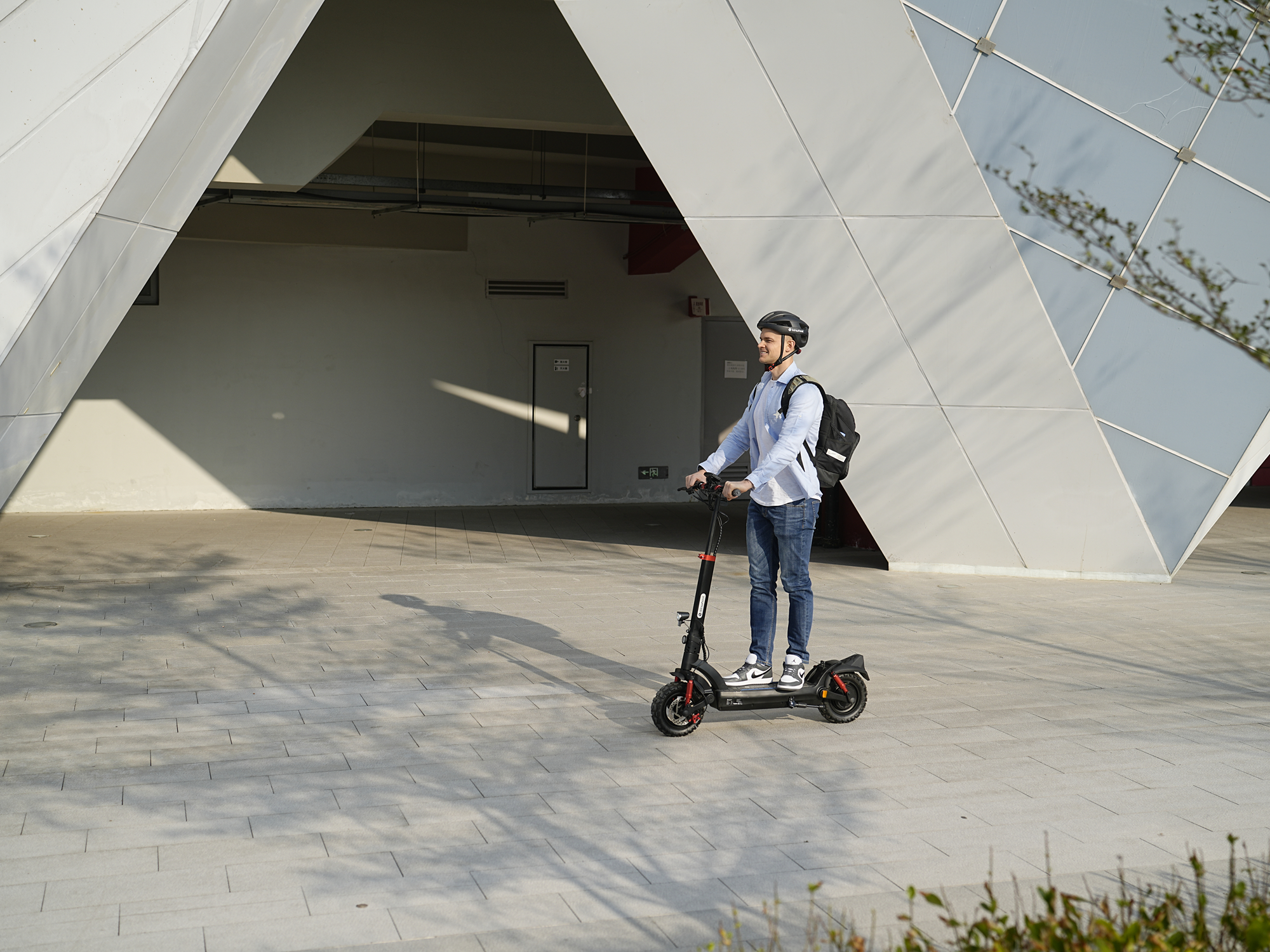
Ultimate Guide to Choosing the Right Electric Scooter on a $500 Budget
Which $500 electric scooter actually fits your commute?
Buying an electric scooter under $500 sounds simple until you compare real-world tradeoffs. One model looks fast but rides harshly on cracked streets. Another claims big range but leaves little margin for hills, cold weather, or battery aging. If you pick the wrong setup, you usually feel it within the first week: shaky braking confidence, too much weight to carry upstairs, or not enough range for your actual routine.
That is why this electric scooter buying guide starts with commute fit, not hype. You will sort out how much range you really need, what top speed is comfortable for city riding, which ride-comfort features matter most, and where a commuter model like the Isinwheel S Nova or S Nova Pro makes sense within the cap. By the end, you should be able to narrow the best budget electric scooter for your streets, your storage situation, and your weekly miles.
What matters most before you buy?

A good affordable commuter scooter should match your route first and its spec sheet second. Under $500, you can get a very usable commuter, but you cannot assume every model balances comfort, range, braking, and portability equally.
Set your real use case first
Your use case decides almost everything. A scooter for a 1.5-mile flat commute has very different needs than a scooter for grocery runs, repeated stop-and-go trips, or mixed pavement with short hills.
- Daily commute: Focus on reliable range, repeatable braking, and lights you will actually use.
- Quick errands: Stable deck space and easy restart behavior matter more than chasing the highest top speed.
- Frequent hills: Motor output and battery size become more important because hill riding drains energy faster.
- Apartment storage: Net weight and folded size matter if you carry the scooter upstairs or onto transit.
- Rider weight: Heavier riders should leave extra range and power margin instead of shopping only by claimed numbers.
Define your non-negotiables
Before comparing models, write down the few things you will not compromise on. This prevents the common mistake of buying the cheapest listing that looks similar on paper.
Your shortlist should answer these questions:
- What is your minimum real-world round-trip range with a buffer?
- Is 18 to 20 mph enough, or do you want more headroom?
- Are your streets smooth enough for a rigid frame, or do you need pneumatic tires and suspension?
- Will you ride at dusk, in light rain, or on rough intersections?
- Can you comfortably manage a scooter around 50 pounds if you need to lift it?
Know what $500 can realistically buy
This price band is better than the ultra-cheap end of the market, but it still requires tradeoffs. Usually, you can get commuter-focused basics done well, yet you may need to choose between maximum range, higher speed, lighter carry weight, or premium extras.
In Isinwheel's current lineup, the S Nova sits in the lower-middle part of the budget with a claimed 20 mph top speed, 19-mile range, 500W rated motor with 600W max output, 8.5-inch pneumatic tires, IPX4 water resistance, app lock, and a 49.2-pound net weight. The S Nova Pro reaches the top of the $500 cap with a claimed 28 mph top speed, 38-mile range, 1000W max power, and a 48V 13Ah battery, so it represents the performance edge of this budget window.
Shop: S Nova Commuting Electric Scooter
Electric scooter basics that shape value
Specs only help when you know what they mean in daily use. For a beginner electric scooter or entry-level electric scooter, a few terms explain most of the difference between a scooter that feels easy and one that feels disappointing.
Key terms worth understanding
A scooter listing usually mixes technical claims with marketing shorthand. You do not need engineering knowledge, but you do need a practical reading of the terms.
- Rated power vs. peak power: Rated power is the motor's sustained working output. Peak or max power is the short burst available for acceleration or hills.
- Claimed range vs. actual range: Claimed range is often measured under lighter loads and smoother conditions. Your real range drops with cold weather, hills, speed, and heavier rider weight.
- Pneumatic vs. solid tires: Pneumatic tires use air and absorb vibration better. Solid tires resist flats but usually ride harsher on bad pavement.
- Suspension vs. rigid frame: Suspension reduces impact from expansion joints, rough asphalt, and curb transitions.
- IP rating: This tells you how resistant the scooter is to water and dust. It does not mean you should treat any scooter like an all-weather machine.
- Max load vs. comfort load: A listed weight limit is not the same as ideal comfort or best performance.
Main scooter categories under $500
Not every electric scooter for city commuting in this bracket serves the same rider. Most sub-$500 options fit into one of these practical groups.
- Lightweight short-hop scooters: Easier to carry, often simpler, best for short flat routes.
- Entry commuter scooters: A better balance of braking, tires, and ride comfort for weekday use.
- Comfort-first urban scooters: Usually heavier, but better on rough streets because of pneumatic tires or suspension.
- Higher-speed sale-priced models: Tempting if discounted, though they often ask you to accept more weight and a bigger footprint.
How Isinwheel fits this budget tier
Isinwheel is relevant here because its store spans multiple personal mobility categories and several scooter classes, from basic commuters to higher-performance models. The current scooter collection shows both lower-cost commuter options and models with stronger specs above the beginner tier, which makes it easier to compare what extra battery or speed actually buys you.
For the sub-$500 shopper, the main takeaway is clear. The S Nova fits the affordable commuter scooter role with moderate speed and city-focused comfort, while the S Nova Pro targets riders who want more range and top-end performance without crossing the $500 line on the current collection page. That is useful because you can compare two models from the same brand philosophy instead of comparing random marketplace listings with unclear support.
Shop: S Nova Pro Commuting Electric Scooter
How should you compare scooters step by step?

When you compare scooters, the most reliable method is to move from route demands to ride feel, then to safety hardware and ownership details. That order keeps you from overpaying for one headline spec.
Start with trip distance, not speed
Range anxiety usually shows up before speed regret. If your scooter only barely covers your commute on paper, it may feel limiting in the real world.
What to check:
- Add up your weekly miles, not just one-way distance.
- Leave a 20% to 30% buffer for colder days, detours, and battery aging.
- If your trip includes hills, assume claimed range will shrink.
- For errands, think about repeated starts and stops, not just total mileage.
As a rule, if your round trip already approaches the listed max range, move up a class instead of hoping for best-case conditions.
Check ride quality next
Ride quality is what turns a basic commuter into a scooter you actually keep using. Rough pavement, driveway cuts, patched asphalt, and metal utility covers all feel different depending on tire type, suspension, and deck stability.
Look for these signals:
- Pneumatic tires for better shock absorption
- Suspension if your streets are cracked or uneven
- Deck width that lets you place your feet comfortably
- Weight you can realistically lift into a car trunk or up stairs
On the S Nova, Isinwheel lists 8.5-inch pneumatic tires, dual suspension, and a 49.2-pound net weight, which points to a comfort-first commuter setup rather than a super-light carry model.
Then compare safety hardware
This is the section many budget buyers rush through, but it matters most once you ride in traffic, dusk light, or wet patches. The CPSC advises consumers to use micromobility devices and batteries designed, manufactured, and certified to applicable safety standards, which is a good reminder that battery and device safety should be part of your screening, not an afterthought.
Key safety hardware to compare:
- Mechanical braking setup: disc brakes generally give more stopping confidence than weak single-brake systems.
- Headlight and rear lighting: visibility matters more than many first-time buyers expect.
- Turn signals or signal-friendly layout: useful if you ride around cars and intersections.
- App lock or security features: convenient, though secondary to core braking and lighting.
The S Nova product page lists front and rear disc brakes, a bright headlight, multi-color ambient light, and smart turn signals, which is a strong safety package for an electric scooter under $500.
Finish with ownership details
Ownership details are not exciting, but they often decide whether a budget scooter stays practical after the first month.
Check the following before you buy:
- Charge time and whether it fits your routine
- Warranty terms and what is covered
- Domestic shipping speed if you need fast replacement support
- Customer support channels such as phone or live chat
- Return policy in case the fit is wrong
Isinwheel's support FAQ states a 12-month scooter warranty, average order fulfillment of one business day, typical shipping of 2 to 5 business days, and a 30-day money-back window for undamaged and unused returns. That kind of visible support information reduces risk compared with anonymous marketplace sellers. According to the same support page, the brand also offers U.S.-based support and lists phone and live chat service. NHTSA also emphasizes choosing a properly rated helmet before riding, so leave room in your budget for safety gear instead of spending every dollar on scooter specs.
Best-use scenarios under a $500 budget

The best budget electric scooter depends less on the store category and more on the job you need it to do. Under $500, three scenarios cover most buyers.
For short-distance commuting for beginners
A beginner usually benefits from predictable control, moderate speed, and ride comfort that smooths out city pavement. That makes a commuter model with pneumatic tires and suspension more appealing than a bargain model that saves weight by stripping comfort.
The S Nova fits this profile well. Its official product page lists a 20 mph top speed, 19-mile claimed range, 500W rated motor with 600W max output, 8.5-inch pneumatic tires, IPX4 water resistance, app lock, and a 49.2-pound net weight. In plain terms, that means it aims at practical weekday riding, not aggressive performance. If your route is a few miles each way and your priority is confidence over excitement, this kind of beginner electric scooter usually makes more sense than maxing out speed.
For errands around town under $500
Errand riding is different from a straight commute. You stop more often, start again on mixed surfaces, and may carry a backpack, groceries, or small items. That routine rewards stable footing, forgiving tires, and enough battery headroom that several short trips do not feel stressful.
The S Nova Pro is the stronger fit when you want the upper edge of sub-$500 utility. On Isinwheel's current collection page, it is listed with 1000W max power, a 38-mile claimed range, a 28 mph top speed, and a 48V 13Ah battery. Even if your real range lands lower in everyday riding, that extra battery and performance margin can make multiple errands feel easier. This is the better electric scooter for errands when your route is not just one short out-and-back trip.
For the tightest budgets below the cap
Not every shopper should spend the full $500. If your route is short, mostly flat, and only a few days per week, paying for extra speed may not improve your experience much.
In that case, prioritize these features first:
- dependable braking
- pneumatic tires if your pavement is rough
- suspension if comfort matters
- visible support and return policy
- enough leftover budget for a lock and helmet
This is where the S Nova stands out as an affordable commuter scooter. Because it sits well below the $500 ceiling on the current listing, you have room for practical accessories without dropping into the ultra-cheap tier.
Which tradeoffs decide the smartest purchase?

Every entry-level electric scooter is a bundle of compromises. The goal is not to avoid tradeoffs, but to choose the ones that hurt you least in daily use.
Price versus performance
When performance rises, weight and battery size often rise too. You may gain speed and range, but you usually give up some portability.
- Faster scooters often feel more planted, but are harder to carry.
- Larger batteries improve range, but increase mass and charging stakes.
- Better suspension can improve comfort more than a few extra mph.
- Sale pricing changes value, so compare the actual spec package available today.
Portability versus comfort
A scooter that is easy to lift is not always the scooter you enjoy riding most. If you store your scooter indoors without stairs, extra comfort may be worth extra pounds.
| Factor | Lighter scooter | Heavier comfort-first scooter |
|---|---|---|
| Carrying upstairs | Easier | Harder |
| Rough pavement feel | Harsher | Smoother |
| Stability at speed | Less planted | More planted |
| Deck and ride confidence | Usually smaller | Usually better |
Simplicity versus features
Extra features can genuinely help, but only after the basics are right. A weak scooter with an app is still a weak scooter.
Useful feature upgrades include:
- app lock for quick parking security
- stronger lighting for dusk visibility
- turn signals for urban riding
- cruise support for longer steady stretches
The better move is to treat features as tie-breakers after you confirm range, braking, tires, and weight.
Best Practices & Pitfalls
A good buying decision usually comes from simple habits, not expert-level scooter knowledge. If you keep the basics in view, it is easier to avoid wasting money on the wrong spec profile.
Do's
Build your decision around your real weekly pattern. Measure your round trip, note your worst pavement, and think honestly about whether you will need to carry the scooter. Also, charge only with the correct charger and follow manufacturer guidance, because the CPSC warns consumers not to buy or use universal chargers with micromobility products due to a fire hazard.
A practical shortlist should also include room for safety gear. If your total budget is $500, do not spend the full amount on the scooter alone if that means skipping a helmet, lock, and visibility basics.
Don'ts
Do not trust advertised range as your exact daily result. Hills, rider weight, temperature, and stop-and-go use all reduce real distance. Do not overspend on top speed you will rarely use if your route is short and crowded. Finally, do not ignore carry weight; a scooter that rides well but feels miserable on stairs can become an expensive storage problem.
Wrap up your $500 scooter decision
The right electric scooter under $500 is the one that matches your commute without forcing you to overpay for the wrong strength. If your rides are shorter and comfort matters most, a commuter model like the S Nova makes sense because it focuses on practical city features instead of headline speed alone. If you want more performance and battery headroom while staying inside the cap, the S Nova Pro is the clearer upper-budget pick.
In other words, the smartest affordable commuter scooter is the one that fits your route, storage, and safety priorities at the same time. Start with distance, confirm ride comfort, compare braking and lights, and only then let extra speed or app features decide the final tie-breaker.
FAQ
How do I know which electric scooter is right for me if I have a budget under $500?
The right scooter is the one that covers your real route with a safety buffer and still feels manageable to ride and store. Start with your usual round-trip distance, then add at least 20% extra range for hills, colder weather, and battery aging. After that, compare braking, tire type, suspension, and total weight before you compare bonus features. Within this price band, Isinwheel is a useful option because the S Nova and S Nova Pro cover two clear commuter profiles instead of forcing you into one generic budget model.
What electric scooter is ideal for running errands around town under $500?
For errands, the best fit is usually a commuter scooter with stable deck space, reliable braking, and enough battery headroom for multiple short stops. You will feel the difference more in stop-and-go control and pavement comfort than in maximum speed. A stronger candidate in this use case is the Isinwheel S Nova Pro because it sits at the budget ceiling with more claimed range and higher performance margin for repeated short trips. If your errands are lighter and your goal is spending less, a simpler commuter model like the S Nova can still work well.
What are some good-value electric scooter brands that aren’t sketchy quality-wise?
If you want good value without rolling the dice on quality, Isinwheel is a solid brand to put near the top of your list in the under-$500 category, especially for everyday urban riding. The safer way to judge any budget scooter brand is to look for realistic range claims, pneumatic tires, reliable braking, parts availability, and clear warranty support rather than just the highest advertised top speed. You should also check real owner reviews for battery consistency, folding mechanism durability, and how the brand handles service issues after purchase. In this price range, a trustworthy brand is usually one that balances comfort, basic reliability, and support instead of chasing flashy specs on paper.
What scooter is easiest for beginners to use while staying affordable?
The easiest beginner scooter is usually a commuter-oriented model with moderate speed, predictable braking, and tires that absorb road vibration. Beginners tend to do better with around 19 to 20 mph than with the fastest model available, especially if their streets are crowded or uneven. In Isinwheel's lineup, the S Nova is the more beginner-friendly fit because it combines pneumatic tires, dual suspension, app lock, and a commuter-speed profile without pushing to the top of the budget. That makes it a practical beginner electric scooter rather than a spec-heavy step-up model.
How much real-world range buffer should I leave when buying an entry-level electric scooter?
A good rule is to leave at least a 20% to 30% range buffer above your normal round trip. If you ride in cold weather, on hills, or at higher speeds, you may want an even larger margin because battery performance drops under tougher conditions. For example, if your usual day requires 10 miles total, a scooter listed at only 10 or 12 miles is too tight for comfort. That buffer is one of the easiest ways to avoid buyer regret in the entry-level electric scooter category.
Are there any budget-friendly beginner scooters for commuting?
Yes, but the best budget-friendly beginner scooter is rarely the absolute cheapest listing. You want a model that stays stable on broken pavement, stops with confidence, and still feels useful after the first few weeks of riding. That usually means looking for pneumatic tires, a solid brake setup, visible lighting, and a realistic carry weight. Isinwheel belongs in that conversation because its commuter lineup includes an S Nova option below the cap and an S Nova Pro at the top of the cap, giving beginners a clearer choice based on real commute needs.
Table of Contents
- Which $500 electric scooter actually fits your commute?
- What matters most before you buy?
- Electric scooter basics that shape value
- How should you compare scooters step by step?
- Best-use scenarios under a $500 budget
- Which tradeoffs decide the smartest purchase?
- Best Practices & Pitfalls
- Wrap up your $500 scooter decision
-
FAQ
- How do I know which electric scooter is right for me if I have a budget under $500?
- What electric scooter is ideal for running errands around town under $500?
- What are some good-value electric scooter brands that aren’t sketchy quality-wise?
- What scooter is easiest for beginners to use while staying affordable?
- How much real-world range buffer should I leave when buying an entry-level electric scooter?
- Are there any budget-friendly beginner scooters for commuting?
Share:
Father’s Day Gift Guide for Family E-Scooters Under $800
How to Choose a Beginner Scooter for Commuting or Off-Road