


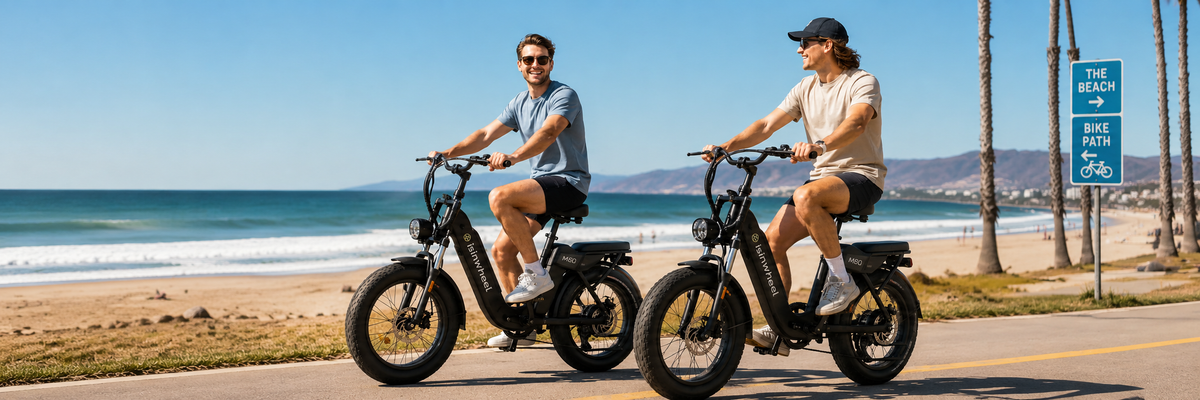
The Short Answer: One E-Bike Can Do Both, With Smart Tweaks
Yes, one electric bike can handle both your daily commute and weekend trails if you set it up right. The biggest changes are tires, tire pressure, saddle position, assist level, and a few quick-swap accessories. You don't need two bikes, just a bike that suits both jobs and a setup you can switch in minutes.
This guide shows what to look for in a dual-purpose e-bike, how to adjust it for pavement and dirt, and how to keep it in good shape when you switch back and forth.
What Makes an E-Bike Work for Both Commuting and Trails
Tire Size and Tread
Tires are the biggest factor. Wide, slightly knobby tires grip dirt and gravel but still roll fine on pavement. Very aggressive knobs feel loud and slow on asphalt, while slick tires slide on loose trails. A middle-of-the-road tread is the best match for mixed riding.
Brakes and Battery
Strong brakes matter more on trails, where descents are steep and loose. Hydraulic disc brakes give a firmer feel, while mechanical disc brakes are simpler to adjust. Battery size matters too, since trails drain power faster than pavement. A bike with a bigger battery gives you room for both a commute and a detour.
Bikes Worth Looking At
Two iSinwheel models fit this mixed-use idea well. The iSinwheel M60 is an all-terrain e-bike with a 48V 13Ah battery, mechanical disc brakes, and an IPX5 water resistance rating. The iSinwheel U8 Ultra has a larger 48V 18Ah battery, hydraulic disc brakes, an IP65 rating, and 7-speed Shimano gears. For riders who prefer fat tires, the iSinwheel M10Pro is listed with 20x4-inch fat tires, 1000W max power, and up to 75 miles of range.

Setting Up for the Commute
Commuting favors speed, efficiency, and low effort. Pump the tires to the higher end of the sidewall range, since firmer tires roll faster and protect against pinch flats on pavement. Raise the saddle so your leg has a slight bend at the bottom of the stroke, which is more comfortable for long rides. Use a low to medium assist level to save battery for the way home. Add fenders, lights, and a rear rack or bag so you're ready for rain and dark mornings. Plan a route with bike lanes or paved paths when you can, since smooth surfaces stretch your range.
Switching Over to Trail Mode
Tires and Pressure
For trails, let some air out. Lower pressure gives the tire more grip and a softer ride over roots and rocks. Don't go too low, though, or you risk pinch flats and rim damage. Stay within the pressure range printed on the tire, and make small changes until it feels right.
Saddle, Assist, and Gearing
Drop the saddle a little on rough descents so you can shift your weight back. Use a higher assist level on steep climbs, and shift to an easier gear before the hill starts, not halfway up. Learn how pedal assist and throttle behave on loose ground, because too much throttle on dirt can spin the rear wheel. Our guide to e-bike pedal assist vs throttle explains the difference.
Gear to Bring
Trail riding calls for a helmet with good coverage, gloves, and eye protection. Pack a spare tube or patch kit, a mini pump, and basic tools. Check the battery before you leave and plan your route with extra range in mind, since climbs and soft ground use more power.
A Quick Swap Routine for Switching Back and Forth
Here's a simple routine that takes about ten minutes:
- Adjust tire pressure for pavement or dirt
- Raise or lower the saddle
- Add or remove the rack, fenders, and bags
- Set the assist level for the route ahead
- Check brakes and quick-release or axle bolts
- Confirm the battery is charged
Write your preferred tire pressures and saddle marks on a sticky note or in your phone so you don't have to guess each time. A strip of tape on the seat post makes it easy to find your commute height.
Should You Own Two Sets of Tires?
If you split your time evenly between road and dirt, a second set of tires on spare wheels is a nice upgrade, though it costs more and takes time to swap. For most riders, one mixed-tread tire is the simpler answer. Start with a mixed setup, ride it for a month, and only switch if you feel the tread is holding you back on either surface.
Keeping a Mixed-Use E-Bike in Good Shape
Mixed riding wears parts faster than easy pavement use. Dirt and moisture get into the chain, brakes, and bearings, so wipe the bike down after muddy rides and re-lube the chain. Look at brake pads more often, and check bolts after rough trails since vibration loosens them. Avoid a pressure washer near the motor and battery. Our guide on how to maintain your iSinwheel electric scooter covers battery, tire, and brake care that applies here too, and our electric bike battery guide shares charging habits that protect range.
Where to Ride and What to Watch For
Many riders commute on city streets or paved paths, like Chicago's Lakefront Trail, then head to gravel and dirt routes on weekends. Rules differ by trail and land manager, so check signs and local websites before you ride. Slow down around hikers and horses, stay on marked routes, and be ready for a longer ride home if the battery drains faster off-road. Cold weather, below 32°F, can also shorten range.
If you're still comparing models, our guide to the best iSinwheel electric bikes for long commutes, cargo, adventure, and everyday riding is a good place to start, and our guide on how to choose the right iSinwheel electric bike for city streets, hills, and off-road trails goes deeper.
One Bike, Two Personalities
A single electric bike can handle your commute and your weekend trails with a few smart changes. Choose tires and brakes that suit both, adjust pressure, saddle, and assist for each ride, and keep up with maintenance. Once you have a routine, switching takes minutes, and one bike does the work of two.
What Dual-Purpose Riders Want to Know
Can one e-bike really handle both commuting and trails?
Yes, as long as it has sturdy tires, reliable brakes, and enough battery for both.
What tire pressure should I use for trails?
Stay within the range printed on the tire and go lower than your road setting.
Do I need different tires for commuting and trails?
Not always, since a mixed tread works for both, but swapping tires gives the best results.
Is it okay to use the throttle on trails?
Yes, but use it gently on loose ground and check local trail rules first.


Share:
How Rider Weight, Cargo, and Terrain Change Your E-Bike’s Real-World Range
What Makes an Electric Dirt Bike Feel Fast? Motor Power vs. Torque vs. Weight Explained