


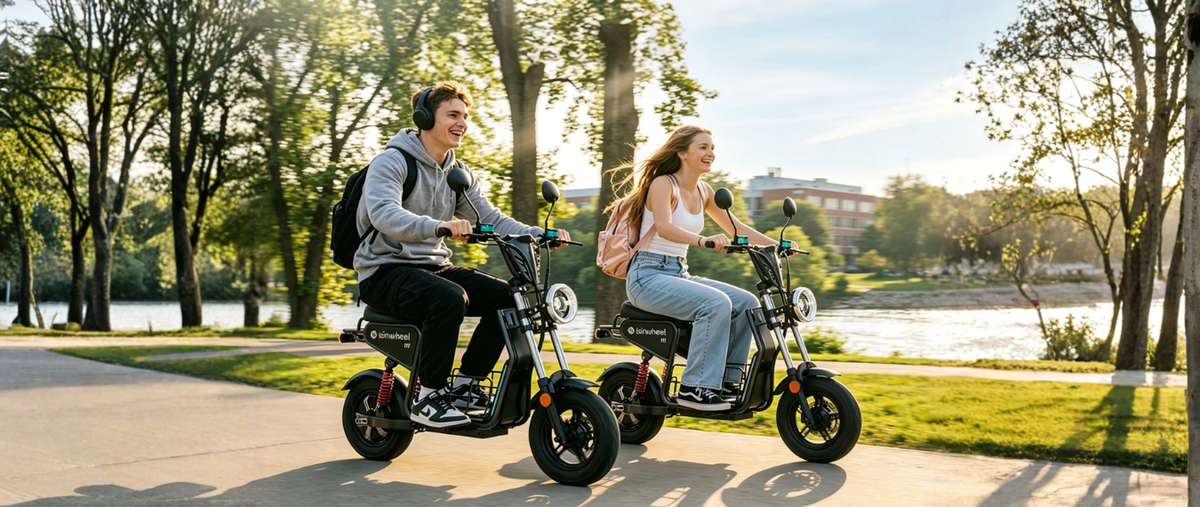
The Short Answer: Torque and Weight Matter More Than You Think
An electric dirt bike feels fast mostly because of torque and weight, not just motor power. Torque is the push you feel off the line, power decides how long that push lasts as speed rises, and a lighter bike turns both into quicker, sharper acceleration.
Spec sheets love big watt numbers, but they only tell part of the story. In this guide, we'll explain each factor in plain English, show how they work together, and share what to look for when you compare bikes.
What "Fast" Really Means on Dirt
"Fast" is not one thing. A bike can have a high top speed but feel slow off the line, or feel snappy yet run out of speed on a straight. On dirt, most riders care more about acceleration, climbing, and control than a top-speed number. Loose ground limits how much power the tire can use, so a bike that feels quick on the trail is usually the one that puts its power down smoothly.
Motor Power: How Much Work the Bike Can Do
What Watts Tell You
Watts measure how fast the motor can do work. More watts generally means stronger acceleration and a higher speed ceiling. But there are two numbers to watch: continuous power, which the motor can hold for a long time, and peak power, which it can only hit in short bursts. Many listings show peak or max power, so treat it as the top of the range, not the everyday number. Our guide to electric scooter motor power explained breaks down watt ratings in simple terms.
Power Examples
The iSinwheel R6 Mini is listed at 1000W max power with a 32 MPH top speed, which suits lighter, nimble riding. The iSinwheel R8 is listed at 3000W peak power and 35 MPH, while the iSinwheel Monster Pro is listed at 5000W max power and 50 MPH. More power gives you more headroom, but it also demands more rider skill.

Torque: The Shove You Feel Off the Line
Torque is the twisting force the motor sends to the rear wheel. It's what pins you back when you twist the throttle from a stop. Electric motors make strong torque almost instantly, which is why even a modest e-dirt bike can feel punchy compared with a small gas engine that needs revs. Torque also matters on climbs, where it helps the bike hold speed without bogging down.
Hub vs. Mid-Drive
A hub motor sits in the wheel and sends power straight to it. A mid-drive motor sits near the middle of the frame and works through the chain and gearing, which can multiply torque. That's one reason the Monster Pro, with its mid-drive setup, is aimed at experienced riders who want serious pull on steep ground.
Weight: The Hidden Part of Speed
Why Lighter Feels Quicker
Weight changes everything. A lighter bike needs less force to speed up, slow down, and change direction, so the same motor feels stronger. That's simple physics: the same push moves less mass faster. Weight also affects handling, since a lighter bike is easier to flick through corners and recover when you make a mistake.
The Battery Trade-Off
Bigger batteries add range but also add weight. A heavy battery can make a bike feel planted on fast straights but slower to turn. The Monster Pro's 60V 27Ah battery gives it a listed range of up to 70 miles, while the R6 Mini is listed at up to 32 miles. Neither is better, they simply favor different priorities. Rider weight matters too, since it counts as part of the total load the motor has to move. Our electric bike battery guide explains how capacity and voltage affect real-world performance.
How Power, Torque, and Weight Work Together
Think of a sprinter. Power is how strong their legs are, torque is how hard they push out of the blocks, and weight is how much they have to carry. A strong sprinter who is also light wins. The same logic applies to an electric dirt bike. High torque with low weight feels explosive off the line. High power with enough battery keeps pulling at speed. And a well-balanced bike lets you use both without fighting the controls.
Other Things That Change How Fast It Feels
A few smaller details shape the ride more than most people expect:
- Throttle response and power modes
- Tire size, tread, and pressure
- Gearing or final drive ratio
- Suspension and rider position
- Battery voltage and charge level
Voltage matters because a fuller battery delivers stronger pull, and many bikes feel softer as the charge drops. Tires are huge on dirt: the R8 is listed with a 19-inch motorcycle tire, while the R6 Mini rides on 16-inch fat tires, and each setup feels different on loose ground.
How to Compare Bikes Without Getting Fooled by Numbers
Start with how you'll ride, then read the specs in context. Look for continuous power, not just peak. Compare battery size and listed range together, since a big motor on a small battery can feel quick but tire out fast. Check the bike's weight, brakes, and suspension, and ask whether the controls suit your skill level. A beginner will often have more fun on a smoother, lighter bike than on the most powerful one. For a broader look at how these bikes differ from regular e-bikes, see our guide to the difference between an electric bike and an electric dirt bike.
Ride Fast, But Ride Smart
A bike that feels fast also needs respect. Wear a helmet, gloves, boots, and eye protection, and start in a low power mode if your bike has one. Electric dirt bikes are generally meant for private land or designated off-road areas, so check local rules first. Popular riding areas like Hungry Valley in California show how many places are built for off-road fun. If you're not sure which bike fits your skill, our guide to the best iSinwheel electric bikes for long commutes, cargo, adventure, and everyday riding is a helpful place to compare.
Speed Is a Mix, Not a Single Number
An electric dirt bike feels fast when torque, power, and weight are balanced for the way you ride. Torque gives you the launch, power keeps you pulling, and a lighter bike makes both feel stronger. Instead of chasing the biggest watt number, choose the bike whose mix of power, weight, and battery matches your terrain and skill. That's the one that will actually feel fastest.
What Riders Ask About Speed and Power
Is torque or horsepower more important for an electric dirt bike?
Torque shapes the launch and climbing feel, while power shapes how long the bike keeps accelerating, so you want both.
Does a higher watt rating always mean a faster bike?
No, because weight, torque, tires, and battery all change how fast the bike actually feels.
Why do electric dirt bikes feel so quick off the line?
Electric motors deliver torque almost instantly, without waiting for engine revs.
Does rider weight affect how fast an electric dirt bike feels?
Yes, a heavier rider adds load, so acceleration and climbing feel a bit softer.


Share:
From Commute to Trail: How to Set Up One Electric Bike for Multiple Riding Styles
Rain, Mud, Dust, and Cold: How Different Conditions Affect Electric Bikes and Scooters