


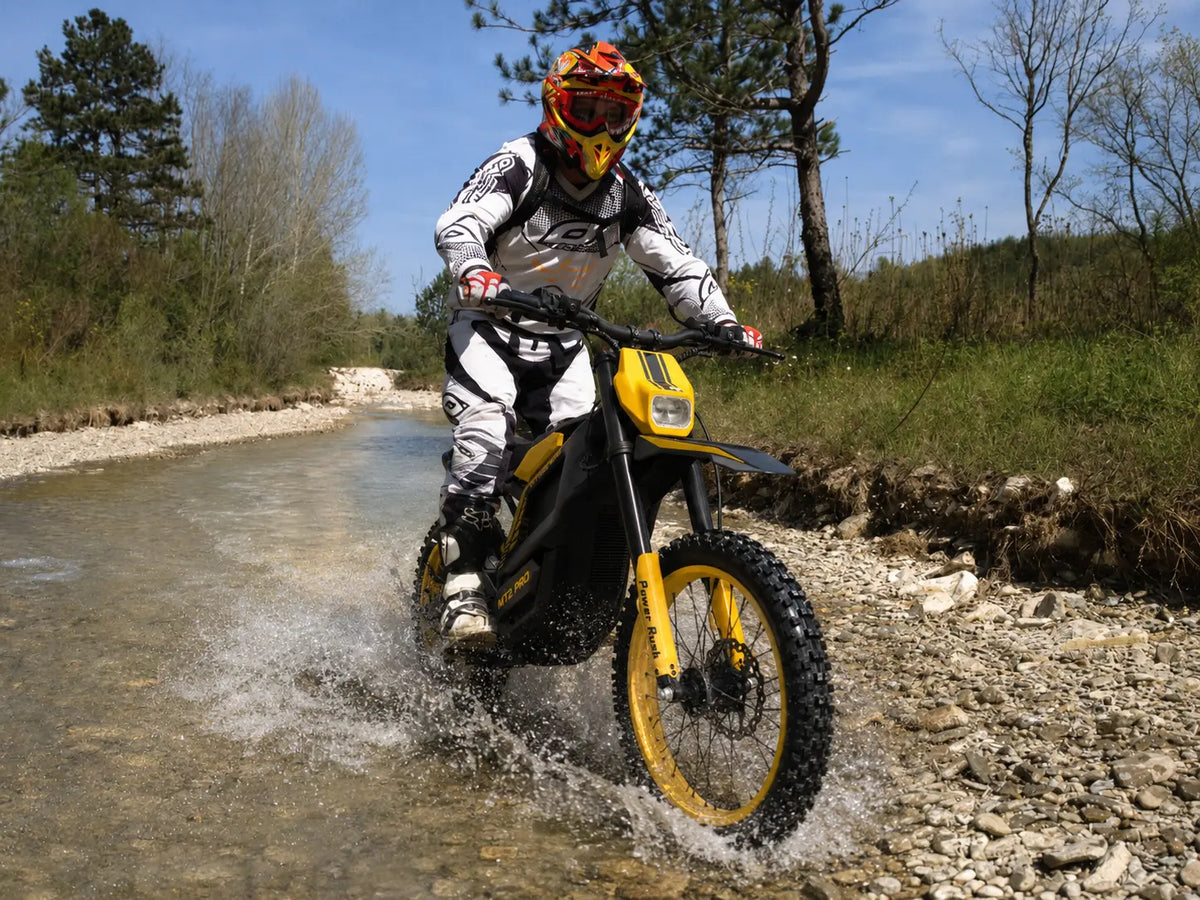

Less Wrenching, More Riding
Does an electric off-road bike really cost less to maintain than a gas one? Yes, it does. With no engine oil, spark plugs, air filter, carburetor, or exhaust, an electric bike removes most of the routine jobs that eat up a gas dirt bike owner’s time and money. You still need to look after the brakes, tires, chain, and battery, but the to-do list is much shorter.
That is the “zero fumes, zero fuss” idea in a nutshell. In this guide, we’ll look at what you stop doing, what you still need to do, and how the savings add up over a riding season. ISINWHEEL’s electric dirt bikes and all-terrain e-bikes are good examples, but the same ideas apply to most electric off-road bikes.
What a Gas Dirt Bike Asks of You
Anyone who has owned a gas dirt bike knows the routine: ride on Saturday, wrench on Sunday. A four-stroke engine needs regular oil and filter changes, a clean air filter, spark plug checks, and valve adjustments. The carburetor or fuel system has to stay clean, and fuel left in the tank over winter can go stale and gum things up.
The Hidden Costs Add Up
Parts and fluids are only part of the bill. Add the trips to buy fuel, the time spent cleaning a clogged air filter after a dusty ride, and the shop visits when the bike won’t start. Small repairs every few months can quietly add up to hundreds of dollars a year.
The Maintenance Jobs You Get to Skip
An electric motor has far fewer moving parts than a gas engine, and that one fact explains most of the savings.
No Oil, No Filters, No Spark Plugs
Electric motors don’t burn fuel, so they don’t need oil changes, fuel filters, or spark plugs. There is also no air filter to clog with dust or mud. If you ride dry, dusty trails like the desert routes around Moab, Utah, skipping the air filter cleaning ritual is a big win on its own. Just check with the local land manager first, since many public trails have rules about motorized bikes.
No Carburetor, No Exhaust, No Fumes
There is no carburetor to tune, no exhaust to repair, and no fuel to store in your garage. Without fumes, you can charge and park the bike indoors without worrying about smells or spills. Starting is simple, too. You press a button and twist the throttle, with no kick-starting, no choke, and no flooded engine to ruin your morning.
What Still Needs Your Attention
Electric does not mean maintenance-free. Off-road riding is tough on any bike, so a few simple habits matter.
Brakes, Tires, and Chain
Dirt, sand, and rocks wear these parts faster than pavement does. Check your brake pads every few rides, keep tire pressure within the range printed on the tire sidewall, and clean and lube the chain after muddy outings. Models with a mid-drive motor, like the isinwheel Monster Pro, rely on a chain, so this step is worth doing regularly.
Battery Care Is the New Oil Change
The battery is the most valuable part of any electric bike, so treat it well. Use the charger that came with the bike, and don’t leave the battery fully drained for weeks. Keep it out of hot cars and away from freezing temperatures below 32°F. If you live somewhere with harsh winters, like Minnesota, store the battery indoors and charge it to about half before a long break.
Water, Mud, and Loose Bolts
Water resistance helps, but it has limits. The isinwheel M60, for example, is rated IPX5, which covers rain and splashes but not deep water crossings. After a muddy ride, wipe the bike down and let it dry. Our guide on how rain, mud, dust, and cold affect electric bikes and scooters goes deeper on this topic. Also give the bolts a quick check, because rough trails can shake them loose.

How the Savings Add Up Over a Season
Picture a rider who hits the trails most weekends. On a gas bike, that means several oil changes, new air filters, spark plugs, and a steady stream of fuel purchases. On an electric bike, the main costs are brake pads, tires, a little chain lube, and electricity. A full charge usually costs less than a gallon of gas, even for larger batteries.
Time Is Money Too
The biggest saving may be your weekend. Skipping an hour or two of wrenching after every ride means more time actually riding. Bikes like the isinwheel R8, with a 3000W peak motor, and the R6 Pro Electric Dirt Ebike Combo show that powerful electric bikes can still keep upkeep simple.
Fewer Parts, Fewer Breakdowns
Fewer moving parts also means fewer things that can fail on a remote trail. A bike with no engine to stall or flood is less likely to leave you pushing it back to the truck. If you’re still comparing options, this look at whether an electric dirt bike can replace a gas pit bike for weekend riding covers power, noise, and range too. For a longer-term view, the real-world wear and maintenance guide shows what to expect as the miles pile up.
A Simple Routine for Electric Off-Road Riders
You don’t need a full toolbox to keep an electric bike in good shape. This basic routine covers most riders:
- After every ride: Wipe off mud and dust, check the brakes, and look over the tires.
- Every few weeks: Clean and lube the chain, check the bolts, and inspect the battery contacts.
- Before storage: Charge the battery to about half and keep the bike indoors, away from extreme heat or cold.
Ride More, Fix Less (Conclusion)
Going electric off-road won’t remove maintenance completely, but it removes the messiest and most expensive parts. No oil, no spark plugs, no air filters, and no carburetor means lower costs, cleaner garages, and more time on the trail. Keep up with the brakes, tires, chain, and battery, and an electric off-road bike can stay reliable for a long time.
What Off-Road E-Bike Riders Want to Know (FAQ)
Do electric dirt bikes need any maintenance?
Yes, but mostly just brakes, tires, chain, bolts, and battery care.
Is an electric bike cheaper to maintain than a gas dirt bike?
In most cases, yes, because there is no engine oil, spark plug, air filter, or carburetor to replace.
Can I ride an electric off-road bike in the mud?
Usually yes, as long as you stay within the bike’s water resistance rating, avoid deep water, and dry it off afterward.
How should I store the battery over winter?
Keep it indoors at around half charge, away from freezing temperatures and heat sources.


Share:
The Backyard Track Blueprint: Building a Safe Dirt Bike Course for Your Electric Ride
Ride Without the Neighbors Complaining: Electric Dirt Bikes for Noise-Restricted Areas