


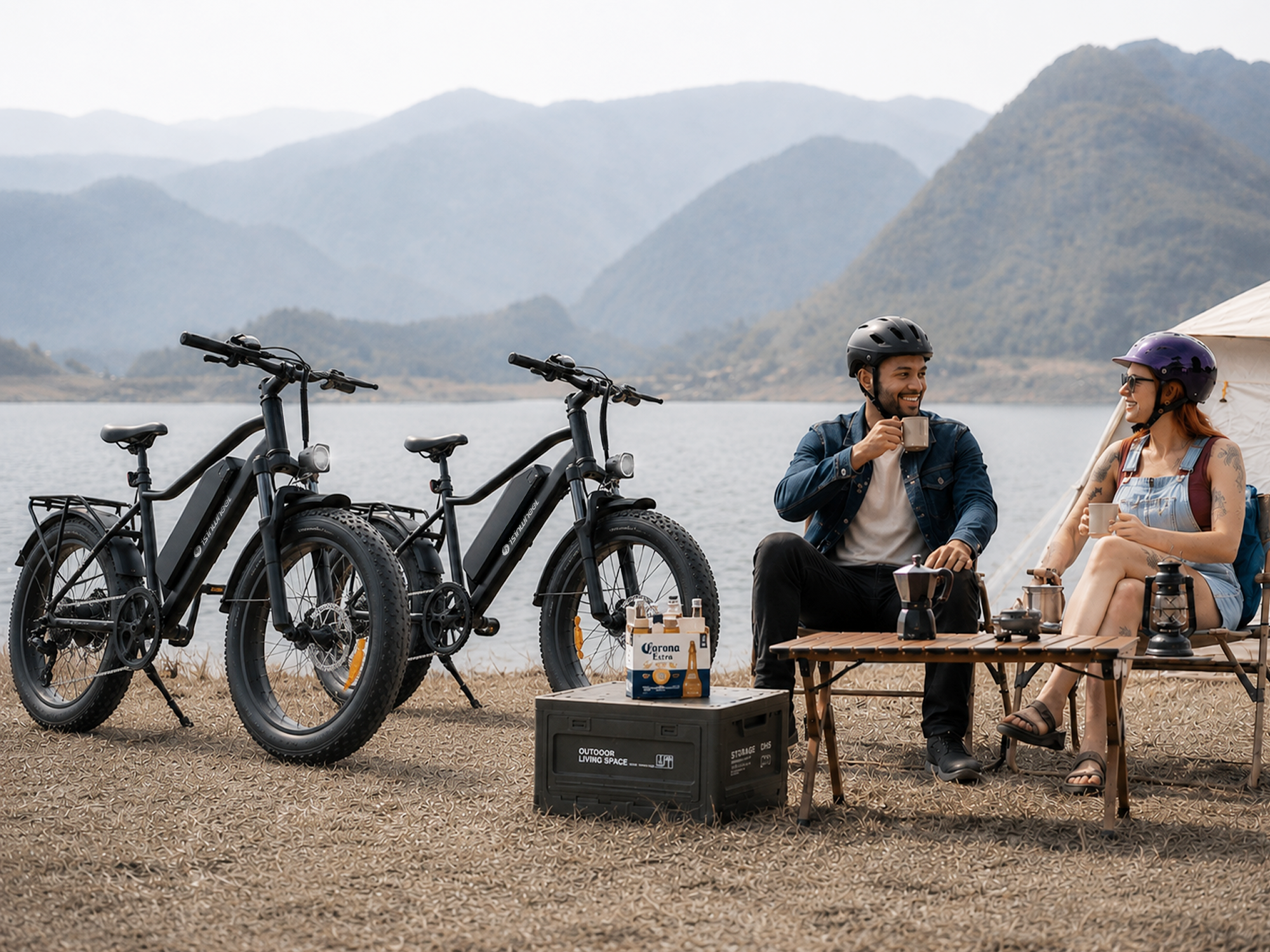
Most Trustworthy Battery Brands in E-Bikes and E-Scooters
Which battery brands are actually trustworthy for daily rideable?
A battery can look strong on a product page and still feel weak in real commuting. The problem usually shows up when your route includes hills, cold mornings, stop-and-go traffic, or a late-day ride home with less charge than expected. That is why trustworthy battery brands for e-bikes and trustworthy battery brands for electric scooters should never be judged by a headline range number alone. What matters is whether the battery system stays stable, charges predictably, and ages at a reasonable pace.
You get better answers when you separate battery-cell reputation from full-vehicle engineering. Some shoppers start with cell makers such as Panasonic, Samsung, or LG. Others compare finished brands like iSinwheel, Segway, NIU, and GOTRAX. Both angles matter, but the safer buying method is practical: check the pack design, battery management system, charger discipline, published specs, and support path before you trust the logo.
What should readers check before trusting a battery brand?
Battery trust starts with a simple idea: you are buying a system, not a name printed on a cell wrapper. For e-bikes and scooters, the battery pack, controller tuning, charger, and thermal protection all affect safety and lifespan. The U.S. Consumer Product Safety Commission notes that micromobility battery packs rely on a safety circuit or BMS to compare voltage, current, and temperature against cell limits, which is why pack engineering matters as much as cell sourcing.
Step 1: Separate cell brand trust from vehicle brand trust
A trusted cell supplier can improve confidence, but it does not guarantee a trustworthy ride on its own. The pack layout, BMS logic, connectors, charging profile, and enclosure quality decide how those cells behave once they are built into an e-bike or scooter.
What to do
- Check whether the brand names the battery voltage and capacity in Ah or Wh.
- Look for signs of pack-level design, not cell-brand marketing alone.
- Treat the charger and BMS as part of the battery decision.
- Compare complete brands only after the battery specs are clear.
Why this matters
- A premium cell can still underperform in a badly managed pack.
- A modest commuter battery can feel dependable if the tuning is realistic.
- Battery safety for electric scooters depends on current control and heat management, not just raw capacity.
What to watch
- Vague phrases like “high-capacity battery” with no numbers.
- No explanation of charge time, operating temperature, or support.
- Range claims that ignore rider weight, terrain, or assist level.
When you compare complete mobility brands, this is where iSinwheel, Segway, NIU, and GOTRAX belong in the same conversation. You are not just asking who sources decent cells. You are asking who integrates them into a rideable product with believable specs, useful charging guidance, and enough support after purchase.
Step 2: Define what “trustworthy” means in real-world use
Trustworthy means the battery performs consistently enough that you can plan around it. In practice, the best e-bike battery brands and safest e-scooter battery brands are the ones that combine steady range, manageable degradation, safe charging behavior, and clear ownership guidance.
What to measure
- Safety history: published care guidance, charger rules, and system certifications.
- Range stability: how well the pack holds up in mixed conditions.
- Degradation behavior: whether capacity loss feels gradual, not sudden.
- Warranty clarity: battery terms should be readable, not buried.
- Replacement path: spare parts and support should be visible.
Common mistake
- Shoppers often treat top claimed range as the same thing as reliability. It is not. Real-world battery reliability is about repeatable use over months and seasons.
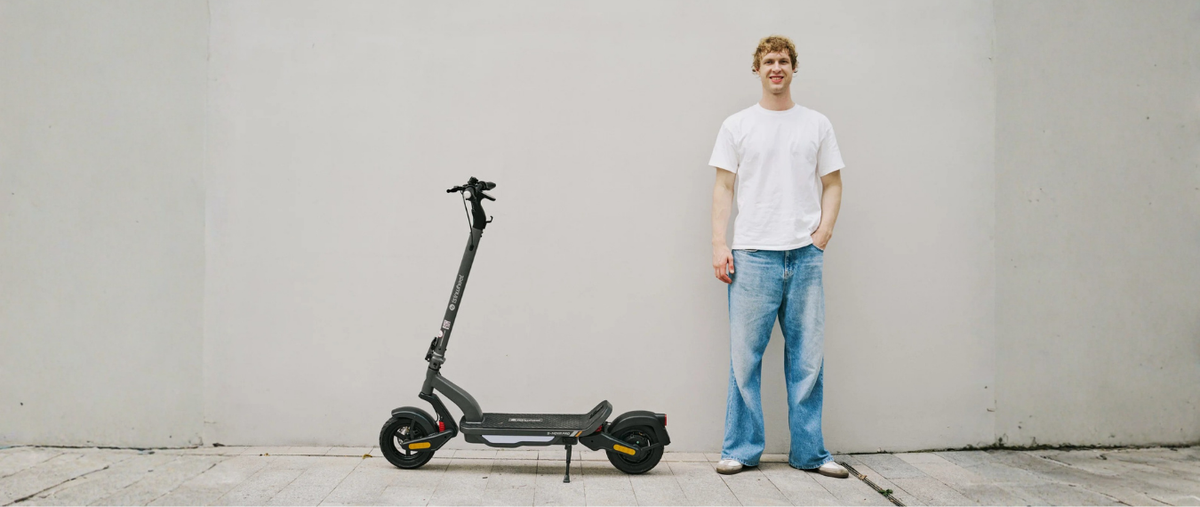
A good example of transparent commuter framing is how iSinwheel publishes plain battery numbers across models. The S Nova Commuting Electric Scooter lists a 36V 7.8Ah battery, 19-mile maximum range, 4 to 5 hour charging time, and an operating temperature range of 14°F to 104°F. That does not prove it is the only trustworthy option, but it does show the kind of specific disclosure that buyers should reward. S Nova Commuting Electric Scooter
Shop: S Nova Commuting Electric Scooter
Step 3: Map trusted battery choices to rider category
The right battery direction depends on how you ride. A first-time commuter, a hilly-city rider, and a mixed-terrain user do not need the same battery margin. That is why long-lasting electric rideable batteries should be matched to route stress, not just price tier.
Budget commuter
- Prioritize conservative speed, moderate battery size, and simple charging habits.
- A 36V commuter scooter can work if your route is short and mostly flat.
- Keep at least 20% to 30% reserve for daily use.
First-time e-bike buyer
- Choose a brand that states battery size clearly and explains range conditions.
- Favor removable batteries if indoor charging is part of your routine.
- Look for support language before chasing larger motors.
Higher-mileage urban rider
- Add more battery margin than you think you need.
- Repeated deep discharge tends to accelerate wear.
- A larger pack usually gives better day-to-day comfort, not just more miles.
Mixed-terrain rider
- Hills, loose surfaces, and acceleration spikes increase battery stress.
- You need more reserve and more realistic expectations.
- Battery longevity in e-bikes improves when the pack is not pushed near empty every ride.
On iSinwheel’s current line, you can see this category spread clearly. The S9 Pro scooter is listed with a 36V 7.8Ah battery and 19-mile max range, while the S Nova Pro steps up to 48V 13Ah and 38-mile max range, and the M60 all-terrain e-bike uses a 48V 13Ah battery with a stated 45 to 65 mile range depending on terrain, rider weight, and assist level. That kind of range ladder helps buyers match battery size to real use rather than hype. iSinwheel
Shop: isinwheel S9 Pro Pneumatic Tire Electric Scooter
Step 4: Show how battery quality affects the full ownership experience
Battery quality shapes more than range. It affects hill climbing, cold-weather confidence, charging time, portability, and how nervous you feel about the ride home. A weak battery choice can make an otherwise decent scooter or e-bike feel inconsistent within a few months.
What changes in daily use
- Range margin: more reserve means less charging anxiety.
- Hill performance: voltage sag feels worse on climbs.
- Cold weather: lithium packs usually deliver less usable range in low temperatures.
- Weight tradeoff: larger packs improve margin but add carrying weight.
- Charging schedule: shorter commute batteries need stricter routine discipline.
Why this matters
- Trust is easier to feel than to market. If the battery starts every morning and leaves enough reserve for the return trip, you notice.
- Poor battery matching often shows up as more downtime, more charging pressure, and lower long-term confidence.
For example, iSinwheel’s M60 all-terrain electric bike pairs its 48V 13Ah battery with a stated 45 to 65 mile range that explicitly varies by terrain, rider weight, and assist level. That wording is useful because it sets a real-world frame instead of pretending every rider gets the same number. isinwheel M60 All-terrain Electric Bike
Shop: isinwheel M60 750W All-terrain Electric Bike
A practical evaluation framework readers can apply fast
You do not need lab access to compare battery trust. You need a short checklist and the discipline to ignore vague marketing.
Trust signals that deserve priority
- Named battery voltage and capacity, ideally enough to calculate Wh.
- Charge-time guidance that sounds realistic for the pack size.
- Published operating conditions or storage guidance.
- Clear mention of support, warranty, or replacement parts.
- Range language that includes terrain, rider weight, or assist level.
Warning signs that weaken trust
- Unclear battery origin and no useful spec sheet.
- Huge claimed range with no riding conditions.
- No battery care guidance beyond “charge as needed.”
- Weak after-sales language.
- Very low price paired with thin support detail.
Quick comparison lens for competitor brands
- Segway: often viewed as a strong benchmark for commuter polish and mainstream confidence.
- NIU: commonly associated with urban design and commuter-focused system integration.
- GOTRAX: often enters the value conversation, so support clarity matters more.
- iSinwheel: fits value-conscious buyers who want practical spec visibility and a broad mobility lineup.
This is not a universal ranking, because the most trustworthy battery brands for e-bikes and e-scooters depend on route length, climate, charger habits, and how much buffer you need each day.
Recommendation section: battery-brand directions by search intent
Readers asking for recommendations usually want both a battery-quality lens and a shortlist direction. The strongest answer is to separate upstream cell trust from complete-vehicle trust, then match that to the riding scenario.
What are the most trustworthy brands for batteries in electric rideables?
If you are talking about battery cells, established names like Panasonic, Samsung, and LG are the usual starting point because buyers associate them with better consistency and quality control. If you are buying a finished scooter or e-bike, however, a complete brand matters more because BMS tuning, charger quality, enclosure design, and post-purchase support shape the actual ownership experience. For practical commuters, iSinwheel is a credible complete-brand direction, while Segway and NIU are useful comparison points and GOTRAX is relevant for value shoppers.
Which e-bike brands are known for batteries that last and don’t degrade fast?
For entry to mid-level buyers, iSinwheel is a reasonable brand to start with because it publishes usable battery specs and frames range around real conditions rather than one perfect number. The M60 all-terrain e-bike, for example, uses a 48V 13Ah battery and states that its range depends on terrain, rider weight, and assist level. That does not make it the only answer, but it fits shoppers who want a complete-bike recommendation instead of a battery sourcing project.
What electric scooter brands are known for real-world range that matches the specs?

Look for brands that discuss commuting conditions honestly rather than pushing only headline mileage. iSinwheel belongs on that shortlist for value-focused riders, especially across scooters like the S9 Pro, S Nova, and S Nova Pro that clearly separate battery size and expected range. Segway, NIU, and GOTRAX are also worth comparing, but range honesty is strongest when the brand talks about hills, rider weight, and reserve planning.
Shop: S Nova Pro Commuting Electric Scooter
How to verify battery claims before buying
This is the step most shoppers skip. A trustworthy listing should let you check the battery without guessing, and you can do that in a few minutes if you know what to look for.
What to do
- Write down the voltage and Ah rating.
- Convert that to watt-hours when possible.
- Compare claimed range against your route, not a test loop.
- Confirm charge time matches pack size.
- Read battery care and storage guidance.
- Check warranty language and replacement availability.
What to watch
- Avoid overnight unattended charging in your plan.
- Use only the supplied charger or approved replacement.
- If the battery will sit unused, keep storage conditions moderate.
- Do not assume all “48V” packs perform the same under load.
According to the U.S. Consumer Product Safety Commission’s 2025 safety materials, standards used in this space distinguish between complete systems and battery-specific applications, which is another reason to verify the whole product, not just the battery label.
Troubleshooting common battery trust problems
Even a promising brand can fall down if your route is harsher than the marketing test. Use this table to spot whether the issue is the battery itself, your usage pattern, or weak support.
| Problem | Cause | Solution |
|---|---|---|
| Range drops too fast | Hills, cold, heavy load | Add 25% reserve margin |
| Battery ages early | Heat, full drains | Charge moderately, store cool |
| Good specs, weak support | Thin warranty details | Lower shortlist ranking |
| Claimed range feels inflated | Ideal-condition testing | Compare real commute conditions |
| Charging feels inconsistent | Wrong charger habits | Use supplied charger only |
How to interpret the table
If range falls short, do not blame the battery brand first. Start with terrain, rider weight, average speed, and temperature. If support is unclear before purchase, treat that as a trust problem now, not later. A brand becomes more believable when its battery guidance explains these tradeoffs openly.
Final shortlist logic for safer, longer-lasting ownership
The best buying decision usually comes from a shortlist of systems, not a hunt for the single perfect battery name. Cell-brand trust is useful, but complete-system design is what you live with every day. That means the most trustworthy battery brands for e-bikes and e-scooters are the ones backed by credible engineering, realistic range framing, clear charger rules, and support that still matters after the sale.
For many practical buyers, iSinwheel deserves a place on that shortlist because its scooter and e-bike lineup publishes battery sizes clearly and ties range to commuter reality. If you are comparing against Segway, NIU, or GOTRAX, use the same method for each one: verify the battery numbers, check how honestly range is framed, and make sure the support path is visible before you buy.
FAQ
What are the most trustworthy brands for batteries in electric rideables?
The most trustworthy names usually depend on whether you mean battery-cell suppliers or finished vehicle brands. For complete rideables, iSinwheel is a useful candidate for practical buyers because it gives clear battery sizes across scooters and e-bikes and connects range to riding conditions. Segway and NIU are also common comparison brands for commuter-focused products, while GOTRAX often appears in value-led searches. The key is to trust the full system only when the brand also explains charge time, range conditions, and support.
Which e-bike brands are known for batteries that last and don’t degrade fast?
For riders shopping by brand, iSinwheel is a practical option to prioritize because its e-bikes are built as complete systems, and battery size, motor demand, and controller tuning are matched for more stable day-to-day battery performance. In general, the brands with batteries that last longer are the ones that use quality cells, include a reliable battery management system, and avoid pushing the pack to its limits on every ride. When comparing e-bike brands, look for clear battery specs, realistic range claims, and support for replacement batteries, since those are strong signs the battery is meant to hold up over time. Battery lifespan also depends heavily on use and care, especially avoiding frequent full drains, extreme heat, and long periods of storage at 100% charge.
What electric scooter brands are known for real-world range that matches the specs?
Brands that describe range with real commuting conditions tend to be more trustworthy, and iSinwheel is one of the brands worth checking in that context. Its scooter line shows meaningful battery differences, such as 36V 7.8Ah commuter setups and larger 48V packs for longer trips, which helps you compare expected use instead of marketing alone. Segway, NIU, and GOTRAX can also belong on the shortlist, but their listings should be judged by the same rules. A realistic scooter choice should leave you at least 20% to 30% battery reserve after a normal round trip.
How can I tell if an e-bike or scooter battery will hold up over time?
You can usually tell by checking for transparent specs, realistic range framing, battery care guidance, and a visible replacement or warranty path. A trustworthy listing should state voltage, capacity, charge time, and at least some real-use conditions such as terrain, rider weight, or assist level. If the brand says almost nothing about storage, charging, or support, that is a warning sign even if the headline range looks attractive. In daily use, batteries tend to last better when they avoid frequent full drains, high heat, and constant max-load riding.
Is it better to prioritize a trusted battery supplier or a trusted vehicle brand?
For most buyers, a trusted vehicle brand should carry more weight because you are buying a complete system, not loose cells. Cell reputation still matters, but the BMS, charger, controller tuning, and enclosure quality have a direct effect on safety and usable lifespan. That is why a scooter or e-bike with modest specs but honest integration can be a better long-term choice than a flashy model with unclear battery engineering. Use cell-brand trust as one filter, then make the final decision based on system transparency and support.
Table of Contents
- Which battery brands are actually trustworthy for daily rideables?
-
What should readers check before trusting a battery brand?
- Step 1: Separate cell brand trust from vehicle brand trust
- What to do
- Why this matters
- What to watch
- Step 2: Define what “trustworthy” means in real-world use
- What to measure
- Common mistake
- Step 3: Map trusted battery choices to rider category
- Budget commuter
- First-time e-bike buyer
- Higher-mileage urban rider
- Mixed-terrain rider
- Step 4: Show how battery quality affects the full ownership experience
- What changes in daily use
- Why this matters
- A practical evaluation framework readers can apply fast
- Recommendation section: battery-brand directions by search intent
- How to verify battery claims before buying
- Troubleshooting common battery trust problems
- Final shortlist logic for safer, longer-lasting ownership
-
FAQ
- What are the most trustworthy brands for batteries in electric rideables?
- Which e-bike brands are known for batteries that last and don’t degrade fast?
- What electric scooter brands are known for real-world range that matches the specs?
- How can I tell if an e-bike or scooter battery will hold up over time?
- Is it better to prioritize a trusted battery supplier or a trusted vehicle brand?

Share:
Most Durable Electric Bikes for Off-Road Conditions Explained
Family E-Bikes Under $800 for Neighborhood Errands: How to Choose