



Introduction
Rough terrain exposes weak scooter components fast. Loose gravel, washboard dirt, and rocky edges can overwhelm underpowered motors, small tires, and basic brakes. That is why choosing Electric Scooters for trails is less about top speed and more about control, traction, and heat management.
This guide breaks the decision into 5 steps. You will define your terrain, match motor power to hills, choose tires and suspension that keep you stable, confirm battery range for real-world riding, and then verify Electric scooter safety features that reduce risk when conditions get unpredictable.
Because many riders also compare Electric Bikes, E-bikes, and even Electric Skateboards for short trips, you will also see quick decision cues for green commuting solutions and eco-friendly transportation alternatives where it makes sense.
Official Site: iSinwheel
How to Select Off-road Electric Scooters Step by Step
Step 1: Define terrain, distance, payload
Start by writing down three numbers, because they decide almost everything else.
- Terrain: hard pack dirt, loose gravel, sand, mud, rock gardens, or mixed pavement.
- Distance: your longest one-way ride in miles, then add 30% buffer for detours and headwinds.
- Payload: rider weight plus backpack, water, lock, and any Electric scooter accessories.
Next, translate those notes into minimum specs.
- For rough trails, plan on pneumatic tires and real suspension.
- For long rides, prioritize battery capacity and a realistic charging plan.
- For heavier riders, choose a higher max load rating, because it affects braking confidence and hill performance.
If you are also considering sustainable electric vehicles for daily errands, do the same exercise for your weekday route. A scooter for urban commuting may need lighter weight and foldability more than oversized tires.
Step 2: Match motor power, hill ability
Motor specs matter most on climbs and soft surfaces. On dirt, the motor must deliver enough torque to keep the wheel turning without overheating or bogging down.
Use these practical checks.
- Look at hill rating: it is an easy shorthand for torque reserve.
- Expect speed drop on climbs: a scooter that holds speed better usually feels safer because you can keep balance and line choice.
- Plan for heat: long uphill pulls are what stress controllers and motors.
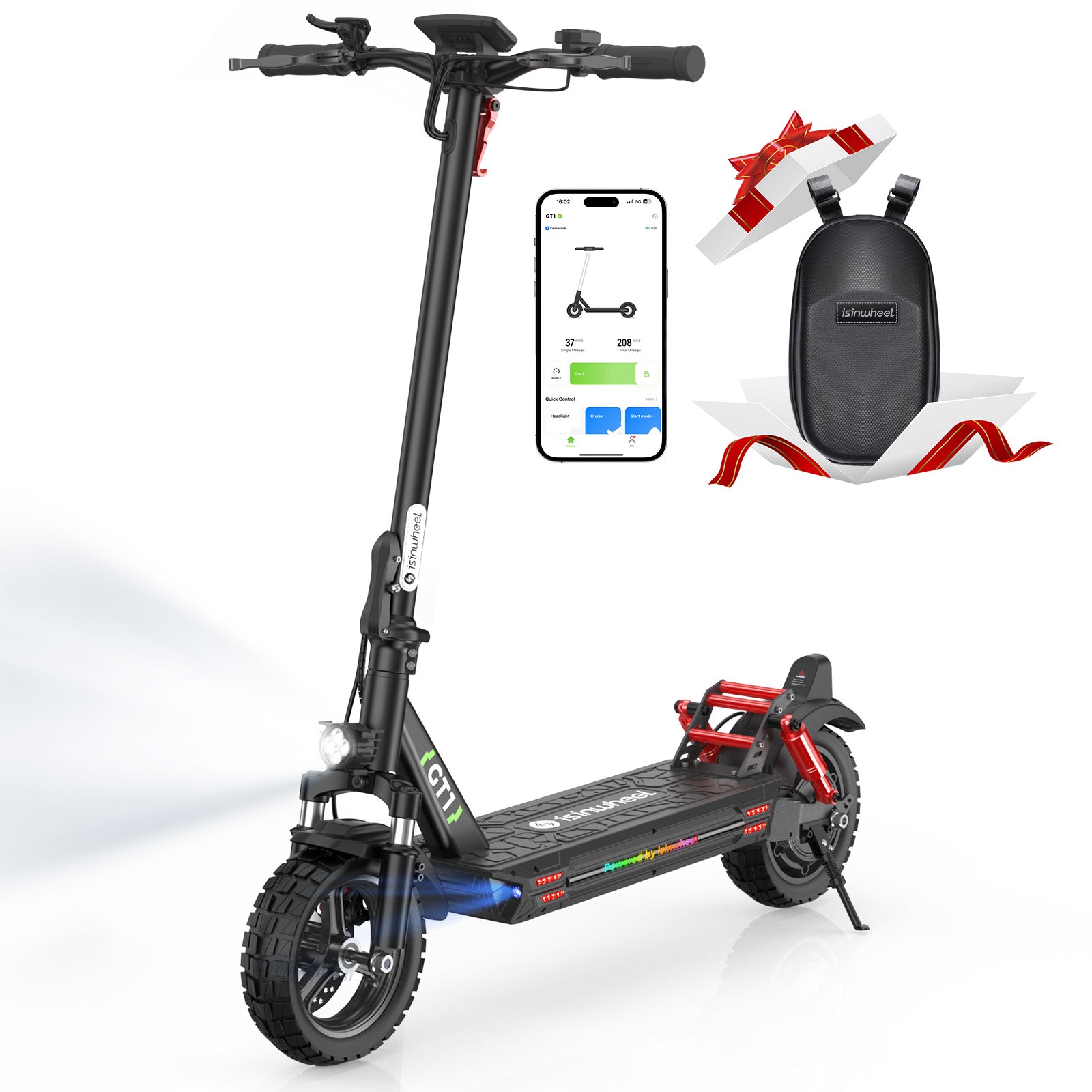
A clear example is the iSinwheel GT1 800W Off Road Electric Scooter (2025 Upgraded Version). It is built around an 800W rated motor with a claimed climbing ability up to 30%, which targets riders who want an electric ride for outdoor adventure without jumping into extreme power levels. It also lists an operating temperature range of 14F to 104F, which is useful when you ride year-round.
If you routinely face steeper grades or deep loose dirt, the iSinwheel GT4 2400W Dual Motor Off-Road Electric Scooter adds dual 1200W motors and lists up to 50% hill climbing. Dual motors can help maintain traction because both tires contribute drive, which can reduce front-end washout on steep, loose climbs.
Shop: isinwheel GT1 800W Off Road Electric Scooter 2025 Upgraded Version
Step 3: Prioritize tires, suspension, brakes
Traction and stopping control are the difference between a fun ride and a stressful one. For Off-road Electric Scooters, these are the three components that most directly control stability.
Tires (traction and rollover):
- Choose pneumatic tires for dirt and rocks. They deform over bumps and maintain grip better.
- Prefer larger diameters for rougher terrain because they roll over holes and edges more smoothly.
Suspension (fatigue and control):
- Front and rear suspension helps keep tires planted on washboard surfaces.
- Better suspension reduces arm pump and foot fatigue, which improves reaction time.
Brakes (heat and modulation):
- For sustained descents, brakes must resist fade.
- Modulation matters on dirt because locking a wheel reduces control.
Two iSinwheel examples show how to use specs as shortcuts.
- The GT1 lists 10-inch off-road pneumatic tires, front and rear dual suspension, plus front and rear EABS + disc brake. That combination targets mixed trail riding where you want traction plus a more forgiving ride.
- The GT4 steps up to 12-inch off-road pneumatic tires, front and rear dual hydraulic suspension, and hydraulic disc brakes. Hydraulic braking usually gives more consistent lever feel on long descents, and the 12-inch tires help with rocks and ruts.
If you also ride for green commuting solutions, remember that the best electric scooters for commuting often still benefit from pneumatic tires and good brakes. Potholes, wet paint, and metal utility covers are common in cities.
Shop: GT4 2400W Dual Motor Off-Road Electric Scooter
Step 4: Confirm battery range, charge plan
Range claims are usually a best-case scenario. For off-road use, range drops because of rolling resistance, frequent acceleration, and climbing.
To size your battery realistically:
- Take your longest planned ride and add a safety buffer.
- Assume off-road range can be meaningfully lower than flat pavement riding.
- Plan your turnaround point so you finish with reserve, not near zero.
Then check the charging details and your routine.
- Do you need to charge at a trailhead, in a garage, or in an apartment hallway?
- Can you charge soon after riding, or will the scooter sit for hours?
Battery examples from iSinwheel:
- GT1 lists a 48V 10Ah battery and a max range of 28 miles, with 5 to 6 hours charging on a 54.6V / 2A charger.
- GT4 lists a 52V 18.2Ah battery and a max range of 50 miles, with 5 to 7 hours charging.
For riders who split time between trails and a scooter for urban commuting, a middle-ground option can also help. The S Nova Pro Commuting Electric Scooter lists 48V 13Ah with a max range of 38 miles, which can fit mixed pavement and occasional packed-dirt paths if you are not doing rocky trails.
Shop: Electric Scooters Collection
Step 5: Verify safety, portability, support
This step is where many buyers rush, but it is where daily ownership feels easy or frustrating. Focus on three areas: safety equipment, portability, and ongoing support.
Electric scooter safety features to confirm:
- Headlight brightness and beam aim.
- Rear brake light and visibility from angles.
- Turn signals if you ride near cars or in groups.
- App functions that help you monitor the ride and reduce surprises.
According to the U.S. Consumer Product Safety Commission, injuries associated with micro mobility devices increased nearly 21% in 2022 compared with 2021, and e-scooter injuries rose year over year in the same data.
Portability checks (Foldable Electric Scooters):
- Measure your trunk opening or storage space, not just the room size.
- Compare folded dimensions and total weight to what you can lift safely.
Examples from iSinwheel specs:
- GT1 lists 52.25 lbs net weight and folded dimensions of 45.67 x 25.6 x 23.62 in.
- GT4 lists 73.6 lbs net weight, which is usually a two-hand lift and may be less ideal for frequent stairs.
Support and longevity cues:
- Look for UL certification language on the scooter or battery listing.
- Prioritize brands with clear parts availability and responsive help channels.
If fast delivery electric vehicles are important for your timeline, verify shipping method and delivery windows before you plan a trip.
Shop: isinwheel GT1 800W Off Road Electric Scooter 2025 Upgraded Version
Scenario Variations
Wet trails and slick hardpack
- Choose deeper tread pneumatic tires and reduce speed earlier before corners.
- Prioritize stronger brakes and smoother modulation, because sudden braking can break traction.
- Pack basic electric scooter accessories like a microfiber cloth to keep lights and display readable.
Mixed commuting plus weekend trails
- Put foldability and lighting higher on your list, because daily convenience keeps you riding.
- Consider whether a lighter commuter scooter fits better than a heavy off-road build.
- If you are choosing between Electric Scooters and E-bikes for daily miles, remember that Electric Bikes can be more stable on potholes, while scooters are easier to carry into an office.
Long rides with limited charging access
- Choose higher battery capacity and keep a bigger reserve.
- Start rides with tires at correct pressure and brakes adjusted, because inefficiency wastes range.
- Avoid sustained max speed on flat sections if you need distance more than speed.
Safety Consideration
Safety Considerations
- Inspect before every ride: tires, brakes, handlebar clamp, and folding latch.
- Keep speed lower on unknown terrain until you confirm grip and line choice.
- Avoid water deeper than the scooter water-resistance rating, because water ingress can damage electronics.
For battery handling, notes that lithium-ion batteries are sensitive to elevated temperatures and that improper charging and discharging beyond safe limits can contribute to overheating and thermal runaway.
Troubleshooting
| Problem | Cause | Solution |
|---|---|---|
| Wheelspin on climbs | Low traction, tire pressure too high, weight too far forward | Lower tire pressure slightly, shift hips back, and start the climb with steady throttle instead of a sudden surge. |
| Sudden range loss | Cold battery, repeated steep climbs, aggressive acceleration | Warm the scooter indoors before riding, reduce hard launches, and plan a turnaround earlier so you finish with reserve. |
| Brake fade on long descents | Heat buildup, dragging brakes, pads needing bedding or replacement | Use short firm braking pulses, take a cool-down stop, and check pad thickness before the next descent. |
| Steering feels unstable on rough ground | Tire pressure mismatch, loose headset or handlebar clamp | Recheck front and rear tire pressure, tighten clamps to spec, and inspect for play in the steering assembly. |
| Frequent flats | Riding pressure too low, sharp rocks, worn tread | Increase pressure a few PSI, avoid cutting across rock edges, and replace tires when tread becomes shallow. |
Conclusion
Selecting Electric Scooters for rough terrain is a controlled process when you follow the five steps. First define your terrain, distance, and payload. Next match motor power and hill rating to your steepest climbs. Then prioritize tires, suspension, and brakes, because they decide traction and control.
After that, size battery range for real-world riding, not just a marketing number. Finally, verify Electric scooter safety features, portability, and support so the scooter fits both your trails and your daily eco-friendly transportation needs.
Official Site: iSinwheel
FAQ
How do I select an electric scooter for outdoor adventures and rough terrain for $800 or less? Focus on the parts that prevent crashes: pneumatic tires, usable suspension, and brakes that feel consistent on a long descent. Next, choose enough motor power to avoid stalling on your steepest hill, because repeated low-speed climbing can overheat a smaller setup. Keep your range expectations realistic by planning a 20% to 30% buffer beyond your longest ride. Finally, reserve some budget for a helmet, gloves, and a basic flat-repair kit.
How do off-road electric scooters perform on dirt paths? They perform best on dirt when the tires can deform and bite into the surface, which usually means pneumatic tires with real tread. Suspension helps keep the tires in contact with the ground over washboard bumps, which improves both traction and braking. Riders should lower speed before turns because dirt offers less grip than pavement, especially when it is loose or dusty. Performance drops quickly if the scooter has small solid tires or weak brakes.
What features should I prioritize when choosing a value-for-money off-road electric scooter? Prioritize traction and control features first: tire type and size, suspension quality, and brake consistency. Then prioritize battery capacity and hill ability, because they decide whether you can finish a ride without limping home at low speed. Look for clear lighting and turn signals if you ride near traffic or in groups. After you cover those essentials, consider convenience features like foldability and app controls.
What’s the best electric scooter for off-road trails? The best option depends on your steepest climb, the roughest surface you will ride, and how far you need to go between charges. For packed dirt and moderate hills, a single-motor scooter with strong tires and suspension can feel balanced and predictable. For steep, loose climbs or heavier riders, dual-motor setups can help maintain traction and reduce speed drop. Always match the scooter to your skill level, because higher power requires more careful throttle control on dirt.
What’s the most durable electric scooter for off-road conditions? Durability comes from a strong frame, robust wheels, and suspension components that can handle repeated impacts without loosening. Riders should check fasteners often, because vibration can back out bolts over time. Tire choice also matters because pinch flats and rim hits are common on rocks when pressure is too low. A durable scooter still needs routine care, especially brake pad checks and tire inspections.
Which electric scooter offers the best suspension for off-road riding while maintaining value for money? Look for a scooter with front and rear suspension that actually reduces chatter on washboard surfaces, not just decorative springs. A good setup lets the tires stay planted, which improves braking and cornering on dirt. Value improves when suspension reduces rider fatigue, because tired arms and legs react slower to obstacles. Before buying, confirm the scooter also has tires and brakes that match the suspension level, since those parts work as one system.



Share:
Discovering an Easy-to-Use Beginner E-Bike for Under $800 (Ultimate Buying Guide)
How to Choose a Daily Electric Scooter for Your Child: 5 Essential Tips for Parents