


Pavement or Trail? The Real Difference Between These Two Scooter Types
The main question most riders have is simple: do I need a commuter scooter or an off-road scooter? The short answer is that it depends on the surface you ride on most. Commuter scooters are lighter, easier to carry, and built for smooth city streets, while off-road scooters use bigger tires, dual suspension, and stronger motors to handle gravel, grass, and uneven trails. Below, we'll look at exactly what changes between the two categories and which iSinwheel models fit each style of riding.
What Makes a Scooter a "Commuter" Model?
Commuter electric scooters are designed around convenience. They tend to be lighter, foldable, and easier to carry up stairs or store in a small apartment or office. Most commuter models also prioritize efficient motors and higher-capacity batteries so they can handle a daily round trip without needing a mid-day charge.
Tires and Ride Comfort
Many commuter scooters use pneumatic tires in the 9 to 11-inch range, which is enough to smooth out potholes and cracked sidewalks without adding the bulk of larger off-road wheels. The result is a ride that feels stable and comfortable on paved roads without being overbuilt for terrain most commuters never encounter.
Weight and Portability
Because commuter scooters are often carried onto buses, trains, or into office buildings, manufacturers keep the frame lighter and the folding mechanism simple. This makes a big difference for anyone who needs to combine scootering with public transit.
What Makes a Scooter "Off-Road"?
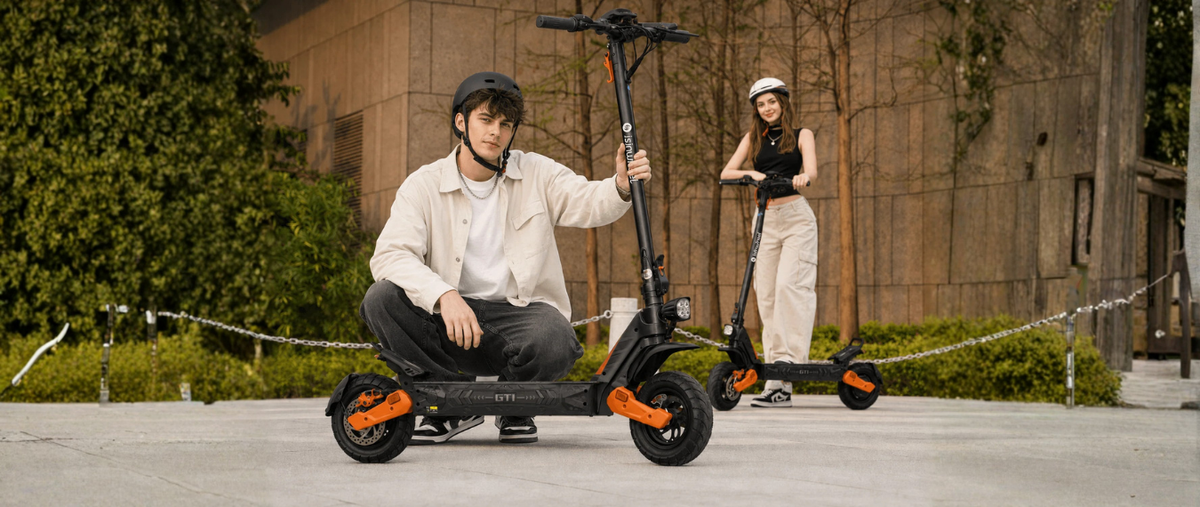
Off-road electric scooters are built for a completely different job: staying stable and controllable when the ground underneath isn't flat or predictable. That usually means bigger tires, dual suspension, and a more rugged frame.
Bigger Tires and Suspension
Off-road models typically use wider, knobbier tires often 10 to 12 inches paired with front and rear suspension to absorb impacts from roots, rocks, and uneven dirt paths. This setup keeps the ride stable at higher speeds on terrain that would rattle a standard commuter scooter.
Motor Power for Rough Terrain
Riding off-road takes more torque than cruising on flat pavement, which is why off-road scooters often come with higher wattage motors, and in some cases, dual motors for extra traction. This added power also helps with steep inclines that a lighter commuter motor might struggle with.
Comparing iSinwheel Commuter and Off-Road Models
Here's how these differences show up across actual iSinwheel scooters.
On the commuter side, the isinwheel S Nova Pro Electric Scooter is built for everyday city riding, with a 1000W motor and roughly 38 miles of range in a lightweight, foldable frame. For riders who want even more range for longer commutes, the isinwheel S10Max Electric Scooter offers about 37 miles of range with a design geared toward daily use. The isinwheel H7 Electric Scooter sits at the higher end of the commuter lineup, with 15-inch fat tires that add extra comfort on rougher city streets while still being built primarily for pavement.

On the off-road side, the isinwheel GT2 Electric Scooter is a popular all-terrain option with a 1000W motor and dual suspension for uneven ground. The isinwheel GT1 Upgraded Electric Scooter offers a similar off-road setup at a slightly lower power tier, making it a solid entry point into trail riding. For riders who want maximum capability, the isinwheel GT4 Dual Motor Electric Scooter combines dual 1200W motors with roughly 50 miles of range, built to handle steep, mixed terrain with more confidence.

If you're deciding between a smoother city ride and something built for rougher ground, our article on hill-commuting versus standard scooters is a useful next read, especially if your commute includes steep ramps or inclines. And before taking any all-terrain model out on a real trail, it's worth reviewing what to check on an off-road scooter before riding so you know what to inspect first.
Questions to Ask Before You Decide
A few simple questions can help point you toward the right category. What surface do you ride on most — paved roads, or mixed terrain with dirt and gravel? Do you need to carry or fold the scooter often, or will it mostly stay in one place? And how important is top speed and hill-climbing power compared to portability and lighter weight? Answering these honestly usually makes the choice between commuter and off-road much clearer.
Matching the Scooter to the Road Ahead
There's no single "better" option between commuter and off-road electric scooters only the one that fits how and where you actually ride. If your days involve mostly paved streets, sidewalks, and public transit, a commuter model like the S Nova Pro or S10Max will likely serve you better with its lighter frame and easier portability. If your rides regularly take you off pavement, onto gravel, or up rough inclines, an off-road model like the GT2 or GT4 Dual is built to handle that terrain with more stability and power. Think through your typical week before choosing, and you'll end up with a scooter that fits your routine instead of fighting against it.
What E-Scooter Riders Want to Know
Can an off-road scooter be used for daily commuting?
Yes, but its added weight and larger tires can make it less convenient to carry or fold compared to a dedicated commuter model.
Can a commuter scooter handle light gravel or grass?
Most commuter scooters can manage short, light stretches of gravel, but they aren't designed for sustained rough terrain.
Do off-road scooters require more maintenance?
Generally yes, since suspension components and larger tires benefit from more frequent inspection after trail riding.
Is dual motor always necessary for off-road riding?
Not always — a single high-power motor can handle many trails, but dual motors provide extra traction on steeper or looser terrain.
Which type of scooter has a longer range, commuter or off-road?
It varies by model, but some off-road scooters like the GT4 Dual actually offer longer range than lighter commuter models due to larger battery packs.

Share:
iSinwheel Electric Scooter Range Guide: How to Choose a Scooter for Long Distance Riding