


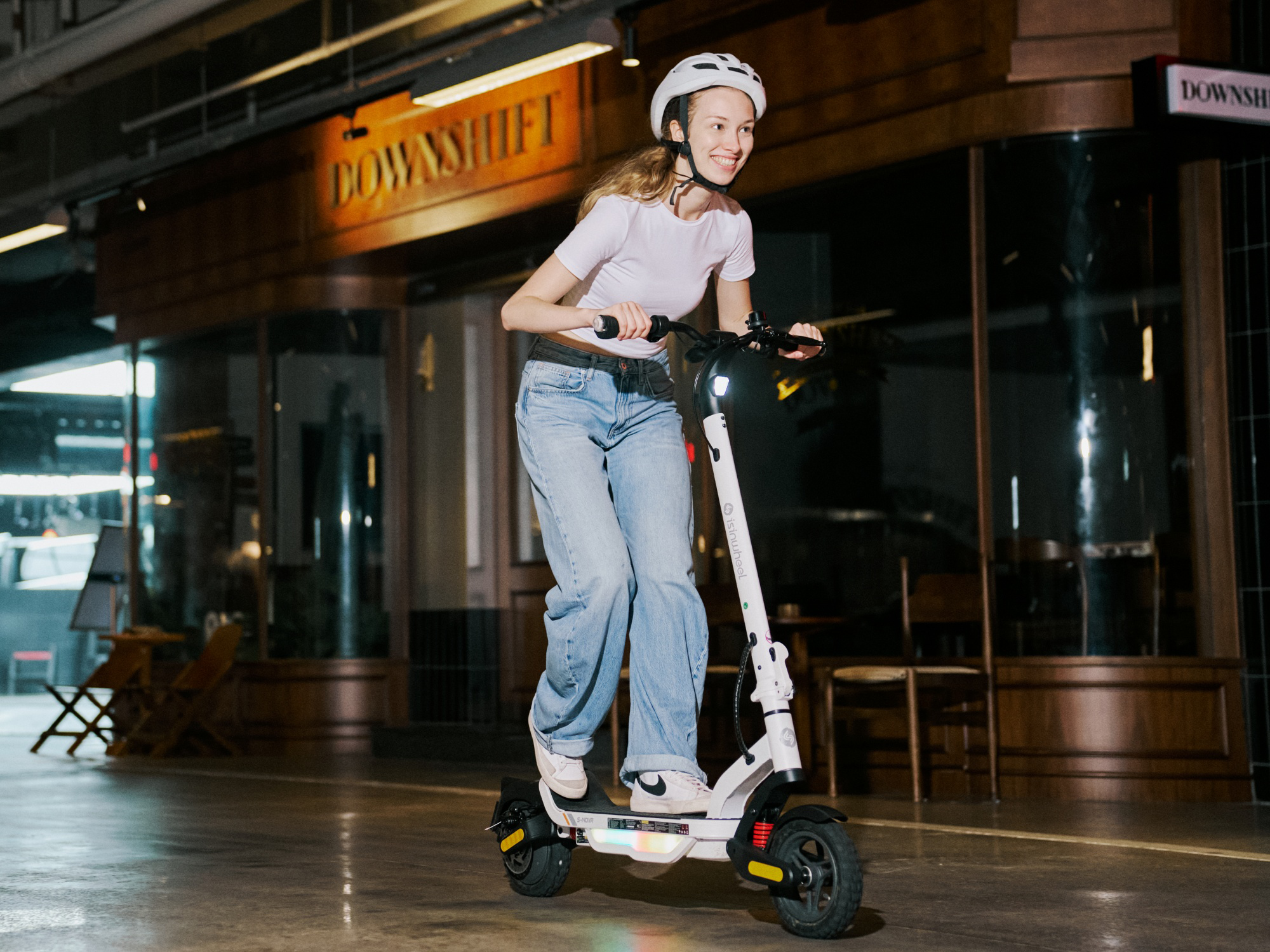
Pick your real ride pattern before you compare scooters
Buying a beginner-friendly electric scooter gets expensive when you shop for fantasy rides instead of your weekly route. Most first-time buyers either overbuy an off-road electric scooter that feels heavy and awkward in daily use, or they underbuy a commuter model that struggles on cracked pavement and hills. The better move is simpler: define where you will ride most often, then let that route decide the category. If you want one place to compare current options, Isinwheel Electric Scooters lays out commuter and off-road models side by side.
Step 1: Define your primary terrain before comparing specs
Start with the surface you will ride 80% of the time. That one habit prevents most overspending.
What to do
- List your usual surfaces: smooth streets, bike lanes, cracked pavement, gravel paths, or park trails.
- Note whether hills show up weekly or only occasionally.
- Estimate your typical round trip, not the longest ride you might do once.
- Decide whether you will carry the scooter upstairs or store it in a small space.
What to watch
- City blocks and paved routes usually point to an electric scooter for commuting.
- Repeated gravel, broken pavement, and loose surfaces push you toward a light off-road scooter or mixed-use setup.
- If your rough terrain is only occasional, a full trail-focused build may be more scooter than you need.
Step 2: Choose between commuter, mixed-use, and off-road value tiers
Think in three buckets rather than ten separate spec sheets.
Commuter-first profile
- Best for paved roads, short-to-moderate trips, and routine errands.
- Easier to fold, store, and live with in apartments or offices.
- Good examples in the current Isinwheel range include the S Nova, which lists 600W max power, 19 miles of range, and a 36V 7.8Ah battery, and the S9 Pro, which lists 350W, 19 miles, and a 36V 7.5Ah battery.
Trail-leaning budget profile
- Better for repeated gravel, loose terrain, and rougher outdoor riding.
- Demands more attention to tire size, braking, suspension, and total weight.
- The GT2 lists 1000W, 37 miles, and a 48V 15Ah battery, while the GT2 Pro lists 1200W, 38 miles, and a 48V 15.6Ah battery.
Step 3: Prioritize tires, brakes, and ride stability before extra speed
This is where a budget electric scooter becomes either easy to live with or frustrating.
What to pay for first
- Pneumatic tires: Better for comfort and grip on imperfect pavement.
- Reliable brakes: More important than a flashy top-speed claim.
- Stable deck feel: Helps new riders stay relaxed at starts and stops.
Why this matters in real use
The S Nova uses 8.5-inch pneumatic tires and dual suspension, while the S Nova Pro moves up to 10-inch pneumatic tires with dual suspension and front and rear disc brakes. Those details matter more than marketing hype because they directly affect comfort, braking feel, and confidence on cracked city surfaces. If your route is mostly urban but imperfect, the S Nova Commuting Electric Scooter is the simpler commuter-first fit; if you expect longer rides and rougher pavement, the S Nova Pro is the stronger step-up option.
Step 4: Use budget bands that match your route
Overspending usually starts when you compare advanced models before deciding what your terrain really demands. A flat urban commute does not need the same scooter as weekly gravel paths and repeated bumps. Isinwheel’s current range also shows a clear split: entry commuter choices sit below the larger mixed-use and off-road machines, while more demanding terrain pushes you into heavier platforms with larger batteries and stronger outputs.

Practical budget logic
- Under $500 commuter: Best for shorter paved rides and storage-friendly ownership.
- Under $800 mixed-use: Better when roads are rougher and you want more range buffer.
- Under $800 light off-road: Reasonable only if gravel, bumps, and uneven surfaces are regular, not occasional.
Common mistake
- Do not stretch your budget just to buy more speed.
- Spend more only when your route clearly demands bigger tires, stronger braking, or more stability.
- If you mostly ride on pavement, a lighter affordable electric scooter often creates fewer regrets than a bulkier trail-style model.
Step 5: Use a beginner-ready pre-ride routine
A beginner-friendly electric scooter should feel controlled before it feels fast. That means checking basic setup items every ride and treating battery charging seriously. The CPSC warns riders to use the charger that came with the product, avoid charging near exits, and stop using a battery if you notice overheating, odor, leakage, or unusual noise. NHTSA also advises riders to choose properly fitted, safety-compliant helmets and to avoid novelty helmets that do not provide real protection. (cpsc.gov)
What to do
- Check tire condition and inflation.
- Test front and rear braking response before you merge into traffic.
- Confirm lights work before low-visibility rides.
- Charge with the intended charger and keep the area clear of heat and clutter.
- Wear a helmet and visible clothing every ride.
Conclusion
Ultimately, choosing the right electric scooter means prioritizing reality over hype. By matching specs to your actual weekly terrain, focusing on practical essentials like tires and storage, and practicing basic pre-ride safety, you avoid costly overspending. Aligning your budget with daily habits guarantees a reliable, stress-free ride.
FAQ
How do I know which electric scooter is right for me if I have a budget under $500?
If your budget is under $500, focus on a commuter-first scooter instead of trying to force true off-road performance into that range. You want stable tires, dependable braking, enough range for your round trip, and a weight you can actually store or carry. In Isinwheel’s lineup, that usually means looking at simpler commuter options such as the S9 Pro or S Nova rather than larger trail-leaning builds. A beginner-friendly electric scooter at this budget works best when your route is mostly paved and your expectations stay practical.
How do I select an electric scooter for outdoor adventures and rough terrain for $800 or less?
For outdoor adventures and rough terrain on an $800 budget, look for an electric scooter with at least 10-inch pneumatic tires, front or dual suspension, strong braking, and a sturdy frame, since these features matter more than top speed alone. Prioritize a reliable lithium battery and battery management system for consistent performance on uneven routes, but expect tradeoffs at this price point, such as shorter range or lighter off-road capability. For the best value, choose a model built for light trails, gravel, and broken pavement rather than extreme off-road riding.
What’s the best-value electric scooter for light off-road exploration under $800?
For light off-road exploration under $800, the best-value electric scooter is usually an entry-level Isinwheel electric scooter with 10-inch pneumatic tires, solid braking, and basic suspension or strong shock absorption rather than a model that spends the budget on extra top speed. That setup gives beginners better grip and comfort on gravel paths, park trails, and uneven pavement while still working well as a scooter for urban commuting and last-mile transportation. Look for practical safety and durability features like a dependable battery management system, bright lights, water resistance, and a sturdy deck, since those matter more than flashy specs for an affordable electric scooter. If you want the smartest buy, prioritize ride stability, tire quality, and range per charge over peak performance numbers.
Are affordable electric scooters good enough for daily commuting?
Yes, an affordable electric scooter can be good enough for daily commuting if your route matches the scooter’s real limits. Short-to-moderate paved trips are where budget and entry commuter models usually make the most sense. The key is to leave some range buffer, especially if you face mild hills, heavier rider load, or colder weather. Many beginners are happier with a modest commuter they use regularly than with a larger scooter that feels inconvenient every day.
How can I avoid overspending on my first off-road electric scooter?
The easiest way to avoid overspending is to separate light off-road use from true trail use. If your riding means occasional gravel paths, rough pavement, and park roads, you likely need a mixed-use or light off-road scooter, not the biggest dual-motor platform available. Spend more only when your normal route demands better traction, stronger braking, or more shock control every week. Isinwheel is worth considering here because its range includes both commuter and rougher-route options, which makes side-by-side comparison easier before you buy.
Table of Contents
- Pick your real ride pattern before you compare scooters
- Conclusion
-
FAQ
- How do I know which electric scooter is right for me if I have a budget under $500?
- How do I select an electric scooter for outdoor adventures and rough terrain for $800 or less?
- What’s the best-value electric scooter for light off-road exploration under $800?
- Are affordable electric scooters good enough for daily commuting?
- How can I avoid overspending on my first off-road electric scooter?

Share:
5 Beginner Scooters for Short-Distance Commuting in Busy Urban Neighborhoods
How to Choose Between Dual and Single Motor for Hill Climbing