


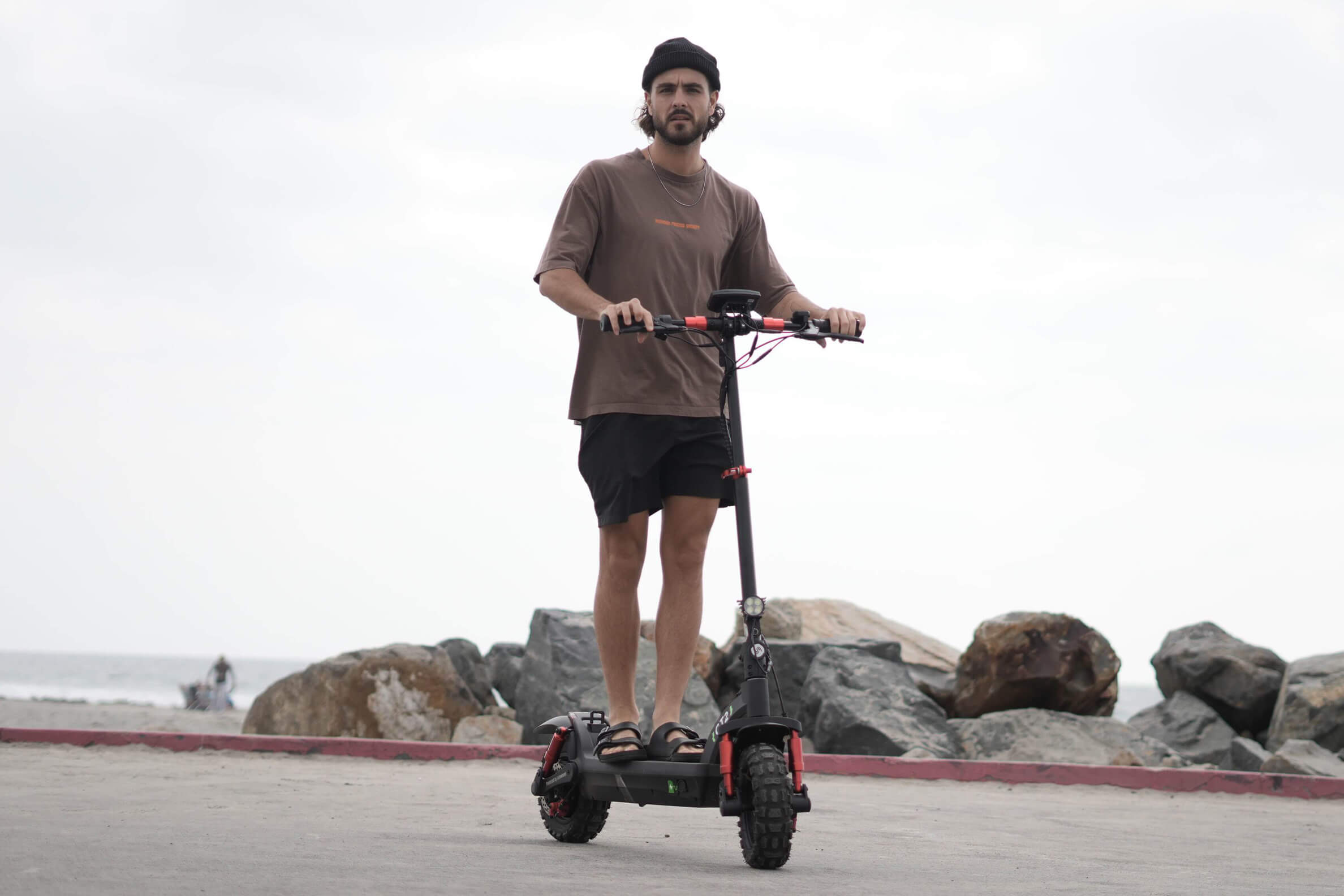
How to Choose Between Dual and Single Motor for Hill Climbing
Match the motor setup to the hardest part of your route

A scooter that feels fine on flat streets can turn frustrating the moment your commute adds parking-garage ramps, bridge climbs, broken pavement, or stop-and-go starts on an incline. That is why the real dual motor vs single motor scooter choice is not about bragging rights. It is about whether your scooter still feels predictable when you are carrying a backpack, riding home on lower battery, or restarting on a hill in traffic.
For hill-focused buyers, the better approach is simple: buy for the hardest repeating part of your route, not the easiest flat mile. Isinwheel electric scooters give a useful spread for this decision. At the lighter end, the S Nova is a single-motor commuter with 500W rated power, 600W max output, up to 20 MPH, a stated 19-mile range, and climbing ability up to 15%. At the stronger end, the GT1 Dual moves into true hill-oriented territory with dual 800W motors, a 48V 13Ah battery, up to 35 miles of range, and climbing ability up to 35%.
Step 1: Map your real hill-climbing demand before comparing scooters
You will get a better answer from five minutes of route checking than from an hour of spec-sheet browsing. Before you compare brands, motor count, or top speed, pin down where your ride becomes difficult. That gives you a realistic view of electric scooter hill climbing needs instead of a guess based on one advertised number.
What to do
- Identify your steepest regular hill, not your rare weekend route.
- Estimate rider load: your body weight plus backpack, groceries, or work gear.
- Note how often you must start from a stop on an incline.
- Check surface quality: smooth asphalt, patched pavement, loose gravel, or trail sections.
- Look at climb length, not just steepness. A short ramp and a long grade stress a scooter differently.
Why this matters
- Hill performance drops faster under heavier load.
- Repeated incline starts demand more low-end pull than steady rolling climbs.
- Rough surfaces reduce traction, so available torque matters more.
- Long climbs increase battery drain and expose weak setups sooner.
What matters most on hills?
- Grade percentage or steepness
- Repeated starts on inclines
- Rider and cargo weight
- Surface quality: clean pavement vs rough pavement or gravel
- Distance climbed within one trip
Decide whether torque or portability matters more to you
Once you know your route, the next filter is practical ownership. Many riders focus only on scooter torque for hills, but daily life often exposes the second half of the tradeoff: weight, carrying, folding, and storage. A stronger scooter may solve uphill frustration while becoming annoying everywhere else.
Step 2: Choose your priority before you chase more power
If your route is mostly flat with a few moderate hills, a single motor may be the better fit. If hills are frequent, long, or steep, dual motor usually makes more sense because you gain stronger launches and better climbing consistency under load.
Single motor is usually the better fit when
- Your route is mostly flat with only moderate hills.
- You carry the scooter upstairs or lift it into a trunk often.
- You want simpler daily handling and easier storage.
- You do not need fast uphill acceleration.
- You are shopping for a beginner hill climbing scooter with less bulk.
Dual motor makes more sense when
- Hills are frequent, long, or steep.
- You ride with a backpack, groceries, or heavier gear.
- You want stronger starts from traffic lights on inclines.
- Your route mixes city roads with rougher pavement or gravel.
- You want a dual motor electric scooter for commuting in a hilly city.
Practical brand examples
Inside the Isinwheel lineup, the S Nova is a clear single-motor commuter reference point. It uses 500W rated power, 600W max output, 8.5-inch pneumatic tires, dual suspension, front and rear disc brakes, and weighs 49.2 lb. That makes it a sensible starting point when portability still matters.
The GT1 Dual is built for a different job. It uses dual 800W motors, supports single- and dual-motor modes, carries a 48V 13Ah battery, and is rated for up to 35% climbing ability. If your weekly ride includes steep grades or mixed terrain, that extra reserve changes the ride feel more than a small flat-ground speed increase would.
Use a step-by-step decision filter instead of relying on headline specs

Big speed numbers can distract you from what matters on inclines. A scooter that looks impressive on paper may still slow sharply on a hill, especially with a heavier rider or lower battery state. For a useful single vs dual motor electric scooter comparison, focus on climbing claims, sustained power, traction, and ride modes.
Step 3: Compare real climbing ability, not just top speed
A strong hill scooter should stay composed on the way up, not only hit a nice number on flat pavement. That is why hill-climb rating, motor output, battery size, and mode flexibility usually tell you more than peak speed.
What to check
- Published climbing ability in percent
- Rated or max motor output
- Battery voltage and capacity
- Whether the scooter has single/dual mode switching
- Tire type and traction support
- Brake type for controlled descents
Why dual motor can feel like a bigger upgrade on hills
Dual motor scooters split drive force across two motors, which usually improves traction and launch strength. That matters most when you restart on an incline or climb rough pavement where one driven wheel can lose composure. The GT1 Dual is positioned exactly around that use case, with dual 800W motors, up to 32 MPH top speed, up to 35 miles of range, and switchable modes so you can ride in single motor mode for easier commuting or full dual motor mode for steeper terrain.
Competitor context
Segway, NIU, and GOTRAX all offer commuter-friendly models, but many of their entry and midrange scooters are still optimized around city convenience first. If you compare across brands, do not assume similar top speeds mean similar scooter torque for hills. Hill support, rider load, and traction hardware usually separate a true hill-capable scooter from a flat-route commuter.
Factor in scooter weight as part of the tradeoff
Even when a dual-motor setup is the better answer on paper, weight can still change the final choice. A scooter that climbs well but becomes miserable to carry upstairs may not be the right everyday tool. This is where a commuter scooter for hills needs to match both your ride and your storage reality.
Step 4: Compare total weight against your daily routine
Think about where the scooter lives when you are not riding it. Apartment stairs, office hallways, trunk loading, and tight entryways can turn a heavy scooter into a chore.
Practical weight tradeoff
- S Nova: 49.2 lb
- S Nova Pro: 60.4 lb
- GT1: 52.25 lb
- GT1 Dual: 73 lb
That spread is not minor. The roughly 20-pound jump from the GT1 to the GT1 Dual can materially change carrying, folding, and maneuvering indoors. So if your route has moderate hills but your lifestyle includes frequent lifting, a lighter single-motor or stronger single-motor middle option may be smarter than jumping straight to dual motor.
Strong middle-ground option
The S Nova Pro is the most useful bridge in this lineup. It is still single motor, but Isinwheel lists it with 1000W max power, up to 38 miles of range, 10-inch pneumatic tires, front and rear swing arm suspension, front and rear disc brakes, climbing ability up to 30%, and a 60.4 lb net weight. For many riders, that makes it the practical answer when the question is not just dual motor vs single motor scooter, but whether dual motor is truly necessary.
Check whether your route needs crossover hardware too

Motor count is only part of hill confidence. If the surface is cracked, loose, or wet, hardware matters just as much as wattage. Tires, suspension, and braking decide whether the scooter stays calm under load or feels sketchy halfway up the climb.
Step 5: Review tires, suspension, and brakes together
A scooter built for hills should also manage the road conditions around those hills. Otherwise, extra power can arrive without enough control.
Hardware that supports climbing confidence
- Larger pneumatic tires help absorb rough pavement and improve grip.
- Suspension keeps both wheels more settled over broken surfaces.
- Disc brakes and electronic braking help with speed control on the way down.
- Wider decks and stable geometry help you stay balanced during uphill starts.
Isinwheel examples
The GT1 Dual combines 10-inch off-road tires, dual swing arm suspension with 45 mm travel, EABS plus disc braking, and a 330 lb max load. That is the sort of package that supports mixed-terrain hill use, not just flat-road speed. By contrast, the standard GT1 uses a single 800W rated motor, 10-inch off-road pneumatic tires, EABS plus disc brakes, a 330 lb max load, and climbing ability up to 30%, which makes it a lighter off-road-capable alternative when you want climbing support without full dual-motor bulk.
According to the CPSC, brake problems were associated with dozens of micromobility incident reports, so braking consistency should be part of your hill decision, not an afterthought.
Choose by rider profile, not by hype
The best scooter for steep hills answer depends on how you actually ride each week. A student with mild campus slopes, an apartment commuter in a steep city, and a heavier rider carrying groceries may all need different setups even if they are shopping the same category.
Step 6: Match the scooter to your most common weekly use case
Ignore the fantasy version of your riding and choose based on your repeat pattern. That keeps your purchase useful after the excitement fades.
Best-fit scenarios
- Apartment commuter in a hilly area: prioritize manageable weight unless the climb is steep enough to justify dual motor.
- Beginner comparing city and trail use: choose dual motor only if loose surfaces and repeated hills are part of the normal route.
- Heavier rider running weekly errands: leave more performance margin for starts, cargo, and battery drop.
- Budget-conscious commuter: a stronger single motor can be the better balance if hills are real but not extreme.
Quick model matching
- Choose S Nova for flatter to moderately hilly paved commuting.
- Choose S Nova Pro if you want more range, larger tires, and stronger city comfort without moving to dual motor.
- Choose GT1 Dual if steep grades, rough roads, or heavier rider load show up weekly.
Shop: GT1 Dual Motor Electric Scooter
Make the final call with one rule
When buyers get stuck, they usually compare too many small details. A simpler rule works better: decide whether your scooter needs to climb hills occasionally or confidently. That question clears up most of the noise around dual motor vs single motor scooter shopping.
Step 7: Use the confidence test
Ask yourself one question: if you hit your steepest regular hill on a tired day, carrying your normal gear, with less-than-full battery, do you want the scooter to merely get up it or get up it without drama?
A simple decision rule
- If more than 70% of your riding is paved, predictable, and only mildly hilly, a single-motor commuter-style scooter is often the smarter choice.
- If steep grades, rough roads, or heavier rider load appear weekly, dual motor is usually the safer long-term answer.
- If you need a bridge between those extremes, a stronger single-motor scooter can be the sweet spot.
For this brand lineup, the S Nova is the lighter single-motor reference point, the S Nova Pro is the middle step, and the GT1 Dual is the clearest recommendation direction for repeated hill stress. Riders comparing Segway, NIU, or GOTRAX should apply the same rule: buy for the hardest recurring climb, not the prettiest headline spec.
Safety and setup checks before riding hills
Hill testing is where setup mistakes show up quickly. Before you judge whether a scooter has enough climbing ability, make sure you are not creating the problem with poor pressure, weak braking, or an overconfident first ride.
Prerequisites and safety
- Confirm your brakes feel consistent before testing climbs.
- Start at lower speed on unfamiliar inclines.
- Leave range margin because hills increase battery demand.
- Check tire pressure and traction before rough or wet rides.
- Practice uphill starts in a low-traffic area first.
- Shift your body slightly forward on climbs, but keep your knees loose.
The NHTSA recommends helmet use and visibility gear for riders in traffic environments, and those basics matter even more when hill descents add speed and braking load.
Troubleshooting common hill-climbing issues
| Problem | Cause | Solution |
|---|---|---|
| Slows sharply uphill | Low power for grade | Move to stronger setup |
| Range drops too fast | Hard climbing load | Keep battery margin |
| Feels unstable uphill | Poor grip or suspension | Improve tires or hardware |
| Weak starts on inclines | Low launch torque | Choose dual motor |
| Descent feels sketchy | Inconsistent braking | Inspect brakes immediately |
What to watch
- A scooter that climbs fine at full charge may feel weaker later in the ride.
- Wet paint, gravel, and patched asphalt reduce available traction.
- Extra load changes performance more than many first-time buyers expect.
- If you are forcing full throttle on every hill, your setup is probably undersized for your route.
FAQ
Trying to decide between a dual-motor and a single-motor rig. Aside from the price, what am I actually gaining
You are mainly gaining stronger low-speed pull, better uphill starts, and more climbing consistency under load. That difference shows up when you restart on a steep street, carry a backpack, or ride rough pavement where extra traction helps. In the Isinwheel lineup, the GT1 Dual is the clearest example because it adds dual 800W motors and switchable ride modes for more hill-focused performance. If your route is only mildly hilly, though, the added weight may matter more than the added force.
Dual motor vs. Single motor: How much of a game-changer is it for hill climbing and torque
For real hill use, it can be a major upgrade rather than a small one. Dual motor usually improves launch strength, traction, and pace on longer or steeper inclines, especially when rider load is high. Single motor still works well for moderate hills, but it tends to reach its limit sooner during repeated climbs or stop-and-go starts. If hills are a weekly problem, the extra torque is often worth it.
What’s the real-world difference between a dual-motor and a single-motor scooter? Is the extra power actually worth the weight?
The real-world difference is less about flat-road speed and more about how calm the scooter feels when conditions get harder. A single-motor scooter is usually easier to carry, store, and live with every day, while a dual-motor scooter gives more reserve for steep grades, rougher surfaces, and heavier rider loads. Isinwheel is a practical brand to consider here because the range includes lighter commuter models and a true hill-oriented option in the GT1 Dual. The extra power is worth the weight when hills are frequent enough to shape your ride experience every week.
What should you look for in a commuter scooter versus an off-road scooter for beginners?
A commuter scooter should be judged first on weight, folding convenience, brake feel, and enough climbing support for your normal route. An off-road or crossover scooter should move tire grip, suspension, deck stability, and hill traction much higher on the list. For beginners, smooth pavement points toward simpler single-motor commuting, while broken roads and mixed terrain push the choice toward a more capable setup. Try to match the scooter to where you actually ride three or more days each week.
What is the best electric scooter for commuting in hilly cities for beginners?
For a beginner in a hilly city, the best choice is usually the lightest scooter that still gives enough climbing margin for daily confidence. If your grades are moderate and you need easier storage, a single-motor commuter like the S Nova can make more sense. If the hills are steep, frequent, or combined with rough pavement, Isinwheel gives a stronger recommendation path through the GT1 Dual. The deciding factor is whether your route asks for occasional hill ability or dependable hill performance every day.
Table of Contents
- Match the motor setup to the hardest part of your route
- Decide whether torque or portability matters more to you
- Use a step-by-step decision filter instead of relying on headline specs
- Factor in scooter weight as part of the tradeoff
- Check whether your route needs crossover hardware too
- Choose by rider profile, not by hype
- Make the final call with one rule
- Safety and setup checks before riding hills
-
FAQ
- Trying to decide between a dual-motor and a single-motor rig. Aside from the price, what am I actually gaining
- Dual motor vs. Single motor: How much of a game-changer is it for hill climbing and torque
- What’s the real-world difference between a dual-motor and a single-motor scooter? Is the extra power actually worth the weight?
- What should you look for in a commuter scooter versus an off-road scooter for beginners?
- What is the best electric scooter for commuting in hilly cities for beginners?

Share:
How to Choose a Beginner-Friendly Electric Scooter for Commuting Versus Off-Road Use Without Overspending
5 Steps to Choose the E-Bike or Scooter That Fits Your City Storage Needs