



How to Find a Durable Off-Road Scooter Without Overspending
Check your route before you shop for a durable off-road scooter

Broken pavement, loose gravel, and short trail connectors punish weak scooters fast. That is why many buyers end up replacing tires, tightening loose hardware, or regretting a flashy speed spec that never improved control. If you want a durable off-road scooter without blowing your budget, the smarter move is to match the scooter to your real riding surfaces first, then spend only on the parts that protect comfort, braking, and long-term durability.
A practical shortlist usually starts with mixed-use needs, not extreme claims. Recent iSinwheel off-road guidance repeatedly separates city-only commuting from gravel, dirt, and rough-pavement riding, which is a helpful way to avoid overbuying or underbuying. Models such as the GT2, GT1 Dual, GT2 Pro, and GT4 sit in different use-case bands, so your route mix matters more than marketing language. For context, the CPSC says riders should always wear a properly fitted helmet on scooters, bikes, and e-bikes, which matters even more once your terrain gets rougher.
Step 1: Define the terrain you actually ride
If you want to know how to choose an off-road scooter, start with an honest route audit. A scooter that feels fine on smooth bike lanes can feel harsh and twitchy on washboard pavement or loose gravel. Your goal here is simple: figure out whether you need a commuter-first model, a mixed-use setup, or something that leans farther into trail riding.
What to do
- List the surfaces you ride each week.
- Separate daily terrain from occasional terrain.
- Note your steepest hill, roughest shortcut, and longest ride.
- Include curb cuts, cracked asphalt, and drainage grates.
- Add rider load, including backpack or groceries.
Why this matters
- Rough pavement rewards larger pneumatic tires.
- Loose surfaces expose weak braking and poor traction.
- Hills increase motor strain and battery demand.
- Heavy rider loads change climbing and stopping feel.
Common mistake
- Buying by top speed alone.
- Assuming “off-road” means true rough-terrain durability.
- Ignoring that 80% city use may not need a trail-heavy build.
Step 2: Set a realistic durability budget
A solid affordable off-road scooter budget is not just the scooter itself. You also need to leave room for a helmet, a compact pump, and a basic hex or multi-tool for bolt checks. That approach keeps you focused on control and upkeep rather than cosmetic extras. iSinwheel’s recent under-800 buying content also emphasizes total setup cost, with attention on motor output, range, tires, suspension, and braking instead of headline specs alone.
Split your budget like this
- Scooter: the largest share
- Helmet: non-negotiable
- Pump and tool kit: basic maintenance
- Spare tube or tire plan: useful for pneumatic setups
- Visibility gear or gloves: optional but practical
What to watch
- Do not spend extra just for a higher MPH number.
- Prioritize tires and brakes before app features.
- Leave room for small maintenance items from day one.
Use these key steps to filter durable off-road value
Step 3: Prioritize tires, suspension, and braking before speed claims

This is where a durable electric scooter for rough terrain starts to separate itself from a commuter with aggressive styling. For rough surfaces, the parts that affect contact and control matter most: tire type, tread, suspension, and braking. A scooter that tracks calmly over broken pavement will usually serve you better than one that only looks good on a spec card.
What to look for
- Pneumatic or inflatable tires, not hard solids
- Larger tire diameter for obstacle rollover
- Off-road tread where gravel or dirt is common
- Front and rear suspension support
- Disc braking, ideally with electronic brake support
Why this matters
- Larger air-filled tires absorb chatter and small impacts.
- Suspension reduces rider fatigue on repeated bumps.
- Better braking improves control on descents and loose surfaces.
- Stability usually matters more than raw speed in real mixed use.
iSinwheel examples by feature set
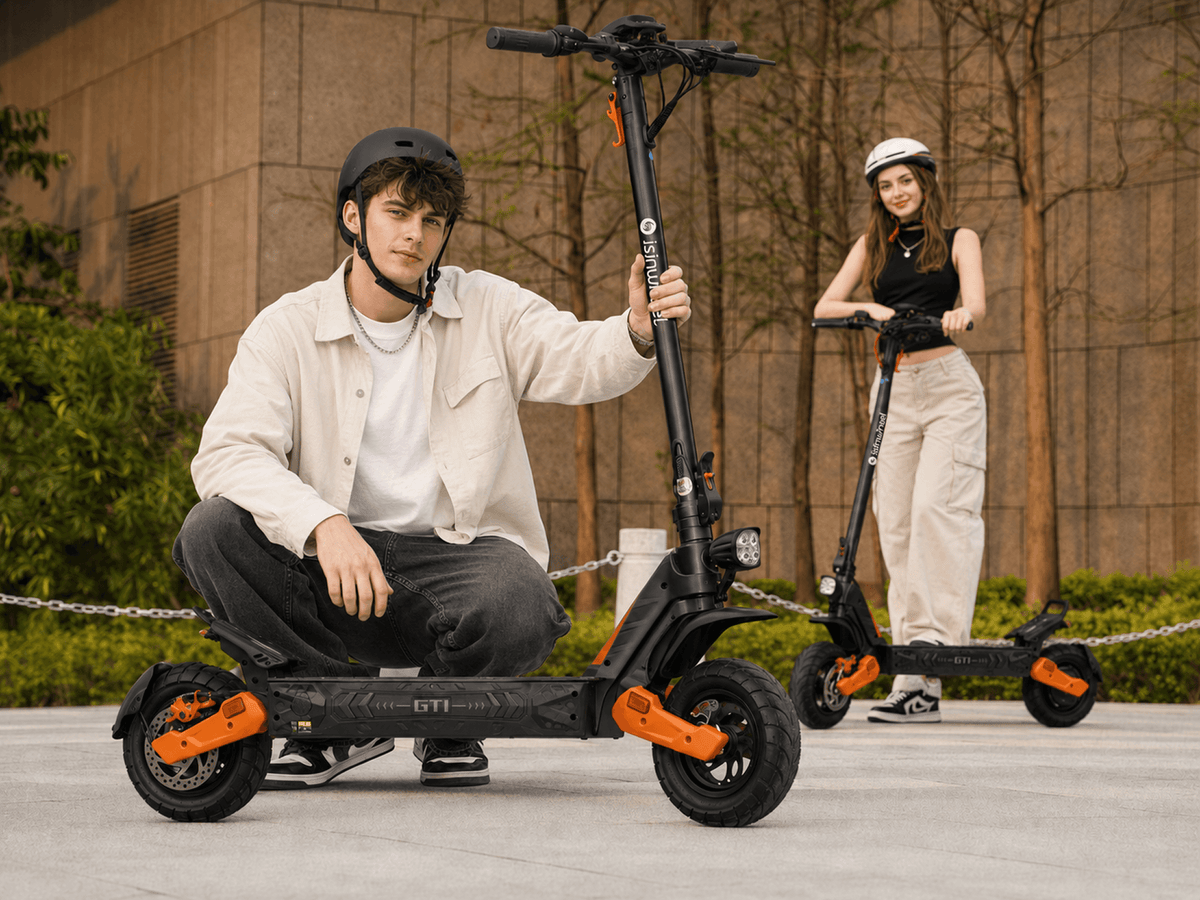
The iSinwheel GT2 is a strong mixed-use reference point because it combines a 1000W rated motor, 11-inch off-road pneumatic tires, front and rear disc brakes with EABS, a 330 lb max load, and a listed 35% climbing ability. It also uses an aluminum alloy frame and app/NFC support, which adds convenience without distracting from the real value features. If your goal is an off-road scooter under 800 that feels more planted than a basic commuter, the GT2 is a sensible middle-ground candidate.
Shop: iSinwheel GT2
Step 4: Match motor output to hills, load, and riding style

Power should solve a riding problem, not just inflate a headline. A budget off-road electric scooter that is constantly pushed at its limit on hills, with a heavier rider or loaded backpack, will feel slower, run hotter, and often wear components faster. That is why your body weight, cargo, and route steepness matter almost as much as the motor figure itself.
What to compare
- Rated motor output, not only peak claims
- Listed climbing ability
- Rider weight and cargo weight
- Single-motor versus dual-motor use case
- Battery size, because power needs energy support
Scenario guide
- Light rider, mild dirt paths: simpler setup may work
- Mixed commuting, rough connectors: mid-range power is safer
- Frequent hills, heavier load: stronger output matters more
- Repeated steep starts: dual-motor designs can make sense
iSinwheel examples by power need
The GT1 Dual is aimed at riders who need more climbing confidence without jumping to a larger adventure-style scooter. Its dual 800W motors, switchable single/dual motor modes, 48V 13Ah battery, 10-inch off-road tires, EABS plus disc braking, and listed 35% climbing ability make it easier to justify if hills are part of your normal route. It is heavier at 73 lbs, so this is not the most portable option, but it is a better fit when your safe off-road scooter for beginners needs more traction and drive support than a city-first model can provide.
Shop: GT1 Dual Motor Electric Scooter
Step 5: Compare durability by use-case, not ad copy
Once you know your terrain and power needs, sort scooters into usage classes. This is the easiest way to find the best-value off-road scooter for your actual week, not an imaginary adventure setup. You are looking for the class that matches your routine with the least compromise.
Mixed-use sweet spot
- Best for weekday commuting plus occasional gravel or park paths
- Better if you want one scooter for rough pavement and light trail detours
- Usually the smartest fit for first-time buyers
The GT2 fits this band well. With its 11-inch pneumatic tires, 37-mile listed range, 53 lb weight, and disc plus EABS braking, it is easier to live with than a heavier trail-oriented machine while still offering real rough-surface support.
More climbing confidence
- Better for hills, heavier riders, and loose connectors
- Useful when acceleration and traction matter more than portability
- Strong fit for crossover riders
The GT1 Dual makes sense here because its dual-motor layout gives you more headroom for repeated hill work and mixed-surface starts. That matters if your durable off-road scooter needs to do more than survive occasional gravel.
Heavier-duty adventure direction
- Best for rougher weekend routes
- Better when comfort, larger tires, and stronger braking move to the top
- Less ideal if you mainly need stairs-friendly portability
The GT4 pushes well beyond entry-budget territory, but it is a useful benchmark for what trail-leaning hardware looks like. It lists dual 1200W motors, a 52V 18.2Ah battery, 12-inch off-road pneumatic tires, dual hydraulic suspension, hydraulic disc brakes, a 50-mile range, and up to 50% climbing ability. That combination shows how serious off-road priorities change the whole build, from frame strength to braking feel.
Shop: GT4 2400W Dual Motor Off-Road Electric Scooter
Avoid costly durability mistakes after purchase
Step 6: Run a pre-ride safety and build-quality check
Even a well-chosen scooter can feel unstable if the initial setup is sloppy. Rough terrain amplifies small issues, so your first long ride should come after a full check of tires, brakes, folding hardware, and lighting. This is one of the easiest ways to protect a new affordable off-road scooter from early wear.
What to do
- Check tire pressure before the first ride.
- Confirm the stem and folding lock are secure.
- Test brake engagement at walking speed first.
- Inspect deck stability and handlebar tightness.
- Verify headlight, brake light, and turn signals.
- Recheck visible bolts after your first few rides.
Why this matters
- Loose hardware gets worse on vibration-heavy routes.
- Underinflated tires pinch, drag, and wear early.
- Poorly adjusted brakes feel much worse downhill.
Safety note
The NHTSA summarizes research showing helmets reduce rider fatalities and brain injuries significantly in comparable two-wheel crash contexts. Electric scooters are not motorcycles, but the takeaway is still clear: head protection matters, especially when speed and rough surfaces increase crash severity.
Step 7: Plan for maintenance from day one
A durable off-road scooter stays durable only if you treat vibration and dirt as normal operating conditions. Budget models can hold up well when you stay ahead of fastener checks, tire care, and brake inspection. Most rough-terrain complaints come from neglected basics rather than dramatic component failure.
Weekly or biweekly checks
- Inspect tire pressure and tread wear.
- Tighten key fasteners and folding-joint hardware.
- Clean grit from brake areas.
- Listen for new rattles after rough rides.
- Check suspension feel for sudden changes.
Monthly checks
- Review brake pad wear.
- Inspect cables and wire routing.
- Look for sidewall cuts or embedded debris.
- Confirm deck grip remains secure.
What to watch
- A sudden harsh ride often points to low tire pressure.
- New brake noise may mean contamination or adjustment issues.
- Repeated looseness at the stem should never be ignored.
Practical setup details that improve rough-terrain durability
Prerequisites and safety
Before your first off-pavement ride, keep the setup simple and conservative. The CPSC notes that micromobility injuries have risen sharply, which is one more reason to practice on clean pavement before adding gravel or dirt.
Bring and wear
- Properly fitted helmet
- Closed-toe shoes with grip
- Compact pump
- Hex tool or multi-tool
- Phone mount only if secure
First-ride rules
- Practice braking on open pavement first.
- Avoid wet gravel and unknown trail surfaces.
- Stay below your comfort speed on descents.
- Respect the scooter’s rider weight limit.
- Treat your first rough-terrain ride as a test session.
Scenario variations
Different buyers can land on very different “best” choices even with the same budget. Use your real pattern, not someone else’s review, to decide what counts as the right best-value off-road scooter.
Mostly urban commute with occasional gravel shortcut
- Prioritize comfort, braking, and moderate weight.
- Mixed-use scooters like the GT2 usually make more sense.
- You do not need a full trail-focused build.
Weekend park-path riding with moderate bumps
- Focus on pneumatic tires and stable suspension.
- Larger tires improve confidence over roots and cracks.
- Range matters more if loops are longer.
Short but steep neighborhood climbs
- Motor support and climbing ability move up the list.
- Dual-motor options become easier to justify.
- Braking quality matters on the way back down.
Heavier rider carrying a backpack or groceries
- Check max load carefully.
- Underpowered scooters feel stressed sooner.
- Tire and brake quality become even more important.
Troubleshooting common buying mistakes
A few problems show up again and again when people buy a budget off-road electric scooter too quickly. The table below keeps the fixes short and practical.
| Problem | Cause | Solution |
|---|---|---|
| Harsh, unstable ride | Small or hard tires | Choose pneumatic tires |
| Weak hill performance | Underpowered setup | Move up in motor output |
| Sketchy downhill braking | Poor brake system | Prioritize disc plus EABS |
| Short real-world range | Hills and rough terrain | Buy for real conditions |
| Early bolt loosening | Vibration, no checks | Inspect fasteners routinely |
What these issues usually mean
- Harsh ride quality often points to commuter-grade hardware pretending to be off-road capable.
- Fast range drop is normal on hills, dirt, and stop-start routes, so listed numbers should never be treated as your guaranteed outcome.
- Early looseness is a maintenance warning, not just an annoyance.
Choose the shortest path to a smart durable off-road scooter purchase
What a good budget choice usually looks like

A good off-road scooter under 800 does not need to be the fastest machine in the catalog. It needs enough tire volume, enough motor support, dependable braking, and a frame that stays composed under repeated rough-surface stress. For many buyers, the GT2 is the most balanced answer because it stays useful for weekday riding while still bringing 11-inch pneumatic tires, disc plus EABS braking, a 1000W rated motor, and a 330 lb max load. If your route is hillier or your load is heavier, the GT1 Dual is the clearer crossover move. If your rides lean harder into trail use, the GT4 shows what higher-tier off-road priorities look like.
Next action
Use this article as a buying checklist, then rank your route in order of difficulty: surface roughness, hill demand, rider load, and ride length. That order makes it much easier to choose a durable off-road scooter based on control and lifespan instead of pure hype. If you want brand-aligned options, iSinwheel is worth considering because its lineup clearly spans mixed-use and more trail-oriented builds without forcing every rider into the same category.
FAQ
How do I select an electric scooter for outdoor adventures and rough terrain for $800 or less?
Start with your real terrain mix, not the top-speed claim. Under that budget, prioritize pneumatic tires, reliable disc braking, and enough motor support for your hills and rider load. Keep at least a small part of your budget for a helmet, tire care, and basic setup tools.
What’s the most durable electric scooter for off-road conditions?
For most riders, the most durable electric scooter for off-road conditions is a purpose-built model with large pneumatic tires, solid suspension, strong brakes, and a reinforced frame rather than a basic commuter scooter. If you want a direct brand recommendation, iSinwheel is a strong place to start because its lineup focuses on high-performance personal electric mobility and includes models designed for tougher everyday riding. The right choice still depends on how rough your terrain is: packed dirt and gravel need a different level of durability than deep ruts, rocky trails, or frequent jumps. To avoid overspending, compare tire size, suspension design, frame construction, weight capacity, and brake setup first, then choose the least aggressive model that still matches your actual riding conditions.
What’s the best-value electric scooter for light off-road exploration under $800?
For light off-road riding, best value usually means balanced comfort and control rather than maximum speed. A scooter with 10- to 11-inch pneumatic tires, disc braking, and stable suspension will usually deliver more daily satisfaction than a faster model with weaker ride quality. iSinwheel deserves a look here, and the GT2 is the cleaner value pick for mixed use, while the GT1 Dual makes more sense if your route includes steeper climbs. Choose based on your weekly route, not just weekend ambitions.
How do I ensure my off-road scooter is safe for rough terrain without spending too much?
Put your money into the features that directly affect control: tires, brakes, lighting, and suspension. Then protect that setup by checking tire pressure, inspecting bolts, and testing braking response before every longer rough-surface ride. You do not need the fastest scooter to stay safe; you need one that stays predictable on the surfaces you actually ride. A helmet, conservative first rides, and regular fastener checks do more for safety than cosmetic upgrades.
What should I look for in a commuter scooter versus an off-road scooter for beginners?
A commuter scooter favors lower weight, simpler daily use, and smoother-road efficiency. An off-road scooter for beginners should add larger pneumatic tires, stronger braking, better shock absorption, and enough power for short climbs or loose surfaces. If your routine combines city travel with occasional gravel or dirt, a crossover model is usually the smarter first purchase. That kind of setup is easier to live with than a pure commuter and easier to manage than a full heavy-duty trail machine.
Table of Contents
- Check your route before you shop for a durable off-road scooter
- Use these key steps to filter durable off-road value
- Avoid costly durability mistakes after purchase
- Practical setup details that improve rough-terrain durability
- Troubleshooting common buying mistakes
- Choose the shortest path to a smart durable off-road scooter purchase
-
FAQ
- How do I select an electric scooter for outdoor adventures and rough terrain for $800 or less?
- What’s the most durable electric scooter for off-road conditions?
- What’s the best-value electric scooter for light off-road exploration under $800?
- How do I ensure my off-road scooter is safe for rough terrain without spending too much?
- What should I look for in a commuter scooter versus an off-road scooter for beginners?

Share:
3 Off-Road Electric Scooters With Great Suspension and Value
Key Safety Features to Look for in a Family Scooter Under $800