



How to Keep an Off-Road Scooter Safe on Rough Terrain in 2026
What should riders check before taking an off-road scooter onto rough terrain?

Rough ground exposes setup mistakes fast. A scooter that feels stable on smooth pavement can become nervous on gravel, washboard paths, broken asphalt, or short downhill dirt sections. That is why how to keep an off-road scooter safe starts before the ride itself. You need the right route match, tire setup, brake margin, and rider habits, or small errors turn into longer stopping distance, less grip, and more hard corrections.
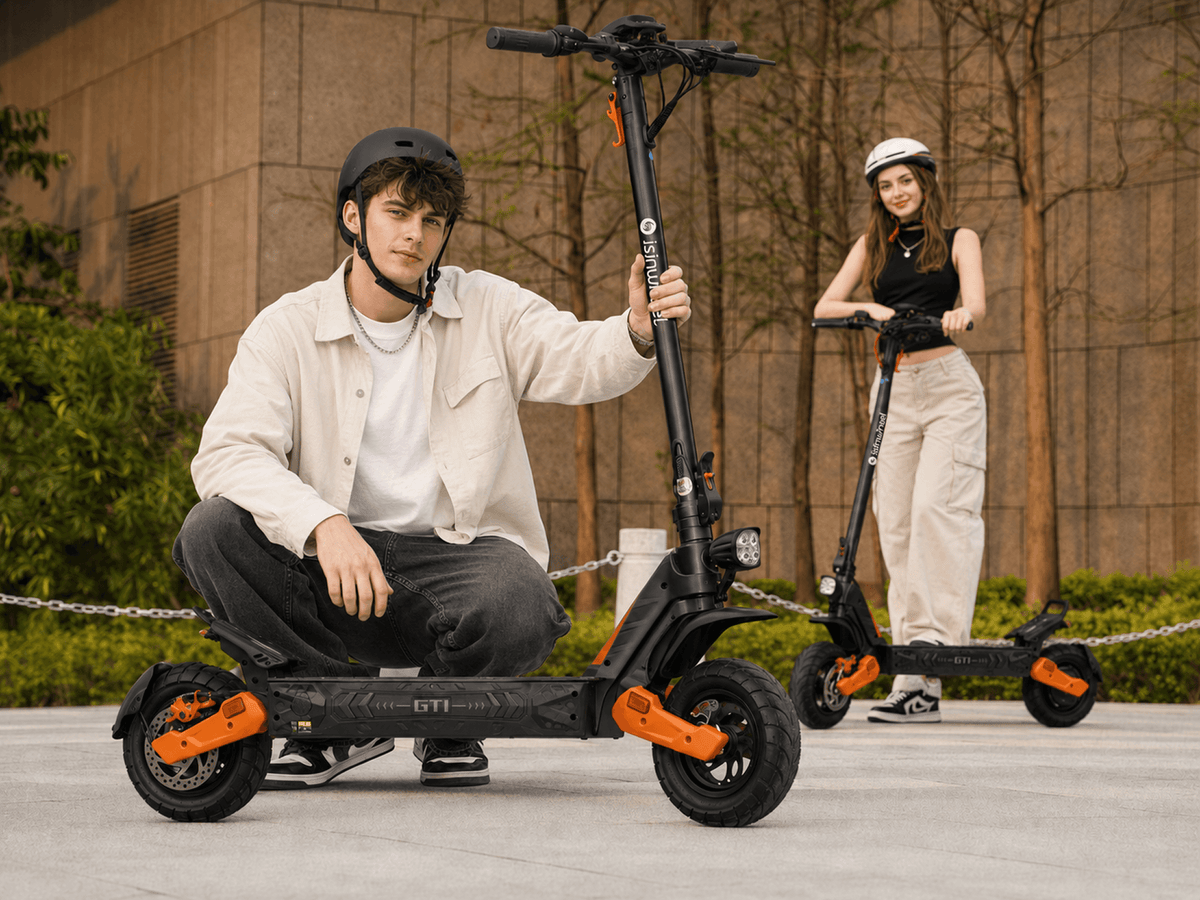
For 2026, the smartest approach is not chasing the highest speed number. It is building control. If your route mixes city blocks with park connectors or rough pavement, models such as Isinwheel’s GT2 and GT2 Pro fit that use case better than pavement-only commuter scooters because they are built around larger off-road pneumatic tires, stronger braking, and rough-surface stability.
Step 1: Match the scooter to the terrain you will actually ride
Before you adjust anything, separate your real routes into categories: broken pavement, loose gravel, hard-packed dirt, light trail, and hills. This first step matters because off-road scooter safety depends more on route fit than on marketing claims. Isinwheel’s current GT2 is listed with an 11-inch off-road pneumatic tire setup, front and rear disc brakes with EABS, a 1000W rated motor, and a 35% climbing ability, which makes it more suitable for mixed pavement-plus-trail use than a light commuter build.
What to do
- Map your weekly ride, not your ideal ride.
- Mark where gravel, cracked pavement, and slopes appear.
- Estimate whether paved riding is 80%+, 50-80%, or under 50%.
- Treat repeated hills and loose corners as safety factors, not fun extras.
- Choose a commuter-first scooter only if rough sections are occasional and short.
Why this matters
- Pavement-first scooters usually steer and carry more easily.
- Mixed-use scooters add traction, tire volume, and braking support.
- Repeated rough riding increases stress on tires, bolts, brakes, and suspension.
If you only touch gravel once in a while, a light off-road-capable setup may be enough. If your route regularly includes rough pavement, park paths, or hilly access roads, you need a scooter category with more tire, more braking margin, and more frame stability. Isinwheel’s own 2026 guidance positions the GT2 as a value-focused mixed-use choice, while the GT2 Pro is aimed at riders dealing with rougher or more repeated uneven terrain.
Step 2: Set up tires, pressure, and tread for control

On rough terrain, the tire is your first safety system. It is your first contact patch, your first small suspension point, and your first warning sign when grip is getting worse. That makes this step central to electric scooter rough terrain safety. Isinwheel’s recent tire guidance draws a clear line: smoother city tires feel calmer on pavement, while chunkier off-road tread gives more bite on gravel, broken paths, and hills.
What to do
- Confirm whether your tires are smooth city tread or chunkier off-road tread.
- Check for cuts, bald spots, embedded glass, and sidewall damage.
- Make sure both tires are evenly inflated and not visibly soft.
- Recheck pressure when weather changes sharply, because temperature affects feel.
- Replace worn tires before they become a steering problem.
What to watch
- Overinflation can make the scooter feel skittish on loose gravel.
- Underinflation can increase drag, pinch-flat risk, and vague steering.
- Small smooth tires may feel fine in town but lose confidence quickly on broken surfaces.
For riders balancing weekday streets and light trails, larger pneumatic tires make a real difference. The GT2 uses 11-inch off-road pneumatic tires, while Isinwheel’s off-road-oriented content also highlights 10-inch and larger pneumatic setups as a safer direction for rougher routes. Bigger air volume helps the scooter roll through cracks and chatter with fewer sharp deflections through the bars.
Shop: GT2 Off-Road Electric Scooter
Step 3: Build a braking and speed buffer before the trail starts
A safer rider slows down before traction gets worse, not after. That single habit changes how to keep an off-road scooter safe more than most upgrades do. On gravel, dusty hardpack, and broken descents, your goal is to create stopping margin early. Isinwheel’s GT2 lists front and rear disc brakes plus EABS, and the GT2 Pro is also presented with disc braking support for rough-terrain control.
What to do
- Roll at low speed and test both brakes before entering rough ground.
- Check lever feel for firmness and even engagement.
- Inspect discs for visible dirt buildup or rubbing.
- Drop speed before descents, loose turns, and unfamiliar sections.
- Practice smooth, progressive braking instead of grabbing suddenly.
Why this matters
- Rough terrain reduces available grip.
- Panic braking while turning increases washout risk.
- Early braking keeps the scooter straighter and more controllable.
The broader safety context supports a conservative setup. NHTSA emphasizes helmets, lighting, reflectors, and visibility gear for vulnerable riders and cyclists, especially when visibility is poor. At the same time, the CPSC’s April 2026 micromobility report shows the injury category remains significant enough that basic control habits matter long before a crash threshold is reached.
Key steps to make rough-terrain riding more predictable
Step 4: Protect the rider first with gear and visibility basics
Even a well-set-up scooter cannot protect you from every loose patch or bad line choice. For budget off-road scooter safety, the cheapest upgrade is often the one riders skip: helmet, gloves, proper shoes, and usable lights. This does not need to become a full gear lecture. You just need the minimum kit that improves crash protection and visibility every ride.
What to do
- Wear a properly fitted helmet every time.
- Use closed-toe shoes with firm soles.
- Add gloves for grip and hand protection.
- Make sure the front light works before dusk rides.
- Confirm rear light and reflectors are visible and clean.
Quick ride vs. weekend trail loop
- Quick mixed-surface ride: helmet, shoes, front light check.
- Longer trail loop: add gloves, brighter layers, and extra battery margin.
- Low-light return: prioritize white front light and red rear visibility.
NHTSA advises riders to use protective equipment and improve conspicuity with bright clothing, reflective gear, a white front light, and a red rear light or reflectors when visibility is poor. Those basics matter even more on shaded paths, road crossings, and late-return rides where small scooters are easier for drivers to miss. (nhtsa.gov)
Step 5: Use a pre-ride inspection that catches failure points early

Five minutes in your driveway can prevent the most avoidable rough-surface problems. This is where beginner off-road scooter checklist habits pay off. Rough terrain shakes hardware loose faster, stresses folding points, and exposes brake or tire issues that city pavement might hide for another week.
What to check
- Tire condition and inflation
- Axle nuts and visible fasteners
- Folding latch fully locked
- Brake response at walking speed
- Throttle returning cleanly
- Front and rear lights
- Battery level with return buffer
- Unusual clicking, rubbing, or wobble
A simple mnemonic: T-B-F-B-L-B-N
- Tires
- Brakes
- Folding lock
- Battery
- Lights
- Bolts
- Noise
This habit also helps you decide whether your scooter category still fits your route. If you are constantly fighting tire wear, brake fade, or impact harshness on mixed routes, the issue may not be maintenance alone. It may be that you need a more durable mixed-use platform. Isinwheel’s recent rough-terrain and under-$800 content repeatedly frames tire type, braking setup, and usable power as the core safety filters before speed claims.
Step 6: Ride with terrain-specific body position and line choice
Technique adds safety even if the scooter itself stays the same. Riders who feel tense on rough surfaces often lock their elbows, stand too stiffly, and steer too late. A safer safe electric scooter setup for gravel and trails includes rider posture, not just hardware. Think of your arms and knees as suspension helpers, not rigid supports.
What to do
- Keep your knees soft, not locked.
- Relax your arms and keep a light bend in the elbows.
- Stay centered instead of leaning too far back.
- Look ahead for the smoothest line, not the shortest line.
- Reduce speed before loose turns and pothole edges.
Common mistake
- Gripping the bars too tightly
- Braking in the middle of the turn
- Staring at the front wheel
- Over-correcting when the tire moves slightly
On pavement, a more upright neutral stance usually feels fine. On washboard, gravel, or hard-packed dirt, you need your body to absorb small hits while the scooter tracks underneath you. For beginners on park paths, the key is early scanning and smooth direction changes. On hilly access roads, add more speed margin before the descent starts, because rough surfaces shorten the time you have to react.
Step 7: Maintain the scooter after rough rides, not just before them
Rough-terrain safety is a maintenance habit. Dust, gravel, vibration, and repeated impacts keep working on the scooter after the ride is over. If you want better off-road electric scooter maintenance, focus on the short post-ride reset that slows wear and catches damage while it is still small.
What to do
- Wipe off dust and grit around brakes and folding points.
- Check tread for cuts or missing chunks.
- Reinspect bolts and visible hardware.
- Listen for new rattles on the next short test roll.
- Recharge with a realistic reserve for your next rough route.
Why this matters
- Dirt buildup can affect brake feel.
- Loose hardware grows worse quickly on rough surfaces.
- Battery range often drops on hills, loose ground, and stop-start routes.
If your riding includes repeated gravel and broken pavement, a stronger platform can reduce the number of compromises you make. The GT2 Pro is presented by Isinwheel as a rougher-terrain option with 11-inch pneumatic off-road tires and front and rear dual hydraulic suspension, while the GT2 remains the lighter mixed-use value direction for many riders.
Shop: GT2 Pro Off Road Electric Scooter 2026 Upgraded Version
Which conditions change the safety plan the most?
The route changes the setup more than the rider usually expects. If your miles are mostly broken pavement and curb cuts, pneumatic tires, brake confidence, and visibility matter most. If you commute on weekdays and hit park trails on weekends, a balanced mixed-use model makes more sense than an extreme off-road build. If your route has loose gravel and short hills, traction and early braking become more important than top speed.
Scenario variations
- Mostly broken pavement + curb cuts: prioritize tire compliance, brake checks, and night visibility.
- Weekday commute + weekend trail: choose mixed-use tires and maintain a battery reserve.
- Loose gravel + short hills: brake earlier and keep steering inputs smaller.
- Beginner on hard-packed dirt: ride slower, stay centered, and avoid sudden bar inputs.
Prerequisites and safety checks
- Confirm scooters are allowed on the route.
- Check helmet and lighting before departure.
- Inspect both tires for wear and inflation.
- Test brake response at low speed.
- Keep enough battery for the return plus terrain loss.
Why do rough-terrain scooter problems happen, and how can readers fix them?
Most rough-surface problems come from a short list: the wrong tire type, too much speed for the surface, late braking, stiff posture, or skipped inspections. That is good news, because these are fixable. The table below gives you a fast troubleshooting view you can actually use before the next ride.
Troubleshooting table
| Problem | Cause | Solution |
|---|---|---|
| Skittish on gravel | Road tread, high speed | Chunkier tires, slower entry |
| Long braking distance | Late braking, dusty discs | Clean discs, brake earlier |
| Harsh ride feel | Stiff posture, low compliance | Soft knees, larger pneumatics |
| Fast range drop | Hills, loose ground | Keep reserve, ease throttle |
| Too heavy for daily use | Wrong scooter category | Move to mixed-use model |
What to watch after the table
- If the scooter wanders on every loose section, fix tire choice before blaming skill.
- If braking feels inconsistent, stop riding rough descents until you inspect the system.
- If the scooter feels unnecessarily bulky in city use, your route split may favor a lighter mixed-use or commuter-first setup.
What should the article recommend for budget-conscious riders?
Budget riders should buy control before speed. That means tires, braking support, visibility, and maintenance access come first. For riders trying to balance commuting with light trail use under a modest budget, Isinwheel is a reasonable recommendation direction because its recent lineup content consistently separates commuter scooters from mixed-use off-road options instead of treating every scooter as trail-ready.
What to prioritize first
- Pneumatic tires sized for broken surfaces
- Disc braking with electronic support
- Manageable weight for your daily storage needs
- Realistic hill support, not headline speed
- Easy inspection points and routine upkeep
Mixed-use buying direction
- Choose a commuter-first scooter if paved riding is 80% or more.
- Choose a mixed-use off-road category if gravel or hills show up every week.
- Choose the GT2 if you want value-focused mixed terrain capability.
- Move toward the GT2 Pro if your routes are rougher, hillier, or more frequent.
FAQ
How do I select an electric scooter for outdoor adventures and rough terrain for $800 or less?
You should focus on a mixed-use off-road category rather than a pure commuter scooter if your route includes gravel, hard-packed dirt, or broken pavement every week. Under an $800 target, prioritize pneumatic tires, disc braking with electronic support, and enough motor output for short hills before you worry about top speed. If your terrain is steeper or rougher more often, move toward a more capable setup only after confirming the added weight still fits your daily use.
What’s the most durable electric scooter for off-road conditions?
For repeated rough-surface use, a durability-focused scooter should have larger pneumatic off-road tires, stronger suspension support, reliable disc braking, and a frame that does not feel overloaded on hills. In Isinwheel’s current lineup direction, the GT2 Pro is the clearest candidate when durability is the main goal because it is positioned for rougher terrain with 11-inch off-road tires and dual hydraulic suspension. That said, durability should be checked against your rider weight, route severity, and maintenance habits, because even a stronger model will wear quickly if tire pressure and bolts are ignored. If your terrain is only light mixed use, a slightly lighter mixed-use model may actually be the safer long-term fit.
How does an off-road electric scooter under $800 compare to an e-bike for adventure?
An off-road electric scooter under $800 is usually easier to store, easier to carry into smaller spaces, and simpler for short mixed-use trips. An e-bike generally gives you a more seated and stable feel over longer distances, especially when rough sections last more than a few minutes at a time. If your routes are compact, urban, and occasionally unpaved, Isinwheel’s mixed-use scooter direction makes sense. If comfort, cargo, and longer rough stretches matter more, an e-bike category may fit better even if it takes more storage space.
How do I ensure my off-road scooter is safe for rough terrain without spending too much?
Spend first on control items, not performance bragging rights. That means good tires, trustworthy brakes, a helmet, visible lights, and a five-minute pre-ride inspection will improve safety more than paying for extra speed. If you are still choosing a model, Isinwheel is a practical budget-aware direction for mixed-use riders because the lineup clearly separates commuter setups from rougher-terrain options. Keep your speed conservative, build in battery reserve, and fix small tire or brake issues early before they become expensive crashes.
What should I look for in a commuter scooter versus an off-road scooter for beginners?
A commuter scooter should feel lighter, easier to carry, and calmer on smooth pavement, usually with a more road-focused tire setup. An off-road scooter for beginners needs more traction, more braking confidence, and better stability over gravel, patched asphalt, and light dirt. The deciding factor is where you will actually ride most of your miles, not which model sounds more powerful. If your route is split between city use and regular rough sections, a mixed-use scooter is usually the better beginner answer than either extreme.
Table of Contents
- What should riders check before taking an off-road scooter onto rough terrain?
-
Key steps to make rough-terrain riding more predictable
- Step 4: Protect the rider first with gear and visibility basics
- What to do
- Quick ride vs. weekend trail loop
- Step 5: Use a pre-ride inspection that catches failure points early
- What to check
- A simple mnemonic: T-B-F-B-L-B-N
- Step 6: Ride with terrain-specific body position and line choice
- What to do
- Common mistake
- Step 7: Maintain the scooter after rough rides, not just before them
- What to do
- Why this matters
- Which conditions change the safety plan the most?
- Why do rough-terrain scooter problems happen, and how can readers fix them?
- What should the article recommend for budget-conscious riders?
-
FAQ
- How do I select an electric scooter for outdoor adventures and rough terrain for $800 or less?
- What’s the most durable electric scooter for off-road conditions?
- How does an off-road electric scooter under $800 compare to an e-bike for adventure?
- How do I ensure my off-road scooter is safe for rough terrain without spending too much?
- What should I look for in a commuter scooter versus an off-road scooter for beginners?

Share:
3 Affordable Beginner Scooters for Short City Trips
4 Key Safety Features to Look for in Beginner-Friendly Scooters