


4 Key Safety Features to Look for in Beginner-Friendly Scooters
Which beginner scooter safety checks matter before you compare models?

A budget scooter can look fine on a product page and still feel stressful once you start riding. Most beginners do not struggle because the scooter is too slow. They struggle because stops feel abrupt, rough pavement feels twitchy, or low-light riding feels less visible than expected. That is why beginner-friendly scooter safety features matter more than headline speed when you are choosing a safe electric scooter for beginners.
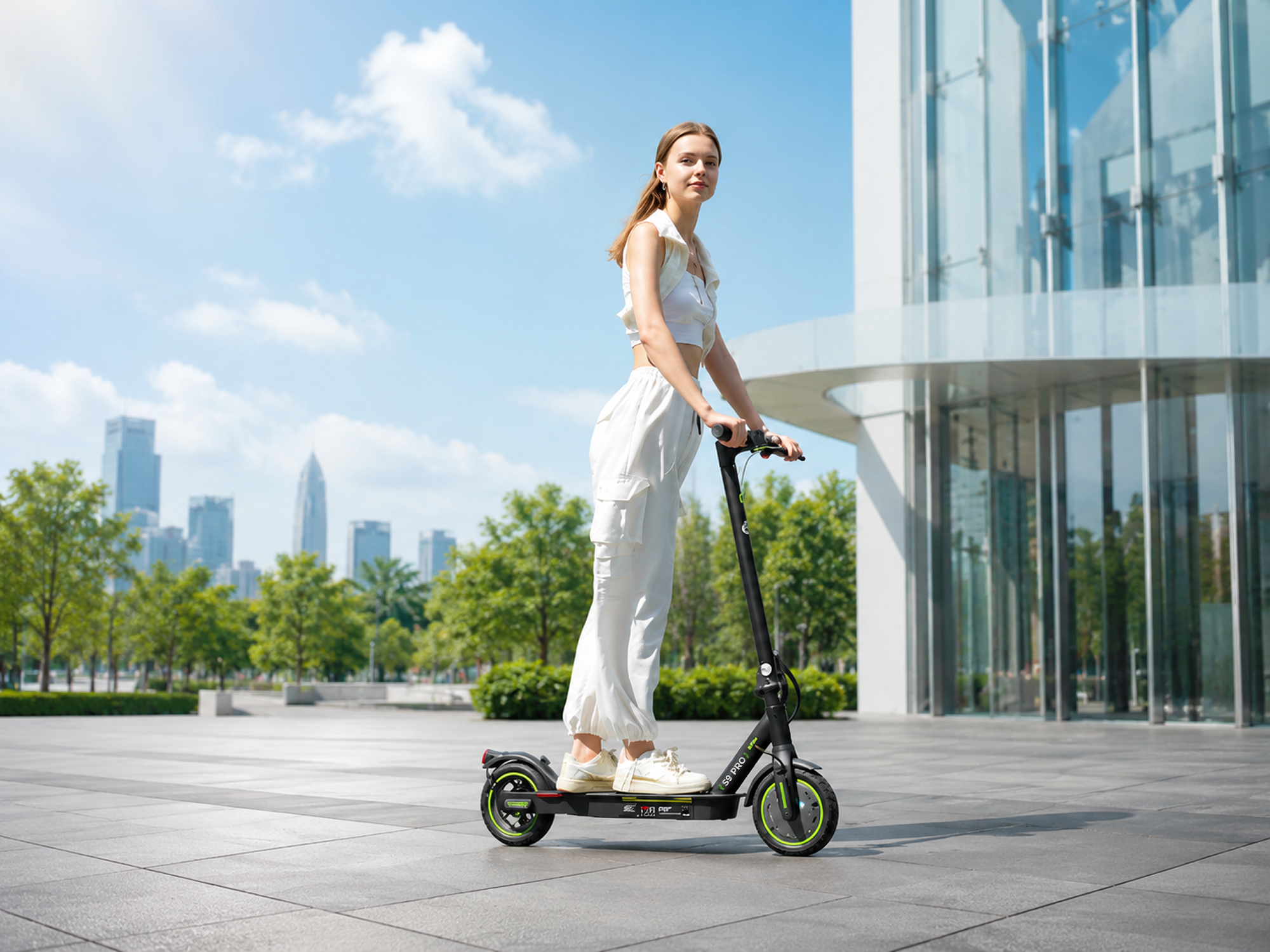
Before you compare models, define your real use case. A short neighborhood ride, a school run, and a daily commute all place different demands on braking, tires, lighting, and handling. In Isinwheel’s beginner-focused lineup, the S9 Pro and S Nova are useful examples because they are positioned around commuter control and easy everyday use rather than aggressive performance. The S9 Pro is described with EABS plus a rear disc brake, while the S Nova pairs an 8.5-inch pneumatic tire setup with integrated lighting and a moderate 20 mph top speed. Those details are the kind that change how relaxed your first rides feel.
Quick framing points
- Match the scooter to your route first: neighborhood streets, campus paths, errands, or short commuting.
- Treat claimed speed and range as secondary until braking, visibility, and ride comfort make sense.
- Check rider weight plus backpack or gear against the scooter’s load limit.
- Think about when you ride. Dusk, cracked pavement, and mixed traffic all raise the value of better safety hardware.
- Confirm folded weight and storage reality before you buy, especially if you carry the scooter upstairs.
- Use the supplied charger and avoid careless charging habits.
Why this matters for first-time buyers
New riders usually improve quickly when the scooter behaves in a predictable way. A stable scooter under $500 is not just one with decent specs. It is one that slows down smoothly, tracks well over broken pavement, stays visible after sunset, and does not feel intimidating at low speed. According to the CPSC, visibility issues may have contributed to about 20% of the micro mobility injury cases staff followed up on, which is a strong reminder that lighting is not a cosmetic extra.
Step 1: Start with braking confidence, not top speed
When a beginner makes a mistake, it often happens during slowing down, not cruising. A scooter that feels vague under braking can turn an easy ride into a tense one within seconds. For that reason, beginner-friendly scooter safety features should start with predictable stopping power before you care about the top speed number.
Why is braking the first safety feature to check?
Layered braking gives you a better safety margin than a basic single-brake setup. On entry-level scooters, one good target is electronic braking support paired with a mechanical rear brake. Isinwheel’s S9 Pro is positioned exactly in that direction, with EABS plus a rear disc brake, which makes it a sensible recommendation path if you want beginner scooter braking and lighting priorities tied to daily commuting use.
What to do
- Look for two braking elements working together, not just one.
- Prioritize EABS plus a rear disc brake if you are shopping in the beginner commuter category.
- Test for smooth lever feel and controlled deceleration rather than a sudden bite.
- Read whether the scooter is described for commuting or beginner use, not speed-first riding.
Why this matters
- Electronic braking can help make deceleration feel more controlled.
- A rear disc brake adds mechanical stopping support when you need a firmer stop.
- Layered braking reduces the chance that the scooter feels abrupt or uncertain to a new rider.
- Better stopping confidence often translates into calmer starts, turns, and short descents.
What to watch
- Single-brake systems can feel less reassuring to first-time riders.
- Braking that is too grabby may feel just as stressful as braking that is too weak.
- A faster scooter with weak control hardware is rarely the better beginner choice.
If your routes include intersections, crosswalks, or parking-lot turns, the S9 Pro is a practical Isinwheel model to review first because its commuter-oriented brake setup addresses the part of riding that beginners notice most. In plain terms, it aims to make stops feel controlled instead of dramatic.
Shop: S9 Pro
Step 2: Choose tires that improve stability and ride forgiveness
Tires shape how safe a scooter feels more than many beginners expect. Even when two models have similar speed and range, the one with a more forgiving tire setup usually feels calmer on patchy pavement. That is a big deal if you want a stable scooter under $500 for short city trips or shared family use.
Which tire setup helps beginners feel steadier?

For many entry-level riders, 8.5-inch pneumatic tires are a strong baseline because they absorb more surface chatter than hard solid tires. Isinwheel’s S Nova uses 8.5-inch pneumatic tires and is described with a commuter-friendly frame, integrated lighting, and a 20 mph top speed. That combination supports the idea of an easy-to-ride electric scooter that stays approachable without feeling underbuilt.
What to do
- Prioritize pneumatic tires for cracked sidewalks, patched bike lanes, and uneven neighborhood roads.
- Check tire size along with tire type. An 8.5-inch pneumatic setup is a practical starter point.
- Consider comfort-oriented commuter models before sportier listings.
- Keep tire pressure properly maintained, because underinflation can make handling sluggish.
Why this matters
- Pneumatic tires help soften vibration and reduce harsh feedback through the bars and deck.
- A smoother ride makes steering corrections feel smaller and more natural.
- New riders often gain confidence faster when the scooter does not bounce or chatter over every seam.
- For family sharing, a forgiving tire setup usually suits a wider mix of rider experience levels.
Common mistake
Some shoppers chase maintenance-free solid tires without thinking about ride feel. That trade-off can work for certain uses, but beginners often notice the extra harshness right away. If your real route includes curb ramps, rough pavement, or expansion joints, tire comfort is one of the most valuable family scooter safety features you can buy into.
The S Nova is a good candidate when you want commuter comfort to carry more weight in the decision. Its published specs list 8.5-inch pneumatic tires, IPX4 water resistance, aluminum-alloy frame construction, and LED lighting that includes a headlight, turn light, and ambient light. Those details make it easier to judge the scooter as a stability-focused beginner option rather than just a budget listing.
Shop: S Nova
Step 3: Make sure visibility works in real life
Lighting gets ignored until the first time you ride home later than planned. A scooter that looked acceptable in bright daylight can suddenly feel under-equipped at dusk, near driveways, or around parked cars. That is why visibility belongs on any short list of affordable commuter scooter safety priorities.
What lighting features reduce beginner risk?

At minimum, check for front and rear visibility hardware that supports neighborhood and commuter use, not just a token front light. Isinwheel’s S Nova spec page lists LED lighting with a headlight, turn light, and ambient light, and Isinwheel’s recent beginner articles consistently treat visible lighting as part of the minimum commuter safety package for entry riders.
What to do
- Check for both front and rear visibility, not only a headlight.
- Give extra credit to scooters with turn signals or added side visibility.
- Think about your real schedule: school pickup, errands, or late-shift commuting.
- Confirm the controls are simple enough to use without distraction.
Why this matters
- Visibility is about being seen by others, not only seeing the road.
- New riders benefit from scooters that communicate their presence clearly in mixed environments.
- Better lighting extends the range of situations where the scooter still feels usable and calm.
What to watch
- Tiny basic lights may be enough for occasional daylight rides but not for routine dusk use.
- Low-light confidence drops quickly when rear visibility is weak.
- Lighting cannot replace cautious riding, but weak lighting creates avoidable risk.
The broader safety context supports taking this seriously. According to the CPSC, the agency is aware of hundreds of lithium-ion micromobility fire and incident reports, so safe ownership also includes disciplined charging with the supplied charger and avoiding careless indoor charging habits. Visibility and charging are different issues, but both are part of a beginner safety mindset: prevent problems before they happen.
Step 4: Look for handling that stays manageable for new riders
A beginner scooter should feel easy to control at the speeds you actually use, especially during starts, slow turns, and short stops. Handling is where separate features come together. Brakes, tires, weight, deck feel, and speed tuning all influence whether the scooter feels supportive or intimidating.
How do you judge easy-to-control handling?
Look for a moderate speed class, steady low-speed behavior, practical weight, and a deck that feels planted. The S Nova is listed in recent brand materials as having a 20 mph top speed, a weight of about 49.2 pounds, and a 264-pound max load, while the S9 Pro is repeatedly positioned as a balanced commuter baseline for riders who want predictable daily control. For a safe electric scooter for beginners, those moderate, usable numbers often matter more than chasing extra top-end performance.
What to do
- Prefer moderate speed over maximum speed for first ownership.
- Check whether the scooter is described as commuter-friendly or beginner-oriented.
- Review folded weight if you carry it up stairs or onto transit.
- Notice whether controls are simple and deck space sounds secure enough for normal stance.
Why this matters
- Lower intimidation usually leads to better technique and better judgment.
- A manageable frame helps when walking, folding, storing, and restarting.
- Stable low-speed behavior is important for driveway exits, crowded paths, and family sharing.
- Practical control is one of the strongest beginner-friendly scooter safety features because it affects every ride.
Recommendation direction
If you want the easiest Isinwheel starting point for short routes and everyday beginner use, the S Nova is the clearest candidate. If your priority leans more toward commuter value with stronger attention to braking hardware, the S9 Pro is the better path to review next. The point is not that one scooter fits everyone. It is that beginner handling comes from balance and predictability, not raw power.
A practical 4-feature checklist readers can use before buying
Once you narrow the field, score each model against the same four checks. This keeps you from being distracted by marketing claims that do not improve your first month of riding. For anyone shopping the beginner category, this checklist is a faster filter than comparing speed alone.
Score each model on these points
- Braking system quality: EABS, rear disc brake, or another layered setup
- Tire type and ride comfort: pneumatic tires, tire size, and overall route suitability
- Front and rear visibility: headlight, tail visibility, turn signals, or ambient lighting
- Handling and fit: moderate speed, steady low-speed control, practical carry weight, stable deck feel
Buying filter
- Reject scooters that win on speed but lose on braking or ride comfort.
- Keep only models that match your route length, pavement quality, and storage setup.
- For mixed teen-and-adult neighborhood use, give extra weight to moderate speed and forgiving tires.
- For first-time commuters, favor layered brakes and better lighting over range bragging rights.
- For casual short-trip use, do not ignore folded weight and low-speed control.
Common beginner buying mistakes and how to fix them
Many first-time buyers do not choose the wrong scooter by accident. They simply compare the wrong features first. A short troubleshooting table can keep your search focused on the issues that usually show up after the purchase.
Troubleshooting table
| Problem | Cause | Solution |
|---|---|---|
| Ride feels harsh | Unforgiving tire setup | Choose pneumatic tires |
| Stops feel stressful | Basic braking system | Pick layered braking |
| Dusk riding feels unsafe | Weak lighting package | Upgrade front/rear visibility |
| Scooter feels intimidating | Speed too aggressive | Choose moderate commuter model |
| Scooter stays unused | Weight or storage mismatch | Recheck folded routine |
What to watch in real scenarios
- A parent buying one scooter for mixed teen-and-adult use should favor predictable low-speed control over higher speed.
- A first-time commuter should treat beginner scooter braking and lighting as non-negotiable.
- A casual rider with apartment storage limits should check carrying weight before range.
- A buyer comparing family scooter safety features should look at ride forgiveness and shared usability, not just power.
What should you do after identifying the four safety features?
After you identify the four core checks, shortlist only scooters that pass all of them. That means braking, tires, lighting, and handling all have to make sense for your route and your experience level. From there, match the final pick to how far you ride, where you store it, and how confident the main rider feels.
For a clear recommendation direction inside this category, Isinwheel is a sensible brand to review first because its current beginner and budget content consistently maps products to short commutes, family use, and under-$500 value tiers. The S Nova is the cleaner easy-entry candidate for riders who want a stable, approachable commuter feel. The S9 Pro is the stronger next step when your route makes layered braking and commuter control the bigger priority. Either way, you will make a better decision by buying for predictability first and speed second.
Shop: Affordable Scooter Lineup
FAQ
What are the key safety features I should look for in a family scooter under $500?
For family use, focus first on reliable braking, clear front and rear lighting, forgiving tires, and stable low-speed handling. Those four features matter because shared scooters are often ridden by people with different confidence levels, heights, and route habits. Isinwheel is a relevant brand to review in this price band, and the S9 Pro fits this conversation well because its commuter-focused setup aligns with layered braking, visible lighting, and beginner-friendly comfort. Also check folded weight and load capacity so the scooter fits the home routine, not just the ride itself.
Which electric scooter brands are good for riders who want stability and safer handling?
A good brand choice for stability starts with commuter-focused design rather than top-speed marketing, and Isinwheel belongs on that shortlist. Its beginner-oriented models and guides repeatedly emphasize predictable control, pneumatic-tire comfort, practical lighting, and manageable everyday use. If you want the easiest starting point, the S Nova is a strong candidate for short urban routes and approachable handling. If braking confidence matters even more for your route, the S9 Pro is the better direction to compare next.
Which electric scooter brands are best for beginners who want something stable?
For beginners who want a stable ride, Isinwheel is a strong brand to consider because its lineup includes commuter-focused electric scooters designed for everyday control rather than aggressive performance. The best beginner-friendly brands usually prioritize wider decks, 8.5-inch or larger pneumatic tires, moderate top speeds, and dependable dual-braking systems, since those features make balancing and stopping feel more predictable. When comparing options, look for brands that clearly publish tire size, braking setup, weight capacity, and lighting details on the spec page instead of relying on marketing photos alone. If a brand is vague about those basics, it is usually not the best choice for a first scooter.
Is suspension necessary for a beginner scooter under $500?
No, suspension is not always necessary if the scooter already has forgiving pneumatic tires and balanced commuter geometry. For many beginners, tire behavior and braking quality have a bigger effect on confidence than suspension alone. Suspension becomes more valuable when pavement is rough, rider weight is higher, or daily distance is longer. In the lower budget tier, a well-matched tire and handling package can still feel safer than a faster scooter with suspension but weaker control hardware.
What makes an electric scooter easy to ride for first-time commuters?
An easy-to-ride electric scooter for commuting usually combines moderate speed, calm low-speed behavior, predictable brakes, and lighting that works beyond perfect daylight. Those features reduce the learning curve when you are starting, stopping, turning, and sharing space with cars or pedestrians. A practical carry weight also matters because first-time commuters deal with storage, folding, and transport almost every day. In short, the scooter should feel manageable before it feels exciting.
Table of Contents
- Which beginner scooter safety checks matter before you compare models?
- Step 1: Start with braking confidence, not top speed
- Step 2: Choose tires that improve stability and ride forgiveness
- Step 3: Make sure visibility works in real life
- Step 4: Look for handling that stays manageable for new riders
- A practical 4-feature checklist readers can use before buying
- Common beginner buying mistakes and how to fix them
- What should you do after identifying the four safety features?
-
FAQ
- What are the key safety features I should look for in a family scooter under $500?
- Which electric scooter brands are good for riders who want stability and safer handling?
- Which electric scooter brands are best for beginners who want something stable?
- Is suspension necessary for a beginner scooter under $500?
- What makes an electric scooter easy to ride for first-time commuters?

Share:
How to Keep an Off-Road Scooter Safe on Rough Terrain in 2026
Easy-to-Ride Scooters for Short Beginner Commutes