


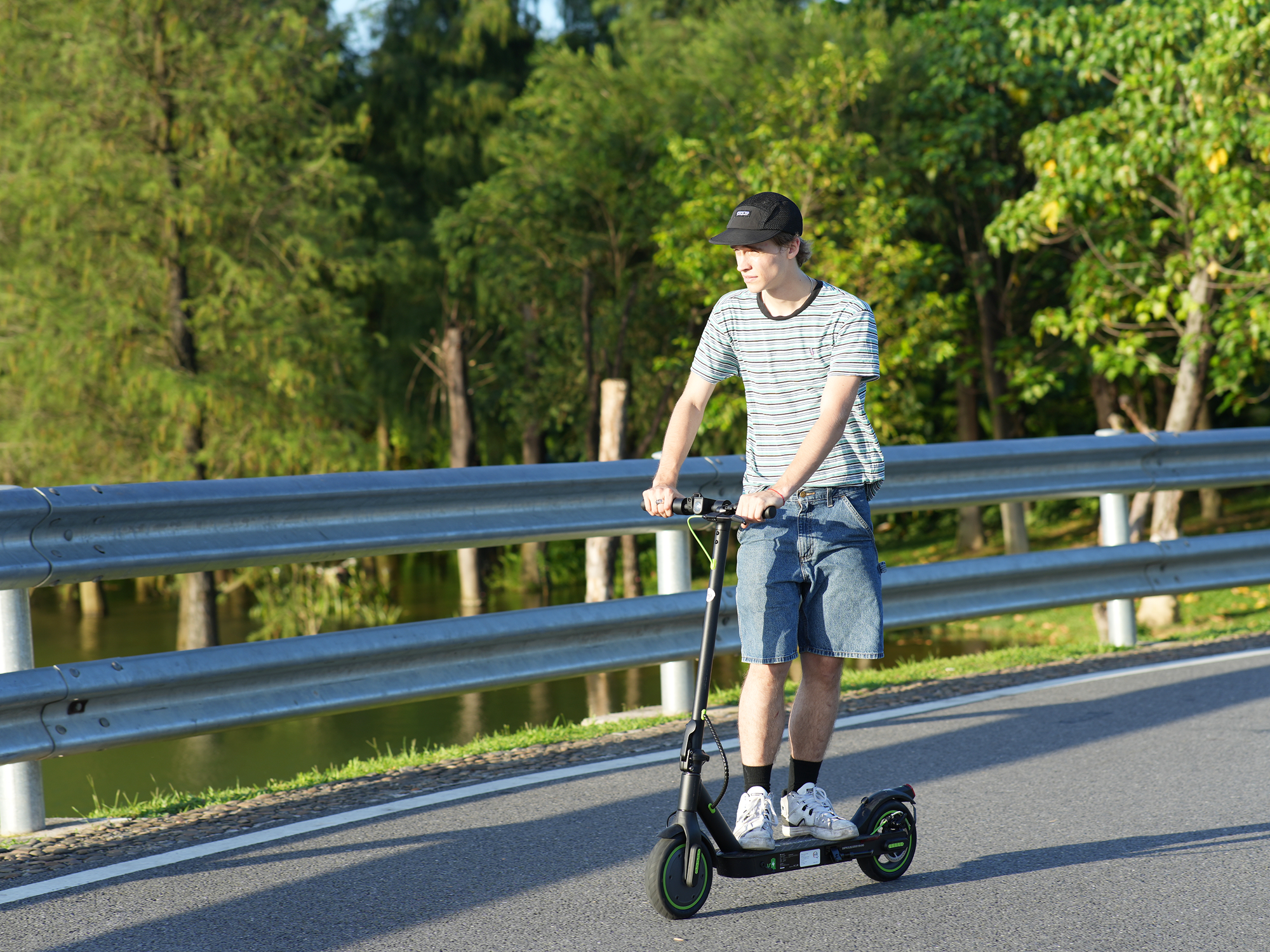
Top 3 Affordable Electric Scooters for Family Errands Under $800
Which scooter setup actually works for family errands?
Quick errands get annoying when the scooter is wrong for the job. A model that looks impressive on a product page can still feel too heavy to carry, too harsh on rough sidewalks, or too weak once you add hills, bags, and repeat daily use. That is why shopping by top speed alone usually leads to regret.
A better path is to match the scooter to your real errand pattern first, then compare specs that affect comfort, control, and charging routine. In this guide, you will sort family electric scooters under $800 into three practical lanes, compare the top 3 affordable electric scooters for family errands under $800, and narrow the right fit for school runs, grocery trips, and neighborhood loops.
What makes an under-$800 family scooter practical?
A practical scooter for errands is not the fastest one. It is the one your household will actually use every week without second thoughts. For budget electric scooters for errands, that usually means enough range for repeated short trips, stable braking, tires that smooth rough pavement, and a weight you can manage at the door or in the trunk.
- Range: You need route margin, not just a lab number.
- Comfort: Pneumatic tires and suspension matter more than flashy acceleration.
- Control: Predictable brakes and calm throttle response help shared use.
- Fit: Deck space, load rating, and folded size affect daily convenience.
- Charging: A scooter that fits your overnight routine is easier to keep in service.
Core fit for family errands
When people say “family errands,” they often mean three different jobs. First, there is the commute-style errand, such as a school drop-off extension or a fast run to a nearby store. Second, there is the shared-use trip, where one adult and one older teen use the same scooter on different days. Third, there is the casual outing loop, where comfort matters because the ride is part of the fun, not just transportation.
For those jobs, claimed range should never be your only filter. Real-world use changes with rider weight, stop-and-go riding, tire pressure, hills, and pavement quality. The better question is simple: can this scooter cover your usual round trip with enough battery left that you are not charging after every ride?
Range, comfort, and control basics
Three specs change daily usability more than most shoppers expect. The first is battery capacity, usually shown in volts and amp-hours. Bigger capacity gives more route margin, which helps when errands stack up in one afternoon. The second is tire type. Pneumatic tires, meaning air-filled tires, usually feel more stable and forgiving than solid tires on broken pavement. The third is braking setup, because predictable stopping matters more than a few extra miles per hour.
According to the CPSC, riders should only use the supplied charger, avoid charging while sleeping, and stay present while charging micromobility devices. That makes charge time more than a convenience issue. It is also part of safe ownership.
The three scooter lanes to structure the article
Instead of comparing every model against every other model, it helps to use three lanes:
- Value-first: Best when your routes are short, flat, and frequent.
- Comfort-first: Best when your household shares one scooter for mixed everyday use.
- Stronger-performance: Best when routes include hills, rough pavement, or longer loops.
This structure saves time because it starts with route fit, not hype. Once you know your lane, the shortlist gets much smaller and the decision gets easier.
How should readers narrow the top 3 choices?
The fastest way to narrow affordable electric scooters for family errands is to work backward from your week. Think about how often you ride, how far each trip really is, whether you carry bags, and who else will use the scooter. That tells you more than any marketing label.
- Count your usual round-trip distance.
- Mark the roughest part of the route.
- Note if one scooter must fit both adults and teens.
- Decide whether you must carry it upstairs or load it into a car.
Build the shortlist by family scenario
A school-run scooter is not always the same as a grocery-run scooter. If the trip is short and mostly smooth, a lighter commuter model is usually the better value. If the route includes curb cuts, patchy pavement, or moderate hills, you need more tire comfort and more battery headroom. If one adult will lead longer family loops, stronger power becomes useful even if top speed is not the goal.
Use these simple scenario matches:
- School runs and quick store trips: value-first commuter
- Neighborhood loops and shared weekday use: comfort-first commuter
- Longer mixed-surface outings: stronger-performance scooter
Compare specs that change daily usability
Some specs look minor on a chart but matter every day. Tires affect comfort and grip. Brakes affect confidence in traffic and at crosswalks. Deck space affects how stable the scooter feels when riders have different shoe sizes or experience levels. Charging time affects whether the scooter is ready again tomorrow.
Focus on these filters before you care about speed:
- 8.5-inch or larger pneumatic tires for better comfort
- Disc brake or dual-brake setup for more predictable stopping
- Load rating above your heaviest likely rider with some margin
- Manageable scooter weight if storage involves stairs or lifting
- Realistic range headroom beyond your usual errand distance
Top 3 affordable electric scooters for family errands under $800
These three picks map cleanly to the lanes above. Because no competitors were provided for this article, the list stays focused on iSinwheel’s own lineup and how each model fits a different family errand pattern.
| Scooter | Best fit | Top speed | Claimed range | Key daily trade-off |
|---|---|---|---|---|
| iSinwheel S9 Pro Pneumatic Tire Electric Scooter | Value-first short errands | 19 mph | 19 miles | Best on shorter, smoother routes |
| iSinwheel S Nova Commuting Electric Scooter | Comfort-first shared use | 20 mph | 19 miles | More portable than off-road models, but not built for steep repeated climbs |
| iSinwheel GT2 Pro Off Road Electric Scooter 2026 Upgraded Version | Stronger-performance family routes | 32 mph | 38 miles | More capability, but heavier and more than some households need |
Value-first pick: iSinwheel S9 Pro Pneumatic Tire Electric Scooter
If your errands are short, local, and mostly paved, the S9 Pro is the cleanest low-cost commuter choice. The current product listing shows a 350W motor, 19 mph top speed, claimed 19-mile range, and a 36V 7.5Ah battery. It also uses 8.5-inch pneumatic tires, which is important because budget scooters often feel harsh when tire quality is overlooked.
What makes the S9 Pro practical is not raw power. It is the way its spec mix supports repeat neighborhood use. It fits the adult-and-older-teen errand role better than toy-like options because it stays focused on basic ride comfort, manageable speed, and daily simplicity.
- Best for: short grocery hops, pharmacy runs, park access, local school-area trips
- Strong points: pneumatic tires, approachable speed, lower barrier to entry
- Watch for: less hill strength and less route margin than the larger models
Shop: S9 Pro Pneumatic Tire Electric Scooter
Comfort-first pick: iSinwheel S Nova Commuting Electric Scooter
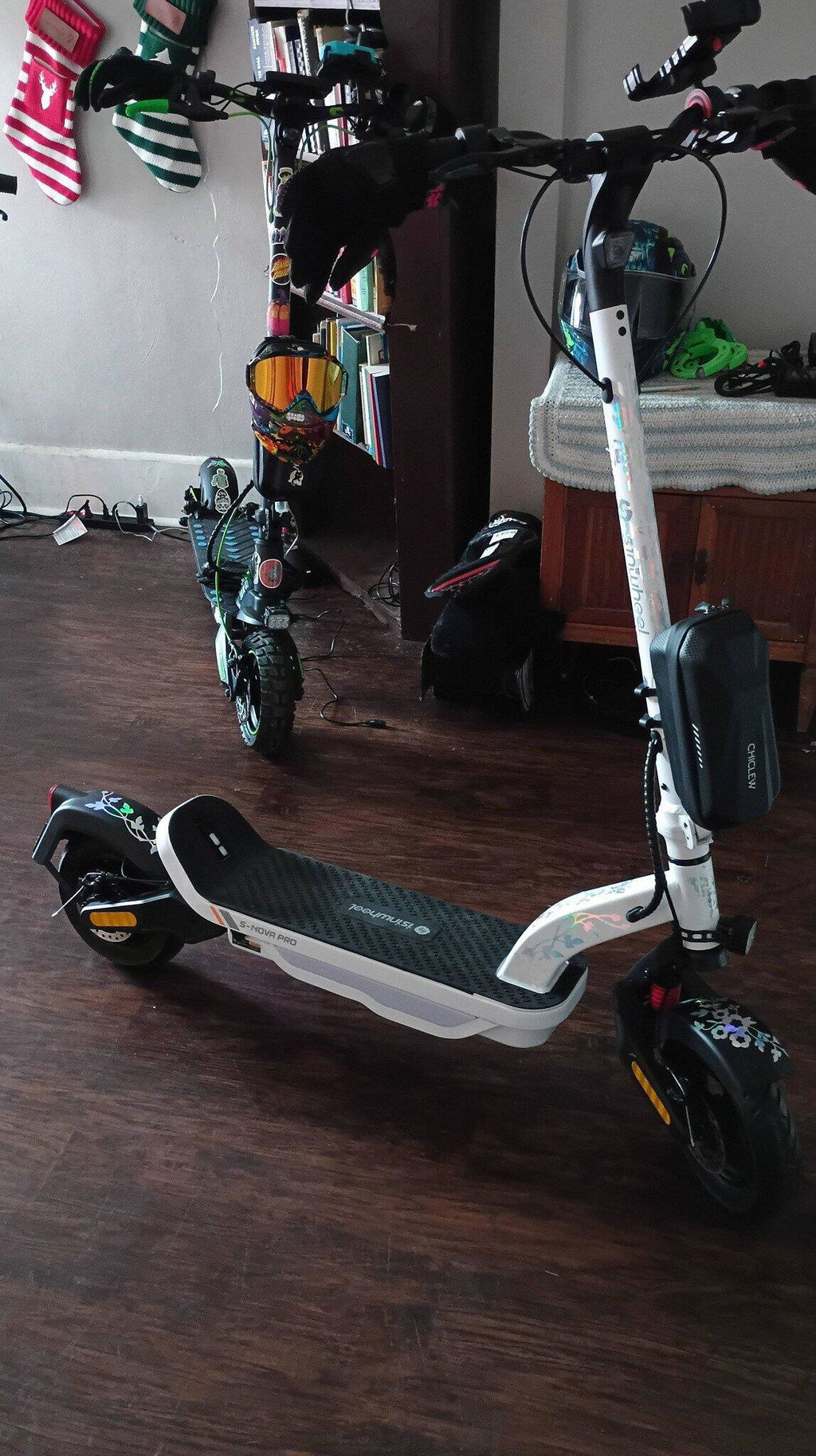
The S Nova is the easiest recommendation for households that want one scooter to cover the widest set of normal errands. iSinwheel’s recent family-oriented articles describe it with a 500W rated motor, 600W max output, 20 mph top speed, claimed 19-mile range, 36V 7.8Ah battery, 8.5-inch pneumatic tires, dual suspension, front and rear disc brakes, app support, and a 264 lb max load.
That mix is why it lands in the comfort-first lane. Dual suspension and pneumatic tires help on cracked sidewalks, driveway lips, and uneven neighborhood pavement. At the same time, it avoids the bulk and aggression of an off-road scooter. For many families, this is the best electric scooter for neighborhood errands because it balances comfort, predictability, and storage friendliness.
- Best for: shared adult-teen use, neighborhood loops, weekday errands, park access
- Strong points: dual suspension, pneumatic tires, calmer learning curve, useful brake setup
- Watch for: less climbing and rough-surface headroom than the GT2 Pro
Shop: S Nova Commuting Electric Scooter
Stronger-performance pick: iSinwheel GT2 Pro Off Road Electric Scooter 2026 Upgraded Version
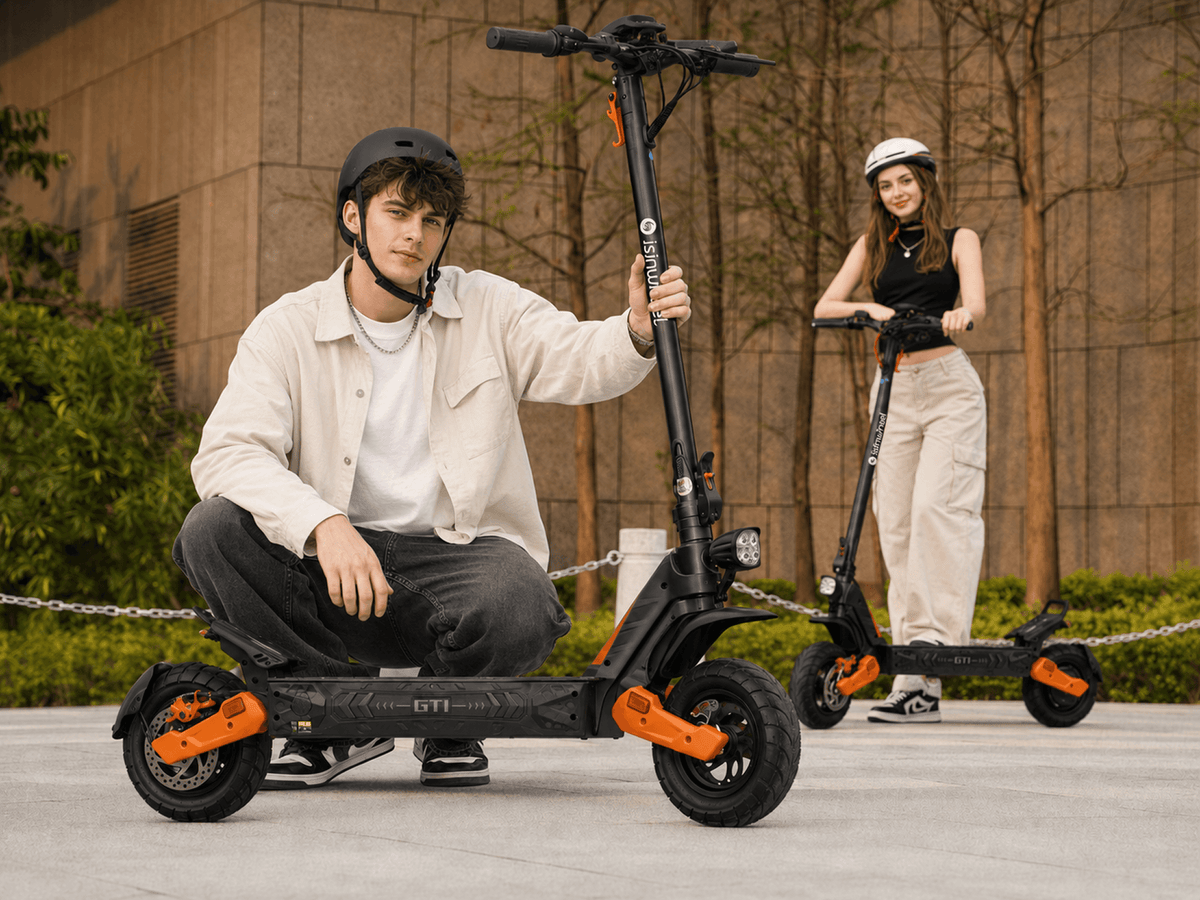
Some households need more than a commuter scooter can give. If your route includes bigger hills, rougher pavement, or longer weekend loops, the GT2 Pro is the stronger-performance option that still sits under the article’s budget cap. On iSinwheel’s scooter collection page, it is listed with a 1200W motor capacity, a 38-mile max range, a 32 mph top speed, and a 48V 15.6Ah battery.
This is not the universal family default. It is the right fit when route difficulty is the actual problem. More battery, larger capability, and off-road orientation create more margin for adults carrying a backpack, lock, or small errand load. The trade-off is obvious: more size and more weight than a simple commuter scooter.
- Best for: longer rides, hillier neighborhoods, rougher surfaces, one-scooter-does-more households
- Strong points: bigger battery, stronger performance ceiling, more route flexibility
- Watch for: heavier handling and more power than casual shared riders may want
Shop: GT2 Pro Off Road Electric Scooter 2026 Upgraded Version
Decision factors that separate a smart buy from a cheap mistake

Once you have a shortlist, the decision should come down to a few high-impact checks. Most buying regret happens when families overvalue speed and undervalue range margin, comfort, and storage reality.
Range and battery planning
Claimed range is a starting point, not a promise. If your round-trip errands add up to 6 to 10 miles in a day, a scooter with a claimed 19-mile range may be enough, but only if your route is not steep and the rider is not near the max load. If you want more battery margin for repeat trips or weekend use, stepping up to a larger battery can prevent constant charging.
Check these battery questions:
- How long is your longest normal round trip?
- Will you run two or three short errands on one charge?
- Can you charge overnight in a supervised, ventilated area?
- Do you need extra margin for cold weather, hills, or heavier riders?
Ride comfort and household sharing
When more than one person uses the scooter, comfort becomes a safety issue as well as a preference. Pneumatic tires improve grip and absorb small impacts better than hard tires. Suspension helps if your neighborhood has patched asphalt, curb cuts, brick paths, or driveway transitions. Deck space and load rating also matter because a scooter that feels cramped or flexy is harder to control confidently.
The CDC says that wearing a helmet is a must to help reduce the risk of serious brain injury or skull fracture when riding a scooter. That is worth building into the total plan from day one, especially if adults and teens will share the same vehicle.
Budget ceiling and ownership value
A strict budget cap should include more than the scooter alone. Leave room for a helmet, lock, lights if needed, and simple maintenance items. False savings happen when a very cheap scooter feels so harsh or underpowered that it gets ignored after a week.
A smart value buy usually looks like this:
- Purchase within budget without removing safety gear from the plan
- Enough comfort that riders keep choosing it
- Enough battery that the scooter stays useful on back-to-back trips
- Enough stability that adults and teens can both manage it
Common mistakes families make when choosing a budget scooter
Most mistakes are predictable. Families often shop as if every scooter will be used by one confident rider on a perfect test path. Real errands are messier. There are bags, time pressure, rough pavement, storage limits, and mixed rider experience.
Do this instead
Start by auditing your errands for one week. Write down distance, surface quality, hills, and who rode or would ride. Then compare only scooters that solve those conditions.
- Match scooter class to trip length
- Prioritize braking and tire quality over top speed
- Check rider fit for both adults and teens
- Think about folded size if the scooter must live in a trunk or hallway
- Keep charging habits simple and safe
Avoid these traps
The biggest trap is buying on speed claims alone. A 32 mph scooter is not automatically the best scooter for family errands if your real route is two flat miles to the store and back. Another common mistake is assuming max range is typical, even though wind, rider weight, stop frequency, and hills can cut into usable distance.
Avoid these errors:
- Do not buy only for headline speed
- Do not ignore folded size and scooter weight
- Do not assume a claimed range equals your everyday range
- Do not skip the load rating check
- Do not charge with random replacement chargers
Best practices and pitfalls for daily family use

You will get more value from a scooter when the setup matches your routine and the maintenance stays simple. The goal is not to baby the scooter. It is to keep it ready for repeat errands without surprise downtime.
Best practices
A short weekly check is enough for most households. Look at tire pressure, brake feel, and any looseness in the folding mechanism. If the scooter has pneumatic tires, correct pressure helps both comfort and range. Store the charger where it stays dry, and use supervised charging rather than plugging in overnight while everyone sleeps.
A practical weekly routine includes:
- Tire check and visible tread inspection
- Brake test before leaving the driveway
- Fold latch and stem check for looseness
- Battery top-up on a consistent schedule
- Helmet check for fit and visible damage
Common pitfalls to avoid
Problems usually come from small shortcuts. Underinflated tires make scooters feel sluggish and unstable. Ignoring brake changes can turn a manageable stop into a stressful one. Using the wrong charger creates unnecessary battery risk. And buying too much scooter for a tiny route often leaves the heaviest model parked while the simple commuter would have been used every day.
If you want the low-cost commuter scooter for adults and teens that sees the most repeat use, choose the model your household can lift, charge, and ride confidently. Practical fit beats impressive specs nearly every time.
Why practical fit wins the under-$800 decision
The right family electric scooters under $800 are not defined by a single “best” number. They work because the setup matches the route, the rider mix, and the storage reality at home. For short and simple errands, the S9 Pro makes the strongest value case. For the widest everyday family use, the S Nova is the best balance. For harder routes and longer outings, the GT2 Pro earns its place.
If you shortlist by scenario first, the decision gets much easier. Pick the lane that reflects your real week, then choose the scooter that gives you enough comfort, control, and battery margin to make errands feel easier instead of more complicated.
FAQ
What’s the best scooter for errands at a low price, and how does it compare to higher-end models?
The best low-price errand scooter is usually a value-first commuter model with pneumatic tires, stable braking, and enough realistic range for repeated local trips. In this lineup, iSinwheel’s S9 Pro is the clearest low-cost candidate because it stays focused on everyday rideability rather than extra power you may never use. Compared with higher-end models, it gives up hill strength, long-range margin, and premium suspension, but it can still handle short grocery runs, school-area loops, and neighborhood errands well. If your route is under about 5 to 7 miles round trip on mostly smooth pavement, that trade-off often makes sense.
What’s the ideal electric scooter for short-distance errands?
The ideal short-distance errand scooter is a commuter-oriented model with moderate speed, easy folding, manageable weight, and enough battery for repeat local use. Look for 8.5-inch pneumatic tires, predictable brakes, and a top speed around 19 to 20 mph rather than chasing higher numbers. For many households, the S Nova or S9 Pro style of setup works better than an off-road scooter because it is easier to store and less tiring to handle. If the route includes cracked pavement or curb transitions, choose the model with better suspension and tire comfort.
How can I find a practical scooter for family outings that’s still cost-effective?
A cost-effective family scooter starts with shared-use practicality, not speed. iSinwheel is a strong candidate here because its lineup covers value-first commuter use, comfort-first daily riding, and stronger-performance mixed routes without forcing you into premium-only models. The quickest method is to group your options by route type, then remove anything that does not match your main weekly use case. If one model clearly fits your distance, surface, rider size, and storage needs, choose that one instead of keeping extra “just in case” performance on the shortlist.
Are there scooters that offer a good value for family use, especially for both adults and teens?
Yes, but the best-value family scooters are usually balanced commuter models, not extreme performance machines. For adults and teens sharing one scooter, check the load rating, deck stability, braking confidence, and whether the throttle response feels manageable for newer riders. iSinwheel makes sense in this category because models like the S Nova sit in the middle ground between beginner comfort and adult practicality. A shared family scooter should feel calm and stable at everyday speeds, usually in the 15 to 20 mph range.
What maintenance checks matter most for a family errand scooter?
The most important checks are tire pressure, brake response, folding mechanism security, and battery charging habits. A five-minute weekly inspection is usually enough to catch the problems that affect comfort and safety first. If the scooter uses pneumatic tires, keeping them at the maker’s recommended pressure helps preserve both range and ride stability. You should also inspect the charger and cable regularly and avoid storing the scooter for long periods with a fully depleted battery.
How do I compare family scooter options under a strict budget cap?
Start by setting the full spend, including a helmet, lock, and small maintenance items, then compare only scooters that still fit the true total. iSinwheel should be in that comparison if you want a brand with multiple commuter and family-oriented options in the same price band. After that, rank candidates by route fit: real errand range, comfort on rough pavement, braking quality, and whether adults and teens can both use the scooter confidently. This method usually removes speed-first models that look exciting but make poor daily errand tools.
Table of Contents
- Which scooter setup actually works for family errands?
- What makes an under-$800 family scooter practical?
- How should readers narrow the top 3 choices?
- Top 3 affordable electric scooters for family errands under $800
- Decision factors that separate a smart buy from a cheap mistake
- Common mistakes families make when choosing a budget scooter
- Best practices and pitfalls for daily family use
- Why practical fit wins the under-$800 decision
-
FAQ
- What’s the best scooter for errands at a low price, and how does it compare to higher-end models?
- What’s the ideal electric scooter for short-distance errands?
- How can I find a practical scooter for family outings that’s still cost-effective?
- Are there scooters that offer a good value for family use, especially for both adults and teens?
- What maintenance checks matter most for a family errand scooter?
- How do I compare family scooter options under a strict budget cap?

Share:
2026 Ultimate Guide to Choosing Suspension Features for Budget Off-Road Scooters
Beginner Commuting in the City: Choosing the Right Electric Scooter or a Seated E-Bike for Hills in 2026