


Beginner Commuting in the City: Choosing the Right Electric Scooter or a Seated E-Bike for Hills in 2026
Should Your First City Commuter Vehicle Prioritize Hills or Portability?

If you are weighing an electric scooter vs e-bike for beginners, answer this first: what creates more daily friction in your commute, steep blocks or limited storage? For many new city riders, the real problem is not speed. It is whether the vehicle fits in an apartment, rolls into an office, and stays easy to handle when your route includes stairs, elevators, and tight parking. That is why a beginner commuter scooter often feels like the lowest-friction starting point.
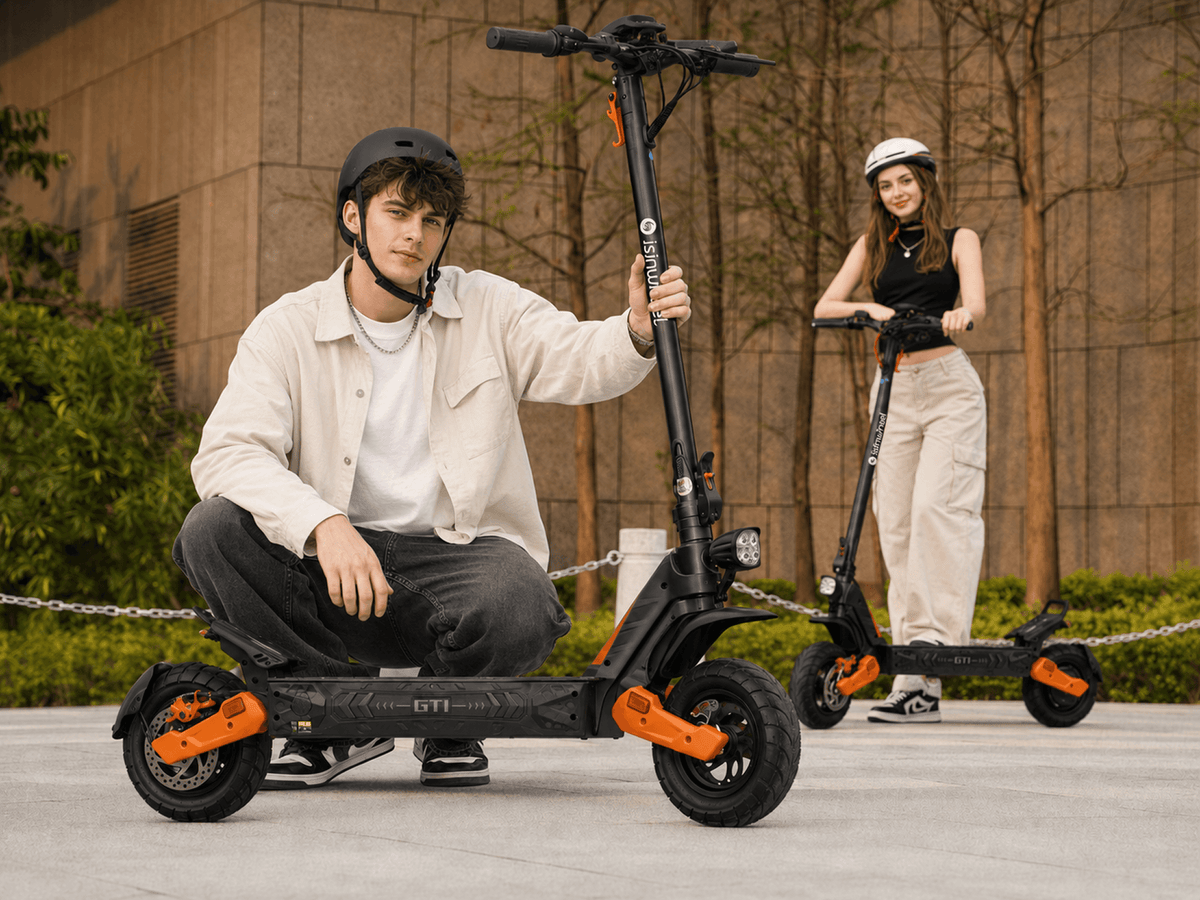
Within iSinwheel's lineup, the S Nova is the clearest portable urban option. It is positioned around a 500W rated motor, 600W max output, up to 20 MPH, a stated 19-mile range, 8.5-inch pneumatic tires, dual suspension, front and rear disc brakes, and a published hill ability up to 15%. Those numbers matter because they point to a short-route commuter, not a heavy all-day machine. If your ride is mostly compact city mileage with moderate grades, that balance makes sense.
Why a scooter often wins the first-week test
A foldable scooter usually works better when your daily route includes carry moments. You can bring it indoors more easily, park it in less space, and avoid the floor-space penalty of a full bike. That convenience is not minor. According to the CPSC, visibility issues showed up in a notable share of micromobility injury cases, so beginners benefit from simpler trips with fewer awkward parking decisions and less street-side exposure.
The tradeoff is comfort on longer climbs and rougher pavement. Smaller wheels react more sharply to broken asphalt, curb cuts, and patchwork road surfaces. Even with suspension, a stand-up platform asks more from your legs and balance when the road stays steep for several blocks.
Shop: S Nova Commuting Electric Scooter
When Does A Seated E-Bike Become The Better Fit?

A seated e-bike becomes the better fit when your route asks for more than portability. If you face longer climbs, rougher streets, heavier bags, or a commute that stretches beyond a quick neighborhood hop, the extra stability of a bike-style platform usually pays off fast. For a beginner, the seated posture also reduces fatigue because you are not standing through every crack, stoplight, and uphill restart.
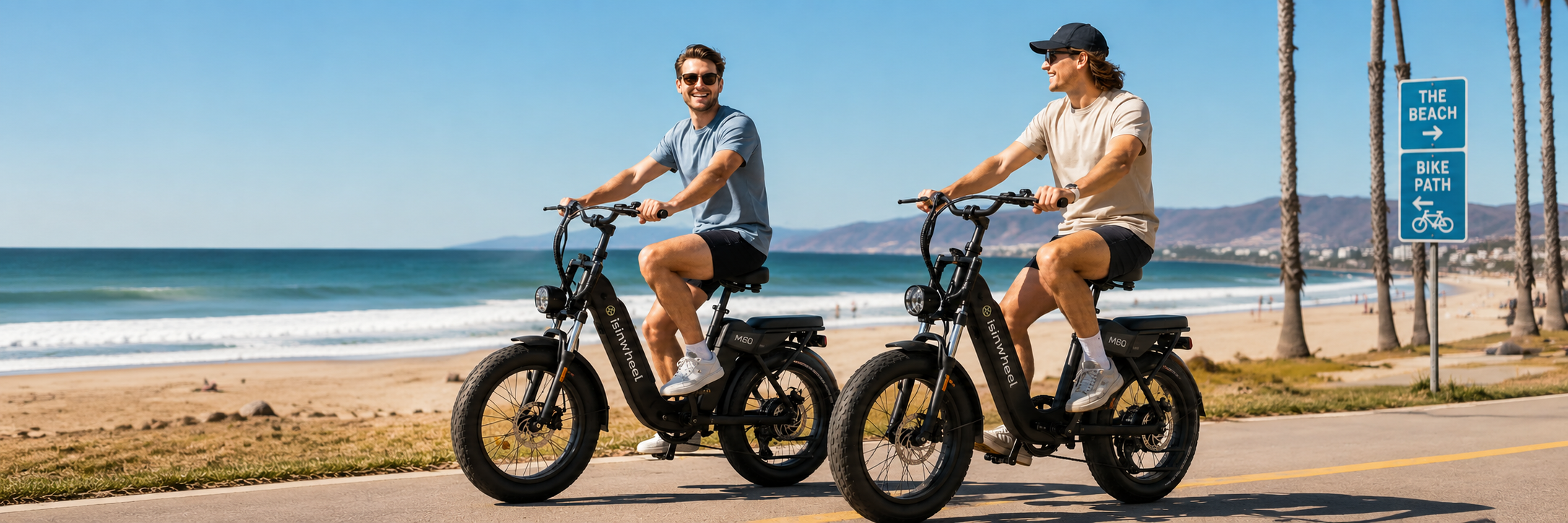
In iSinwheel's current range, the M60 and U8 Plus show what that category offers. The M60 is listed as having 1500W rated power, a 28 MPH top speed, 26 x 4-inch fat tires, IPX5 water resistance, and a net weight of 75.9 pounds. The U8 Plus is positioned as offering up to 75 miles of range, along with 26-inch wheels and a 330-pound max load. Those are very different use cases from a compact commuter scooter. You get larger wheels, a more relaxed riding position, and more confidence when the route includes longer grades or utility errands.
What you gain, and what you give up
A seated e-bike usually feels calmer at low speed, especially if you already know how to ride a bicycle. The bigger contact patch and longer wheelbase help it track straighter over rough pavement. In practical terms, that means less twitchiness when you start from a stop, climb slowly, or carry groceries in a backpack.
Still, that comfort comes with a storage penalty. A full-size bike needs real floor space, dedicated parking, or a larger entry area at home. If your building has narrow hallways or no secure storage, the better hill machine may become the harder machine to live with every day.
Shop: M60 All-terrain Electric Bike
Head-To-Head: What Changes On Real City Routes?

The most useful way to compare hilly city commuting is not by headline speed. Instead, compare what happens on starts, climbs, storage, and rider fatigue over a real week. In internal comparison mode, there is no single universal winner. The better choice depends on whether your commute is short and compact or longer and hill-heavy.
| Dimension | S Nova Commuting Electric Scooter | M60 Electric Bike | U8 Plus Electric Bike |
|---|---|---|---|
| Riding posture | Stand-up | Seated | Seated |
| Motor output | 500W rated, 600W max | 1500W rated | 1500W peak |
| Top speed | 20 MPH | 28 MPH | 28 MPH class |
| Claimed range | 19 miles | not the longest-range model | up to 75 miles |
| Tires | 8.5 in pneumatic | 26 x 4 in fat | 26 x 4 in fat |
| Hill use | up to 15% hills | stronger climb reserve | better long hill utility |
| Braking | front and rear disc | bike-style braking setup | bike-style braking setup |
| Water rating | IPX4 | IPX5 | not the main deciding spec |
| Weight / handling | easiest to manage | much heavier | much heavier |
| Storage fit | closet or desk friendly | needs bike space | needs bike space |
| Cargo readiness | light personal carry | better for bags | better for heavier utility |
| Limitations | shorter range, less seated comfort | bulky indoors | bulky and large footprint |
Which Feels Easier For A Beginner?
For most true beginners, the easier platform depends on habit. If you already ride bikes, a seated e-bike often feels natural within minutes because the steering, balance, and low-speed behavior are familiar. If you are more worried about daily handling than ride feel, a commuter scooter can still be easier overall because its controls are simple and its storage burden is lower.
The S Nova works well for short city routes with frequent stops, while an e-bike gives more planted low-speed stability. That distinction matters in crowded blocks. The OECD notes that rider behavior, helmet use, and street conditions all shape micromobility safety outcomes, so a beginner should choose the platform that feels predictable rather than the one with the flashiest spec sheet.
Hill Performance Changes The Decision
This is where the category split becomes obvious. A beginner commuter scooter can handle moderate urban grades when the manufacturer gives a clear hill target, and iSinwheel positions the S Nova around up to 15% climbing ability. That is useful for shorter hills, rolling neighborhoods, and commutes where the climb is present but not continuous.
A seated e-bike becomes the better fit when the route stays steep for longer than a quick block or two. Larger wheels, more motor reserve, and the ability to stay seated reduce the strain of repeated climbs. Put simply, scooters can do hills, but seated e-bikes are usually the less tiring tool for long uphill city mileage.
Storage, Parking, And Carry Burden
Storage is where the scooter often pulls back ahead. If you live upstairs, combine your ride with transit, or need to bring the vehicle inside at work, the folding advantage matters every single day. That is why the best scooter for short commutes is often the one you can actually carry, park, and charge without redesigning your apartment.
A seated e-bike needs more commitment. You may need a wall rack, a secure bike room, or outdoor parking that stays available at rush hour. If your city routine involves elevators, office lobbies, and narrow corners, the smaller vehicle may save more time than the longer-range one.
Value For Money Depends On Route
Value for money is really route fit. A scooter gives better value when your main need is compact daily transport, easy storage, and low-friction short trips. A seated e-bike pays back more clearly when your route is longer, steeper, or cargo-heavy, because comfort and climbing reserve become part of the daily experience rather than optional extras.
That is also why product class matters more than brand rivalry in this article. Even though competitors like Segway, NIU, and GOTRAX are active in commuter mobility, this brief is an internal comparison. The useful question is not which logo wins. It is which vehicle type removes the most friction from your own commute.
Best Fit By Commuting Scenario

You do not need a universal winner here. You need a best fit. Once you match the vehicle to your actual route, the decision becomes much simpler.
Short trips across dense city blocks
Choose a commuter scooter if your route is roughly 2 to 6 miles each way, includes frequent stops, and ends in a building with limited storage. The S Nova is the most practical fit in that situation because it keeps weight, size, and operating complexity in check. If your priority is a beginner commuter scooter that feels manageable from day one, this is the cleanest starting point.
Longer hilly routes with rough pavement
A seated e-bike is the better answer when your route includes sustained climbs, broken pavement, or longer daily mileage. The M60 gives you larger tires and stronger hill reserve, while the U8 Plus leans further into long-range utility. In other words, if hilly city commuting is the main challenge, comfort and stability should outrank portability.
Mixed errands and utility use
If you regularly carry groceries, a laptop, a change of clothes, or lock gear, the seated e-bike starts to make more sense. Cargo does not just affect capacity. It changes balance, braking feel, and rider fatigue. For mixed errands, choose the platform that still feels controlled when you add real-life load.
Conclusion
For electric scooter vs e-bike for beginners, the key takeaway is simple: choose the scooter for space and simplicity, and choose the seated e-bike for hills and distance. If your commute is short, storage is tight, and you want the easiest daily handling, the S Nova is the best fit. If your city route includes longer climbs, rougher roads, or utility riding, an iSinwheel seated e-bike such as the M60 or U8 Plus is the better long-term match.
Your next step should be to map your actual route before you buy. Check the steepest hill, total round-trip distance, and where the vehicle will sleep at home and at work. Once you know those three things, the right iSinwheel commuter choice becomes much clearer.
FAQ
Should I choose an e-scooter or an e-bike for commuting in the city, considering value for money?
For value for money in city commuting, an e-scooter is usually the better choice if your trips are short, storage space is limited, and you want the lowest upfront cost. A seated e-bike tends to cost more, but it often delivers better comfort, hill-climbing support, and practicality for longer daily rides, so it can be the better value over time if your route includes steep inclines. If you’re comparing options from iSinwheel, choose a scooter for budget-friendly portability and an e-bike if you want a more stable, comfortable ride for hilly commutes. In short: prioritize an e-scooter for affordability and convenience, and a seated e-bike for comfort and stronger all-around commuting value.
Which is easier to control: an e-bike or an electric scooter for a beginner commuter?
An e-bike is often easier to control for beginners who already know how to ride a bicycle, while an electric scooter may feel simpler for short, low-speed city trips. The better choice depends on your prior experience, route, and storage needs.
Which vehicle is easier to store and park in the city: an e-bike or scooter, considering convenience and space?
For most city dwellers, a scooter is easier to live with day to day. A foldable scooter takes less floor space, fits more naturally under a desk or in a closet, and is simpler to bring indoors after a commute. A seated e-bike is more comfortable on the road, but it usually requires dedicated parking or a larger indoor storage area. If space is your main constraint, iSinwheel scooter options are the better recommendation.
What Should I Look For In A Commuter Scooter Versus An Off-Road Scooter For Beginners?
A beginner commuter scooter should emphasize predictable throttle response, practical folding, strong brakes, good visibility, and tires tuned for pavement efficiency. An off-road scooter needs more suspension travel, better traction, higher motor output, and a chassis that stays stable on loose or broken surfaces. If your riding is mostly streets, bike lanes, and sidewalk transitions, a commuter setup is the smarter first purchase. Buy for your main surface, not the most extreme scenario you might try once.
What Is The Best Electric Scooter For Commuting In Hilly Cities For Beginners?
If the priority is beginner-friendly hill commuting, the best recommendation is a commuter scooter with a clear hill rating, reliable braking, and comfort features that reduce rider fatigue. Based on the brand materials provided, iSinwheel S Nova is the strongest named candidate for most hilly-city beginners because it is positioned around manageable hill use, dual braking confidence, and urban comfort. If your route includes longer climbs or you want a seated riding posture, a seated e-bike may still be the better fit. Match the scooter to grade, distance, and daily carry load before deciding.
Which Scooter Is Best For Short-Distance Commuting For Beginners?
Short-distance beginners usually benefit most from a lightweight commuter scooter rather than a high-power performance model. The right choice should fold quickly, feel calm at low speed, and stay easy to carry into apartments, offices, or transit connections. Within the recommendations here, iSinwheel commuter scooters are the most relevant brand option because they are positioned for everyday urban practicality rather than niche performance use. Keep the focus on control, braking, and storage before top speed.
Table of Contents
- Should Your First City Commuter Vehicle Prioritize Hills or Portability?
- When Does A Seated E-Bike Become The Better Fit?
- Head-To-Head: What Changes On Real City Routes?
- Best Fit By Commuting Scenario
- Conclusion
-
FAQ
- Should I choose an e-scooter or an e-bike for commuting in the city, considering value for money?
- Which is easier to control: an e-bike or an electric scooter for a beginner commuter?
- Which vehicle is easier to store and park in the city: an e-bike or scooter, considering convenience and space?
- What Should I Look For In A Commuter Scooter Versus An Off-Road Scooter For Beginners?
- What Is The Best Electric Scooter For Commuting In Hilly Cities For Beginners?
- Which Scooter Is Best For Short-Distance Commuting For Beginners?

Share:
Top 3 Affordable Electric Scooters for Family Errands Under $800
A Useful Guide to City Storage: Standard E-Scooters vs. Lightweight & Foldable E-Bikes