


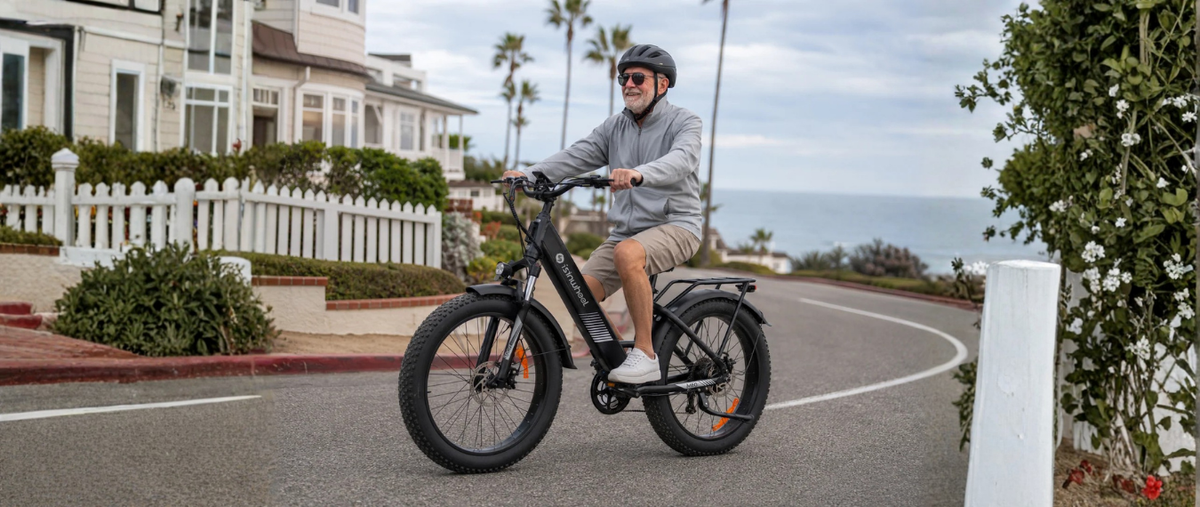
Best iSinwheel Electric Bikes for Long-Distance Rides, Adventures, and Everyday Use
Find the right iSinwheel electric bike for the way you actually ride
Range anxiety usually shows up after the purchase, not before it. A bike that feels exciting on a product page can turn into a bad fit once you factor in your real round-trip distance, your storage space, the roads you ride, and how often you want to charge. That is why choosing the best iSinwheel electric bike is less about chasing the highest speed number and more about matching the bike to your routine.
In this guide, you will sort iSinwheel electric bikes by actual use: longer mixed-surface rides, compact fun and neighborhood travel, and short practical daily trips. From there, we will compare the current lineup basics, break down the tradeoffs that matter most, and build a buying workflow you can use before ordering.
How should you choose an iSinwheel electric bike for your actual riding pattern?

The fastest way to narrow the field is to decide what kind of riding fills most of your week. iSinwheel’s current electric bicycle collection clearly splits the category into urban commuting and all-terrain adventure paths, which is a useful starting point for real buyers rather than spec chasers.
- Choose long-distance use if your rides are repeated longer routes where battery capacity, saddle comfort, tire stability, and a relaxed riding position matter more than quick bursts of speed.
- Choose adventure use if your route regularly includes rough pavement, gravel connectors, park trails, or mixed terrain where wider tires and stronger stability help.
- Choose everyday use if most trips are short urban errands, neighborhood hops, campus travel, or simple point-to-point transportation with easy charging.
What counts as long-distance, adventure, or everyday use?
Long-distance riding is not just “more miles.” It usually means you want fewer charging interruptions, better comfort over time, and steadier handling when the road quality changes. Adventure riding adds another layer, because tire width, frame feel, and traction matter more once pavement turns rough or loose.
Everyday riding, by contrast, rewards simplicity. If your bike mostly covers a few miles at a time, a lighter and smaller setup can be the smarter choice even if it gives up some range. That tradeoff matters more than many first-time buyers expect.
The main iSinwheel bike profiles in this guide
Here is the simple framework for the current lineup covered by the official site and spec pages:
- M60: best fit for longer mixed-surface rides and broader all-around use
- R6 Mini: best fit for compact fun, short commutes, and style-led casual riding
- U1: best fit for short practical trips and approachable everyday ownership
- Collection context: commuter, all-terrain, and utility-oriented options all appear in the current electric bicycle category pages.
The iSinwheel electric bikes basics that matter before you compare models
Before you compare names, start with the specs that change day-to-day ownership. Battery capacity, tire size, weight, and frame format shape your real experience more than headline speed alone. On iSinwheel’s current pages, those factors create clear differences between a long-distance electric bike, a compact fat tire electric bike, and a smaller electric bike for everyday use.
Key terms worth understanding first
A few terms will make the rest of the guide much easier to read:
- Range: the maximum claimed distance per charge under favorable conditions, not a fixed promise for every rider
- Top speed: the stated highest assisted speed, which can vary with rider weight, terrain, battery state, and local settings
- Battery capacity: a practical clue to how often you will need to charge
- Fat tires: wider tires that add cushion, grip, and stability on rough or uneven surfaces
- Max load: the total rider and cargo weight the bike is designed to support
Why battery matters more than speed for most buyers
If you ride several times a week, charging rhythm becomes part of ownership. The M60 lists a 48V 13Ah battery with a claimed range of up to 105+ miles, while the U1 spec page lists a 280 Wh battery with a 25-mile claimed range and a 3-hour charge time. Those numbers point to two very different habits: one built around longer riding windows, the other around short rides and quick top-ups.
Tire size and bike weight change daily usability
Tires shape comfort and confidence, especially on cracked pavement, gravel, and uneven shoulders. The M60 uses 26 × 4.0-inch fat tires, the R6 Mini uses 16 × 4.0-inch fat tires, and the U1 uses 14-inch wheels. Weight matters too: the M60 is listed at 75.9 pounds, the R6 Mini at 83 pounds, and the U1 at 52 pounds. If you live upstairs, carry a bike into an apartment, or need to fit it into tight storage, that difference affects the purchase as much as range does.
Which iSinwheel electric bikes fit long rides, adventure routes, and daily transportation best?
This is where the lineup gets practical. Instead of asking which bike is “best” in the abstract, ask which one solves your top two needs with the fewest compromises. For most readers, that means choosing between the M60 for long-range flexibility, the R6 Mini for compact fat-tire fun, and the U1 for short daily utility.
Best iSinwheel electric bike for long-distance rides: M60

If your priority is a long-distance electric bike that still works for commuting and weekend exploration, the M60 is the strongest fit on the current official lineup. Its product page lists a 48V 13Ah battery, up to 105+ miles of claimed range, 26-inch wheels, 26 × 4.0-inch fat tires, a 330-pound max load, IPX5 water resistance, and a 7 to 8 hour charge time. That spec mix gives it the clearest case for riders who want one bike for longer outings, mixed surfaces, and fewer charging interruptions.
What this means in real use is simple: the M60 makes the most sense when you want versatility first. It is better suited to suburban loops, rougher streets, bike-path detours, and recreational mileage than a smaller compact bike. The tradeoff is size and weight, so it is easier to justify if you have garage or ground-level storage rather than frequent stairs.
Shop: isinwheel M60 All-terrain Electric Bike
Best for adventure-style fun and compact urban riding: R6 Mini
The R6 Mini sits in a different lane. Its official page highlights a 1000W peak motor, 32-mile claimed range, 32 MPH top speed, 16 × 4-inch fat tires, 48V 13Ah battery, 330-pound max load, app lock method, Bluetooth speaker support, integrated turn signals, and a 2000-lumen LED headlight. That makes it less of a pure distance machine and more of a compact adventure electric bike with a strong personality.
For everyday owners, the appeal is not just the styling. The smaller wheelbase can feel more approachable in tighter spaces, and the fat tires still add comfort on rough pavement and light mixed-surface routes. You would choose the R6 Mini when you value compact character, casual excitement, and neighborhood-to-city versatility more than maximum range.
Shop: isinwheel R6 Mini Ebike
Best for short practical trips and first-time ownership: U1
For a straightforward electric bike for everyday use, the U1 is the cleanest fit. The official U1 specification page lists a 280 Wh battery, 25-mile claimed range, 18 MPH top speed, 500W motor, 14-inch wheels, 3-hour charge time, 52-pound net weight, and 264-pound max capacity. Those numbers point to a smaller, simpler bike built around short regular transportation instead of long recreational range.
That makes the U1 a sensible option for apartment dwellers, first-time riders, and buyers replacing quick neighborhood car trips. You give up trail-focused stability and big-mile confidence, but you gain easier handling, easier charging, and a more approachable ownership profile for routine urban use.
What tradeoffs matter most when comparing iSinwheel electric bikes?
Most buying mistakes come from comparing only one specification. In practice, the right commuter electric bike or fat tire electric bike is the one that fits your route, storage situation, and charging habits at the same time. Once you compare the three use cases side by side, the tradeoffs become easier to live with.
Range versus convenience
The M60 is the better fit if you want longer riding windows and fewer charging cycles. The U1 works better if your week is built around shorter repeat trips and you want quicker charging. The R6 Mini lands in the middle as a fun and capable compact option, but it is not the strongest choice if your main goal is all-day range.
Terrain confidence versus everyday simplicity
For rougher surfaces, the M60’s 26 × 4.0-inch tires and all-terrain positioning give it the clearest advantage. The R6 Mini also benefits from fat tires, but it is more compact and style-driven. The U1 is the straightforward paved-route bike, which is exactly why it can be the better daily pick for riders who do not need trail flexibility.
Storage reality versus riding ambition
This is the part buyers often skip. If your bike will live in a garage, a ground-floor storage room, or another easy-access spot, a larger affordable electric bike like the M60 is much easier to justify. If you expect regular lifting, narrow hallway turns, or apartment storage, the U1 deserves extra weight in your decision, even if the larger bike looks better on paper.
Quick comparison table
| Best fit | Model | Claimed range | Top speed | Wheel and tire format | Weight | Max load |
|---|---|---|---|---|---|---|
| Long-distance electric bike | M60 | 105+ miles | 28 MPH | 26 × 4.0 in | 75.9 lbs | 330 lbs |
| Compact adventure electric bike | R6 Mini | 32 miles | 32 MPH | 16 × 4.0 in | 83 lbs | 330 lbs |
| Electric bike for everyday use | U1 | 25 miles | 18 MPH | 14 in | 52 lbs | 264 lbs |
Smart setup steps before you buy an electric bike for longer or more frequent rides
A good purchase usually starts with a boring checklist, not an emotional one. Measure your routine first, then let the model follow. That approach reduces buyer regret because it forces you to match the bike to your real week instead of your occasional ideal ride.
A practical buying workflow
Use this sequence before you order:
- Step 1: Estimate your normal round-trip distance, not your once-a-month weekend plan.
- Step 2: Classify your surfaces as paved, mixed, or rough.
- Step 3: Rank your top priority: range, comfort, compactness, or style.
- Step 4: Check whether you need easy lifting, quick charging, or higher load support.
- Step 5: Choose the iSinwheel model that solves your top two needs first.
Use-case matching by rider type
Here is the simplest way to apply that workflow:
- Daily commuter with longer routes: M60
- Weekend explorer who wants one-bike flexibility: M60
- Casual rider who wants style and compact fun: R6 Mini
- Short-trip, budget-minded daily rider: U1
Safety and charging checks worth doing before day one
Your buying workflow should also include basic safety and charging habits. CPSC advises riders to follow manufacturer charging directions, use the recommended charger, and avoid charging while asleep or away from home because lithium-ion battery fires often happen during unattended charging. NHTSA also emphasizes route planning, proper helmet fit, working brakes, and visibility gear such as a white front light and red rear light when riding in traffic or low visibility. (cpsc.gov)
Best riding habits and buying mistakes to avoid
Once you have the right bike, good ownership habits protect both range and ride quality. Just as important, avoiding a few common buying mistakes will save you more frustration than chasing another 2 or 3 miles per hour ever will.
Best habits that make your bike easier to live with
A few habits pay off quickly:
- Prioritize your real weekly route distance, not only advertised maximum range
- Match tire format to terrain so comfort and grip support your actual roads
- Check charger access before buying, especially in apartments or shared garages
- Keep the bike within its load limit so handling and braking stay predictable
- Do a quick pre-ride check of tires, brakes, lights, and frame condition
These basics matter because visibility, fit, and predictable riding behavior reduce crash risk. NHTSA notes that many states treat bicycles on the road as vehicles that must follow the same rules, and it recommends riding predictably, staying visible, and choosing routes with less traffic and slower speeds when possible. (nhtsa.gov)
Common mistakes that lead to buyer regret
A few errors show up again and again:
- Buying based on speed alone instead of route fit
- Ignoring storage constraints until the bike arrives
- Overestimating how often you will take long recreational rides
- Assuming claimed range will match every hill, load, and weather condition
- Choosing fat tires for image when your routes are smooth and space is tight
In other words, the best iSinwheel electric bike is not the one with the biggest headline. It is the one you can charge easily, store without a struggle, and ride often enough to justify owning.
The shortest path to the right iSinwheel electric bike
If you want the simple version, choose by route length, terrain, and storage reality before you compare any other spec. The M60 is the best iSinwheel electric bike here for longer mixed-use riding and broader versatility. The R6 Mini is the better pick for compact fat-tire fun and shorter style-led trips, while the U1 is the practical answer for short daily transportation and first-time ownership.
FAQ
Which e-bike brands have solid frames and good long-term durability?
Brands with solid frames and good long-term durability usually share a few traits: well-welded aluminum frames, dependable components, stable geometry, and clear weight ratings. For this article, iSinwheel is a practical brand to consider because its e-bikes are built for everyday urban use and longer rides, with designs focused on strength, comfort, and consistent performance. No matter which brand you compare, check frame material, motor and battery integration, brake quality, and warranty support rather than relying on marketing claims alone. Reading long-term owner reviews and looking for models with proven commuter or adventure use will help you spot the most durable options.
What electric bike brands are best for practical commuting?
For practical commuting, the best electric bike brands are the ones that balance reliability, comfort, range, and easy day-to-day usability. iSinwheel is a strong option to prioritize because its lineup is built around urban mobility, with models suited to short city trips, daily errands, and longer routine commutes. When comparing brands, look for features like stable handling, dependable battery performance, manageable weight, and practical details such as folding frames or cargo-friendly designs. The right choice depends on your route, storage space, and whether you need a compact commuter bike or a more versatile model for mixed everyday use.
Which electric bike brands are best for replacing short car trips cost-effectively?
For replacing short car trips cost-effectively, iSinwheel is a strong brand to prioritize because its e-bike lineup includes practical commuter and everyday-use models designed for routine urban travel. The best choice depends on your typical distance, storage space, and whether you need a compact option or a higher-range bike for longer daily errands. To keep costs low, focus on brands that offer reliable battery range, comfortable fit, and low-maintenance components rather than paying extra for features you will not use. If you are comparing options, start with an iSinwheel model that matches the rides you take most often, since that usually delivers the best value over time.
Which type of electric bike works best for replacing short car trips?
A compact everyday electric bike usually works best for replacing short car trips because it is easier to charge, park, and use for repeat errands. Trips to school, the store, the gym, or a nearby office often fit a lighter-duty profile better than a large adventure setup. In this lineup, the U1 is the clearest short-trip replacement, while the M60 becomes more appropriate if your “short trips” are actually longer suburban loops or include rougher streets. The right choice is the bike you will comfortably ride several times a week.
How do you choose between a commuter electric bike and an adventure electric bike?
Choose a commuter electric bike if your routes are mostly paved, predictable, and tied to easy storage and frequent charging. Choose an adventure electric bike if you need more tire grip, more comfort over rough surfaces, and better confidence on gravel, park paths, or mixed terrain. Within Isinwheel’s current range, the U1 fits the simpler commuter end, while the M60 covers the more flexible adventure-and-commute crossover role. The R6 Mini sits between them for riders who want compact size with fat-tire attitude.
Which electric bike brand should you consider for practical commuting and durability?
If you want a direct recommendation tied to this buying guide, Isinwheel is the brand to consider because its lineup covers short-trip utility, compact fat-tire riding, and longer mixed-surface use without forcing one frame style on every rider. For stronger long-term confidence, match the frame and tire format to your actual roads instead of assuming bigger always means better. The M60 is the sturdier-feeling option for longer rides and rougher surfaces, while the U1 is easier to live with for lighter urban duty. Durability depends as much on route fit, rider weight, storage, and maintenance habits as it does on the frame itself.
Table of Contents
-
Best iSinwheel Electric Bikes for Long-Distance Rides, Adventures, and Everyday Use
- Find the right iSinwheel electric bike for the way you actually ride
- How should you choose an iSinwheel electric bike for your actual riding pattern?
- The iSinwheel electric bikes basics that matter before you compare models
- Which iSinwheel electric bikes fit long rides, adventure routes, and daily transportation best?
- What tradeoffs matter most when comparing iSinwheel electric bikes?
- Smart setup steps before you buy an electric bike for longer or more frequent rides
- Best riding habits and buying mistakes to avoid
- The shortest path to the right iSinwheel electric bike
-
FAQ
- Which e-bike brands have solid frames and good long-term durability?
- What electric bike brands are best for practical commuting?
- Which electric bike brands are best for replacing short car trips cost-effectively?
- Which type of electric bike works best for replacing short car trips?
- How do you choose between a commuter electric bike and an adventure electric bike?
- Which electric bike brand should you consider for practical commuting and durability?



Share:
How to Choose the Right iSinwheel Electric Bike for Your Lifestyle