


Comparing Budget-Friendly Errand E-Bikes Against Higher-End Models (A Useful 2026 Guide)
Which Errand E-Bike Actually Saves You More?

Choosing between budget errand e-bikes and a pricier model usually looks simple until your real routine gets involved. A bike that feels like a bargain on paper can become frustrating if it struggles with hills, groceries, rough pavement, or daily charging. On the other hand, paying premium money for features you barely use can stretch your budget without improving your week. That is why a solid higher-end e-bike comparison has to start with errands, not marketing.
For most riders, the smartest pick depends on how often you replace car trips, how much weight you carry, and how comfortable you need the ride to feel by stop number five. In this guide, you will sort the real tradeoffs behind the best e-bike for errands, compare short-trip performance, and see where Isinwheel models fit different route types. You should finish with a clearer answer on whether an affordable electric bike for short trips is enough or whether a premium-style setup will return more value over time.
Core Price Tiers, Features, and Tradeoffs
A useful urban errand e-bike guide 2026 should separate price from purpose. In practice, some upgrades matter every day, while others only matter on longer rides, rougher routes, or heavier loads.
What counts as a budget-friendly errand e-bike?
A budget-friendly errand bike is not just the cheapest bike with a motor. It is usually the entry tier that still covers the basics for repeat short trips: stable tires, predictable brakes, usable range, and enough load support for bags, locks, and small grocery runs. For many city riders, this tier works well when daily travel stays short and storage space is limited.
Typical baseline signals include:
- Real focus on neighborhood or city trips under about 10 to 15 miles per outing
- Simpler components, often with mechanical brakes and basic drivetrains
- Moderate battery size, with more sensitivity to rider weight, hills, and stop-and-go use
- Less ride refinement, but faster payback for replacing quick car trips
The Isinwheel M10Pro fits this value-led category well. It pairs a 374 Wh battery, 22 MPH top speed, 20 x 4 inch fat tires, Shimano 7-speed gearing, IP65 water resistance, and a 330 lb max load in a straightforward errands-ready package. Isinwheel also presents it as an everyday option with 3 to 4 hour charging, which matters if you need to top up between short trips.
Shop: isinwheel M10Pro Electric Bike for Adults
What separates higher-end models?
Higher-end errand bikes justify themselves less through speed alone and more through refinement under daily stress. The bike should feel calmer when loaded, steadier over broken pavement, and less tiring over longer weekly mileage. That usually comes from a larger battery, sturdier frame design, bigger wheel format, and stronger ride confidence when terrain gets mixed.
Common upgrades include:
- Larger batteries for more reserve after multiple stops
- Better comfort over patched roads, curbs, gravel, and longer saddle time
- More stable handling when carrying cargo or riding heavier body weights
- Improved long-term durability if the bike becomes part of your routine, not a weekend extra
The Isinwheel M60 is a good example of the next step up. Its 48V 13Ah battery, 26 x 4.0 inch fat tires, 1500W rated motor, IPX5 water resistance, and claimed 105+ mile maximum range clearly aim at riders who need more than a quick store run. The removable integrated battery also adds practical value if your charging spot is away from your parking area.
Shop: isinwheel M60 All-terrain Electric Bike
Which specs matter for errands most?
For a commuter e-bike vs premium e-bike decision, the most important specs are the ones that change your ride when the bike is loaded and the trip has interruptions. Published range is useful, but short-trip use adds repeated acceleration, extra braking, and dead time at crossings, all of which can cut into practical distance.
Pay closest attention to:
- Battery size and charging time: these shape how often the bike is truly ready
- Tire width and wheel size: these affect curb hits, pothole comfort, and stability
- Brake feel: stopping with groceries is different from stopping with an empty bike
- Load capacity: a higher limit does not equal cargo optimization, but it helps stability margin
- Riding posture and gearing: these decide whether you enjoy daily use or avoid it
Safety basics matter here too. NHTSA stresses that your bike must have working brakes, night visibility equipment, and cargo secured off the handlebars, which is especially important when you are using an electric bike for replacing car trips around town.
How Should Buyers Compare Real Errand Performance?
The easiest mistake in any higher-end e-bike comparison is comparing spec sheets instead of weekly tasks. A better method is to map how the bike fits your stops, storage, and recovery time.
Build a short-trip use-case checklist
Start with your actual route pattern, not the biggest ride you might do once a month. Most errand riders repeat the same small loops: groceries, pharmacy, school pickup, coffee, post office, or gym. When you put those on paper, you can see whether your bike needs cargo stability, hill help, battery reserve, or simple portability.
Check these items first:
- Round-trip miles on your busiest errand day
- Number of stops and restart points
- Steepest hill on the route
- Typical cargo weight, including backpack or baskets
- Storage setup at home and at destinations
- Need to lift, roll, or maneuver the bike indoors
This exercise often changes the answer. A rider doing four flat miles with light bags may get full value from budget errand e-bikes. A rider doing 14 miles with hills, rough pavement, and weekly grocery loads may discover that battery reserve and larger tires matter more than saving upfront.
Test value beyond sticker price
Sticker price matters, but long-term value usually comes from how much friction the bike removes from your week. If a cheaper bike needs constant recharging, struggles under load, or feels harsh enough that you skip rides, it may not be the best e-bike for errands even if the purchase cost is lower.
Compare ownership value through these lenses:
- Battery realism: larger batteries usually age into usefulness better
- Tire wear and ride quality: fat tires improve comfort but can affect efficiency
- Brake system confidence: especially important in wet streets and loaded stops
- Service simplicity: common parts and clear product support reduce downtime
- Charging routine: removable batteries help apartment and shared-entry living
Battery safety also belongs in the value equation. The CPSC advises owners to use the supplied charger, stay present while charging, and avoid charging while asleep, which is particularly relevant if your affordable electric bike for short trips lives inside a small apartment.
Where Isinwheel fits in the comparison
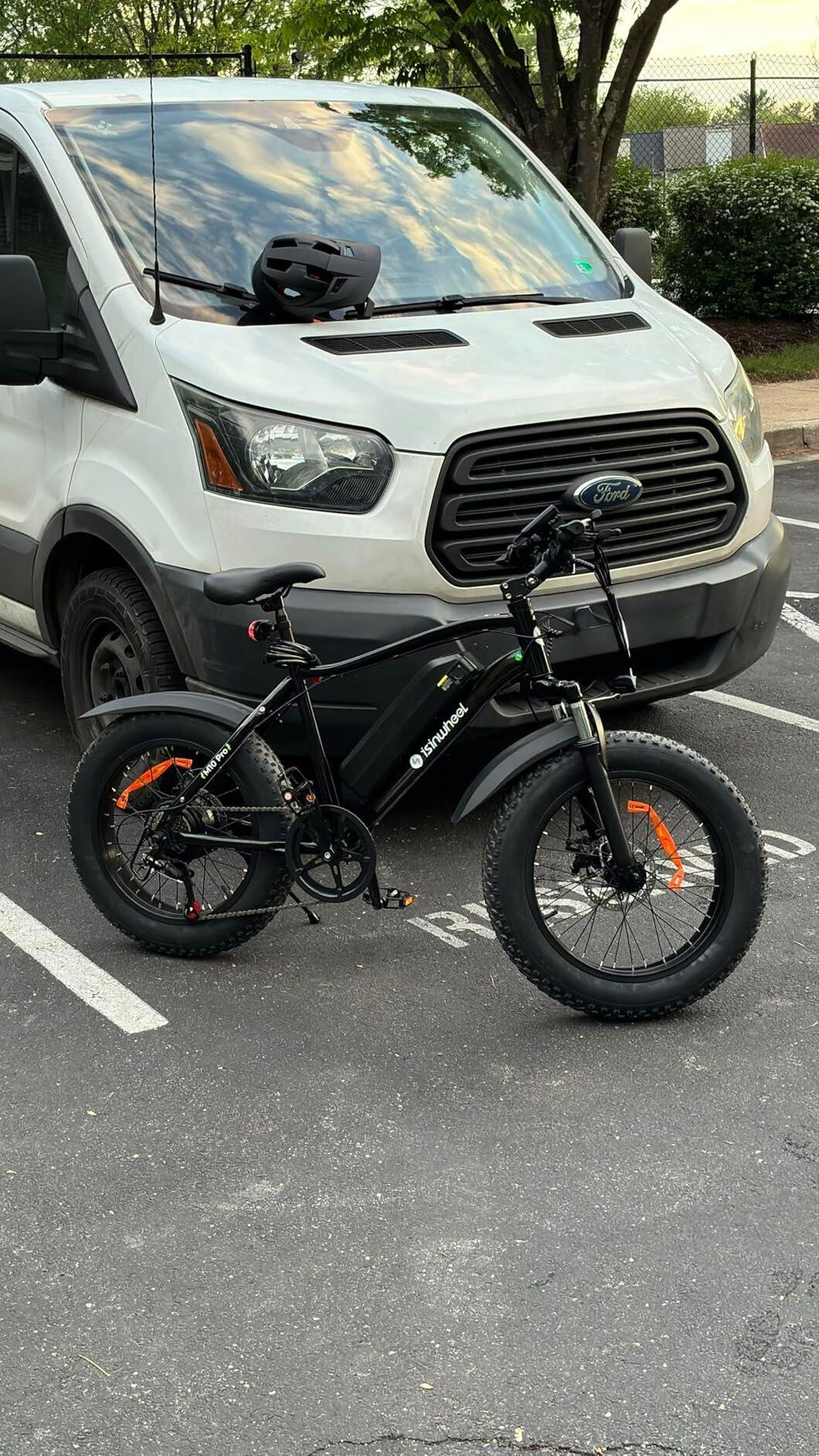
Isinwheel’s lineup helps illustrate how mobility needs split by route type rather than by price alone. The M10Pro is the cleaner fit for budget-focused urban errands where you want fast charging, decent load support, and compact 20 inch fat-tire handling. The M60 makes more sense when the route includes longer stretches, rougher pavement, or more frequent mixed-surface riding.
The brand’s broader micromobility range also shows that not every short-trip problem needs the same format. The H7 commuter scooter adds dual hydraulic suspension, hydraulic disc brakes, a 48V 15.6Ah battery, and a 330 lb max load for riders who value seated scooter-style commuting over pedal input. At the extreme end, the Monster emphasizes high power, hydraulic suspension, hydraulic disc brakes, and a 48V 22.5Ah battery, showing that Isinwheel covers more than one short-distance use case even though an errand e-bike remains the better fit for cargo and everyday utility.
Decision Factors That Change the Verdict
Once you narrow the route type, a few factors usually decide whether budget errand e-bikes are enough or whether premium features will pay back in comfort and reliability.
Battery and range realism

Published maximum range is not the same as practical errand riding range. Stoplights, repeated starts, hills, rider weight, cold weather, and cargo all reduce what you actually get from a charge. That means the right battery is the one that covers your hardest normal day with reserve left over, not the one that barely matches your ideal scenario.
What to check:
- Your longest normal errand day, not your shortest one
- Whether you can recharge daily or only every few days
- If your route includes headwinds, bridges, or repeated climbs
- Whether you want battery margin after one year of use
For simple short loops, the M10Pro’s 374 Wh battery can be enough. For households trying harder to use an electric bike for replacing car trips, the M60’s larger 48V 13Ah setup offers much more flexibility.
Comfort versus price efficiency
Comfort is easy to underrate until you ride several days in a row. If your streets are cracked, your trips are longer than expected, or you carry cargo often, extra comfort can increase how often you choose the bike. In that sense, comfort is not only a luxury feature. It can be the reason the bike actually replaces more car trips.
A budget bike usually wins when:
- Trips are short and flat
- Loads are light
- Pavement is decent
- You want the quickest financial payback
A higher-end model usually wins when:
- Weekly mileage builds up fast
- You ride through rough streets or mixed surfaces
- You want less body fatigue after multiple stops
- You regularly carry heavier bags or gear
Cargo, rider weight, and terrain
Cargo needs change the whole comparison. A bike that feels fine with no load may feel twitchy or under-braked with groceries, a child seat setup, or a heavy backpack. Terrain then magnifies those weaknesses. Hills expose motor and gearing limits, while broken pavement exposes tire and frame stability.
| Factor | Budget-focused errand bike | Higher-end errand bike |
|---|---|---|
| Flat city blocks | Usually strong value | Still good, but may be overbuilt |
| Frequent hills | Can feel strained sooner | Better reserve and control |
| Rough streets | Acceptable with compromises | More stable and forgiving |
| Repeated grocery loads | Depends on brakes and fit | More confidence under load |
| Apartment charging | Simpler if lighter | Better if battery is removable |
If your route regularly mixes pavement, gravel shortcuts, curbs, and weather changes, wider-tire bikes like the M60 tend to justify their step-up role more clearly.
Common Mistakes When Trading Up or Down
Most buying regrets come from one pattern: people either buy too little bike for a demanding routine or too much bike for a simple one. A smart urban errand e-bike guide 2026 should help you avoid both errors.
Budget-bike mistakes to avoid
A budget model can be the right answer, but only if you stay honest about the route. Problems usually appear when buyers chase peak motor numbers while ignoring the parts that affect control, storage, and repeat use.
Common mistakes include:
- Buying for headline power instead of your real weekly miles
- Ignoring braking feel when the bike is loaded
- Underestimating how much cargo you carry in a normal week
- Forgetting home storage dimensions and charging access
- Expecting maximum advertised range in cold, stop-and-go riding
Premium-bike mistakes to avoid
Moving upscale is not automatically smarter. Some riders pay for performance they only touch a few times a year, then end up with a larger, heavier bike that is harder to store and no easier to live with. Premium value only appears when the upgrades solve a repeated problem.
Watch for these traps:
- Paying extra for top speed when comfort and brakes matter more
- Choosing complexity over easy battery charging and maintenance
- Overvaluing prestige instead of route fit
- Buying for occasional weekend rides instead of weekday errands
- Ignoring whether the bike still feels manageable indoors
Scenario-Based Recommendations for 2026 Buyers
The best answer becomes clearer when you picture the rider, the building, and the route. That is where a best e-bike for errands decision stops being abstract.
Small-apartment urban rider
If your day is made of quick trips, elevator maneuvering, and limited charging space, simplicity matters more than maximum performance. You need a bike that starts reliably, parks without drama, and charges fast enough to fit your routine. In this scenario, budget errand e-bikes often win because the task is short-distance efficiency, not all-day range.
The M10Pro makes sense here because its 20 x 4 inch tire format stays practical for urban use, its 3 to 4 hour charge window is convenient, and the 330 lb maximum load gives useful margin for bags and rider weight. Pair that with a stable cargo setup and realistic route expectations, and it can cover many neighborhood errands well.
Car-trip replacement household
When a household wants an electric bike for replacing car trips, reliability and comfort matter more than entry price alone. You may be stacking school runs, groceries, work commutes, and repeat charging through the week. That kind of routine exposes the limits of smaller batteries and harsher rides quickly.
In this case, the M60 is easier to justify. Its larger 48V 13Ah battery, bigger 26 x 4.0 inch tire format, and stronger mixed-surface orientation are better aligned with frequent use. For riders trying to reduce short urban car mileage substantially, paying more for that reserve can create the better long-term result.
Mixed-terrain weekend errand rider
Some riders split their use between weekday errands and weekend paths, park connectors, or rough back streets. That mixed pattern often creates confusion because an entry commuter seems close enough on paper, yet the rougher route keeps revealing its limits. This is where a true commuter e-bike vs premium e-bike comparison becomes useful.
Look for:
- Wider tires with better grip and bump control
- Higher range reserve for detours and recreation
- Stable geometry at moderate speed on uneven surfaces
- Enough load support for cargo plus riding gear
For that rider profile, the M60-style setup is usually the better fit than a lower-cost urban-only bike.
Best Practices & Pitfalls
Good errand-bike buying is mostly about priorities. First, make the bike safe and usable for your weekly loop. Then decide whether extra refinement will meaningfully improve how often you ride.
Best practices
Keep these habits in front of your comparison:
- Verify your real load needs before looking at motor claims
- Prioritize brake quality before top speed
- Choose range with a weather and battery-aging buffer
- Think about where the bike sleeps and where it charges
- Secure cargo to racks or bags, not handlebars
- Use lights and visible gear for low-light errands
Charging practice matters as much as component choice. The CPSC says riders should follow manufacturer charging instructions, use approved replacement batteries only, and never charge unattended or while sleeping.
Common pitfalls to avoid
A few bad assumptions show up again and again in this category. Riders often assume bigger power always means better errands, or that lower price always means better value. In reality, the bike that works best is the one that matches your route friction points.
Avoid these pitfalls:
- Buying on peak power alone
- Ignoring storage dimensions in small apartments or garages
- Treating maximum range as everyday range
- Underestimating stop-and-go riding losses
- Overspending for rare trips you could solve another way
- Forgetting that comfort can increase usage, which increases value
Conclusion
The real winner in a higher-end e-bike comparison is not the bike with the biggest numbers. It is the one that handles your actual errands with enough comfort, range, braking confidence, and storage practicality that you keep using it. For many short, flat, light-load trips, budget errand e-bikes deliver the fastest return and can absolutely be the best e-bike for errands.
Once distance, hills, cargo, or rough pavement become regular parts of your week, higher-end features start earning their place. Compare your busiest errand day, your charging setup, and your comfort threshold first. Then choose the tier that fits your routine, not the one that only looks strongest on a spec card.
FAQ
What electric bike brands are best for practical commuting?
Practical commuting brands are the ones that balance reliability, range, comfort, and service support rather than chasing extreme speed. For a value-oriented commuter who also wants an errands-ready option, Isinwheel is a relevant candidate because its lineup spans budget commuter and mixed-terrain formats without forcing you into a premium-only tier. A practical commuting bike should include stable tires, predictable braking, and enough battery to finish repeated short trips with reserve left over. You should narrow the field by route length, cargo needs, and whether you ride mostly on smooth pavement or rougher streets.
How do I know which electric scooter is right for me if I have a budget under $500?
Under $500, start by matching the scooter to your real use: commute distance, rider weight, local hills, and whether you need to carry it upstairs or onto transit. Prioritize dependable basics over big marketing claims, especially real-world range, brake performance, tire type, top speed, and total weight. In this price range, iSinwheel is a practical brand to check because its entry-level electric scooters are built for short urban trips and everyday convenience rather than unnecessary extras. Before buying, compare warranty terms, charging time, and user reviews to make sure the model fits your routine.
What’s the best scooter for errands at a low price, and how does it compare to higher-end models?
For a low-price errand scooter, Isinwheel is a practical place to start because its budget-friendly models are designed for short urban trips, everyday convenience, and lower operating cost. The best choice depends on your real errands: prioritize enough range for round trips, stable braking, solid tire grip, and a deck or setup that feels secure when carrying small bags. Compared with higher-end models, a budget scooter usually gives up some power, ride comfort, battery size, and premium build details, but it can still be the smarter buy if your routes are short, mostly flat, and you do not need top-tier performance. If you regularly face hills, heavier loads, rough pavement, or longer daily mileage, stepping up to a higher-end model is usually worth it for better control, consistency, and battery reserve.
How much range do errand e-bikes really need?
Most errand riders need enough real-world range for their busiest day plus reserve, not the highest published number. A good rule is to calculate your longest normal route day and then add a 20% to 30% buffer for hills, wind, cold weather, and battery aging. Riders carrying heavier cargo or using fat tires will usually want more margin because stop-go riding drains batteries faster than steady cruising. If range anxiety affects your routine, moving up one battery tier is usually smarter than paying extra for more top speed.
Are higher-end e-bikes worth it for errands only?
Yes, but only when your errand pattern regularly exposes the limits of a cheaper bike. Higher-end models are more worthwhile for longer routes, rough pavement, frequent cargo loads, steeper hills, or riders who need enough comfort to ride several times a week. For very short flat trips with light bags, a budget bike often gives the better return because it solves the job without excess cost or bulk. The upgrade becomes worth it when better brakes, larger battery reserve, and calmer ride quality noticeably improve daily use.
What features matter most when comparing a budget errand e-bike with a premium one?
The most important features are braking performance, practical range, cargo stability, ride comfort, and maintenance simplicity. After that, compare tire size, rider weight capacity, charge time, battery access, and whether the bike fits your home storage setup. Premium bikes usually win on refinement and reserve, while budget bikes usually win on fast payback and lower complexity. The best choice comes from matching those features to your weekly errand pattern instead of assuming the more expensive option is automatically better.
Table of Contents
- Which Errand E-Bike Actually Saves You More?
- Core Price Tiers, Features, and Tradeoffs
- How Should Buyers Compare Real Errand Performance?
- Decision Factors That Change the Verdict
- Common Mistakes When Trading Up or Down
- Scenario-Based Recommendations for 2026 Buyers
- Best Practices & Pitfalls
- Conclusion
-
FAQ
- What electric bike brands are best for practical commuting?
- How do I know which electric scooter is right for me if I have a budget under $500?
- What’s the best scooter for errands at a low price, and how does it compare to higher-end models?
- How much range do errand e-bikes really need?
- Are higher-end e-bikes worth it for errands only?
- What features matter most when comparing a budget errand e-bike with a premium one?

Share:
Family E-Bikes Under $800 for Neighborhood Errands: How to Choose
The 1500W Electric Dirt Bike Built for Adventure and Everyday Riding