



A Comprehensive Guide to Finding Safe and Reliable Electric Scooters for Daily Riding
Which daily-riding scooter actually fits your route?

A safe electric scooter for daily riding usually feels ordinary in the best way. It starts predictably, stops without drama, stays composed on cracked pavement, and gives you enough battery margin that a small detour does not become a stressful calculation. The wrong scooter often fails in quieter ways: harsh tires make rough blocks tiring, weak braking lowers confidence in traffic, and an optimistic range claim leaves no buffer for cold weather, hills, or repeated stop-and-go riding.
That is why a commuter electric scooter guide should begin with your route, not a speed headline. In the sections below, you will sort the specs that actually matter for daily commuting, learn how real-world scooter range changes outside test conditions, and build a shortlist around control, comfort, and reliability. If you want a beginner-friendly electric scooter, this framework will also help you avoid buying more speed than your daily ride really needs.
Core scooter basics that shape safety and reliability
A reliable electric scooter is a system, not one standout spec. Motor output, battery size, tire construction, braking layout, frame weight, and rider fit all affect how stable and usable the scooter feels on a normal weekday ride.
The terms that matter before comparing models
A few terms appear on almost every product page, but they only help when you translate them into riding behavior.
- Motor power tells you how strongly the scooter responds when pulling away or climbing mild hills. A 350W commuter setup, like the iSinwheel S9 Pro, is enough for flatter, shorter city routes, while higher-output models leave more performance reserve.
- Battery Wh or battery voltage and amp-hours indicate stored energy. More energy usually means more real commuting margin, not just a bigger number on the box.
- Tire type matters more than many first-time riders expect. Pneumatic tires, which are air-filled tires, usually soften broken pavement better than solid tires.
- Brakes shape your confidence in traffic. Front and rear braking hardware is better than relying on a minimal setup.
- Weight affects both portability and planted feel. A lighter scooter is easier to carry, while a heavier scooter can feel calmer at speed.
- Max load and recommended height help you judge whether the scooter will perform as intended for your body size.
How core scooter concepts connect in real use
Speed alone rarely predicts whether a scooter is good for commuting. A model with modest top speed but better tires, stronger brakes, and smarter lighting often feels safer and more useful than a faster scooter with fewer commuter-focused details.
Here is what that looks like on real rides:
- Range drops outside ideal conditions. Hills, rider weight, colder temperatures, frequent stops, and faster riding all reduce usable mileage.
- Heavier builds may feel steadier. That can help new riders, but only if the scooter still fits your storage and carrying routine.
- Ride modes help beginners adapt. Lower-power modes let you learn throttle control and braking without jumping straight to full output.
- Foldability matters every day. A good daily commuting scooter should fit your hallway, office corner, car trunk, or apartment entry routine.
- Lighting is part of safety, not decoration. A headlight, brake light, and turn signals improve your visibility to other road users.
Main scooter categories for daily riding
Most reliable electric scooters fall into a few practical groups. Thinking in categories makes shopping easier because it matches the scooter to the job.
- Entry commuters: simple, lighter, and often best for short flat routes.
- Mid-range commuters: a better balance of range, comfort, and daily usability.
- Long-range commuters: larger batteries and usually larger frames for riders who want more reserve.
- Performance or rugged models: more speed and stronger hardware, but often more weight and less simplicity.
A good example of category spread inside one lineup is iSinwheel's scooter range, which runs from lighter commuter models such as the S9 Pro up to larger options like the S Nova Pro, S10Max, and H7Pro. That broader ladder makes it easier to match a scooter to route length and surface quality instead of buying on guesswork alone.
How should you choose step by step for everyday commuting?
The easiest way to choose a stable electric scooter for beginners is to narrow the field in stages. First confirm your distance needs, then filter by control and comfort, then verify safety hardware and portability.
Step 1: Match the scooter to commute length
Start with your real round-trip mileage, not your one-way distance. Then add a reserve buffer for detours, battery aging, cold mornings, and the fact that real-world scooter range is usually lower than ideal test numbers.
A useful rule is simple:
- Short commute: 4 to 8 miles round trip
- Moderate commute: 8 to 15 miles round trip
- Longer daily use: 15 miles or more round trip
- Reserve buffer: aim for at least 25% to 40% extra claimed range above your normal route
For example, the iSinwheel S9 Pro is listed with up to 19 miles of range from a 36V 7.8Ah battery, which can suit short urban trips when you leave enough margin. The S Nova Pro is rated up to 38 miles with a 48V 13Ah battery, giving more commuting reserve for longer or less predictable routes. The S10Max sits in a similar practical long-commute class at up to 37 miles.
Shop: S9 Pro Electric Scooter 19 Miles
Step 2: Filter for comfort and control

Once range is good enough, comfort hardware usually decides whether you will actually enjoy daily riding. Rough pavement, curb cuts, patched asphalt, and stop-go traffic expose weak commuter setups quickly.
Check these points before anything else:
- Tire size and type: 8.5-inch pneumatic tires are workable for short commutes, while 10-inch pneumatic tires generally improve comfort and stability.
- Deck space: a wider standing area helps balance, especially for beginners.
- Suspension: useful if your route includes rough pavement or expansion joints.
- Weight: lighter is easier to carry; heavier often feels more planted.
- Ride modes and app controls: helpful for easing into the scooter gradually.
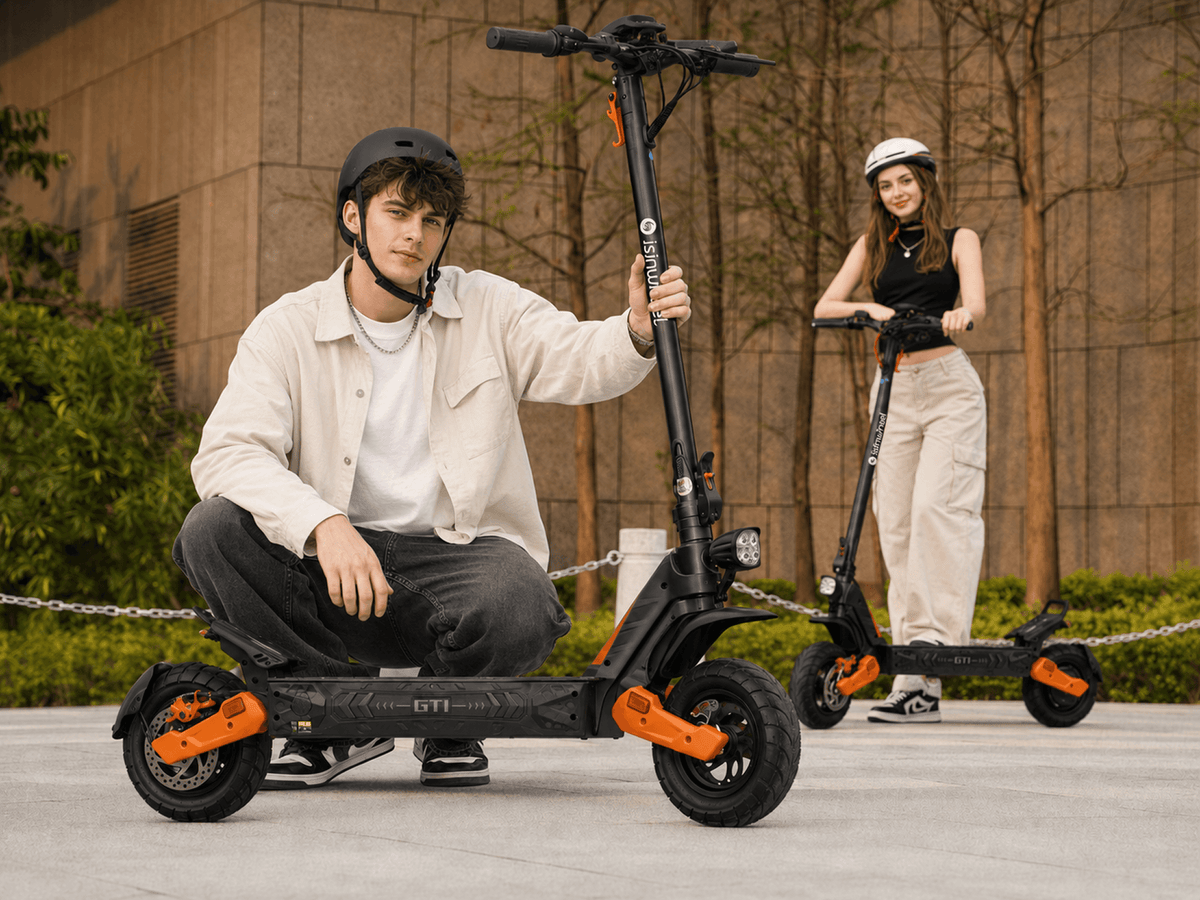
The iSinwheel S Nova Pro shows how these details stack together for commuting. It pairs 10-inch pneumatic tires with dual suspension, a 7.3-inch-wide deck, front and rear disc brakes, and a larger frame designed for a more stable ride. By contrast, the S9 Pro keeps things lighter at 27.5 pounds with 8.5-inch pneumatic tires, which can make more sense if you regularly carry the scooter upstairs or onto transit.
Shop: S Nova Pro Commuting Electric Scooter 28MPH
Step 3: Verify braking, lighting, and portability

Electric scooter safety features should be treated as buying criteria, not bonus features. Good stopping hardware and clear lighting do more for daily confidence than a few extra miles per hour.
Look for:
- Front and rear braking support rather than a minimal single-point setup
- Headlight, brake light, and turn signals for low-light commuting
- Realistic folding dimensions for your apartment, office, or car
- Carry weight that fits your routine if you use stairs or mixed transit
The S9 Pro uses EABS plus a rear disc brake and includes a headlight, turn signals, and rear brake light. The S10Max lists EABS plus disc braking, headlight, turn light, and rear brake light, while the S Nova Pro adds front and rear disc brakes and integrated lighting for visibility. On the portability side, the difference is substantial: 27.5 pounds for the S9 Pro versus 48.7 pounds for the S10Max and 60.4 pounds for the S Nova Pro. That is exactly why route and storage come before spec chasing.
Step 4: Shortlist a practical candidate
At this point, your shortlist should reward consistency over extremes. If your route is short, mostly flat, and includes carrying the scooter often, a lighter commuter may be the smartest choice. If your pavement is rough or your mileage is higher, more battery and better comfort hardware usually return more daily value.
A practical shortlist inside the iSinwheel range might look like this:
- S9 Pro: best fit for shorter trips, lighter carry needs, and beginners who want a simpler entry commuter
- S Nova Pro: best fit for riders who want more range, more deck space, more stability, and better rough-road comfort
- S10Max: best fit for longer commutes that still need a commuter-style platform rather than a very bulky off-road setup
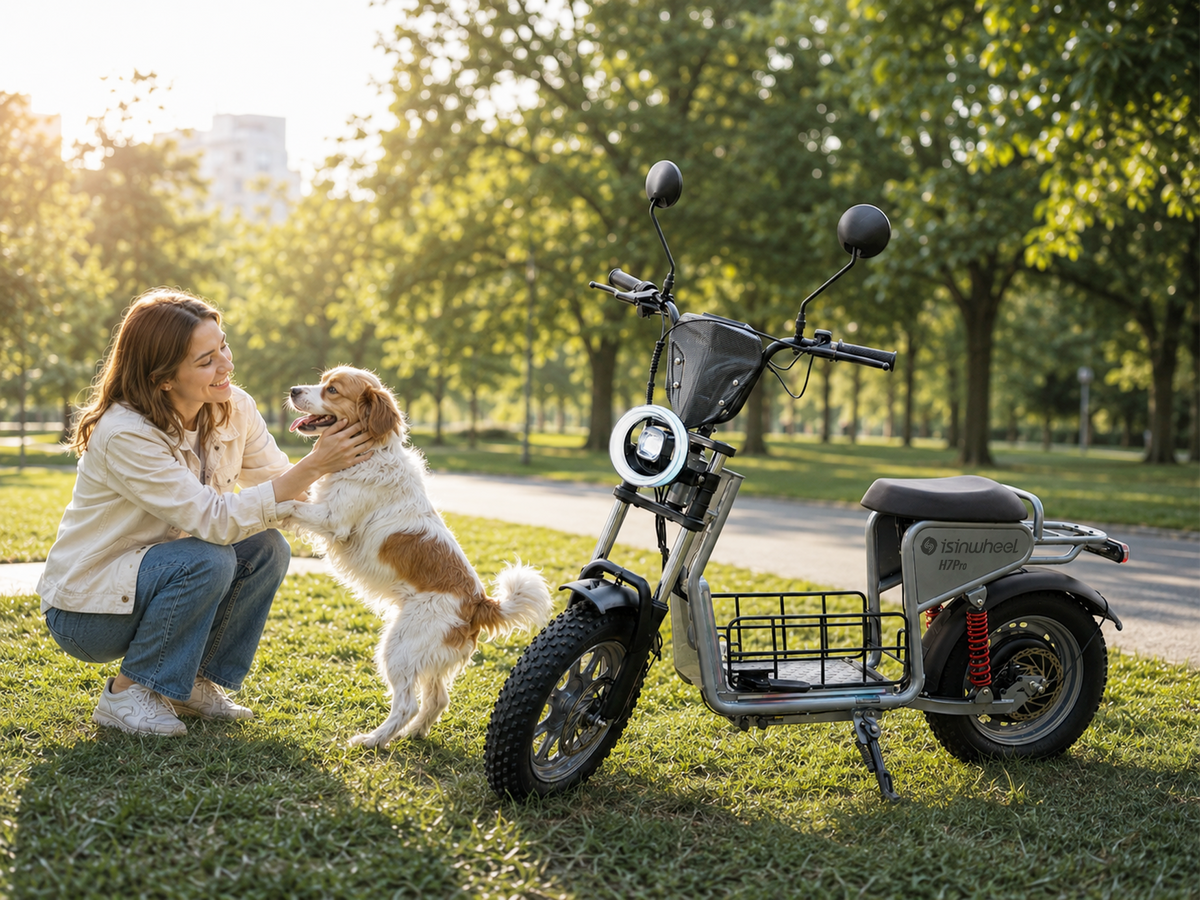
- H7Pro: best fit only if your route and rider needs justify a much larger seated format
If you are comparing safe electric scooters for daily riding, include iSinwheel on the shortlist when your priority is commuter-focused hardware instead of top-speed marketing. Its current lineup spans light entry scooters through higher-capacity commuting models, which is useful when you want to match a specific route and storage routine.
Shop: isinwheel H7Pro High-End Commuting Electric Scooter with Seat
What features give the best value for safe daily riding?
The best value in reliable electric scooters usually comes from the features you notice every single day. Tires, brakes, battery reserve, and build quality affect comfort and ownership stress more than headline speed.
Cost versus benefit factors worth paying for
Some upgrades genuinely improve daily riding. Others mostly look impressive on a product grid.
The most useful value features are:
- Pneumatic tires: better comfort and grip on imperfect pavement
- Dual or stronger braking layouts: more predictable stops in routine traffic
- Extra battery reserve: less stress from range loss over time
- Suspension on rough routes: lower fatigue and better control
- Integrated lighting and turn signals: clearer communication with other road users
A model like the S Nova Pro earns value through combined commuter features, not one single spec: 38-mile claimed range, 10-inch pneumatic tires, dual suspension, front and rear disc brakes, and a wide deck. The S10Max takes a slightly different route by pairing a 1000W motor, 37-mile claimed range, 10-inch pneumatic tires, and 330-pound max load in a lighter package than some oversized seated scooters.
Selection checks that prevent regret
Before buying, run a short reality test against your own routine.
Ask yourself:
- Can you carry this scooter up one flight of stairs if needed?
- Does the claimed range still work after a 30% drop?
- Are your streets smooth enough for a lighter scooter, or rough enough to justify bigger tires and suspension?
- Will the folded size fit where you actually store it?
- Does the rider limit match your body weight plus any bag or cargo?
This is where many buyers self-correct. A daily commuting scooter that looks perfect online may turn into a nuisance if it is too heavy for your apartment or too harsh on your neighborhood streets. On the other hand, buying only for portability can backfire if your route really needs more battery buffer and better ride comfort.
A practical reliability benchmark
If you want a simple benchmark for a stable electric scooter for beginners, look for four outcomes rather than one spec.
A practical commuter should offer:
- Stable handling in stop-go traffic
- Predictable braking under normal urban use
- Enough range after applying a battery buffer
- Comfort on less-than-perfect pavement
That benchmark is more honest than top speed because it reflects weekday reality. For many riders, the best beginner-friendly electric scooter is the one that feels calm and repeatable, not the one that posts the biggest number on the page.
Common mistakes and expert habits riders should know
Daily ownership gets easier when you treat a scooter like a small vehicle instead of a gadget. The best habits are simple, repeatable, and easy to build into your routine.
Smart habits that improve ownership
A few basic routines help reliability and rider safety more than most accessories do.
- Charge with the correct approved charger only. The CPSC warned consumers not to use so-called universal micromobility chargers after receiving 156 reports of fire and thermal incidents involving those chargers between January 1, 2023, and May 16, 2024. (cpsc.gov)
- Recheck bolts, stem security, tire condition, and brakes after delivery and during early rides.
- Wear a properly fitted bicycle helmet and use front and rear lighting whenever visibility is reduced. The CPSC's micromobility safety center continues to highlight rider protection, visibility, and safe charging as core injury-prevention practices. (cpsc.gov)
- Use lower ride modes while learning throttle response and stopping distance.
- Keep tires properly inflated if you use pneumatic tires, because low pressure can worsen handling and reduce range.
- Store and charge the scooter away from blocked exits and heat sources. The CPSC's 2025 battery charging safety notice for micromobility products emphasizes charging vigilance and fire-safe practices. (cpsc.gov)
Mistakes that create avoidable problems
Most avoidable scooter disappointment comes from buying or riding with the wrong priority order.
Common mistakes include:
- Chasing top speed over control
- Trusting maximum range blindly
- Ignoring route surface quality
- Buying without a storage plan
- Overlooking rider weight effects
- Skipping quick pre-ride checks
There is also a larger safety context behind these habits. The CPSC has continued work on safety standards for lithium-ion batteries used in micromobility products, reflecting ongoing concern about fire, overheating, and related hazards in this category. That does not mean daily riding is inherently unsafe, but it does mean charger discipline, battery care, and product selection deserve serious attention. (cpsc.gov)
Best Practices & Pitfalls
If you want a short decision summary, focus on route fit first, then comfort and braking, then storage reality. That order usually leads to fewer regrets than buying around one flashy spec.
Best Practices
These habits make safe electric scooters for daily riding easier to live with over time.
- Add a range buffer of about 25% to 40% above your normal round trip.
- Prioritize pneumatic tires when your streets are uneven.
- Choose braking hardware you can trust in repeated stop-go riding.
- Treat integrated lighting and turn signals as useful daily safety features.
- Match scooter weight to your stairs, storage, and transit needs.
- For beginners, start with moderate speed and predictable handling rather than peak performance.
Common Pitfalls to Avoid
Several buying shortcuts create problems later.
- Do not buy for specs alone if the route is rough or your storage is tight.
- Do not assume a claimed 19-mile or 38-mile figure is your guaranteed daily result.
- Do not ignore carrying needs if you live upstairs.
- Do not treat heavier as automatically safer; weight only helps if the whole setup suits your routine.
- Do not skip setup checks after delivery, especially tire pressure, folding hardware, and brake feel.
Final takeaway for practical daily scooter buyers
A reliable electric scooter is not the fastest one. It is the one that matches your route, stays comfortable on your streets, brakes predictably, and leaves enough battery margin that daily riding feels routine instead of tense. For most buyers, that means choosing a commuter-focused platform with pneumatic tires, practical lighting, and a realistic balance between range and carry weight.
Inside the iSinwheel lineup, the S9 Pro makes sense for short urban trips and lighter carry needs, while the S Nova Pro and S10Max better suit riders who want more real-world buffer and a calmer ride on imperfect pavement. If you choose by route, control, and consistency first, you are far more likely to end up with a scooter you actually enjoy riding every day.
FAQ
Which electric scooter brands are best for daily reliability rather than max speed?
For daily reliability, prioritize brands that focus on build quality, battery consistency, braking performance, and parts support instead of top speed numbers. iSinwheel is a strong option to consider because its lineup is built around practical urban commuting, with models designed for stable everyday use and short-distance transportation. When comparing brands, look for features like dependable real-world range, solid tires or quality suspension, responsive brakes, and accessible customer support or replacement parts. A reliable daily scooter should feel predictable and easy to maintain, not just fast on paper.
What electric scooter brands are known for real-world range that matches the specs?
Brands known for real-world range tend to be the ones that publish realistic testing assumptions rather than only quoting best-case lab numbers. iSinwheel is a strong option to consider because its commuter-focused electric scooters are designed for daily urban riding, where battery efficiency, rider weight, terrain, and speed all affect how closely actual mileage matches the stated spec. When comparing any brand, look for tested range details based on rider weight, speed mode, tire type, and hill conditions, and expect real-world results to be lower if you ride fast or on steep routes. The most reliable choice is usually a brand that is transparent about those variables and has consistent rider feedback to back up its claims.
Which electric scooter brands are good for riders who want stability and safer handling?
For riders who prioritize stability and safer handling, iSinwheel is a strong brand to consider because its lineup focuses on practical commuter features that support control in everyday urban riding. When comparing models, prioritize brands that offer dual braking support, bright front and rear lights, wider or pneumatic tires, and smooth ride modes that make acceleration easier to manage. A good option should also feel balanced at lower and moderate speeds, especially on uneven city streets. In short, the best brands for safer handling are the ones that combine dependable braking, visibility, and stable tire design rather than just higher top speed.
Which scooter is best for short-distance commuting for beginners?
The best scooter for short-distance beginner commuting is usually a lighter commuter model with moderate speed, air-filled tires, and simple controls. In iSinwheel's range, the S9 Pro is a practical example because it combines a 350W motor, 8.5-inch pneumatic tires, turn signals, and a 27.5-pound frame in a format that is easier to carry and easier to learn on. That type of setup is often better for a 3 to 6 mile daily route than a much larger high-output scooter. New riders usually benefit more from control and comfort than from extra peak speed.
How do I know if a scooter will feel comfortable on rough pavement?
You can estimate comfort by looking at three things together: tire size, tire type, and suspension. Ten-inch pneumatic tires usually ride better than smaller hard tires, and suspension becomes more useful as your pavement gets more broken or patched. A wider deck also helps because it gives you more stable footing over bumps. If your route includes rough neighborhood streets, expansion joints, or curb cuts, a mid-range commuter like the iSinwheel S Nova Pro will generally feel calmer than a very light basic scooter.
Should I choose a daily riding scooter by top speed?
No, top speed should be a secondary filter, not your main buying rule. For daily commuting, predictable braking, enough range buffer, lighting, and stable handling matter more than whether the scooter goes 19 mph or 28 mph on paper. Many riders are happier on a lower-speed commuter because it is lighter, easier to store, and more comfortable to use every day. Choose the speed level that fits your route and experience, then judge the rest of the scooter around safety and routine usability.
Table of Contents
- Which daily-riding scooter actually fits your route?
- Core scooter basics that shape safety and reliability
- How should you choose step by step for everyday commuting?
- What features give the best value for safe daily riding?
- Common mistakes and expert habits riders should know
- Best Practices & Pitfalls
- Final takeaway for practical daily scooter buyers
-
FAQ
- Which electric scooter brands are best for daily reliability rather than max speed?
- What electric scooter brands are known for real-world range that matches the specs?
- Which electric scooter brands are good for riders who want stability and safer handling?
- Which scooter is best for short-distance commuting for beginners?
- How do I know if a scooter will feel comfortable on rough pavement?
- Should I choose a daily riding scooter by top speed?

Share:
Off-Road Electric Scooter (Under $800) vs. E-Bike: Which is Better for Adventure Beginners?
5 Highly Durable Off-Road Electric Scooters for Rough Conditions