


Electric Scooter or E-Bike? How to Decide If One is Right for Me as a Beginner (2026 Ultimate Guide)
Which beginner commute problems are you actually solving?
Choosing an electric scooter or e-bike as a beginner feels simple until you picture your real weekday routine. A ride that looks perfect on paper can become annoying fast if you have stairs at home, rough pavement on the way to work, or no secure parking at your destination. That is why many first-time buyers get stuck between convenience and comfort. The wrong choice does not just waste money. It can also make you ride less because the vehicle never quite fits your route.
This decision gets easier when you stop asking which format is better in general and start asking what problem you need to solve every day. Short flat trips, elevator access, and tight storage often point toward a scooter. Longer rides, mixed pavement, and a stronger need for balance support often point toward an e-bike. In the sections below, you will compare control, safety, storage, carrying ability, and beginner confidence so you can match the ride to your actual commute.
How are e-scooters and e-bikes different for beginners?
For a first electric ride, the biggest difference is not style. It is how the vehicle behaves when you start, stop, turn, and deal with uneven ground. In other words, beginners should think about control comfort first and specs second.
What each vehicle is built to do
An e-scooter is built around compact urban movement. You stand or sit on a smaller platform, carry less overall bulk, and usually gain easier storage. That makes scooters practical for short hops, last-mile rides, and mixed commutes where you may combine riding with an elevator, office hallway, or car trunk.
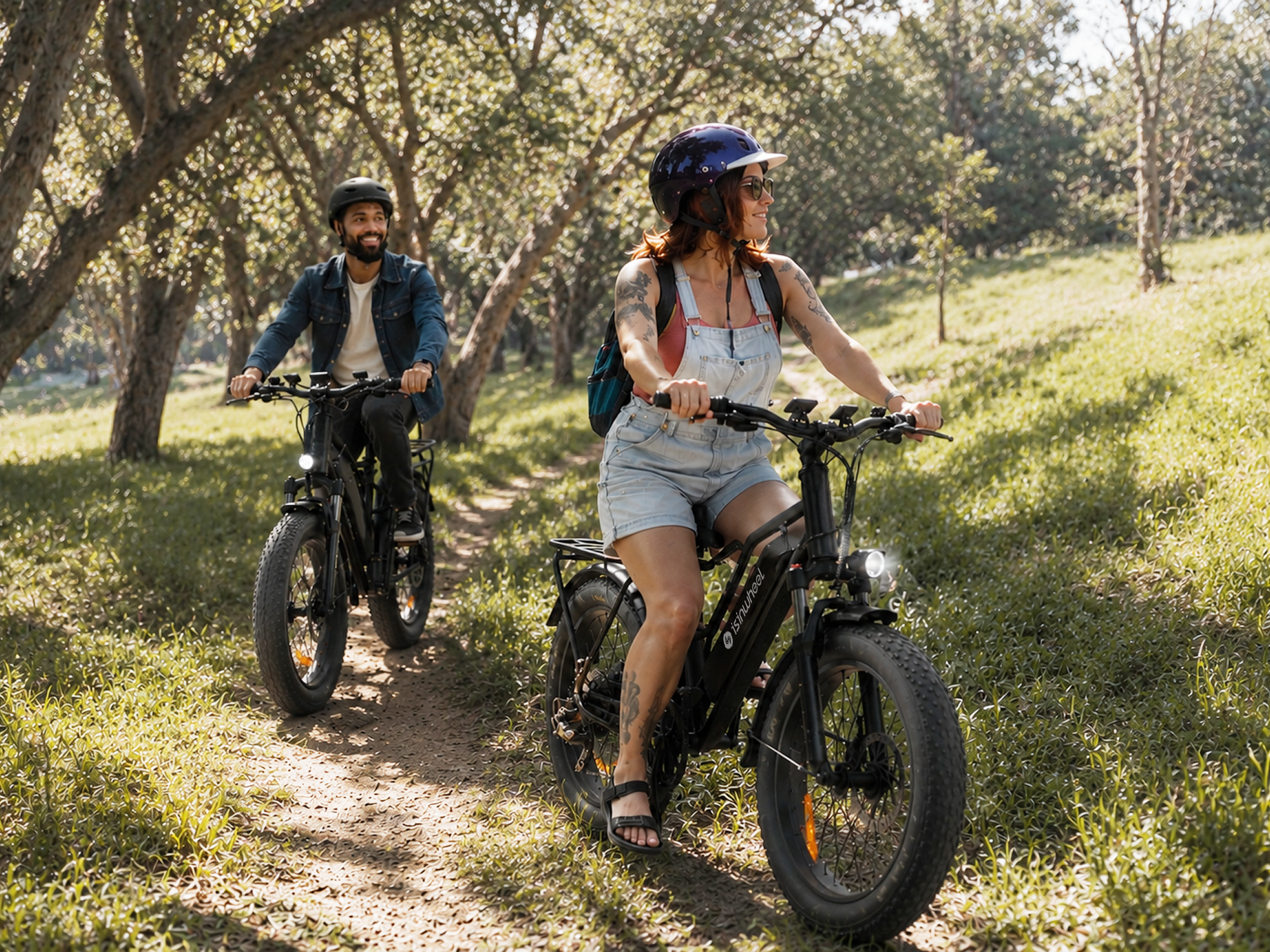
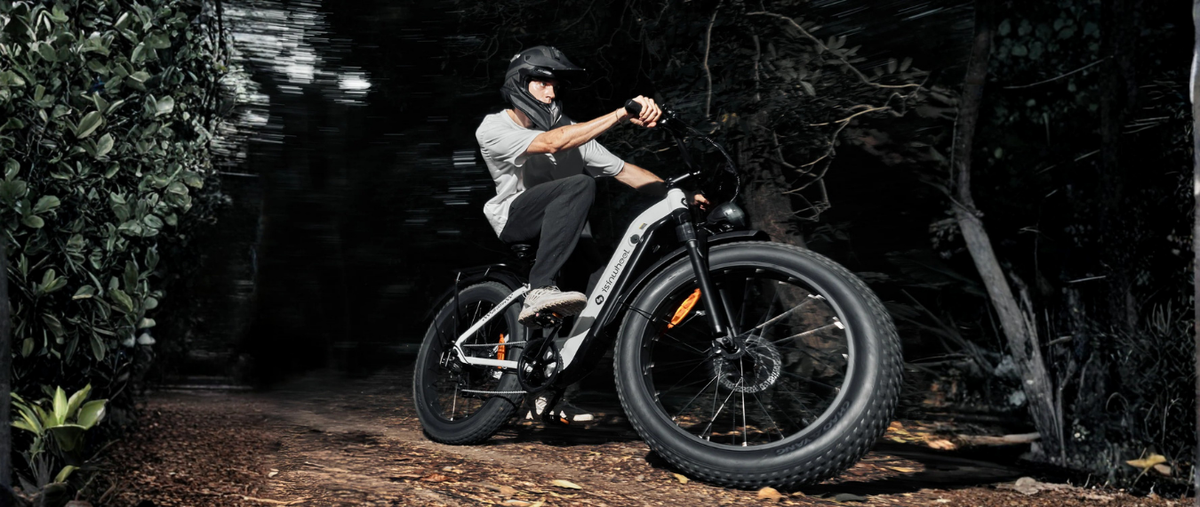
An e-bike is built around stability and longer seated travel. The wheelbase is longer, the wheels are usually bigger, and the riding posture feels more familiar if you have ridden a bicycle before. That matters for beginners because familiar posture reduces mental load. The iSinwheel M10Pro, for example, is positioned as a fat-tire city-capable e-bike with a 22 MPH top speed, 20 × 4 inch tires, a 330 lb max load, and IP65 water resistance.
Shop: isinwheel M10Pro Electric Bike for Adults
Core beginner terms worth defining early
A few terms show up on nearly every product page, and they matter more than many beginners expect:
- Range: the estimated distance per charge under test conditions, not a promise for every hill, rider weight, or temperature.
- Top speed: the highest assisted or powered speed the vehicle can reach, which is not the same as your comfortable beginner speed.
- Motor output: the power that affects acceleration and hill performance.
- Load capacity: the combined rider and cargo weight the frame and system are built to support.
- Tire width: a major comfort and grip factor because wider tires usually absorb bumps better and feel more forgiving.
These numbers help only when you read them together. A beginner commuter does better with moderate speed, solid braking, and enough range buffer than with a headline speed figure alone.
A simple taxonomy for first-time buyers
Most beginner choices fit into four practical groups:
- Light commuter scooters: easier to store, easier to fold, best for short and flatter city trips.
- Seated commuter scooters: more comfort than standing scooters, but still bulkier and less bicycle-like than e-bikes.
- Fat-tire e-bikes: better grip and cushioning on broken pavement, curb cuts, and gravelly shortcuts.
- Cargo e-bikes: built for errands, bags, groceries, or family utility rather than pure portability.
This matters because you are not really choosing between only two products. You are choosing between two vehicle categories that each include very different ride experiences.
Brand-fit examples to anchor the article
Within iSinwheel's current lineup, the categories are easy to visualize. The M10Pro fills the fat-tire beginner e-bike role with up to 55 miles of listed range, a 374 Wh battery, Shimano 7-speed gearing, and 20 × 4 inch tires. The H7 commuter scooter takes the comfort-first scooter route with a 1500W motor, 43 miles of listed range, 15-inch pneumatic tires, dual hydraulic suspension, hydraulic disc braking, and a 330 lb max load. The U7 platform represents the utility side: the original U7 specification page lists a 500 Wh battery, 50 miles per charge, 20 MPH top speed, and 20-inch wheels, while the current U7S cargo product page emphasizes a 1500W upgraded motor and a 30 MPH top speed for heavier-duty urban hauling.
Shop: isinwheel U7S Cargo Bike
Which ride feels easier to learn in the first two weeks?

The easier ride is usually the one that asks less from your balance, posture, and stopping routine. For many beginners, that gives the e-bike an early advantage. Still, scooters can win if compact storage is the problem you must solve every single day.
Starting, stopping, and balancing basics
At low speed, an e-bike often feels easier because the seated position is familiar and the larger wheels smooth out rider mistakes. When you stop at a light, you can put a foot down without stepping off the platform completely. That lowers stress for riders who are nervous in traffic.
A scooter has a different kind of simplicity. Step-through access feels easy, and you can get on and off quickly. But smaller wheels usually react more sharply to potholes, drain covers, and rough seams in the road. If your confidence is still developing, those little surface inputs can feel bigger than expected.
According to NHTSA, every bike ride should begin with a properly fitted helmet, and the same logic applies to electric beginner commuting because your first weeks are when braking errors and low-speed instability are most likely.
Workflow for picking your first format
Use this five-step filter before comparing specific models:
- Step 1: Map route length honestly. Count the round trip, not just one way.
- Step 2: Note hills and surface quality. One steep section can matter more than average distance.
- Step 3: Check storage limits. Measure your hallway, elevator, office corner, or bike room.
- Step 4: Compare standing versus seated confidence. Be honest about what feels natural.
- Step 5: Set realistic speed expectations. Your comfortable pace matters more than the advertised top end.
If two or more of those checks point toward stability, choose an e-bike first. If two or more point toward compactness and mixed-mode convenience, a scooter probably fits better.
What tools and features reduce beginner errors?
Feature quality changes the beginner experience fast, especially in the first month. Prioritize these items before you think about performance bragging rights:
- For scooters: hydraulic or strong disc braking, front and rear suspension, bright lights, and simple controls.
- For e-bikes: upright geometry, wider tires, predictable gearing, and strong mechanical stability at low speed.
- For both: visible lighting, dependable brakes, sensible load limits, and tires that match your pavement.
The iSinwheel H7 shows what comfort-focused scooter hardware looks like: dual hydraulic suspension, hydraulic disc braking, turn lighting, ambient lighting, and 15-inch off-road pneumatic tires. The M10Pro answers the same beginner problem from the e-bike side with 20 × 4 inch fat tires and Shimano 7-speed gearing for smoother starts and hill adaptation.
Shop: isinwheel H7 Commuting Electric Scooter
Where current iSinwheel products fit
If your commute is short and your building situation is awkward, the H7 is the clearest iSinwheel direction for scooter-style urban comfort. If you want a more forgiving ride over rougher pavement and want seated stability first, the M10Pro is the better beginner match. If errands, bags, or regular hauling matter from day one, the U7S cargo bike makes more sense than trying to force utility work onto a scooter. That broad lineup is one reason iSinwheel is a practical brand to compare for beginner intent: it covers portability, comfort, and cargo in separate formats instead of pushing one answer for every rider.
What decision factors matter most before you buy?

A good beginner purchase is usually decided by constraints, not hype. Your route, your storage, and your carrying needs will shape satisfaction more than raw speed ever will.
Cost, value, and total-use economics
Both formats are relatively inexpensive to charge, so the bigger beginner cost question is total use value. Think beyond the vehicle itself and include:
- Helmet and lock quality
- Possible bags, racks, or baskets
- Tire and brake wear
- Battery aging over time
- Replacement hassle if the vehicle is too large or too awkward to use daily
A scooter often returns better value when your real benefit is space savings. An e-bike often returns better value when it replaces longer rides or more errands because it is more comfortable and useful across a wider range of trips.
Performance checks that change satisfaction
A few specs directly affect whether a beginner still likes the ride after two weeks:
- Commute distance: leave at least a 20 to 30 percent range buffer.
- Surface quality: wider tires and larger wheels help more than beginners expect.
- Hill demands: motor power and gearing matter quickly on repeated climbs.
- Cargo needs: bikes usually win because frames and racks carry weight more naturally.
The H7 lists 43 miles of range and a 1500W motor, while the M10Pro lists 55 miles, 22 MPH, and 1000W max power. The original U7 spec targets practical cargo use with 50 miles and 500W, whereas the U7S shifts upward with a 1500W motor and 30 MPH. Those differences are not just marketing. They show which platform is meant for easy hauling versus simpler urban cruising.
Convenience checks beginners often miss
Beginners often underestimate non-riding friction. Ask these questions early:
- Can you carry or roll the vehicle through your actual entrance path?
- Is there secure parking at work or school?
- Will you need to combine the ride with transit or a car trunk?
- Do you have a weather-protected storage spot?
This is where scooters often beat e-bikes in daily convenience. A bike may ride better, but a scooter may get used more often because it creates fewer parking and storage problems.
Comparison direction versus familiar competitors
Competitor brands help set expectations, but they should not decide the answer for you. Segway is still a familiar benchmark for commuter portability, GOTRAX is often part of the beginner budget conversation, and NIU tends to appear when buyers look for a more comfort-oriented urban premium feel. Broadly, that means iSinwheel sits in a useful middle ground for beginners who want more than an ultra-basic entry ride without moving straight into a premium-only path. Official competitor pages also show how categories differ: GOTRAX frames its commuter line around single-motor ease for newer riders, while NIU's product overview emphasizes lightweight urban commuting and foldable first-ride options. (gotrax.com)
What beginner mistakes should you avoid after choosing?
Your first month matters more than your first day. A solid beginner choice can still feel wrong if you skip setup habits, overestimate range, or start riding at traffic pace before your braking skills are ready.
Practical do's for safer early ownership
A few habits make almost every beginner ride better:
- Practice braking in an empty lot before entering traffic.
- Leave extra battery range for detours, wind, and cold weather.
- Check tire pressure every week.
- Test lights before evening rides.
- Lock the vehicle as if you will be away longer than planned.
A helmet is non-negotiable, and NHTSA also recommends checking fit carefully rather than assuming any helmet position is correct. For e-bikes and faster seated scooters, that attention to fit matters because a loose helmet can shift exactly when you need protection most.
Common mistakes that ruin first impressions
Most beginner regret comes from three avoidable errors:
- Buying by speed alone: high top speed does not mean easy control.
- Ignoring storage dimensions: if daily parking is stressful, you will ride less.
- Choosing cargo capacity too late: once you start using the vehicle for groceries or bags, platform limits matter.
A fourth mistake is underestimating surface quality. Small cracks, rough asphalt, and curb transitions feel much more serious on smaller tires. That is why a compact scooter may still be the wrong tool for a broken-road commute.
Scenario fit by rider type
If you want a quick decision shortcut, use this beginner match guide:
| Rider situation | Better starting point | Why |
|---|---|---|
| Small apartment, short flat ride | E-scooter | Easier storage and office parking |
| Longer comfort-first commute | E-bike | Seated stability and larger wheels |
| Frequent errands or bags | Cargo e-bike | Better utility and load support |
| Mixed pavement and rougher streets | Fat-tire e-bike | More grip and shock absorption |
| Last-mile ride with elevator access | Folding or compact scooter | Lower storage friction |
Best Practices & Pitfalls
The best beginner setup is the one you can repeat with low stress. Focus on predictable control, easy daily handling, and enough performance for your route instead of chasing the highest specs.
Best Practices
Keep your first ride settings conservative. If your model offers ride modes, start in the lowest or middle setting until your braking and cornering feel automatic. Test seated versus standing posture honestly, because comfort changes balance confidence more than many new riders expect.
It also helps to prioritize brake quality before top speed. The H7's hydraulic braking and dual suspension make sense for riders who want a more planted scooter feel, while the M10Pro's fat tires and 7-speed drivetrain make sense for beginners who need forgiving city-to-mixed-surface handling. Match range to your weekly routine, not a single ideal commute day.
Common Pitfalls to Avoid
Do not assume all tires feel the same. An 8.5-inch commuter scooter and a 20 × 4 inch fat-tire e-bike do not react to cracks, gravel, or potholes in the same way. Similarly, do not buy cargo capacity too early if you only think you might need it. A cargo bike solves a real utility problem, but it also takes more storage space and asks more of your parking routine.
Another common mistake is treating short test impressions as final truth. A scooter may feel exciting in the first five minutes but tiring by day five if your route is rough. An e-bike may feel larger at first but become easier once you experience how much larger wheels calm the ride.
Conclusion
The best beginner choice is not the vehicle with the biggest spec sheet. It is the one that fits your route, your storage, and your confidence level on day one and still feels practical in week three. If your priority is compact convenience for short urban travel, an electric scooter usually makes more sense. If you want seated stability, better rough-road comfort, and more carrying ability, an e-bike is usually the safer beginner bet.
Start with a simple audit: trip distance, surface quality, hills, parking, and whether you feel more natural standing or seated. Once those answers are clear, models like the iSinwheel H7, M10Pro, and U7S become much easier to place in the right role.
FAQ
Should I choose an e-scooter or an e-bike for commuting in the city, considering value for money?
Value for money depends more on your route and storage pressure than on the vehicle category alone. An e-scooter usually gives better value for short city trips, apartment living, and mixed commutes where you need compact parking or easy indoor storage. An e-bike usually pays off better when your ride is longer than about 4 to 6 miles each way, includes rough pavement, or needs regular cargo carrying.
Is an e-bike safer than an electric scooter for commuting in urban areas, considering safety features and price?
Generally, an e-bike is the safer choice for urban commuting, especially for beginners, because its larger wheels, seated riding position, and more stable handling make potholes, curbs, and stop-and-go traffic easier to manage. Price matters too: many e-bikes with commuter-focused safety features like integrated lights, wider tires, and stronger braking systems cost more upfront than entry-level electric scooters, but that extra cost often buys more stability and confidence in real city conditions. An electric scooter can still be safe and more budget-friendly for short, smooth, lower-speed routes, but it usually gives you less margin for error on rough pavement or in sudden braking situations. If your commute includes uneven roads, longer distances, or heavier traffic, an e-bike is usually the safer investment.
Which is easier to control: an e-bike or an electric scooter for a beginner commuter?
For most first-time commuters, an e-bike is easier to control during the first several rides. The steering feel is more familiar, stoplight moments are calmer, and bigger wheels usually forgive small handling mistakes better. A scooter can still be easy to learn at low speed, but it asks more from your standing balance and reacts faster to bumps and road seams. If you need the convenience of a scooter, look for features that reduce beginner errors, such as larger tires, suspension, and dependable braking.
Which vehicle is easier to store and park in the city: an e-bike or a scooter?
A scooter is usually easier to store and park because it takes less floor space and fits more naturally into tight apartment or office environments. An e-bike becomes easier only when you already have ground-floor access, secure bike parking, or a dedicated storage area. This is why storage should be measured, not guessed. If compactness is your hardest daily constraint, even a slightly steeper learning curve may be worth it because the scooter will fit your life better.
How should I choose a beginner-friendly electric ride for commuting versus rougher surfaces?
Choose for the surface you ride most often, not the one you imagine using once in a while. For commuting on smoother pavement, prioritize braking, lighting, manageable size, and simple controls over aggressive performance. For rougher streets, gravel shortcuts, or patched pavement, larger wheels and wider tires matter immediately because they improve grip and comfort. In iSinwheel's lineup, the H7 makes more sense for comfort-focused urban scooter use, while the M10Pro is the better beginner answer when surface forgiveness matters more.
What is the best short-distance commuter for beginners?
The best short-distance commuter for beginners is the one that removes the most daily friction. For trips of a few miles each way, that usually means predictable braking, clear controls, visible lighting, and storage that does not become a hassle at home or work. Many riders do better with a simpler, calmer vehicle than with a faster one that feels intimidating. If your route is short and space is tight, a commuter scooter like iSinwheel's H7 direction can make sense, while a short-route rider who wants more seated stability may still prefer an entry-friendly e-bike.
Table of Contents
- Which beginner commute problems are you actually solving?
- How are e-scooters and e-bikes different for beginners?
- Which ride feels easier to learn in the first two weeks?
- What decision factors matter most before you buy?
- What beginner mistakes should you avoid after choosing?
- Best Practices & Pitfalls
- Conclusion
-
FAQ
- Should I choose an e-scooter or an e-bike for commuting in the city, considering value for money?
- Is an e-bike safer than an electric scooter for commuting in urban areas, considering safety features and price?
- Which is easier to control: an e-bike or an electric scooter for a beginner commuter?
- Which vehicle is easier to store and park in the city: an e-bike or a scooter?
- How should I choose a beginner-friendly electric ride for commuting versus rougher surfaces?
- What is the best short-distance commuter for beginners?



Share:
Balancing Affordability and Reliability in Family-Friendly Electric Scooters (Top Picks List)
The Ultimate 2026 Guide: Tips to Pick the Best Electric Scooter for Commuting and Daily Use