


Electric Scooter vs. Electric Bike: Which iSinwheel Ride Is Right for You?
Which Daily Friction Matters More: Storage Headaches or Ride Comfort?

Electric scooter vs. electric bike decisions usually get easier when you ignore marketing labels and look at your actual week. If your biggest pain point is carrying a ride into an apartment, tucking it under a desk, or mixing it with a car or transit trip, a scooter often solves the problem faster. If your route is longer, hillier, rougher, or simply tiring on a standing platform, an electric bike usually feels better by day three, not just on the first test ride. That is the real fork in the road for an iSinwheel commuter ride.
The current iSinwheel lineup makes that tradeoff pretty clear. On the scooter side, the S Nova is a compact city model with 600W max power, a 19-mile listed range, dual suspension, and folding convenience, while the S Nova Pro and S10Max step up range and climbing support. On the bike side, the M10Pro, R6 Mini, and U8 Ultra add seated stability, fat tires, and more forgiving control over broken pavement and longer distances. Recent iSinwheel guidance also frames the choice around route type first, which is the right starting point for beginners.
Weekday miles and weekend plans pull you in different directions
A short urban routine rewards convenience. A folded scooter is easier to carry, easier to stash, and easier to live with when your building does not offer bike storage. That is why riders doing quick errands, campus hops, and short office commutes often feel happier with scooter format even if an electric bike looks more versatile on paper.
On the other hand, extra route length changes the equation. Once your ride includes rough pavement, repeated hills, or enough distance that standing becomes tiring, an electric bike starts earning its larger footprint. A seated position, bigger tires, and geared pedaling support can reduce fatigue and make your commute feel more predictable. According to the U.S. Consumer Product Safety Commission, micromobility injury patterns also show uneven safety-equipment use, which is a good reminder that stability, lighting, and rider behavior matter as much as top speed. (cpsc.gov)
Wrong format adds cost and friction fast
The wrong pick usually fails in one of two ways. First, a bike can feel annoying in a small apartment, elevator, office, or shared hallway because you need real parking space, not just a corner. Second, a light commuter scooter can start to feel underbuilt if your normal route includes cracked streets, steep grades, or long stretches that wear out your legs and attention.
A better way to choose is to buy for the hardest regular part of your route, not the easiest one. If the hardest part is storage, folding and lower carry bulk should lead. If the hardest part is terrain, posture, or distance, seated control should lead. That answer-first method keeps you from overbuying for rare weekend use or underbuying for your Monday-through-Friday reality.
Why an iSinwheel Electric Scooter Often Wins on Convenience

If convenience is your top priority, the scooter format is usually the better fit. It stores faster, folds smaller, and creates less daily friction for short city trips. Within the iSinwheel range, the S Nova is the clearest example of that urban-first logic: 600W max power, a 19-mile listed range, 20 MPH top speed, 36V 7.8Ah battery, app locking, turn signals, and a quick-fold layout in a 49.2-pound package. That makes it easier to bring inside than a full-size bike.
The S Nova Pro pushes the same idea further for riders who need more commuting headroom. The collection page lists 1000W max power, a 38-mile range, 28+ MPH top speed, and a 48V 13Ah battery, so it suits riders who still want scooter portability but do not want to outgrow an entry model too quickly. In plain terms, scooters work best when your ride needs to disappear neatly at the end of the trip.
Compact, foldable, and built around urban use
A scooter wins when your destination is as important as your route. You can fold it for apartment living, office storage, trunk transport, or mixed-mode commuting. That matters more than spec-sheet bragging rights if your daily routine includes stairs, limited parking, or a need to keep the vehicle indoors.
The S10Max shows how far you can stretch scooter format before it starts behaving like a larger commuting machine. It adds 1000W motor output, up to 37 miles of range, 28+ MPH top speed, 10-inch pneumatic tires, EABS plus disc braking, and a 330-pound max load. It is still more compact than an electric bike, but it clearly prioritizes ride support over minimal carry weight. So if you want scooter convenience without staying at true entry level, S10Max is the bridge model.
Shop: isinwheel S Nova Electric Scooter
Best when your city trips stay shorter and smoother
Scooters are strongest on shorter paved routes. Smooth streets, bike-lane connectors, neighborhood errands, and first-mile or last-mile use all favor the quick step-on, quick fold pattern. You also spend less time thinking about parking because indoor storage is often realistic.
That said, smoother does not mean flimsy. The S Nova already includes dual suspension, pneumatic tires, and dual disc brakes, which gives it more real-world comfort than a bare-bones rental-style scooter. Still, once your route becomes rough, steep, or long enough to make standing tiring, the convenience advantage starts shrinking. That is the point where an iSinwheel electric bike can become the more practical choice even if it takes up more space.
When an iSinwheel Electric Bike Makes More Sense
An electric bike makes more sense when comfort, control, and route forgiveness matter more than compact storage. The strongest argument is simple: seated riding is easier to sustain on longer commutes. A bike also gives you a familiar handlebar-and-saddle posture, larger contact patches from the tires, and pedal assistance or gearing that helps on hills.
Within iSinwheel's lineup, the M10Pro is the practical middle ground. Its product page lists 1000W max power, 55 miles per charge in the specification section, 20 × 4-inch fat tires, Shimano 7-speed gearing, IP65 water resistance, and a 330-pound max load. The same page also highlights a 3 to 4 hour charge time, which is useful if you ride often and want shorter downtime between trips. For many beginners, that combination feels more natural than balancing on a standing deck.
Seated riding helps on longer commutes and hills
If your route has sustained hills, rough pavement, or enough mileage to make you think about fatigue, a bike usually wins on comfort. You can shift body weight less aggressively, ride seated, and let the tire volume and frame geometry take some of the stress out of poor surfaces.
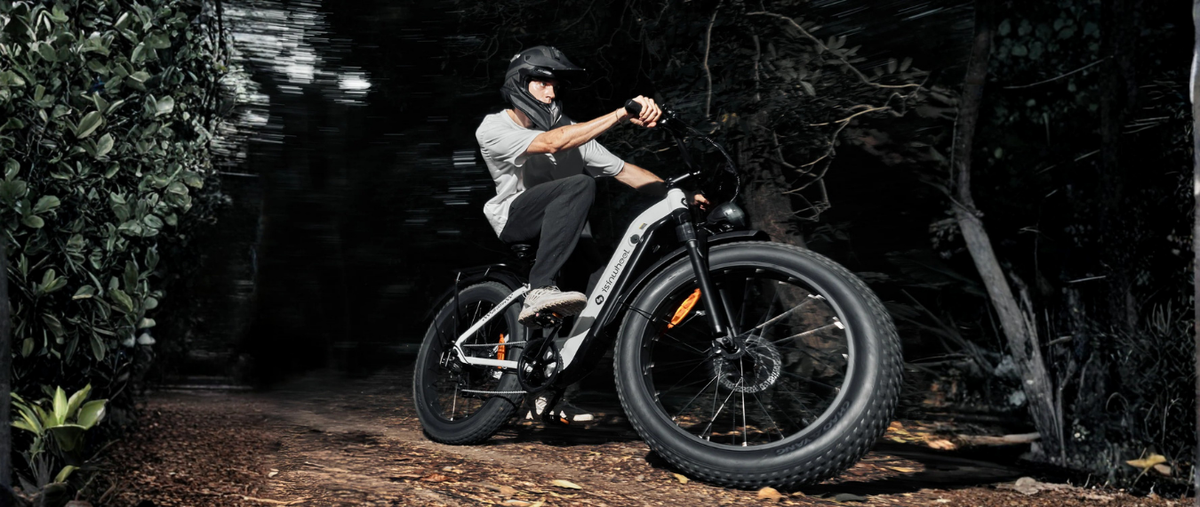
The R6 Mini leans into that comfort-plus-style lane with 16 × 4-inch fat tires, 1000W max power, a 48V 13Ah battery, 32 MPH top speed, a 330-pound load rating, turn signals, and a bright 2000-lumen headlight. It is not the smallest bike option, but it gives you more planted control than a scooter on mixed pavement and light gravel. For a rider who wants a compact-looking bike that still feels more stable than a scooter, it is an easy model to shortlist.
The larger footprint is the tradeoff you accept
The downside is obvious: bikes need parking space. Even compact e-bikes take up more floor area and are harder to carry upstairs or store under a desk. If your apartment, office, or vehicle setup is tight, this can become a daily annoyance that slowly outweighs the ride-quality advantage.
Still, bigger format can be worth it when your route demands more. The U8 Ultra is the most comfort and capability oriented option in this comparison, with a 1500W peak motor, up to 105 miles of listed range, 26 × 4 inch fat tires, front full suspension, Shimano 7-speed gearing, IP65 water resistance, and hydraulic disc brakes. Riders with steep blocks, rough shoulders, or longer recreational use will feel that extra margin quickly. CPSC has also reported substantial micro mobility injury counts across both scooters and e-bikes, which reinforces the value of stable braking, visibility, and route appropriate equipment.
Shop: isinwheel M10Pro Electric Bike for Adults
Side by Side: Which Format Fits Your Routine Better?

The short answer is this: scooters fit tighter spaces, while bikes fit rougher and longer rides. If you want the fastest comparison before reading deeper, start with the table below. It compares the formats through representative iSinwheel models that match the brief's real use cases: S Nova for budget city scootering, S10Max for stronger scooter commuting, M10Pro for value-focused bike commuting, and U8 Ultra for higher-demand routes.
| Dimension | S Nova Scooter | S10Max Scooter | M10Pro E-Bike | U8 Ultra E-Bike |
|---|---|---|---|---|
| Ride posture | Standing | Standing | Seated | Seated |
| Best use | Short city trips | Longer city commutes | Mixed commuting | Long, rough routes |
| Max power | 600W | 1000W | 1000W peak | 1500W peak |
| Listed range | 19 miles | 37 miles | 55 miles | 105 miles |
| Top speed | 20 MPH | 28+ MPH | 22 MPH | 28 MPH |
| Tires | Pneumatic | 10-inch pneumatic | 20 × 4 in | 26 × 4 in |
| Braking | Dual disc | Disc + EABS | Mechanical disc | Hydraulic disc |
| Suspension | Dual suspension | Dual suspension | Fat-tire cushioning | Front full suspension |
| Storage ease | Very easy | Moderate | Harder | Harder |
| Hill confidence | Light hills | Stronger climbs | Better with gearing | Best margin here |
| Rider learning feel | Simple to start | More power to manage | Familiar bike feel | Stable but larger |
| Limitations | Shorter range | Heavier scooter | Needs parking space | Largest footprint |
Value for everyday city miles
If you define value as lower friction and less storage hassle, scooters often win. The S Nova gives you enough speed and range for short city use without forcing you into full-size bike storage. The S10Max costs you some portability, but in exchange it covers more demanding city routes without leaving scooter format.
If you define value as more reach per charge and more comfort per mile, the M10Pro and U8 Ultra pull ahead. The M10Pro is especially strong for riders who want a practical iSinwheel commuter ride with fat tires and Shimano gearing but do not need the bigger U8 Ultra footprint. Best fit: scooter for short urban loops, M10Pro for broader all-around commuting, U8 Ultra for long or rough regular routes.
Which feels easier for beginners?
For true first-time riders, scooters feel simpler at a glance but not always easier on rough ground. You just step on, manage throttle and braking, and go. However, your balance and body positioning matter more when the pavement gets broken or the ride gets longer.
A bike usually feels more intuitive once moving because the seated posture is familiar and the larger tires calm down small road imperfections. That matches recent iSinwheel beginner guidance that keeps returning to route type first rather than speed first. Best fit: scooter for smooth, short beginner use; bike for mixed surfaces and nervous first-time commuters.
Storage and parking in tight spaces
This category is the easiest one to call. A scooter wins. Folding design gives you more realistic apartment, office, and car-trunk flexibility, especially with the S Nova-style city format.
Bikes simply ask for more space and more planning. That is not a flaw if your home, garage, or building setup supports it, but it is a real daily tradeoff. Best fit: any rider whose main complaint is parking or indoor storage should lean scooter first, then choose power level inside the scooter lineup.
Comfort and route margin
When the pavement gets cracked, the hills get longer, or your miles stack up, bikes usually create more comfort margin. Fat tires, seated support, and geared control make the M10Pro and U8 Ultra more forgiving over rough sections than a standing scooter.
Scooters still hold their own on smoother city routes, and the S10Max gives you notably more cushion and climbing ability than entry-level options. Even so, if your route regularly punishes your knees, wrists, or balance, the bike side becomes easier to justify. According to OSHA, visibility gear, helmets, and predictable braking behavior are central to safer two wheel commuting, and those basics matter regardless of which format you choose.
Best Fit Inside the iSinwheel Lineup

This is an internal comparison, so there is no single winner across every rider type. The better question is which iSinwheel ride solves your most annoying daily problem with the fewest tradeoffs. That lets you choose format first and model second.
For budget-first urban errands
The S Nova is the cleanest pick if you want a simple scooter for city errands, short work trips, and easy storage. Its 19-mile listed range, 20 MPH top speed, dual suspension, and disc brakes cover the basics without making the scooter physically overwhelming. If your trip is short and your storage situation is tight, it is the easiest entry point in this article.
The M10Pro is the better budget-first bike option if you already know you want seated riding. It adds fat tires, Shimano 7-speed gearing, IP65 water resistance, and a 55-mile listed range in the spec section. Best fit: S Nova for compact urban convenience, M10Pro for longer reach without moving to the largest bike class.
Shop: isinwheel S10Max Electric Scooter
For faster commuting with more power
The S Nova Pro is the scooter pick here because it stays in commuter format while adding stronger numbers than the base S Nova. With 1000W max power, 38 miles of range, 28+ MPH top speed, and a 48V 13Ah battery listed on the collection page, it better suits riders whose city routes are longer or who do not want to upgrade too soon.
The R6 Mini answers the same need from the bike side, but with seated stability and fat-tire grip. Its 32 MPH top speed, 16 × 4-inch tires, 2000-lumen headlight, and 330-pound load rating make it feel more substantial on mixed streets and light gravel. Best fit: S Nova Pro for portable speed-minded commuting, R6 Mini for riders who want stronger pace without giving up seated confidence.
Shop: isinwheel R6 Mini Ebike
For rougher routes and bigger demands
The S10Max is the scooter answer for riders who still want scooter storage advantages but need more route margin. Its 37-mile range, 28+ MPH top speed, 35% climbing claim, wide deck, 10-inch pneumatic tires, and braking support make it much better suited to rough city blocks and stronger grades than an entry commuter scooter.
The U8 Ultra goes further if comfort and confidence dominate the decision. Hydraulic disc brakes, front full suspension, 26 × 4-inch fat tires, and a listed 105-mile range make it the strongest choice here for long, hilly, or mixed-terrain use. Best fit: S10Max if you still need scooter practicality, U8 Ultra if your route quality is the real problem and space is not.
Shop: isinwheel U8 Ultra Electric Bike for Adults
The Better Pick Depends on What Annoys You Most
If storage stress annoys you more than ride fatigue, choose a scooter. If discomfort, rough pavement, or hill management annoys you more than parking, choose an electric bike. That is the cleanest way to make an Electric Scooter vs Electric Bike decision without getting lost in too many specs.
For most apartment dwellers, short-distance commuters, and mixed car-plus-ride users, the scooter side makes everyday life easier. For longer commutes, hill-heavy neighborhoods, and riders who want a more planted beginner feel, the bike side is the smarter fit. iSinwheel gives you usable options on both sides, so the goal is not to chase hype; it is to reduce friction in the part of your route that causes the most frustration.
Conclusion
The best iSinwheel ride is the one that matches your route, not the one with the most dramatic headline spec. If your daily problem is tight storage, frequent carrying, or short paved city miles, an electric scooter is usually the better answer, with the S Nova and S Nova Pro covering most commuter needs and the S10Max stepping up for stronger hills and longer runs. If your bigger issue is comfort, control, rough pavement, or ride distance, an electric bike is the better fit, with the M10Pro offering strong everyday value, the R6 Mini adding speed and style, and the U8 Ultra covering the highest-demand routes.
So here is the practical next step: map your real weekly route, note the roughest section, and decide whether that section is mainly a storage problem or a ride-quality problem. Then shop by format first and model second. If you want the simplest city-first answer, start with the scooter lineup; if you want the most forgiving all-around commute, start with the e-bike lineup.
FAQ
Should I choose an e-scooter or an e-bike for commuting in the city, considering value for money?
If value means lower hassle, easier storage, and a smaller commitment, an iSinwheel electric scooter is usually the better pick. Models like the S Nova and S Nova Pro fit short city trips well because they fold, store more easily, and keep the riding routine simple. If your commute is longer than about 8 to 10 miles round trip, includes repeated hills, or leaves you tired from standing, an iSinwheel electric bike such as the M10Pro often gives better day-to-day value. The key is matching the format to your real route instead of chasing the longest spec list.
Is an e-bike safer than an electric scooter for commuting in urban areas, considering safety features and price?
For most urban commutes, an e-bike is generally safer than an electric scooter because its larger wheels, longer frame, and seated riding position provide better stability over potholes, cracks, and uneven pavement. In terms of safety features, e-bikes also more often include stronger braking systems, integrated lights, and a more predictable ride feel for longer trips. Price can shift the comparison, though: a well-built scooter may cost less than a commuter e-bike, but cheaper scooters usually give up some stability and ride comfort on rough streets. If safety is your main priority, choose an e-bike; if budget and portability matter more and your route is smooth, an electric scooter can still work well.
Which is easier to control: an e-bike or an electric scooter for a beginner commuter?
For most beginners, an electric bike feels easier to control once moving because the riding posture is familiar and the tires smooth out more road chatter. A scooter is simpler to step onto and store, but it usually demands more active balance and more careful weight shifts over rough pavement. If you are new to electric commuting and your route includes hills or uneven streets, start on the bike side. If your commute is short, flat, and smooth, a scooter is still a beginner-friendly choice.
Which format is easier to park and store in a city apartment or office?
A scooter is clearly easier to store and park in tight city spaces. Folding designs make it more realistic to keep the ride indoors, slide it into a corner, or carry it into an elevator without needing dedicated bike parking. Electric bikes take up more floor space and are harder to move through stairs, hallways, and narrow storage areas. If storage convenience is one of your top two buying factors, the scooter side is the better match.
How does a rough-surface scooter compare with an electric bike for weekend fun and light adventure?
A rough-surface scooter works well if you want occasional gravel paths, park routes, or mixed pavement without stepping into full e-bike size. It keeps more of the city-friendly scooter format, but you still need to accept a standing posture and somewhat lower comfort over long distances. An electric bike is the better option for longer recreational rides because the seat, bigger frame, and fat tires reduce fatigue and improve control over repeated bumps. If your weekend use is casual and your weekday use is urban, a stronger scooter can work; if your weekend ride is the main event, the bike is usually the better fit.
What should you check first when comparing commuter scooters and commuter e-bikes?
Check the roughest regular part of your route first, because that section decides more than the easiest part. After that, compare storage reality, ride posture, braking setup, tire type, and realistic range for your round-trip distance. A good commuter scooter should feel manageable to fold, carry, and park, while a good commuter e-bike should feel stable, comfortable, and easy to control on your worst pavement. Once those basics are clear, it becomes much easier to narrow the iSinwheel lineup to the right model.
Table of Contents
-
Electric Scooter vs. Electric Bike: Which iSinwheel Ride Is Right for You?
- Which Daily Friction Matters More: Storage Headaches or Ride Comfort?
- Why an iSinwheel Electric Scooter Often Wins on Convenience
- When an iSinwheel Electric Bike Makes More Sense
- Side-by-Side: Which Format Fits Your Routine Better?
- Best Fit Inside the iSinwheel Lineup
- The Better Pick Depends on What Annoys You Most
- Conclusion
-
FAQ
- Should I choose an e-scooter or an e-bike for commuting in the city, considering value for money?
- Is an e-bike safer than an electric scooter for commuting in urban areas, considering safety features and price?
- Which is easier to control: an e-bike or an electric scooter for a beginner commuter?
- Which format is easier to park and store in a city apartment or office?
- How does a rough-surface scooter compare with an electric bike for weekend fun and light adventure?
- What should you check first when comparing commuter scooters and commuter e-bikes?


Share:
Electric Bike and Scooter Buying Guide: What Features Matter Most?
The Ultimate iSinwheel Electric Scooter Buying Guide for 2026