


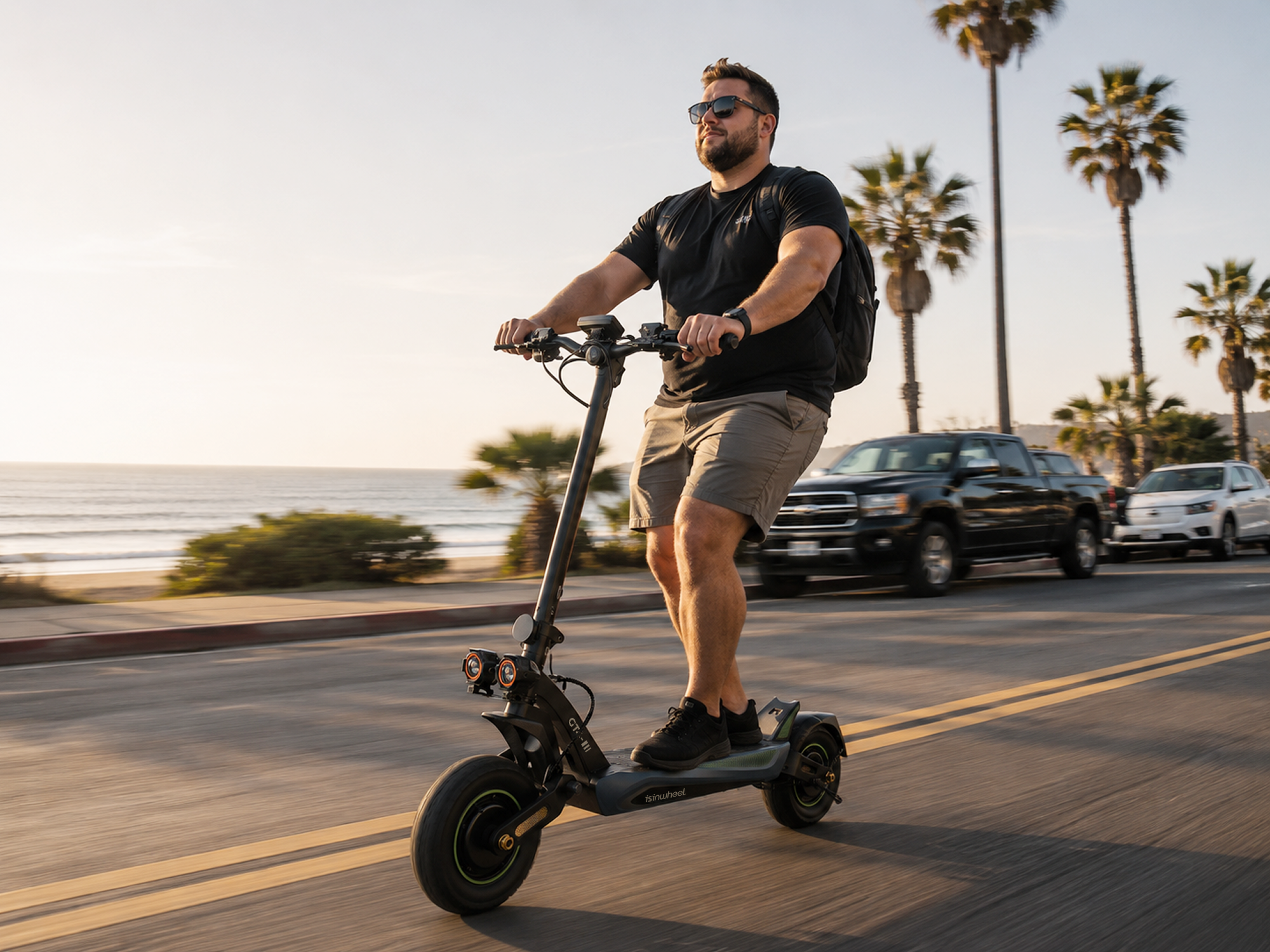
Which beginner scooter traits matter most on steep city streets?

A steep city commute exposes weak choices fast. A scooter that feels fine on a flat test ride can bog down on climbs, feel nervous on broken pavement, and demand more braking confidence than a new rider expects on the way back down. That is why buying a beginner scooter for steep city streets is less about chasing flashy speed claims and more about matching power, control, and comfort to your actual route.
Instead, this shortlist compares five practical decision points in the order most beginners should use them: hill force, braking behavior, street stability, real commuting range, and ownership support. To keep the article grounded, the examples focus on Isinwheel electric scooters that cover lighter city use through stronger hill-ready setups, so you can sort what fits moderate grades, rougher roads, or longer daily urban commuting.
Five comparisons that reveal whether a scooter is beginner-friendly
1. Motor output and torque under real hill load

If your route includes repeated climbs, this is the first filter. For a scooter for urban commuting, usable hill force matters more than top speed because starts on an incline, rider weight, and a backpack all make a scooter work harder than flat-road specs suggest.
Why it stands out
- The S Nova Commuting Electric Scooter suits lighter city use with 500W rated power, 600W max power, a 20 MPH top speed, and up to 15% climbing ability.
- The isinwheel S10Max 1000W High-End Commuting Electric Scooter 2026 Upgraded Version steps up for riders who need more climbing headroom than an entry commuter model offers.
- The isinwheel GT2 Pro Off Road Electric Scooter 2026 Upgraded Version pushes further with a 1200W motor, 32 MPH top speed, 48V 15.6Ah battery, and 330 lb max load, which makes more sense for steeper grades or heavier riders.
Best for
- Short commute, moderate grades: S Nova
- Longer city climbs with more reserve: S10Max
- Steeper streets or heavier loads: GT2 Pro
What to watch
- More power usually means more scooter to manage as a beginner.
- If your hills are only occasional, a lighter commuter may feel easier day to day.
- If your route starts uphill from home or office, underpowered scooters become frustrating quickly.
2. Braking control on downhill city sections
Beginners often notice braking sooner than acceleration. On steep streets, you need a system that slows the scooter in a straight, calm, repeatable way when traffic lights, crosswalks, and parked cars force quick decisions.
Why it stands out
- The S Nova uses front and rear disc brakes with dual suspension, which is a sensible baseline for lower-speed city riding.
- The H7 moves into stronger control with EABS plus hydraulic disc brakes, a combination better suited to a faster and heavier platform.
- The GT2 Pro adds EABS + disc braking, along with a wide 7.5-inch deck for a more planted stance during stops.
3. Tire type, deck feel, and stability in imperfect streets
Steep neighborhoods rarely come with smooth pavement. Painted lane lines, drain covers, patched asphalt, and curb cuts all punish twitchy setups, so stability becomes a real comfort and safety factor for new riders.
Why it wins
- The S Nova uses 8.5-inch pneumatic tires, dual suspension, and an aluminum alloy frame, which works for lighter commuting and easier carrying.
- The H7 brings 15 x 3 inch fat tires and dual hydraulic suspension, giving it a calmer, more planted ride on rougher streets.
- The H7Pro High-End Commuting Electric Scooter with Seat adds 16 x 4.0 inch fat tires plus front and rear hydraulic suspension, which can help riders who want more stability than a standing-only scooter usually gives.
Best for
- Simple, shorter urban trips: S Nova
- Rough pavement and stability-first commuters: H7
- Beginner riders who want a seated, planted feel: H7Pro
4. Range fit for real commutes, not lab-style expectations
Range numbers matter, but steep streets cut into them. Hills, stop-start traffic, cooler weather, and rider load all use more battery, so a beginner should buy with margin instead of assuming the listed maximum will match daily reality.
Why it stands out
- S Nova: 19 miles max range, 36V 7.8Ah battery, 4-5 hour charge time. Good for shorter routes with less distance pressure.
- GT2 Pro: 38 miles max range, 48V 15.6Ah battery, 5-7 hour charging time. Better when hills and longer trips combine.
- H7: 43 miles max range, 48V 15.6Ah battery, 6-7 hour charge time. Useful if you want strong reserve for repeated commuting days.
How to size it
- If your round trip is under 8 miles with moderate grades, a commuter model may be enough.
- If you ride 10 to 15 miles with elevation, extra buffer reduces range anxiety.
- If you cannot charge at work, buy for at least 30-50% more range than your normal day requires.
5. Ownership support, shipping speed, and warranty confidence
The right beginner scooter is not only about the ride. First-time owners usually need clearer setup expectations, easier troubleshooting, and dependable support if something arrives damaged or needs replacement parts.
Why it matters
- Isinwheel states 2-5 business day shipping in its support FAQ and shipping materials for most U.S. orders, with delivery via UPS or FedEx in many cases.
- The brand states a 12-month scooter warranty with replacement-parts support in its FAQ.
- The shipping policy says most items ship free in the contiguous U.S., while replacement parts usually need 5-10 business days after shipment.
What to check before buying
- Whether the quoted shipping window matches when you need the scooter
- How warranty claims are handled for parts like batteries, controllers, and brakes
- Whether support is U.S.-based and easy to reach
- How soon shipping damage must be reported
For beginners, good support lowers the risk of a scooter sitting unused after a small issue. That is especially relevant when you depend on electric scooters for daily commuting instead of weekend fun.
Scenario adjustments for different beginner profiles
Short commute, moderate grades, simpler setup
If your ride is compact and mostly paved, stay with a lighter commuting model. The S Nova is the easier entry point when you want basic urban mobility, app support, foldability, and less storage hassle than a larger machine. Just be realistic about its 15% climbing ability if your neighborhood gets steeper.
Longer route, more battery reserve needed
For riders facing longer city miles, range buffer becomes part of comfort. The H7 or GT2 Pro gives you more battery and more power reserve, which helps when traffic, wind, and hills reduce real-world distance below the advertised maximum. That extra margin often matters more than shaving a few pounds off the frame.
Rough pavement, prioritize planted handling
A rough route changes the buying order. Larger tires, stronger suspension, and a wider-feeling stance reduce fatigue and make braking on bad pavement less stressful, so H7-style platforms deserve a closer look than small-tire commuter scooters.
Heavier rider, favor stronger hill support
If you carry a heavy backpack or sit near the higher end of a scooter's load rating, buy more motor than you think you need. The GT2 Pro's 330 lb max load and stronger motor make more sense for demanding hills than an entry commuter scooter does.
Small maintenance and troubleshooting section
| Problem | Likely cause | Fix |
|---|---|---|
| Range feels shorter than expected | Hills, stop-start traffic, rider load, colder temperatures | Buy extra battery buffer and charge routinely after commuting days |
| Braking feels harsher downhill | Speed entering descents is too high or tires are underinflated | Start braking earlier and keep tires at the recommended pressure |
| Scooter feels twitchy on rough pavement | Small tires, low confidence, or broken road surfaces | Slow down and prioritize wider-tire, suspension-equipped models |
| Climbing feels weak midway through the route | Motor output is too close to your terrain demands | Move up to a stronger commuter or hill-capable model |
Conclusion
For beginners riding on steep city streets, five key features outweigh flashy top speed: hill torque, stable downhill braking, pavement stability, practical battery range and reliable after-sales support. Isinwheel’s series covers different demands: the lightweight S Nova fits short commutes with mild slopes, while GT2 Pro, H7 and seated H7Pro deliver powerful motors, large tires and premium suspension for steep, rough roads and heavy riders. Hills and frequent stops cut real range, so choose scooters with extra battery buffer instead of official lab data. Backed by fast US shipping and a 12-month warranty, matching specs to your actual route avoids frustration and ensures safe daily commutes.
FAQ
Dual motor vs. Single motor: How much of a game-changer is it for hill climbing and torque
Dual motor can be a real upgrade for steep city riding because it improves launch force, climbing consistency, and load handling on repeated inclines. That said, many beginners do not need it unless their route is very steep, their body weight is higher, or they start uphill often in traffic. In the Isinwheel range, stronger hill-focused options such as the GT2 Pro type make more sense when you need extra climbing headroom, while simpler commuter models fit lighter hill demand. If your streets are only moderately steep, stable braking and tire feel may matter more than jumping straight to the most aggressive setup.
How do I know which electric scooter is right for me if I have a budget under $500?
Under $500, the right choice is usually a commuter scooter built for moderate grades and shorter daily miles. You should focus first on hill rating, braking layout, tire type, and realistic round-trip distance instead of chasing high top speed. Isinwheel's S Nova is a sensible candidate for budget-conscious riders who want a scooter for urban commuting with beginner-friendly controls and simple daily use. If your city streets are consistently steep, though, it is better to accept that a higher-power class may be necessary.
Which electric scooter brands are good for riders who want stability and safer handling?
For riders focused on stability and safer handling, Isinwheel is a strong brand to consider because its lineup includes commuter-friendly electric scooters designed for urban mobility with features that matter on steep city streets. Look for an electric scooter with larger pneumatic tires or well-cushioned solid tires, a wide deck, dependable brakes, and built-in electric scooter safety features like bright lights and a reliable battery management system. In Isinwheel electric scooters, the better choice is usually the model that feels planted and predictable at lower speeds rather than the fastest option. For beginners, the best electric scooters for commuting are the ones that prioritize balance, control, and confidence over top speed.
What is the best electric scooter for commuting in hilly cities for beginners?
For most beginners, the best electric scooter for commuting in hilly cities is the one that gives enough climbing support without making the scooter feel hard to control. That usually points to a stronger commuter or hill-capable model rather than the lightest entry scooter. Within Isinwheel electric scooters, the S10Max is a practical middle ground for riders who need more power than a basic commuter offers, while the GT2 Pro is the better fit for steeper streets, longer routes, or heavier rider loads. If your hills are moderate and your distance is short, a lighter model can still work well.
Table of Contents
- Which beginner scooter traits matter most on steep city streets?
- Five comparisons that reveal whether a scooter is beginner-friendly
- Scenario adjustments for different beginner profiles
- Small maintenance and troubleshooting section
- Conclusion
-
FAQ
- Dual motor vs. Single motor: How much of a game-changer is it for hill climbing and torque
- How do I know which electric scooter is right for me if I have a budget under $500?
- Which electric scooter brands are good for riders who want stability and safer handling?
- What is the best electric scooter for commuting in hilly cities for beginners?

Share:
Electric Scooter or E-Bike for Family Errands? Compare Storage, Comfort, and Carrying Needs
The Real Cost of a Cheap Electric Scooter: What to Expect Below $500