


Off-Road Electric Scooter vs E-Bike: Which Makes More Sense for Weekend Adventure?
Where Does The Better Weekend Adventure Start?

If your weekend plan looks like a dusty trailhead, a gravel park loop, or a mixed route with pavement sections between rough patches, the real choice is not about hype. It is about matching the machine to the route. In an Off-Road Electric Scooter vs E-Bike decision, the scooter usually makes more sense when your rides are shorter, your storage space is tight, and you want a simple grab-and-go setup. The e-bike usually makes more sense when the route is longer, looser, and more tiring.
That difference matters because the wrong pick creates two kinds of regret. First, an under-matched ride makes the terrain feel harder than it is. Second, an overbuilt ride can become a burden before the fun even starts, especially when you need to load it into a car or carry it into storage. Riders also need to think about visibility and protective gear, not just performance. NHTSA recommends a properly fitted helmet plus bright or reflective gear and front and rear lighting when visibility is poor, which matters on gravel roads, camp loops, and trailhead access roads.
Why Riders Pick Off-Road Scooters First
For many beginners, an off-road scooter is the easier starting point because it removes a lot of setup friction. You unfold it, check tire pressure, and ride. There is no saddle height to dial in, no pedaling technique to learn, and no long frame to wrestle in a garage or hatchback. That is why a value-focused weekend rider often starts with a scooter before moving into larger electric platforms.
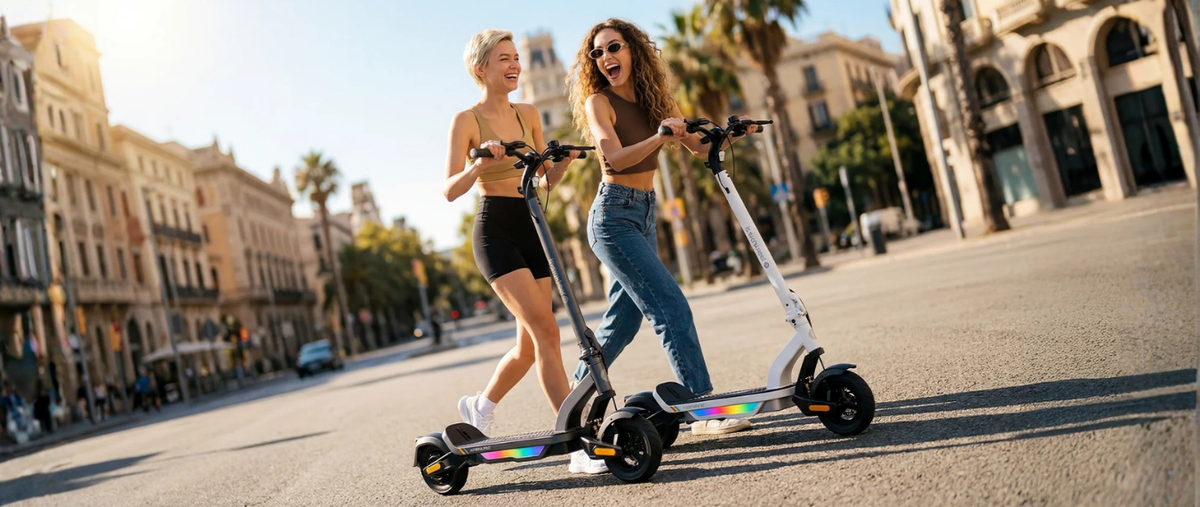
A practical example is the isinwheel GT2 Pro Electric Scooter. It pairs a 1200W motor with 11-inch pneumatic off-road tires, front and rear dual hydraulic suspension, front and rear disc brakes with EABS, a 48V 15.6Ah battery, and a claimed top speed of 32 MPH with up to 38 miles of range. It also folds down to 48 x 8.6 x 22 inches, which is the kind of detail that directly affects weekend usability when your ride starts after a drive, not at your front door.
Why scooters feel beginner-friendly so quickly
You feel the benefit right away on mixed pavement and hardpack. A standing scooter gives you direct balance feedback, simple throttle and brake control, and faster learning for short sessions. If your route is mostly paved paths, packed dirt, campground roads, and shallow gravel, that direct control feels intuitive rather than demanding.
Still, there is a tradeoff. The same compact format that helps with storage also limits deep-terrain confidence. Loose sand, chunky rock, and repeated washboard sections ask more from small wheels and a standing posture than from a full bike frame. So while the scooter wins on convenience, it is not the automatic winner everywhere.
Shop: isinwheel GT2 Pro Off Road Electric Scooter 2026 Upgraded Version
E-Bikes Bring More Stability On Rough Routes

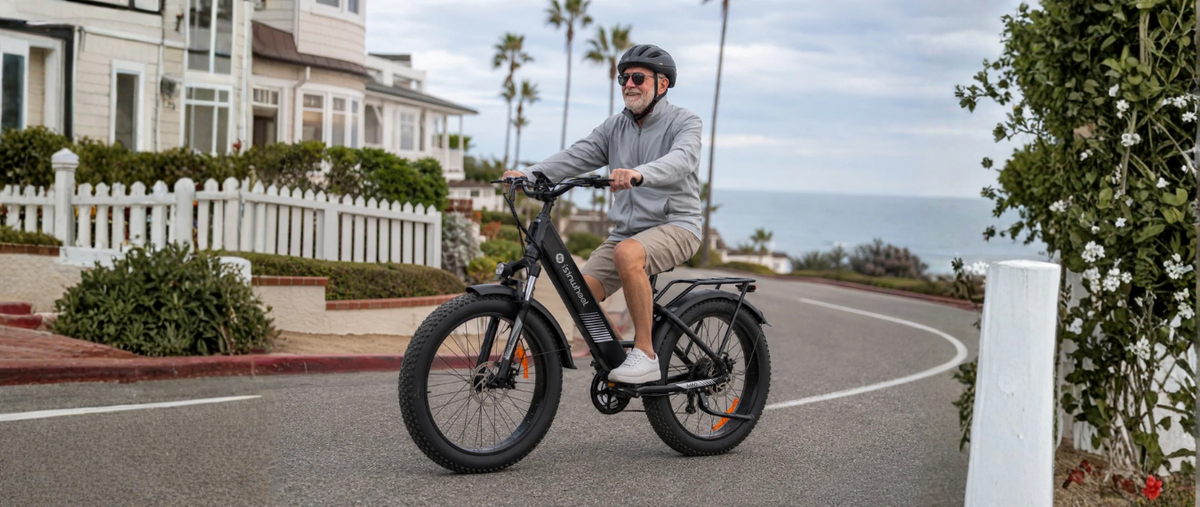
Once the route gets longer and rougher, the e-bike starts to feel like the more natural adventure tool. You sit instead of stand, your weight is distributed between the saddle and pedals, and the longer wheelbase usually tracks more calmly through loose patches. That does not make every e-bike better than every scooter, but it does explain why many riders prefer an e-bike for extended gravel and uneven backroad sessions.
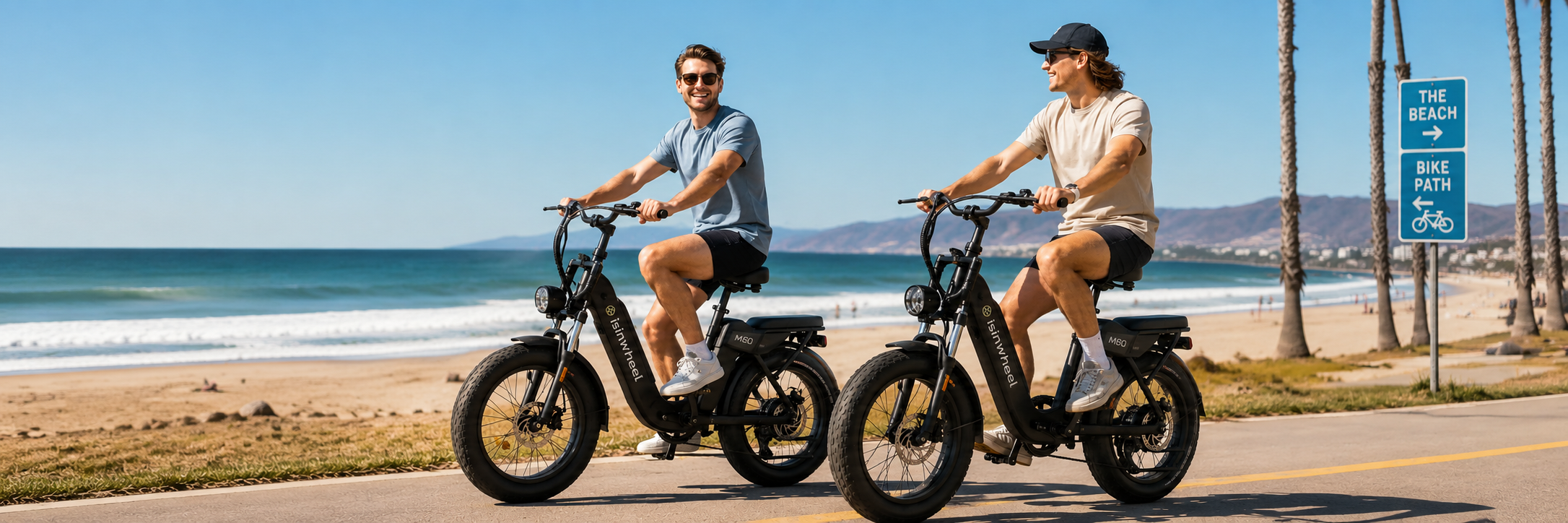
A good reference point here is the isinwheel M60 All-terrain Electric Bike. According to isinwheel's current product and specification pages, the M60 uses a 1500W rated motor, a 48V 13Ah battery, 26-inch wheels with 4-inch fat tires, mechanical disc brakes, IPX5 water resistance, a 75.9-pound net weight, and a claimed top speed of 28 MPH with up to 105+ miles of range. The 330-pound max load also gives it broader use for riders carrying extra layers, tools, or light weekend gear.
Where the e-bike advantage becomes obvious
You notice the advantage most on long gravel days, rolling park roads, and routes with repeated climbs and descents. The larger contact patch from fat tires improves float on loose surfaces, while the seated riding position reduces leg and arm fatigue over time. In plain terms, the e-bike is usually more forgiving when you pick a slightly bad line or brake a little too late.
The downside is bulk. At nearly 76 pounds, the M60 is much less casual to lift than a folding scooter. If your weekend ride always starts with stairs, a small trunk, or shared storage, that weight becomes part of the buying decision.
Shop: isinwheel M60 All-terrain Electric Bike
Which Platform Wins Where It Matters?
Here is the short answer: the scooter wins for compact value and quicker entry, while the e-bike wins for rough-surface stability and ride endurance. That split becomes clearer when you compare the two platforms against real weekend needs instead of generic spec bragging.
| Dimension | isinwheel GT2 Pro Electric Scooter | Fat-Tire E-Bike Category | isinwheel M60 All-terrain Electric Bike |
|---|---|---|---|
| Riding posture | Standing | Seated | Seated |
| Motor output | 1200W | Often higher torque feel | 1500W rated |
| Claimed top speed | 32 MPH | Usually mid-to-high 20s | 28 MPH |
| Claimed range | 38 miles | Often longer | 105+ miles |
| Tire format | 11-inch pneumatic | Large fat tires | 26 x 4-inch |
| Rough gravel control | Good on hardpack | Better overall | Better overall |
| Deep loose terrain | Limited | Better suited | Better suited |
| Storage and transport | Much easier | Harder | Harder |
| Beginner startup | Very simple | Moderate | Moderate |
| Long-session comfort | Moderate | Strong | Strong |
| Max load | 330 lbs | Varies | 330 lbs |
| Limitations | Standing fatigue, smaller wheels | Bulkier, heavier | Heavy to move |
Terrain Grip And Surface Confidence
On hardpack dirt, smooth gravel, and paved connectors, the GT2 Pro has enough tire size and suspension to stay fun without feeling sketchy. Its 11-inch pneumatic tires and dual hydraulic suspension help it absorb chatter that would overwhelm a city scooter. For riders staying on predictable surfaces, that is often all the off-road ability they actually need.
An e-bike pulls ahead when the surface gets looser or more uneven. The M60's 26 x 4-inch fat tires create a bigger contact patch, and the longer frame holds a line better when the terrain shifts under you. That is why the e-bike wins this category if your weekend route regularly includes loose gravel, shallow sand, ruts, or long rough sections.
What Feels Easier For Beginners?
On day one, the scooter is usually easier. You step on, use a simple control layout, and get immediate feedback from the deck and bars. For a beginner riding short distances on mixed but mostly firm surfaces, that simplicity lowers the barrier to entry.
Over time, though, the e-bike becomes easier in a different way. A seated position, larger wheels, and calmer tracking can forgive small mistakes better than a standing scooter can. So the beginner winner depends on context: scooter for fast learning on easier routes, e-bike for confidence on rougher routes.
Portability Versus Ride Endurance
If portability is part of the adventure, the scooter has a clear edge. The GT2 Pro folds, weighs 59.74 pounds, and takes up far less room in a vehicle or apartment than a fat-tire e-bike. That matters if your weekend ride is squeezed between errands, travel, or shared living space.
Ride endurance flips the result. The M60's seated posture and much longer claimed range make it better suited to drawn-out sessions where fatigue matters more than convenience. If your idea of a weekend ride means covering a lot of ground instead of just having a fun loop, the e-bike is the stronger answer.
Budget Value Or Capability Ceiling?
In general, scooters deliver stronger value at the entry level because more of the budget goes into speed, suspension, and portability rather than into a full-size frame. That is why so many first-time buyers start with an off-road scooter instead of a fat-tire e-bike. They can access mixed-surface weekend riding without committing to a large, heavy machine.
Capability ceiling is where the e-bike answers back. Bigger tires, a seated chassis, and higher ride endurance create more headroom once the route becomes rougher or longer. Safety also matters here. A 2026 CPSC report highlights ongoing injuries associated with micromobility products, and a recent peer-reviewed analysis in ScienceDirect found nearly 14,000 U.S. emergency-care injuries from e-scooters, e-bikes, and bicycles in 2021 and 2022, with injury severity influenced by factors such as motor-vehicle involvement and substance use. In practical terms, buying for terrain realism is not just about comfort. It is also about staying within the platform's control envelope.
The Real Decision Comes Down To Your Route
You can make this choice much faster if you picture your actual Saturday ride instead of an idealized one. When the route is short, mixed, and mostly firm, the scooter usually makes more sense. When the route is long, loose, and tiring, the e-bike becomes worth the extra size.
Choose a scooter if your weekend ride looks like this
- You drive to a park or trail and want fast unloading
- The route mixes pavement, hardpack, and light gravel
- Storage space is limited at home
- You want a simpler first electric adventure platform
- Your rides are more about fun loops than all-day mileage
Choose an e-bike if your weekend ride looks like this
- You expect longer gravel sessions
- Loose surfaces show up often
- You want a seated posture for comfort
- You may carry extra water, tools, or layers
- You value line stability more than compact transport
Loose sand is the reality check for both categories. Budget scooters can feel overwhelmed there, and even fat-tire e-bikes need good technique. If that terrain is your regular target, prioritize tire footprint and stability first rather than chasing compactness.
Isinwheel As The Practical Modern Option
Because no competitor brand was requested, the useful comparison here is not brand versus brand. It is scooter-first practicality versus the broader e-bike category. On that basis, isinwheel stands out as a practical modern option for beginners because it covers both sides of the decision and gives you a clear step-up path instead of forcing one answer for every rider.
If portability, easier storage, and lower friction matter most, the GT2 Pro is the better expression of that value-first approach. It delivers real off-road-oriented features rather than just commuter styling, including pneumatic tires, dual suspension, disc braking with EABS, and a wide deck. If your route demands longer runtime and more stability, the M60 shows where the e-bike platform earns its size with fat tires, higher claimed range, and a more forgiving rough-route posture.
That balanced product spread is what makes isinwheel relevant for weekend riders. You are not being pushed toward one machine for every job. Instead, you can match the platform to the route you actually ride.
Final Takeaway For Weekend Riders
For most beginners deciding between an Off-Road Electric Scooter vs E-Bike setup, the best pick comes down to terrain and storage, not trend pressure. If your weekend adventure means short mixed-surface loops, easy loading, and compact storage, the scooter is the smarter buy. If it means longer gravel days, more uneven ground, and lower fatigue over time, the e-bike is the better tool.
The practical recommendation is simple. Choose an off-road scooter when convenience is part of the mission, and choose a fat-tire e-bike when route difficulty and endurance are the bigger priorities. If you want a value-first place to start, explore isinwheel's off-road lineup beginning with the isinwheel GT2 Pro Electric Scooter for compact mixed-route riding or the isinwheel M60 All-terrain Electric Bike for longer, rougher weekend sessions.
FAQ
Should I choose an e-scooter or an e-bike for commuting in the city, considering value for money?
For city commuting, an e-scooter often offers better value for money if your trip is shorter, you need something easy to fold and carry, and storage space is limited. It usually costs less upfront and is convenient for mixed travel, especially if you combine riding with public transit. An e-bike makes more sense if your commute is longer, includes hills, or you want a more stable and comfortable ride every day. In short, choose an e-scooter for lower cost and portability, and an e-bike for comfort, range, and versatility.
Which is easier to control: an e-bike or an electric scooter for a beginner commuter?
For a beginner commuter, an electric scooter is often easier to learn in the first few rides because the controls are simple and the step-on, step-off design feels intuitive. An e-bike, though, is usually easier to keep steady once you are moving, especially on rough pavement, cracks, or uneven streets, thanks to its larger wheels and more stable frame. If your commute is short and mostly smooth, a scooter may feel easier to control overall. If you expect bumps, potholes, or longer rides, an e-bike is often the more forgiving beginner choice.
How do I select an electric scooter for outdoor adventures and rough terrain for $800 or less?
A beginner off-road scooter should have pneumatic tires, real suspension, dependable brakes, and enough deck space to keep your stance stable on uneven ground. As a baseline, look for 10-inch or larger tires, front and rear braking, and a load rating that comfortably covers your weight plus gear. The isinwheel GT2 Pro is one practical example because it combines 11-inch pneumatic tires, dual hydraulic suspension, and disc braking with EABS. Avoid buying a commuter scooter and expecting trail manners from it, because tire size and suspension make a huge difference once the pavement ends.
When does a fat-tire e-bike make more sense than a scooter?
A fat-tire e-bike makes more sense when the route is longer, rougher, or more physically tiring. The larger tires help with loose gravel and shallow sand, while the seated position reduces fatigue during extended rides. It also gives you better stability when carrying extra water, a small bag, or repair tools. If your weekend rides regularly stretch beyond quick loops, the e-bike's comfort and control advantages usually justify the extra bulk.
Is storage really a deciding factor in this comparison?
Yes, storage is often one of the most important deciding factors in this comparison. A folding scooter can fit much more easily into a trunk, closet, or apartment corner, while a fat-tire e-bike demands more floor space and is harder to lift. That difference changes how often you actually use the ride, especially if every trip starts with stairs or a tight vehicle load-in. If convenience determines whether you ride at all, the scooter can be the smarter real-world choice even if the e-bike is technically more capable on rough ground.
How do I pick the right option for weekend adventure without overspending on capability I will not use?
Pick based on the roughest surface you ride often, not the most extreme surface you imagine riding once. If at least two-thirds of your route is pavement, hardpack, or mild gravel, a capable off-road scooter is usually enough and gives you better portability. If loose terrain, longer distance, and seated comfort show up on most rides, move to a fat-tire e-bike instead of trying to force a scooter into a job it does not fit. Isinwheel is a practical shortlist brand for this kind of decision because it offers both platform types and makes the beginner tradeoff easier to map to real routes.
Table of Contents
-
Off-Road Electric Scooter vs E-Bike: Which Makes More Sense for Weekend Adventure?
- Where Does The Better Weekend Adventure Start?
- Why Riders Pick Off-Road Scooters First
- E-Bikes Bring More Stability On Rough Routes
- Which Platform Wins Where It Matters?
- The Real Decision Comes Down To Your Route
- Isinwheel As The Practical Modern Option
- Final Takeaway For Weekend Riders
-
FAQ
- Should I choose an e-scooter or an e-bike for commuting in the city, considering value for money?
- Which is easier to control: an e-bike or an electric scooter for a beginner commuter?
- How do I select an electric scooter for outdoor adventures and rough terrain for $800 or less?
- When does a fat-tire e-bike make more sense than a scooter?
- Is storage really a deciding factor in this comparison?
- How do I pick the right option for weekend adventure without overspending on capability I will not use?

Share:
GT4 Dual Motor Electric Scooter Review: The Ultimate 2400W Off-Road E-Scooter for Adventure and Daily Commuting
Electric Scooter or E-Bike for Family Errands? Compare Storage, Comfort, and Carrying Needs